

Small kitchens can be a big challenge. Small counter space, overcrowded cabinets, and excess cooking utensils can easily transform a small cooking space into a messy workspace. To apartment residents or any other person with limited kitchen space, the secret of keeping the environment functional is in clever organization and clever storage ideas. Rather than moving drawers around or stashing utensils in overcrowded cabinets, minor changes, such as a utensil crock, vertical arrangement of dishes, and efficient stacking of bowls, can change the way a kitchen operates.
The good thing is that it is not necessary to renovate a small kitchen to the full extent to maximize it. Some multi-purpose tools and useful habits can greatly enhance everyday cooking habits. Objects such as a kitchen utensil crock, a sturdy spoon rest, and well-organized dishware such as a stoneware bowl set can be used to keep order and keep commonly used objects within reach. Even the tiniest kitchen can be made to feel larger and more effective by utilizing vertical space and multifunctional storage methods.
This guide discusses the practical ways of minimizing clutter, storing dinnerware in a smart way and arranging bowls and utensils in a way that makes every inch of your kitchen work harder on your behalf.

Addressing Clutter in Small Cooking Areas
The greatest challenge in small kitchens is clutter. With utensils, appliances, and dishes taking up every inch of the countertop, it can be daunting to make a simple meal. The initial step in resolving this problem is to determine what items actually should remain available and what can be stored in other places.
One of the most frequent errors in small kitchens is the overuse of drawers. Drawers are useful, but they tend to be cluttered with spatulas, ladles, whisks, and other cooking utensils. Burrowing through them is time-consuming and makes the cooking process less pleasant. Rather, think about moving commonly used utensils to a visible and organized solution such as a kitchen utensil crock that is located close to the stove or prep area.
This is a basic vertical storage device that holds cooking necessities in an upright and conveniently accessible position. The utensil crock is used to store utensils in a single place instead of having them scattered in several drawers. This not only saves space in the drawers but also makes the tools accessible during cooking.
The other important action in addressing clutter is to empty counters of unwanted objects. Minimalism is very useful in small kitchens. Occasionally used appliances, like specialty mixers or large blenders, may be placed in cabinets or shelves. The idea is to have sufficient space to chop, mix, and plate meals without any inconvenience.
Hooks, wall-mounted rails, and magnetic strips can also provide useful storage without taking up counter space. Suspending cooking utensils or mugs liberates cabinets to dishes and makes the kitchen appear purposeful instead of cluttered.
Clutter is reduced when every tool has a specific location. The outcome is a calmer, more organized kitchen that is much easier to cook in.
Consolidating Tools Using a Kitchen Utensil Crock and Spoon Rest
A kitchen utensil crock and a reliable spoon rest are one of the easiest but most efficient additions to a small kitchen. These two products assist in the organization of cooking utensils and maintaining clean and tidy countertops.
A utensil crock is a vertical storage device that contains the necessary equipment such as spatulas, wooden spoons, ladles, and tongs. The crock collects these items in a single location instead of spreading them out in drawers or counters. Since utensils are erect, they can be easily recognized and picked in a short time during cooking.
The secret of using a crock as a kitchen utensil is to select only those tools that you use frequently. The number of contents should be restricted to approximately six to ten utensils to avoid congestion and maintain a clean container. Items that are not used often can be stored in drawers or cabinets.
This arrangement can be combined with a spoon rest to make an even more effective cooking station. When preparing meals, utensils are usually left on the counter leaving behind stains of sauce or dripping oil. A spoon rest is a special area where used cooking utensils are placed, leaving the workspace clean and eliminating the necessity of wiping down the workspace.
Even minor habits can be significant in small kitchens. Washing utensils and putting them back in the utensil crock after washing and putting cooking tools on a spoon rest when cooking meals keeps the kitchen clean without the need to put in additional effort.
Additionally, both items also add to vertical storage. They do not place tools horizontally on drawers and counters but arrange them vertically, which leaves them with a lot of space to prepare food.
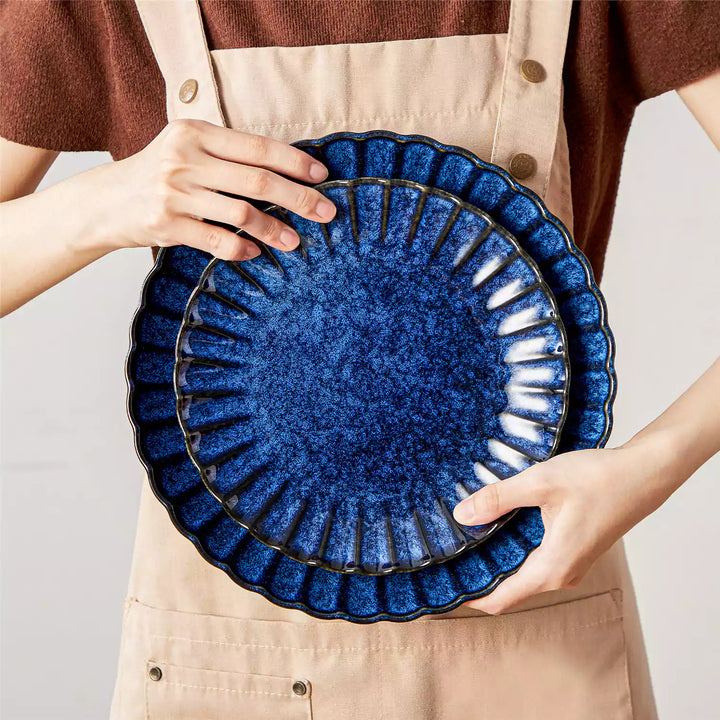
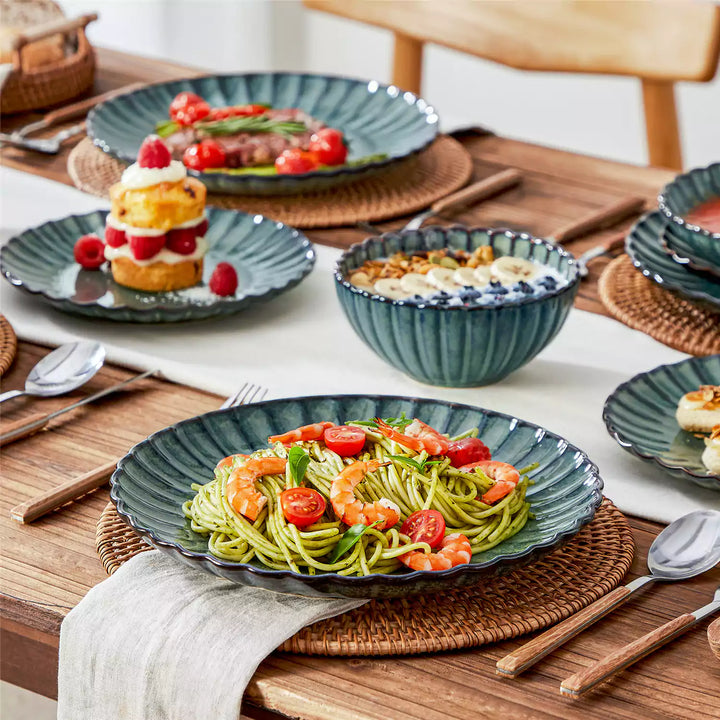
Smart Ways to Display a Complete 12-Piece Dinnerware Set
Dinnerware storage may easily take up precious cabinet space in smaller kitchens. Deep cabinets can be neatly stacked with plates, but can be hard to reach, particularly when there are different sizes. It is necessary to find a viable solution to storing a 12-piece dinnerware set without cluttering cabinets.

Vertical dish organizers or plate racks within cabinets are one clever idea. These enable plates to be erect rather than piled up in tall heaps. This design allows one to pick up single items without shaking the whole stack.
Another good alternative to displaying a 12-piece dinnerware set is open shelving. Rather than storing dishes behind cabinet doors, placing them in open shelves in an organized manner provides storage and decoration. Plates, bowls, and mugs can be arranged in terms of size and color, which brings visual order to the kitchen and saves space in the cabinets.
In small kitchens with limited shelving, rotating seasonal dishes can also be used. The 12-piece dinnerware set is easily accessible with everyday pieces being stored in lower cabinets and less used items being stored in higher cabinets.
The other creative solution is serving pieces as storage solutions. Smaller dishes, condiments, or kitchen accessories can be placed in larger bowls or platters. This method utilizes all the tableware without introducing additional containers to the kitchen.
Finally, the thoughtful display of dinnerware helps avoid overcrowding cabinets and makes the kitchen look more open.
Arranging and Stacking Stoneware Cereal Bowls
One of the most common things used in any kitchen is bowls. They are a vital part of everyday meals, whether it is breakfast cereal or soups and snacks. Nevertheless, inefficient storage of bowls can easily eat up shelf space.
A stoneware bowl set, especially stoneware cereal bowls, is made to be durable and stackable. They are slightly tapered in shape, which enables them to fit in a nest, thus making them easy to store. A set of stoneware bowls occupies much less space when stacked properly than a set of bowls of various shapes.
A good idea is to group bowls by purpose. Storing stoneware cereal bowls in one place means that breakfast necessities are readily available without having to rummage through cabinets. To keep things organized, larger mixing bowls or serving bowls can be kept separately.
Storage capacity can also be doubled by using cabinet shelf risers. These easy inserts form a second tier in cabinets, where the bowls can be stacked safely without having to reach unstable heights.

Other homeowners also use stoneware cereal bowls as multipurpose containers. They are able to store chopped ingredients temporarily during meal preparation, keep fruit on the counter, or serve snacks when guests arrive. This versatile application minimizes the use of extra containers in small kitchens.
Consistency is the key when storing a stoneware bowl set. Putting bowls back in the same place will avoid clutter and keep the cabinet space tidy.
FAQs
Q: Why Would a Utensil Crock Be Useful in a Small Kitchen?
A: A utensil crock is a vertical storage solution for commonly used cooking utensils. It also saves space in the drawers by storing spatulas, spoons, and ladles standing on the counter, and makes them more accessible during cooking.
Q: What Is the Number of Utensils in a Kitchen Utensil Crock?
A: Ideally, a kitchen utensil crock ought to contain six to ten tools that are essential. The number restriction helps to avoid overcrowding and makes every utensil easy to pick up.
Q: What Is the Significance of a Spoon Rest in Small Kitchens?
A: A spoon rest prevents contact of cooking utensils with the counter when preparing meals. This minimizes clutter, eliminates stains, and maintains a clean and tidy workspace.
Q: Can Stoneware Cereal Bowls Be Stacked?
A: Yes, stoneware cereal bowls are generally stackable in shape, which makes them perfect in small kitchens where there is a lack of cabinet space.