





The Benefits of Choosing Enamel for Van Life over Ceramic

Van life is one big rolling mood board. Your kitchen is a cross between a tiny-house test lab and a picnic that never ends. Every mug, plate, and pan has to earn its spot. That is why the “what should I cook with?” question matters so much.
Lately, the conversation tends to settle into a friendly tug-of-war between enamel and ceramic. Both can be gorgeous. Both promise easy cooking. But if you actually live with your kitchen on wheels, enamel quietly pulls ahead in ways that really matter.
In this guide, we will wander through the colorful, clanky, real-world differences between enamel and ceramic for van life, using insights from van kitchen guides, outdoor gear tests, and enamel and ceramic cookware experts. The goal is simple: help you build a compact, joy-sparking kit that can handle bumpy roads, small sinks, surprise guests, and your favorite camp recipes without drama.
Van Life Reality Check: What Your Kitchen Is Up Against
Before we crown a material, it helps to name the constraints. A MALACASA guide on van life cookware points out that van kitchens are squeezed on every axis: space, weight, water, and power. Every pot and pan has to justify itself by being multi-use, easy to clean, and simple to store.
Water is the quiet boss. A Muse Outdoors article on camper van kitchens notes that scrubbing crusted food off standard cookware can burn as much water and time as washing all the other dishes combined. That is a real problem when your gray water has to be hauled to a dump station or handled under Leave No Trace rules instead of disappearing down a suburban drain.
Storage is the second big constraint. MALACASA describes stainless nesting sets with removable handles that collapse into a single drawer and collapsible pots that flatten to about 2.5 inches, all because clutter in a van multiplies fast. You are not just stacking pans; you are playing three-dimensional Tetris next to bedding, food, and tools.
Then there is motion. Muse Outdoors calls out fragile ceramic dishware as a risky choice in vans, because vibrations and potholes are enthusiastic plate assassins. In contrast, enamel-coated steel tableware is recommended as sturdy, compact, and easy to clean, with a retro look that feels much more joyful than plastic.
Finally, think about heat and power. Some full-time van travelers lean on indoor induction cooktops. MALACASA notes that those require cookware with magnetizable bases and clear “induction compatible” labeling. Others cook almost entirely outside on propane griddles, two-burner stoves, or campfires. One RV user in that guide cooks almost every meal on a portable griddle. Your cookware has to move between these worlds without complaint.
Into this little metal house roll enamel and ceramic.
What “Enamel” and “Ceramic” Actually Mean In Van Life
Because the words get used loosely, it is worth defining them the way van life resources and cookware makers do.
When van life writers like MALACASA talk about enamel in this context, they are primarily describing two things: classic enameled cast iron, such as Dutch ovens and skillets, and enamel-coated steel tableware like plates, bowls, and mugs. Both use a glassy enamel coating fused onto metal. GSI Outdoors describes their enamelware as a metal base coated with porcelain enamel, creating a smooth, non-reactive, easy-to-clean surface that can go from stove to table.
Enameled cast iron takes the thermal personality of regular cast iron and wraps it in enamel. Guides from brands like Made In, All-Clad, and CampMaid all highlight the same perks. The enamel eliminates the need for seasoning, protects against rust, and keeps acidic foods like tomato or wine sauces from reacting with the metal. It still behaves like cast iron when it comes to heat retention and even cooking, which is why All-Clad and others love it for stews, braises, and baking.
On the tableware side, Muse Outdoors recommends enamel-coated steel plates and bowls in place of fragile ceramic dishware for van kitchens. Esbit, in its own van life essentials guide, recommends light, unbreakable, easy-care dishes, calling out enamel as sturdy and heat-resistant enough to go straight on a stove.
Ceramic, on the other hand, usually means something different in van life conversations than your grandma’s porcelain mugs. MALACASA uses “ceramic” mainly for ceramic nonstick coatings applied to hard-anodized aluminum pots and pans. OutdoorGearLab and other testers echo this definition in their reviews of camping cookware. These sets are light, heat quickly, and are often celebrated in reviews for how easily they wipe clean.
That difference matters. In this context, ceramic is usually an ultra-slick coated surface on an aluminum base, while enamel is a glass-like coating on cast iron or steel.

Durability on Bumpy Roads: Why Enamel Is a Calm Companion
Out on the highway, every pothole is a gear test. This is where enamel quietly outperforms ceramic for van life.
Muse Outdoors is blunt about ceramic dishware in vans: it is fragile, and road vibrations plus bumps make it easy to break. The same article recommends enamel-coated steel dishware as the sturdier, retro-chic alternative. It stacks neatly, shrugs off bumps, and still feels more stylish than plastic.
Esbit’s van life packing guide pulls in the same direction. Their advice is to choose cookware and tableware that is light, unbreakable, and easy care, recommending bamboo or enamel dishes in that role. They specifically note that enamel is heat-resistant enough to go straight onto a stove, so one plate or bowl can double as a warm serving dish.
For cookware, durability looks a little different. Ceramic nonstick sets often win on initial impressions. MALACASA cites Outside and OutdoorGearLab tests that consistently rate ceramic nonstick as extremely easy to clean. MSR’s Ceramic 2-Pot set, weighing around 1 pound, is a darling in those tests for cleanup. However, both MALACASA and OutdoorGearLab warn that ceramic coatings are delicate. They need wood or silicone utensils, careful nesting, and padding so road jostling does not scratch the surface. Heat must stay in a moderate zone to protect the coating.
Enameled cast iron and enamel-coated steel have their own Achilles heels. CampMaid’s explanation of enameled cast iron points out that enamel can crack if you drop a pot and it tends to be more expensive than bare cast iron. Overmont and All-Clad both warn against aggressive thermal shock, like running cold water into a screaming-hot pot. Chips are possible if you bang pieces together carelessly.
Yet, once you baby enamel during packing and avoid dramatic abuse, it tolerates everyday life on the road remarkably well. A Made In explainer and Jessica Gavin’s roundup of enameled cast iron both emphasize that with reasonable care, these pieces can last for decades and even generations. Enamel’s metal core is extremely strong, so the failure mode is a chip in the surface, not the entire dish shattering into shards.
Real-world van life voices echo that long-haul durability. In one RV-focused group, a camper mentions using only cast iron in their rig, noting that yes, it is heavy, but you only need a couple of pieces and they essentially last forever with no synthetic nonstick chemicals to wear out. Enamelled cast iron behaves similarly once you treat it right. You are buying a few lifer pieces, not a coating that might feel fragile every time the van hits a speed bump.
For a kitchen that spends its days rattling down washboard roads, enamel’s resistance to shattering, its ability to age gracefully, and its no-drama attitude about small scratches make it a calmer companion than delicate ceramic coatings and fragile ceramic plates.

Cooking Performance in a Tiny, Mobile Kitchen
Durability is only half the story. What happens when it is time to actually cook?
MALACASA’s van life cookware guide draws a sharp functional line. Enamelled cast iron shines in slow simmers, compact-oven baking, and wind-resistant outdoor cooking, thanks to its mass and heat retention. Ceramic nonstick, especially when paired with aluminum bases, excels at quick weeknight-style meals and low-effort cleanup when water, time, and battery power are tight.
Cookware experts back this up. Made In and All-Clad both describe enameled cast iron as having outstanding heat retention and even heat distribution, making it ideal for stews, soups, braises, and bread-adjacent recipes. A Made In piece notes that enameled cast iron heats more slowly than stainless steel but holds heat longer, and All-Clad recommends cooking on low to medium heat because once this material is hot, it stays hot.
Serious Eats tested several enameled cast iron skillets and found similar patterns. Lighter pans like Staub’s 12-inch fry pan heated faster and more evenly, with center surface temperatures climbing quickly into searing-ready ranges, while heavier pieces were slower but just as steady once warmed. Across brands, testers praised enameled cast iron for strong searing and oven versatility, with some pans rated to around 500°F and the Staub pan rated dramatically higher, up to about 900°F for extreme scenarios.
On the ceramic side, camping cookware tests are more about speed and convenience. OutdoorGearLab’s review of camping cookware sets highlights hard-anodized aluminum and ceramic-coated pots like MSR’s Fusion Ceramic 2-Pot system as offering fast boil times and extremely easy cleanup at around 1 pound of total weight. MALACASA notes that third-party tests consistently highlight ceramic pots as “easiest to clean,” which makes them appealing in water-limited vans.
However, the same sources emphasize trade-offs. OutdoorGearLab points out that ceramic coatings are more fragile than bare metal, and MALACASA stresses that aluminum-based ceramic sets are less robust than steel or cast iron. These sets excel when you are simmering a quick pasta and wiping the pot with a paper towel, but they are not ideal for long simmering or high heat on an open flame.
To pull this together, here is a compact comparison rooted in those tests and guides.
Aspect |
Enamel (cast iron or steel) |
Ceramic nonstick (on aluminum) |
Typical weight |
Heavy for cast iron; a 12-inch cast-iron skillet is about 7 lb 7.6 oz; enamel-coated steel tableware is lighter but still solid. |
Very light; sets like MSR’s Ceramic 2-Pot system are around 1 lb for two pots. |
Heat behavior |
Warms more slowly but retains heat exceptionally well, excellent for simmering, braising, and baking in compact ovens. |
Heats quickly and responds fast to changes, ideal for quick meals and boiling water. |
Durability of cooking surface |
Enamel can chip if dropped or abused but does not wear away with normal stirring and is non-reactive with food. |
Ceramic coatings are easily scratched by metal or rough nesting and can degrade if overheated or scraped. |
Cleaning effort |
Smooth, non-porous surface is reasonably easy to clean with warm soapy water; not as slippery as good nonstick but forgiving. |
Often wipes clean with minimal effort; repeatedly rated “easiest to clean” in tests by outlets such as OutdoorGearLab and other reviewers cited by MALACASA. |
Cooktop and heat source compatibility |
Works on gas, electric, and induction; enameled cast iron can go from stovetop to oven and, when rated, onto camp stoves and some grills. |
Usually excellent on camp stoves and many indoor cooktops, but not suitable for direct campfire use and not always induction compatible. |
Breakage risk in motion |
Steel and cast-iron cores resist bending or shattering; chips are cosmetic unless enamel is severely damaged. |
Pots themselves are tough, but the coating is vulnerable; ceramic plates are more at risk of cracking or breaking in a moving van. |
Price and longevity |
Higher up-front price but can last for decades if cared for; enamel-coated tableware offers good value over time. |
Lower to moderate price, but the coating’s life span is shorter and more sensitive to daily wear and van vibrations. |
In a stationary kitchen, both materials make sense in different ways. In a rolling one, enamel’s long simmering, high versatility, and structural strength give it an edge for the pieces that see daily abuse.

Cleaning and Water Use: When Nonstick Really Matters
Water is precious in a van, which is where ceramic nonstick makes its loudest argument.
MALACASA’s van life cookware guide emphasizes how big a deal easy cleanup is. Ceramic nonstick sets like the MSR Ceramic 2-Pot system are repeatedly recognized in third-party tests as some of the easiest cookware to clean. OutdoorGearLab calls out ceramic-coated pots for wipe-and-go cleanup that saves both water and time. When you are living with a small tank and a limited gray water capacity that must be emptied at proper dump stations or buried carefully away from waterways, that matters.
Muse Outdoors makes the same point from a different angle. They note that scrubbing crusted food from regular cookware can consume nearly as much water and time as washing everything else put together. That is why a good nonstick pot and pan set is on their short list of van kitchen essentials.
Enamel does not disappear from this conversation though. GSI Outdoors describes their enamelware as having a smooth, non-reactive surface that is easy to clean. Emalco’s camp enamelware is marketed around similar benefits: durability plus a glassy surface that does not cling to flavors. All-Clad and Overmont both outline cleaning routines for enameled cast iron that rely on warm water, mild dish soap, and occasional use of a baking soda paste for tough spots. Overmont even recommends a soak with warm water and a dash of vinegar for stuck-on food before a gentle scrub.
In real van life, a hybrid cleaning routine tends to work well with enamel. One common approach in camping communities is a two-bucket system, as described by members of the TentBox community. Dishes are washed in a bucket with a little soap and water, then rinsed in another bucket with clean water and a splash of vinegar. Enamel’s smooth surface responds beautifully to this kind of gentle soak and wipe. For stubborn residue on enameled cast iron, home cooks sometimes lean on approaches like a short simmer with baking soda or a salt and soap boil, described anecdotally in home-cleaning posts, before finishing with a regular wash.
So ceramic nonstick is still the king of low-effort cleaning, but enamel is not a scrubby nightmare. If you let enamel soak for a few minutes and rely on warm water, vinegar, and soft sponges, it holds up well in low-water dish systems without requiring aggressive scouring that might damage a delicate surface.

Safety, Health, and Heat Limits
Many van cooks care as much about what touches their food as they do about how fast it boils.
Enamel has a strong safety story. All-Clad and Made In both describe enameled cast iron as non-reactive and safe for acidic ingredients. The enamel coating serves as a glassy barrier between food and metal, preventing rust and metallic flavors while eliminating the need for synthetic nonstick chemicals. CampMaid notes that enameled cast iron performs especially well in recipes with citric juices and acidic ingredients, which would challenge bare cast iron seasoning.
Modern enameled cast iron from reputable cookware makers is also considered non-toxic. Jessica Gavin, a culinary school graduate who has extensively tested enameled cast iron from brands like Le Creuset and Staub, emphasizes that high-quality, contemporary enameled cast iron is food-safe. Concerns are mainly associated with some vintage pieces from decades ago rather than well-regulated modern products.
Ceramic nonstick emerged partly in response to worries about older nonstick coatings. MALACASA’s overview and an Amazon-style roundup of enamel and ceramic cookware both note that many modern ceramic and enamel-coated sets are explicitly advertised as free from PFAS, PFOA, PTFE, and similar chemicals. OutdoorGearLab highlights MSR’s Fusion Ceramic set as a non-toxic, PFOA-free alternative to traditional Teflon-style coatings.
Heat limits are where the differences show. Serious Eats reports that many enameled cast iron skillets are rated to around 500°F, with Staub’s skillet going far higher, up to about 900°F, which is well beyond what most van cooks will ever use. Made In notes that its enameled cast iron can handle roughly the same oven temperatures while still recommending low to medium stovetop heat and avoiding prolonged dry high heat to protect the enamel.
Ceramic coatings, by contrast, are more heat-sensitive. OutdoorGearLab and MALACASA both advise using moderate heat and plenty of fat or liquid with ceramic cookware to preserve the coating. It performs beautifully within that window, but repeated high-heat abuse can shorten its lifespan.
For van life, this means enamel is the better choice for equipment going over open flames, into compact ovens, or onto grills and high-heat outdoor stoves. Ceramic shines on indoor burners and camp stoves where you control the flame and prioritize quick, low-stress cooking and cleaning.
Aesthetics and Joy: Enamel as a Traveling Tabletop Palette
Of course, cooking in a van is not just about efficiency. It is also about joy. Colorful tableware turns a parking-lot dinner into a memory.
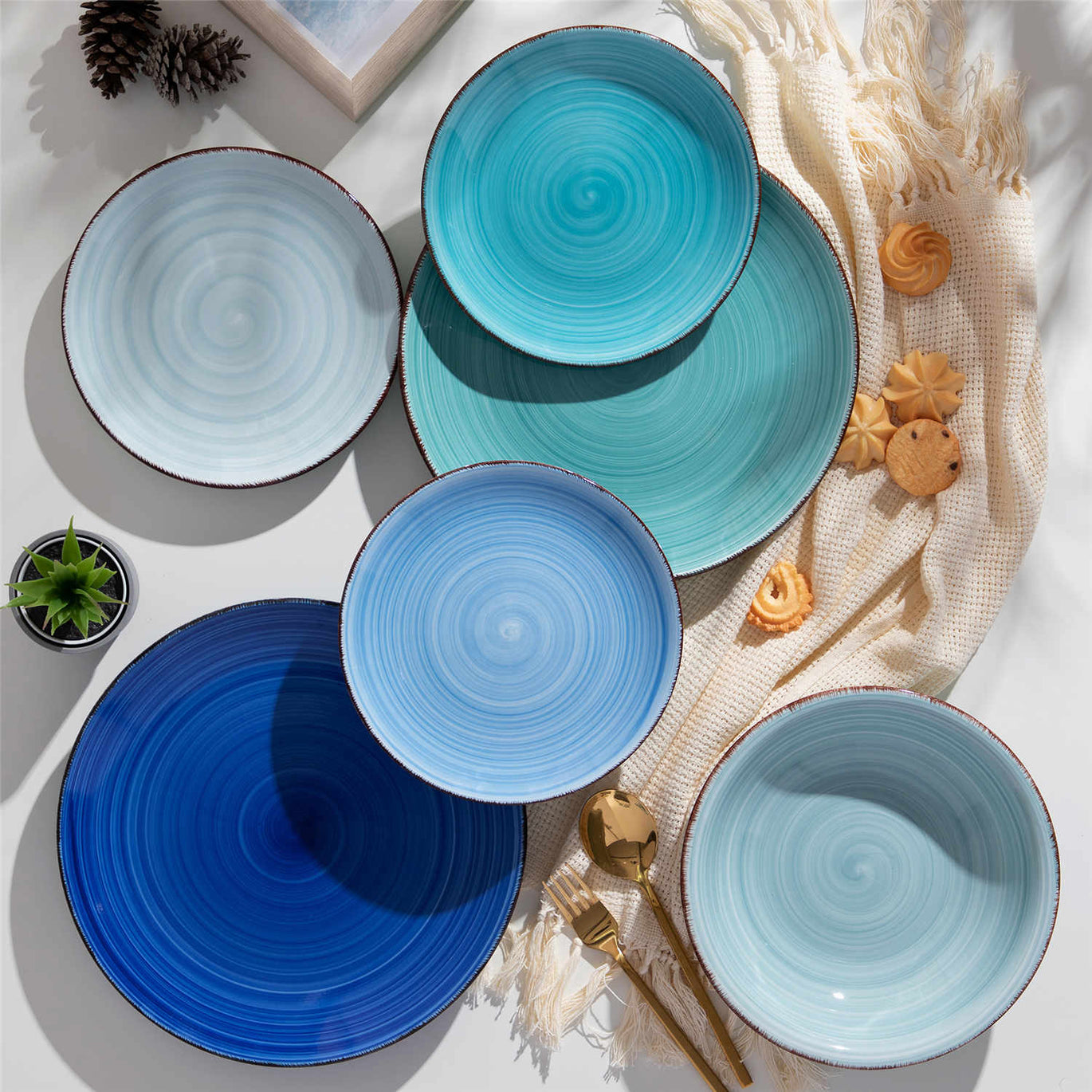
Enamelware brands lean hard into this aesthetic. GSI Outdoors pitches its enamel camping tableware as a way to create an “elegant kitchen anywhere,” with classic blue and green Pioneer sets that look like they rolled straight out of a nostalgic camp movie. Emalco highlights national park–themed enamel mugs, like a Grand Canyon camping mug that invites you to raise a morning coffee to public lands and conservation icons.
Golden Rabbit’s cookware and tableware are marketed as vibrant and giftable, with email sign-ups promising VIP access to enamelware deals, which tells you there is a dedicated fan base for these colorful pieces. A Quora discussion about why blue-with-white-speckle enamel feels like the “default” camping material connects that pattern to a traditional camping kit: something to sleep under, in, and on, something to cook on and in, something to eat with and drink out of, and something to carry it all. Enamel fits neatly into that archetype, visually and functionally.
Ceramic cookware can be beautiful too, especially modern ceramic nonstick sets in muted stone and pastel tones. But in a van, that ethereal minimalism can feel fragile. Enamel, by contrast, reads as cheerful and tough. The chipped mug you have used in three states feels like part of your story, not a flaw you need to baby.
If you think of your van table as a rotating art installation, enamel is the medium that can handle both the gallery and the gravel road.
When Ceramic Still Makes Sense (And How to Mix Materials)
None of this means ceramic should be banished from the van. It just means it should play a very specific, high-impact role.
MALACASA lays out a pragmatic “fewer, better” philosophy. For van cooks who mainly use indoor induction and care deeply about minimal cleanup, they recommend anchoring your kit with an induction-compatible nesting ceramic nonstick set. Lightweight systems such as MSR’s ceramic pots, at around 1 pound total, have been repeatedly recognized in third-party tests for how effortlessly they wipe clean.
On the other hand, if you cook mostly outdoors on propane or over campfires and love long simmers and baking, MALACASA recommends anchoring your kit with an enameled Dutch oven and designing a secure storage slot for its weight. For mixed indoor-outdoor cooking, they propose a hybrid trio: an enamel pot or Dutch oven for flame and oven work, a small ceramic nonstick pot for fast, low-water indoor meals, and a truly nesting stainless set with removable handles to cover extra burners and oven use.
In other words, ceramic is fantastic as a specialty player for ultra-easy weeknight stews and noodles when you are tired, it is raining, and you want the dishes done in a minute. Enamel is the foundational, multi-decade teammate that holds up under abuse and handles the more demanding cooking.
How to Build an Enamel-Forward Van Kitchen
Putting all of this together, an enamel-forward van kitchen is less about hoarding and more about choosing a small, gorgeous, multi-use core that can survive both your appetite and your mileage.
Start with one enameled Dutch oven sized for your stove. MALACASA specifically recommends choosing a compact enameled Dutch oven that fits comfortably on a two-burner van stove. Jessica Gavin’s picks show how a mid-size Dutch oven in the 4 to 7 quart range can handle braises, soups, breads, and one-pot meals for a few people. In a van, that one pot becomes your chili pot, pasta pot, bakeware, and sometimes even your serving bowl.
Add two or three enamel-coated steel plates and bowls and matching mugs. Muse Outdoors and Esbit both point to enamel dishware as the sweet spot between unbreakable and stylish. Enamel plates and bowls can go from morning yogurt to lunchtime sandwiches to an evening simmer where they briefly warm on a stove as makeshift gratin dishes. Enamel mugs can serve as mini pots for heating water, as the Quora-style “big metal mug that does everything” solution, and as your daily coffee ritual vessel.
Layer in one lightweight ceramic nonstick pot for speed. MALACASA and OutdoorGearLab both highlight ceramic-coated aluminum pots like the MSR systems as unbeatable for quick cleanup. A small ceramic pot that nests inside your Dutch oven gives you a quick oatmeal or ramen option when you do not want to scrub anything. Protect it with a soft cloth or pan protector during travel.
Back everything up with a compact stainless nesting set. A stainless set with removable handles, as mentioned in MALACASA’s guide, can collapse into a single bundle. Stainless is not as easy to clean as ceramic or enamel, but it is robust, inexpensive, and happy on every heat source you throw at it.
Then, think about storage and care as part of the design. Overmont recommends stacking enameled cast iron with soft padding or cloth between pieces and even slipping a paper towel inside for moisture absorption. In humid climates, they suggest a small silica gel packet inside a pot during storage. MALACASA warns to give ceramic nonstick its own padded space so the coating does not grind against other pans on rough roads.
Finally, line up your cleaning rituals with your materials. For enamel, rely on warm water, mild soap, short soaks, and gentle tools. For ceramic, keep the heat moderate, use wood or silicone utensils, and avoid metal scourers. For both, remember the advice from van life dishwashing discussions: simple two-bucket systems with a small bit of soap and a splash of vinegar can keep your dishes sparkling while staying respectful of your water and gray water limits.
An enamel-first kit like this does something subtle but powerful. It reduces decision fatigue. It turns your van kitchen into a kind of capsule wardrobe: a few beautifully made, hard-working pieces that are a pleasure to use every single day.
FAQ
Is enamel too heavy for van life?
Weight is the main hesitation people have about enamel, and it is a valid one. MALACASA points out that a twelve-inch cast-iron skillet can weigh about 7 lb 7.6 oz, and Jessica Gavin notes that large enameled Dutch ovens can easily reach 12 lb or more with the lid. That is noticeable in a van, especially if you are lifting pieces in and out of high cabinets.
The key is to size your enamel pieces realistically and keep the total count low. Many campers in RV and camping communities report using just two or three cast-iron-based pieces as their entire heavy cookware set. One compact enameled Dutch oven and possibly a medium skillet or braiser can cover a huge range of dishes without turning your cabinets into a strength workout. For everything else, you can lean on lighter enamel-coated steel plates and a single ceramic nonstick pot to keep the overall kit manageable.
Will enamel chip, and does that matter in a van?
Brands like CampMaid and Overmont are clear that enamel can chip if you drop a piece on a hard surface or knock it sharply against something, and they caution against dramatic thermal shocks such as plunging a hot pot into cold water. Chips are mostly a cosmetic issue as long as they are small and not in the exact spot where you constantly scrape with utensils. The underlying metal is still structurally sound.
To minimize chipping, van life guidance from Overmont and others is simple. Stack your enamel with soft padding or cloth between pieces, avoid rattling them loose in drawers, and be gentle when loading and unloading from overhead cabinets. If you treat enamel like you treat your favorite mugs, it will usually treat you well in return, even on rough roads.
Can I use enamel over a campfire or outdoor grill?
This is one of enamel’s biggest advantages over ceramic in van life. Both CampMaid and Lodge-style camp Dutch oven guides describe using cast iron, including many enameled pieces when rated by the manufacturer, over open flames and charcoal. Outdoor-focused cookware overviews emphasize that cast iron and enameled cast iron are excellent for campfires, grills, and high-heat burners because of their heat retention and resilience.
Ceramic-coated aluminum, by contrast, is generally not recommended for direct campfire use, especially not in long, intense sessions. OutdoorGearLab and MALACASA both frame ceramic cookware as ideal for controlled stove environments with moderate heat. If campfire cooking is part of your van life dream, an enamel Dutch oven or enamel-compatible cast-iron skillet is a safer and more durable choice for that part of your cooking, while ceramic stays inside for quick, low-water meals.
Enamel brings big-camp nostalgia, bold color, and serious durability into the narrow footprint of a van kitchen. Paired with just a touch of ceramic nonstick for fast, low-water cooking, an enamel-forward setup lets you simmer, bake, sear, and serve with confidence, even when the road gets rough. Your tiny rolling dining room deserves tools that are as joyful and resilient as the adventures you eat in the middle of.
References
- https://www.seriouseats.com/best-enameled-cast-iron-skillets-6833276
- https://alwaystheadventure.com/vanlife/camper-van-kitchen?srsltid=AfmBOoqdHk5gh8RHmI8-NIUDclN4V8b7_5p0HcaOd7uV5Gnt54RSK6We
- https://www.amazon.com/Enamel-Pots-Pans/s?k=Enamel+Pots+and+Pans
- https://www.campmaid.com/blogs/the-difference-between-enamel-and-regular-cast-iron-dutch-oven?srsltid=AfmBOooyHyN4OTlYRVmDVrFJeB1ndaYpePFu9C7RRuYTmDhwzRTGXGFs
- https://emalco.com/camp-enamelware/
- https://www.goldenrabbit.com/collections/cookware?srsltid=AfmBOop-OL7I9dPLYhycRa3Okx-HCCYydVHwivn2kqAq-TyoXSkxXom0
- https://gsioutdoors.com/collections/enamelware?srsltid=AfmBOorYcijuh1oo1-MvfZnkKVRdw19GopVUpyni_l-5mDTfAef65iFA
- https://www.jessicagavin.com/best-enameled-cast-iron-cookware/
- https://www.lodgecastiron.com/pages/cleaning-and-care-camp-dutch-oven?srsltid=AfmBOoqXjFCYEqSlINZxi_vCh8FyqTBzvVXdtVtl765HCQ9-9rAhUWpN
- https://madeincookware.com/blogs/enameled-cast-iron-pros-and-cons
Sie können auch mögen
Stern 16 Stück Geschirr Set
- Von €69,95
€92,95- Von €69,95
- Stückpreis
- per
-
Blue
-
Green
-
Red
-
Grey
Bonita 18-teiliges Geschirrset
- Von €58,95
€71,95- Von €58,95
- Stückpreis
- per
-
Blue
-
Multicolor
Simi 24 Stück Geschirr Set
- €92,95
€124,95- €92,95
- Stückpreis
- per
Starry 16-teiliges Geschirrset
- €70,95
€82,95- €70,95
- Stückpreis
- per
-
Blue
-
Green
-
Red
-
Gradient Green