



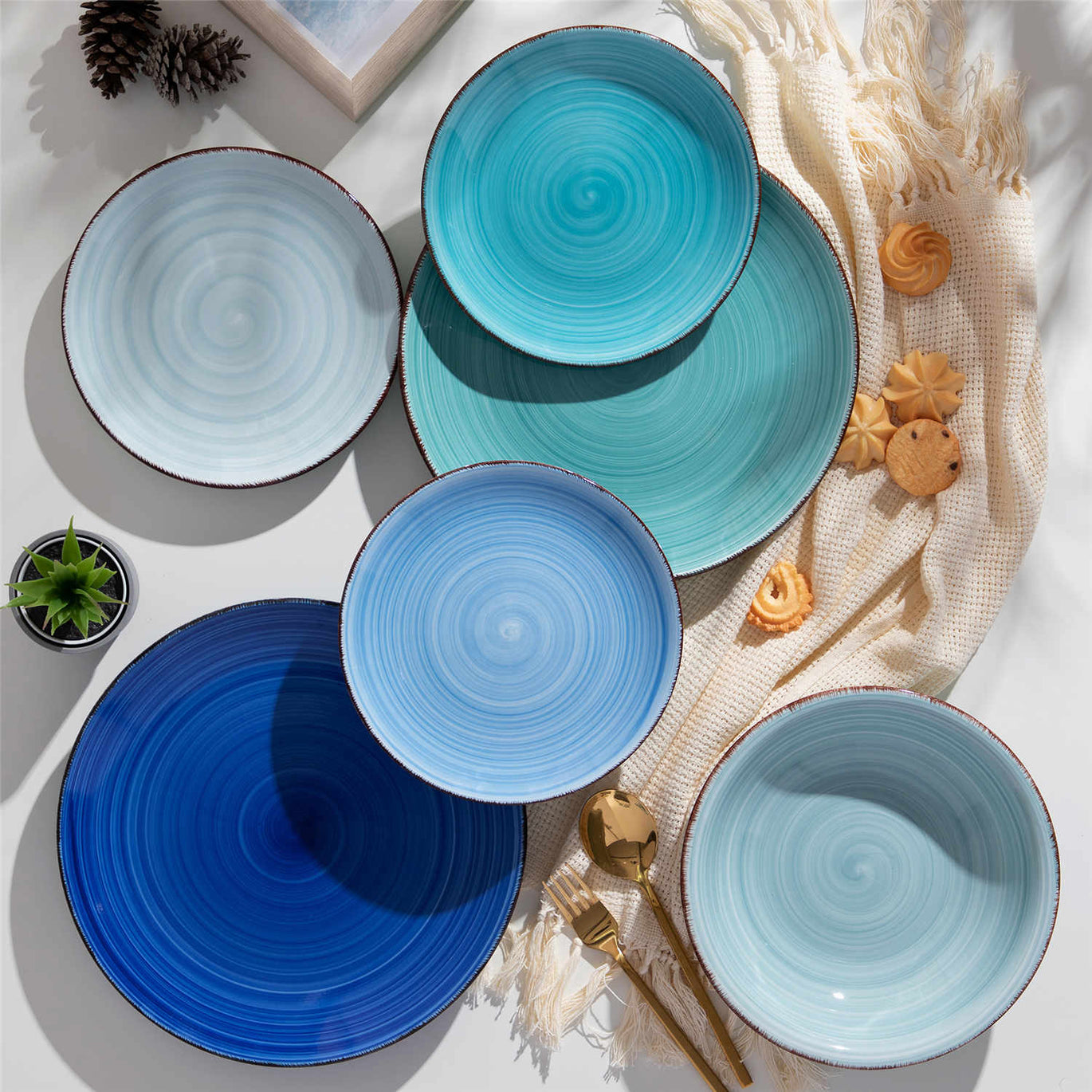


Gender Inclusivity in Ceramic Tableware Brands: A Necessity

Why This Conversation Belongs on the Table
Picture two dinner plates on a store shelf. One is blush pink with soft florals and a delicate gold rim, labeled “Her Collection.” The other is matte charcoal with thick walls and a chunky handle, labeled “For Him.” They sit side by side, quietly sorting future meals into feminine and masculine experiences before anyone has even picked them up.
As a curator obsessed with colorful tabletops and joyful, real-life dining, I spend a lot of time watching how people actually use plates, bowls, and mugs. Couples mix and match. Friends swap pieces. Kids reach for the heaviest mug because it feels important. Guests choose the plate that matches their mood, not their gender. The table is already more fluid than many ceramic tableware brands allow it to be.
Gender inclusivity in ceramic tableware is not a trend gimmick. It is a necessity if brands want to respect the real diversity of the people who eat, drink, celebrate, and grieve with their products. It is also a serious business opportunity. Research in ceramics, craft history, and design shows that gendered assumptions have long distorted who is seen, who gets paid, and whose aesthetic comfort is prioritized. When brands correct those distortions, they make better products, build stronger emotional bonds with customers, and help repair a historically skewed field.
To understand why this matters so much for tableware, we need to start far away from the showroom and go deep into the ground.

Clay Has Never Been One-Gender
Archaeology’s Lesson: Gender Is Not What You Assume
Archaeologists used to look at grave goods, see weapons, and assume “man.” They saw weaving tools and assumed “woman.” Feminist bioarchaeology has spent decades dismantling these shortcuts by comparing bones, teeth, trauma, and wear patterns with the idealized images buried alongside them. The gap between the objects and the actual bodies tells a powerful story.
A famous example is the “Hasanlu Lovers,” two skeletons who died in what is now Iran around 800 BCE, found locked in an embrace. For years they were displayed as a heterosexual couple. Skeletal analysis of pelvis and cranium, however, suggests both individuals were likely male. Their story did not change; our assumptions about whom intimacy belonged to did.
Other case studies go straight at labor and power. At Abu Hureyra in modern Syria, Theya Molleson documented a pattern of damage in female skeletons—collapsed vertebrae and arthritis in the feet—linked to kneeling for long hours grinding grain. The grave goods alone did not reveal that cereal processing was heavily gendered; the bones did. On the Eurasian steppes, Jeannine Davis-Kimball excavated kurgans where some women were buried with weapons and riding-related skeletal changes, including embedded arrowheads and bowed legs. These were not symbolic “Amazon” props. Some women were actual warriors, paralleling male warrior burials.
Pamela Geller’s re-analysis of skulls from the Samuel G. Morton collection used modern methods to show that individuals long labeled as male warriors from Ottawa and Sioux communities were in fact female. Again, assumptions about who fights and who crafts were literally written into the skull catalog.
Across these cases, feminist archaeologists argue for an explicitly critical lens: do not let heteronormative and binary ideas decide who could fight, feast, heal, or grind grain. Compare ideal images and objects with the actual evidence of lived bodies.
For ceramic tableware brands, this is a direct warning. If archaeologists can misread skeletons and graves, brands can certainly misread plates and bowls. A decorative platter in a domestic setting is not automatically “for women.” A heavy stoneware mug is not automatically “for men.” The meaning comes from context, not from a stereotype baked into the clay.
Making and Using Pots Across Cultures
Zoom in on who has actually worked with clay over time and the picture of “feminine craft” versus “masculine industry” fragments in fascinating ways.
A historical overview in one ceramic research essay notes that before around 6000 BCE, women were often the primary ceramicists. They harvested clay, formed, fired, and decorated pottery used to store and serve food. In several Indigenous cultures of North and South America and the Neolithic Middle East, women’s hands literally built daily life in clay. More recently, fingerprint analysis of pottery from Chaco Canyon in North America, dating to the 10th and 11th centuries CE, showed that both men and women made ceramics there, challenging the assumption that women only decorated pieces that men formed.
Later, with the invention of the potter’s wheel and rising production volumes, many Western societies recast ceramics as a physically intense, masculine-coded, profit-driven field. Between about 6000 and 3000 BCE in some regions, wheel-based production and new machinery helped move clay work into male-dominated workshops. The association of physical exertion with masculinity, especially in Western cultures, reinforced this shift.
Yet this “inevitable” masculine takeover was never universal. Ethnographic and ethno-archaeological work on the Western Balkans shows a different but equally complicated picture. Women there mostly handled small-scale domestic pottery. Men dominated commercial production, especially where wheels and kilns required more capital and dedicated space. But even when women were not credited as “potters,” they often prepared clay, ground temper, loaded and tended firings, decorated vessels, and sold them at markets. Clay work was a chain of tasks, and women were essential links, even if their names never made it onto workshop records.
In the Philippines, the National Museum of Anthropology highlights how pottery production in many northern communities has been historically women’s work, with skills passed from mother to daughter. Pottery is treated as both technical craft and cultural artifact, connecting women potters to local environments, rituals, and community identity. Urbanization and industrial containers now threaten these traditions, prompting calls to safeguard women’s ceramic heritage.
In Ghana, one study notes that women make up just over half of the population and are heavily present in petty trading, craftwork, and farming. Much of their economic contribution, including pottery, is unrecorded or undervalued because it happens in family and informal settings. The authors argue that development policies need to recognize women’s economic roles explicitly if they are to escape poverty. Pottery here is not a quaint pastime; it is part of women’s survival strategies and cultural leadership.
In Brazil, research on Paulistaware tracks how Indigenous Tupiniquim women appropriated Portuguese coarse ware forms in the 16th century and continued to reproduce and transform them over centuries. These women acted as cultural brokers, managing agroforestry systems, food logistics, settlements, and ceramic traditions in the face of colonial disruption. The authors describe this as an “archaeology of persistence,” where change in clay technology does not signal loss of identity but intentional recombination.
In all these cases, gender and clay are tightly bound, but never in a single, simple way. Sometimes women dominate forming, sometimes men, sometimes both share in different stages. Sometimes ceramics are coded as “female,” sometimes as gender-neutral prestige objects. The only constant is that social structures, not the clay itself, determine who gets credit and who gets sidelined.
Brands that cling to a cliché that ceramics are naturally feminine because they live in the kitchen, or naturally masculine because they involve heavy lifting and firing, are ignoring a long, rich record of gender diversity around clay. The material is flexible. Our stories about it can be too.
Tableware Is More Neutral Than Our Stories About It
Isabella d’Este’s Maiolica: Banqueting for All Genders
Modern feminist art often uses ceramics to honor women. Judy Chicago’s landmark installation The Dinner Party, created in the 1970s, features ceramic and textile place settings celebrating thirty-nine historical and mythical women, plus hundreds more named on the floor. Chicago deliberately used media associated with domesticity and “women’s work” to make women’s contributions visible.
An art historian studying Renaissance ceramics, however, warns against projecting this modern feminized reading backward onto all historic tableware. Sixteenth-century Italian maiolica—tin-glazed earthenware painted with narrative scenes—offers a different model. Isabella d’Este, marchesa of Mantua and a major Renaissance collector, commissioned an elaborate narrative-painted service around 1524. Her son, Duke Federico II Gonzaga, commissioned similar services in the 1530s from the same master, Nicola da Urbino.
These dishes were decorated with scenes from classical texts such as Ovid’s Metamorphoses and Virgil’s Aeneid, plus Old Testament stories. They appeared at court banquets, displayed on tiered credenzas or used in meals where both male and female elites were present. Contemporary writings, such as Castiglione’s Book of the Courtier, frame banqueting as a stage for liberality and conviviality shared by rulers of all genders. While the court remained patriarchal, these maiolica services were not designed solely for female spectators. They carried classical learning and munificence that both duke and dowager marchesa wanted to project.
Drawing on Michael Baxandall’s concept of the “period eye,” this research argues that Renaissance viewers would have seen colorful maiolica as a sign of courtly generosity and humanist sophistication, not as delicate domestic decoration. The same dishes appealed to men and women, reinforcing dynastic identity without threatening male power.
For contemporary tableware brands, Isabella’s story is a reminder that decorated ceramics have historically been gender-neutral carriers of prestige and narrative. A plate with intricate mythological or floral imagery does not inherently belong to women. A bold, architectural form does not inherently belong to men. The same service can speak to different viewers in different ways, depending on how it is used and framed.
From “Just Craft” to Powerful, Plural Aesthetics
For a long time, ceramics in art history were dismissed as “just craft,” particularly when associated with women. An essay on women in ceramic art traces how this hierarchy worked against female artists: ceramics were seen as decorative, domestic, and therefore less serious than painting or sculpture. At the Bauhaus in 1919, a wave of women applicants prompted director Walter Gropius to segregate them into a “women’s class,” funneling them into pottery and textiles rather than metalwork or cabinetry.
Yet the careers of women ceramic artists complicate that story. Eva Zeisel, a Hungarian-born designer who later worked in Germany and the United States, apprenticed in traditional guilds and then succeeded in industrial mass production. Her work shows that everyday earthenware—an inkwell, a serving dish, a teapot—can be both functionally excellent and formally adventurous. She did not reject “craft”; she leveraged its intimacy with daily life to shape modern taste on a global scale.
Another example, Alison Petty Ragguette, uses porcelain and mixed media to explore the internal body and natural systems. Installations with slip-cast porcelain forms, rubber tubing, pumps, and circulating liquids create immersive environments that feel like walking through a living organism. This is not the realm of dainty flowered teacups. It is conceptually rich, physically demanding work that treats clay as a medium for big ideas about the body, technology, and ecology.
The essay argues for a nuanced view of “female aesthetics.” Certain colors, forms, or themes may feel feminine, but their meaning depends on context. Feminine aesthetics can be empowering when they support self-exploration and critique of women’s conditions, rather than being dismissed as trivial or forced into angry cliché.
Translating this back to tableware, gender inclusivity is not about banning florals or pastel glazes. It is about removing the gatekeeping label that says those choices are “for women only” and treating them as valid options within a wide expressive palette. It is also about acknowledging that heavy, rough-surfaced stoneware and sleek, minimalist forms are not inherently masculine. They are textures and shapes that anybody can love.
Aesthetics, Comfort, and the Science of Feeling Included
Aesthetic Comfort Is Measurable
We often talk about plates and tiles as if their appeal is purely subjective, but design research shows that our brains respond in patterned ways to different ceramic surfaces.
A study of ceramic tile design at the Jingdezhen Ceramic Institute used event-related potentials, a type of brainwave measure, to examine how people process tiles they like versus tiles they dislike. Participants viewed images of tiles that they had previously rated as appealing or unappealing while their neural responses were recorded.
The researchers focused on three components. The N100, an early response linked to initial attention, was larger for tiles people liked. In other words, preferred designs grabbed positive attention quickly. Later components, P200 and the late positive potential, were larger for tiles people disliked. Those less appealing designs drew more sustained processing, consistent with a general negativity bias where unpleasant stimuli hold our focus longer.
This pattern suggests that aesthetics are not a vague afterthought. Ceramic surfaces that people find appealing set off an immediate, positive engagement. Those they dislike sit in the mind like a pebble in a shoe, demanding energy and attention.
Another design study, funded by the Arts and Humanities Research Council, investigated emotional durability in ceramic tableware. Thirty participants between ages seventeen and seventy-five were asked about their favorite and least favorite drinking vessels. Almost everyone chose a mug, not a cup-and-saucer set, as their favorite. Attachments clustered around how the object felt in the hand, how the rim and handle worked, its color and weight, and the stories attached to it, such as gifts or memories.
The authors used a framework that distinguishes visceral reactions (immediate sensory responses), behavioral factors (usability and comfort), and reflective meanings (symbolism, identity, memories). They concluded that emotionally durable ceramics are those that feel good in use, function well, and support personal narratives over time.
For brands, these studies converge on a simple point. People notice ceramics in their bodies and brains. If a design feels gendered in a way that excludes or mocks someone, it risks becoming a “disliked tile” in that person’s experience, demanding attention in the worst way. If a mug feels like it belongs to your story regardless of your gender expression, you are more likely to keep it, repair it, and bring it along as your life changes.
Gender inclusivity, then, is not only an ethical stance but also a path to more emotionally durable products that avoid the subtle, sustained discomfort of exclusion.
Exclusion in Labs, Kilns, and Boardrooms
Gender bias around ceramics does not appear only on store labels. It runs through research labs, factories, and leadership structures that shape which products ever reach the table.
In science more broadly, a special issue of the International Journal of Applied Glass Science dedicated to “Women in Glass” highlighted stark imbalances. As of March 8, 2020, there was only one woman for every nine men in the elite ranks of Western science. Women in European and OECD countries held few decision-making roles, received less funding, and earned lower salaries than equally qualified men. The editors noted that women often made up nearly half of conference attendees in glass science but remained underrepresented as invited speakers and authors in special issues. Their response was to create a full issue spotlighting women researchers and to call on organizations to treat diversity management as a strategic engine for innovation.
The ceramics world shows similar patterns. An article on women in ceramics recounts how the field in the United States became roughly gender-balanced by the late twentieth century in terms of headcount, yet women were still steered toward lower-status decoration work and faced unsafe and dismissive conditions. One ceramicist described working at a sink manufacturer where female decorators sprayed toxic gold and platinum compounds with inadequate protective gear. When she raised safety concerns, management brushed them off as part of the job. She ultimately quit, and the company fired her. The story crystallizes how women’s health and labor have often been treated as expendable in ceramic production.
The same article notes a 2019 study by the National Endowment for the Arts showing that women artists earn about seventy-seven cents for every dollar earned by male artists on average. Women’s works remain underrepresented in major collections and sell at discounts at auction compared with men’s work. Wage gaps combine with microaggressions and masculine stereotypes, such as the idea that wood firing is “for guys,” to push women to work double-time to prove themselves.
Structural barriers appear in the craft world more generally. Design educator Rose Sinclair argues that diversity initiatives in craft and design often amount to short-term checklists rather than real reform. She calls for long-term strategies spanning five to ten years, coordinated across the education pipeline from primary school to higher education, to treat craft as legitimate work and career, not just a kitchen-table hobby. She also points to unpaid internships as a major gatekeeping mechanism; only those who can afford to work for free can access certain opportunities, which reproduces inequality.
Institutions such as The Clay Studio have adopted explicit frameworks for diversity, equity, accessibility, and inclusion. Drawing on definitions from the American Alliance of Museums, they define diversity as recognizing differences and similarities across individuals and groups, equity as correcting imbalanced systems so treatment is fair and just, accessibility as ensuring people across the spectrum of ability have full access, and inclusion as making sure diverse individuals genuinely participate in decisions and are respected. Crucially, they frame equity as the central goal and emphasize that achieving it requires dedicated resources, time, and trust-building.
In parts of Africa, research on women and pottery heritage in Ghana highlights yet another layer. Women there form a significant share of the economically active population, especially in crafts and farming, but much of their contribution is invisible in official statistics. Without policies that explicitly value women’s economic work, their craft labor remains underpaid and undervalued, even as it sustains households and transmits cultural knowledge.
Across these domains, the message is consistent. If you do not consciously design for gender inclusivity, your default structures will likely reproduce a pattern where half the population does most of the invisible, lower-paid, or uncredited work and has less say in what gets made.
Ceramic tableware brands sit at the intersection of all these systems: research, design, production, marketing, and heritage. Gender inclusivity means engaging with each layer, not just repainting a few plates in neutral colors.

How Tableware Brands Can Practice Gender Inclusivity
Rethink Design Language and Product Architecture
Start by looking closely at your forms, colors, and naming. Are certain shapes or decorations labeled explicitly “for her” or “for him”? Do softer palettes get relegated to bridal registries while strong, saturated hues get stamped as “masculine”? Consider following the lead of Renaissance maiolica services and contemporary emotionally durable design: create families of pieces with shared language and let individuals choose favorites based on personal resonance, not gender labels.
One design study recommends offering variety with family resemblance, so each user can adopt a personal favorite mug or plate while still feeling part of a coherent collection. Translating that insight to gender means offering multiple ways to feel at home at the table. Chunky handles can coexist with fine rims. Matte surfaces can live next to glossy glazes. The secret is to resist attaching those traits to gendered identities and instead talk about grip, weight, mood, or culinary pairing.
Make Marketing Imagery a Shared Feast
Scroll through your imagery. Who is shown cooking, serving, and eating? Are men mostly grilling and plating meat on heavy stoneware while women arrange salads on delicate porcelain? Are queer couples, nonbinary people, and multigenerational households visible, or is every lifestyle shot a mirror of the same heteronormative script?
The “Women in Glass” special issue editors emphasized that visibility in invited talks and featured articles matters because it shapes who imagines themselves in the field. The same is true for marketing photos. When users never see someone like themselves enjoying a particular line, the product subtly signals that they are guests rather than hosts in that brand’s world.
A gender-inclusive tabletop campaign might show a group of friends of varied genders choosing freely among pieces from the same collection, or a father and son arranging a floral brunch table, or a nonbinary host mixing inherited porcelain with new, colorful bowls. The point is not to tick every box in a single photo shoot but to normalize a wide range of people as legitimate owners and stylists of your wares.
Center Makers Across Genders
Gender inclusivity must also reach back through the supply chain. Historically, women’s contributions—as potters, decorators, laborers, or cultural custodians—have been obscured or treated as supplemental. The Philippine gallery “Palayok: The Ceramic Heritage of the Philippines” and research on Paulistaware and Ghanaian pottery show how women’s clay work anchors community identity and transmits knowledge across generations.
Brands can honor this by collaborating transparently with women ceramicists and pottery communities, crediting them by name, sharing profits fairly, and avoiding extractive storytelling. When drawing on traditional forms or motifs, work with living practitioners and co-design products rather than simply reproducing designs as anonymous “ethnic” accents.
At the same time, do not assume all women ceramicists make the same kind of work. The women profiled in a contemporary ceramics article range from quiet studio potters to installation artists and wood-firing experts. Some, like Nancy Green and Tara Wilson, emphasize the importance of mentors and representation. Others focus on safety, wage equity, or challenging masculine stereotypes around specific techniques. Listening to a range of women and gender-diverse makers will expand your design vocabulary far beyond the usual pink-versus-gray binary.
Fix Internal Structures, Not Just Surface Patterns
Patterns printed on plates are easy to change. Pay scales, hiring practices, and governance are harder, but they are where gender inclusivity becomes real.
Take the wage gap data from the National Endowment for the Arts seriously. If women artists, including ceramicists, earn on average seventy-seven cents for every dollar men earn, a brand that claims inclusivity has to audit its own fees, salaries, and royalties. Are women designers, technicians, and marketers being paid equitably? Are freelance collaborations with women and gender-diverse artists compensated at the same level as those with men?
Look at entry routes into your company. If the only way to get a foot in the door is via unpaid internships, you are reproducing the structural inequality Rose Sinclair warns about. Replace unpaid positions with paid apprenticeships or fellowships and actively recruit from diverse backgrounds.
Frameworks like the DEAI definitions used by The Clay Studio can guide you. Diversity asks who is at the table. Equity asks whether systems are fair. Accessibility asks who can actually participate. Inclusion asks whether those present have real voice and respect. Put these questions to your design review panels, leadership teams, and vendor selection processes just as rigorously as you apply quality checks to your glazes.
Communicate With Care
Language around tableware can be surprisingly loaded. Product descriptions that call something “ladylike,” “man cave ready,” “for bachelors,” or “for girls’ nights only” narrow who feels invited. Instead, describe the experience: “bright and buoyant for brunch,” “grounded and earthy for slow dinners,” “sleek and focused for quiet solo coffees.” Let customers map those moods onto their own gender identities.
Packaging can carry tiny signals of inclusion or exclusion as well. Care instructions that assume a woman is reading, or gift tags that default to heterosexual couples, send messages about who the brand assumes its customers are. Neutral, warm language that speaks to “hosts,” “friends,” “families,” or “you” gives everyone space.
To crystallize the difference, consider this simple comparison.
Dimension |
Gendered tableware strategy |
Gender-inclusive tableware strategy |
Color and motif |
Assigns pastels and florals to women, dark tones to men |
Offers a spectrum of palettes and patterns without attaching them to specific genders |
Product naming |
Uses “for her” and “for him” labels |
Uses mood, function, or story-based names open to all |
Imagery |
Stereotyped roles in serving and cooking |
Shows varied genders using all pieces in multiple ways |
Maker visibility |
Highlights mainly male “master” designers |
Credits women, men, and gender-diverse makers and communities |
Customer experience |
Signals who “should” buy which item based on gender |
Invites everyone to choose what fits their hand, taste, and story |
The inclusive column is not an aesthetic formula. It is a shift in who you imagine around the table.

Are Explicitly Gendered Collections Ever Helpful?
It is tempting to ask whether all gendered labeling is inherently harmful. Some customers may look for “his and hers” gifts, and certain cultural celebrations have gendered components that people cherish. There can be marketing convenience in offering clearly segmented products.
However, the costs are significant. Gendered collections can reinforce stereotypes that constrain people’s choices, make queer and nonbinary customers feel invisible, and shorten the emotional lifespan of products. When a person’s identity or style evolves, a plate that screams “bachelor pad” or “bride-to-be” may feel outdated, even if its form and function are still sound. That works against the goal of emotional durability that sustainable design advocates champion.
Gender-inclusive design does not forbid designing for romance, intimacy, or specific life stages. It simply encourages brands to focus on feelings and functions rather than binary categories. A deep red platter can be marketed as perfect for anniversaries without specifying whose. A set of soft, shimmering plates can be framed as ideal for anyone who loves dreamy tablescapes, regardless of gender.
The most pragmatic approach is to make collections as flexible as the lives they enter. The same plate should feel at home at a solo breakfast, a queer friendsgiving, a mixed-gender family reunion, or a corporate celebration. Designing and marketing with that versatility in mind is the heart of gender inclusivity.
Short FAQ
Does gender-inclusive tableware mean everything has to be neutral beige?
Absolutely not. Gender inclusivity is about expanding who feels welcome, not shrinking the color palette. Bright pink, lilac, jet black, neon orange, and every speckled glaze in between are all fair game. The key is to decouple those colors and forms from rigid gender labels so that anyone who loves them can claim them with pride.
Is it wrong to enjoy traditionally “feminine” florals or “masculine” stoneware?
There is nothing wrong with gravitating toward any aesthetic. The problem arises when brands and cultures tell you that your preference is correct only if your gender matches the stereotype. Inclusive tableware brands celebrate a man’s love for delicate florals and a woman’s love for heavy, industrial-looking stoneware with equal enthusiasm, and welcome everyone who falls somewhere in between or outside those examples.
Where should a small brand start with gender inclusivity?
Start where you have the most control. Rewrite product descriptions and category labels to remove gendered language. Audit your imagery and add a few shoots that show a broader spectrum of people using your pieces. Review your pricing and collaboration fees for equity. Listen to feedback from women and gender-diverse makers and customers. Small, consistent steps in design and communication can set the tone while you work on deeper structural changes.

A Joyful Closing
Gender inclusivity in ceramic tableware is not about policing color or banning romance from the dinner table. It is about honoring the long, messy, brilliantly diverse history of people of all genders who have shaped clay, invented forms, hosted feasts, and held cups close to their lips. When brands design and act with that history in mind, every plate, bowl, and mug becomes a tiny stage for shared dignity and delight. As a Colorful Tabletop Creative and Pragmatic Joy Curator, I see it this way: the more people who feel fully themselves at your table, the more vibrant the whole spread becomes.
References
- https://barnard.edu/engendering-past-practices-and-potentials-explicitly-feminist-archaeology
- https://www.academia.edu/8083311/New_Perspectives_on_Women_in_Ceramic_Art
- https://pmc.ncbi.nlm.nih.gov/articles/PMC9716562/
- https://honors.libraries.psu.edu/files/final_submissions/3296
- https://www.journals.uchicago.edu/doi/pdf/10.1086/718022
- https://www.theclaystudio.org/diversity-equity-access-and-inclusion-report
- https://ceramics.org/acers-spotlight/special-ijags-issue-women-in-glass/
- https://www.ceramicsnow.org/articles/the-whole-world-in-our-hands-at-the-stephen-lawrence-gallery/
- https://www.granthaalayahpublication.org/Arts-Journal/ShodhKosh/article/download/835/768/6822
- https://gssrr.org/JournalOfBasicAndApplied/article/download/7078/3391/20867
Sie können auch mögen
Stern 16 Stück Geschirr Set
- Von €69,95
€92,95- Von €69,95
- Stückpreis
- per
-
Blue
-
Green
-
Red
-
Grey
Bonita 18-teiliges Geschirrset
- Von €58,95
€71,95- Von €58,95
- Stückpreis
- per
-
Blue
-
Multicolor
Simi 24 Stück Geschirr Set
- €92,95
€124,95- €92,95
- Stückpreis
- per
Starry 16-teiliges Geschirrset
- €70,95
€82,95- €70,95
- Stückpreis
- per
-
Blue
-
Green
-
Red
-
Gradient Green