



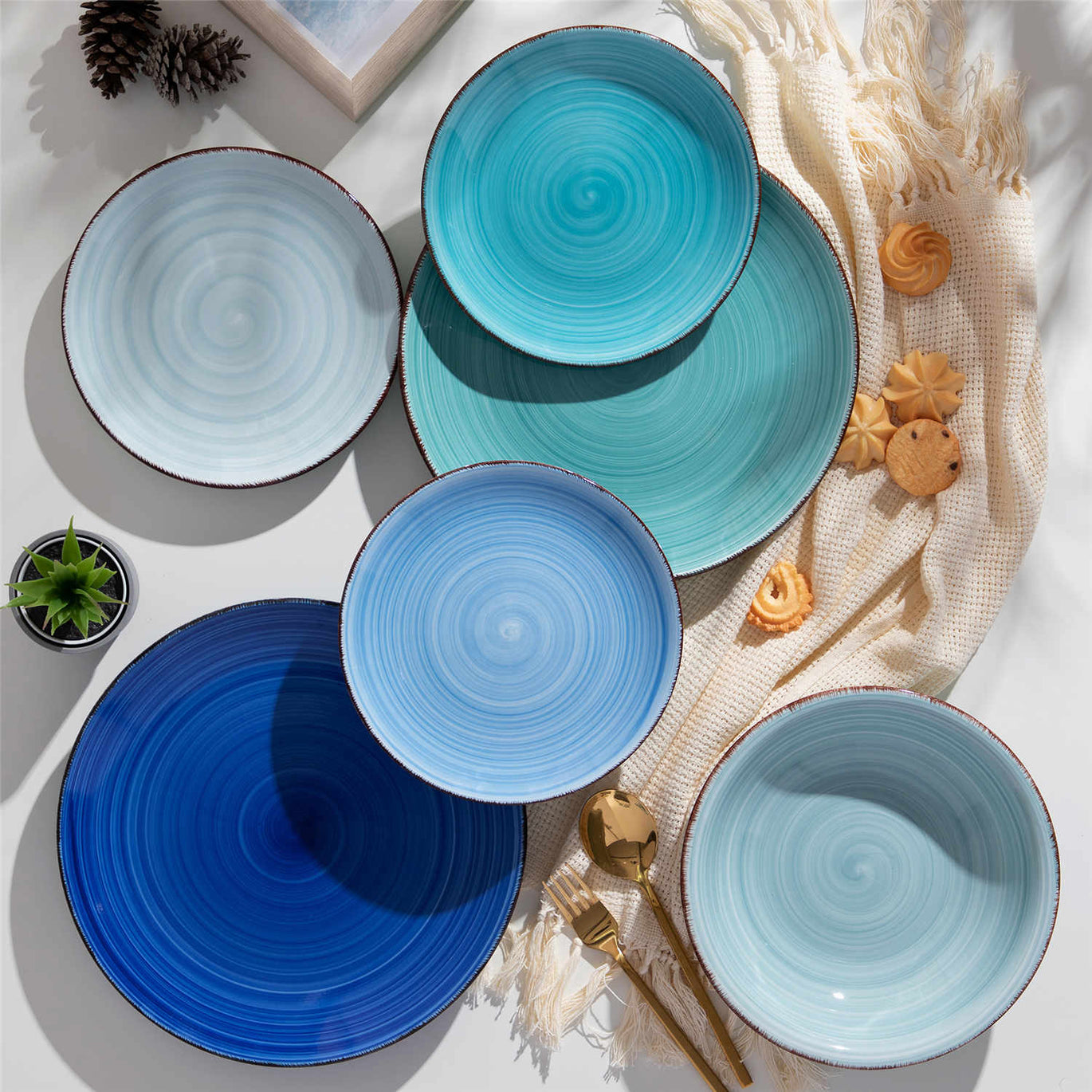


Why So Many Ceramic Tableware Designers Are Women: A Deep Dive from Clay to Table

Setting the Table: When Plates Become a Story
Walk into a design fair, scroll through “feminine dinnerware” searches, or browse artisanal dinner plates inspired by Tuscan hills or Senegalese women, and a pattern emerges: an enormous share of the people sketching, throwing, glazing, and naming these collections are women.
That observation is not just a vibe; it resonates with what anthropologists, design historians, and ceramic artists themselves describe. Across traditional pottery communities, early modern households, Bauhaus classrooms, and today’s Instagram-ready tablescapes, ceramics and tableware have been repeatedly coded as “women’s work” and “feminine taste,” even while they carry real power over how we eat, host, remember, and belong.
Ceramic tableware design sits right where function, ritual, and aesthetics meet. Contemporary dinnerware trend reports describe plates and bowls as core decor tools, emotional mood-shifters, and visual identity markers. A 2025 forecast from a ceramic manufacturer notes that the global ceramic tableware market is expected to grow from about $102 billion in 2024 to roughly $145.5 billion by 2030, and another survey it cites reports that around three-quarters of consumers say tableware design directly affects how they perceive a meal. When that much everyday meaning and money flow through clay, understanding who designs these objects—and why the field skews so heavily female—matters.
In this article, we will explore how deep historical gender roles, the art–craft divide, institutional biases, and current lifestyle trends all converge to make ceramic tableware design a place where women are particularly visible. Along the way, we will touch on pros and cons of this pattern and offer practical ways to support more equitable, joyful, and colorful tables.

What Counts as “Ceramic Tableware Design”?
Before asking why women dominate a field, we need to be clear about what field we are actually talking about.
Ceramic tableware design sits at the intersection of:
- Material knowledge: clay bodies, glazes, firing temperatures, durability, food safety.
- Form and ergonomics: how a plate stacks, how a mug feels in the hand, whether a bowl doubles comfortably as a small serving dish.
- Visual language: color palettes, motifs, surface textures, silhouettes that align with fashion and interior trends.
- Social use: how pieces work in daily meals, holiday feasts, restaurant service, or those cozy “girl dinners” focused on connection rather than elaborate cooking.
Modern trend pieces from brands like MDMAISON, Kim Seybert, Joyye, and others emphasize that dinnerware is now treated as functional art and lifestyle marker. They describe modular collections that mix neutral “capsule” basics with bold accent plates; increasingly tactile matte finishes; nature-inspired color palettes; and handcrafted-looking textures meant to suggest small-batch authenticity even when production is scaled.
In other words, ceramic tableware design is not just about making a plate that survives the dishwasher. It is about choreographing the mood of a meal, carrying cultural stories, and aligning with broader aesthetics from “quiet luxury” neutrals to dopamine-bright pastels. That space has long been associated with feminine-coded skills: care, hospitality, and decorative taste.

A Long History of Women and Clay
Traditional Pottery as Women’s Work
Anthropologist Elizabeth Anne Rothenberger’s thesis on gender roles in traditional pottery production notes a recurring pattern: in many societies around the world, women hold the primary responsibility for making pottery, especially in domestic and household contexts. She documents cases where women shape, dry, and decorate vessels that are used in their own kitchens, markets, and rituals. In other communities, men and women share the process, often dividing tasks such as clay preparation, firing, or intricate painting.
Rothenberger frames these patterns through the concept of gender roles: locally specific norms that organize who does which parts of work. They are not universal biological facts; they are cultural expectations that can change with modernization, market integration, and technology. In some communities, the entry of pottery into tourism markets or larger-scale trade shifts work to men, or brings men and women together in workshop-style production. In others, women’s roles remain remarkably stable for generations.
What matters for our question is that there is a deep precedent for women being the primary experts in clay work tied to everyday food, storage, and hospitality. That expertise lives in muscle memory, family teaching, and local status, even if it rarely shows up in big museum labels or official histories.
Households, Food, and Gendered Labor
Feminist archaeology adds another layer by examining how bodies record daily labor. In a well-known study of Abu Hureyra, archaeologist Margaret C. Molleson analyzed bone deformities in skeletons from a Neolithic settlement. She identified recurring “packages” of bone changes—collapsed vertebrae and arthritis in the toes—associated with long-term grain grinding on quern stones. These patterns occurred predominantly in female skeletons, indicating that grinding grain was mainly women’s work.
Related case studies gathered in a feminist archaeology volume emphasize how domestic labor—food processing, cooking, and serving—was often gendered female. In Mycenaean Pylos, for example, textual, artistic, and isotopic evidence shows palace feasts where elites might consume as much as two tons of meat in a single event. Yet differences in women’s diet and health suggest that many women literally had “no seat at the table.” Their work fed the feast, but their bodies bore different nutritional and social burdens.
When we connect these dots, we see a long-standing link between women, food, and the vessels that make food possible. Women ground the grain, cooked the porridge, and often shaped the pots. Their authority over clay was practical and embodied, even if social and political power around the feast table remained male dominated.
Ceramics as the “Feminine” Design Medium
The Georgian Household: Women, Ceramics, and Taste
Literary and decorative-arts scholarship on Jane Austen’s era offers a sharp snapshot of how ceramics became tied to feminine taste in Western domestic culture. An analysis published by the Jane Austen Society of North America notes that Georgian interiors were explicitly gendered. Solid architectural elements and large furniture in dining rooms and libraries were coded masculine: substantial, serious, dark-toned.
Ceramics, textiles, and moveable storage pieces, by contrast, fell under women’s control. Household account books show that men financed structural refurbishments and grand dinner services with heraldic crests, but women chose and replaced tea sets, breakfast services, and everyday ceramic pieces. The drawing room—defined as a feminine sphere—was the stage where women’s taste appeared in framed drawings, embroidered work, and tea rituals using carefully chosen silver and ceramic implements.
In this world, ceramics were both property and performance. Daughters might receive porcelain in marriage portions; widows might distribute cherished plates and teacups through bequests. A woman’s hosting skills, including the tea and coffee she served and the dishes she presented them in, shaped her reputation. Shopping for ceramics was time-consuming and socially visible, contributing to stereotypes of frivolous female consumption even as men quietly enjoyed shopping and design choices themselves.
That history matters because it establishes ceramics—and especially tableware—as a domain where women were expected to be experts, where their taste was both scrutinized and empowered. They chose patterns, replaced broken cups, and arranged tables. Fast-forward two centuries, and it is not hard to see how that legacy morphs into women leading the design of those very objects.
Bauhaus, Craft, and Channeling Women into Clay
Jump to 1919 and the founding years of the Bauhaus. As recounted in an essay on women in ceramic art, when female applicants outnumbered men at the school, a women-only class was created that included pottery. This decision did not emerge from clay’s inherent properties; it reflected the assumption that certain crafts, particularly ceramics and textiles, were more “appropriate” for women. Men, by contrast, were steered toward metal, architecture, and other disciplines coded as serious and masculine.
The same essay argues that the art–craft divide that still haunts ceramics is artificial. Ceramics inherently require both skilled, teachable making and imaginative, expressive design. Yet institutional structures repeatedly placed women on the “craft” side of that divide. Clay became a medium considered delicate, decorative, and domestic, while painting and monumental sculpture were positioned as high art.
This channeling had a double effect. On one hand, it constrained women’s freedom to choose among all possible mediums. On the other, it allowed them to build deep expertise and innovation within ceramics, a field that was more open to their presence precisely because it was undervalued by patriarchal hierarchies.
Women Using Clay to Rethink Gender
From Everyday Objects to Global Design
Eva Zeisel is a prime example of how a woman designer used ceramics to shape global visual culture. Born in 1906, she trained in traditional European guild systems and went on to design mass-produced wares that are as beloved by collectors as by everyday users. Her 1929–1930 earthenware “Inkwell” and later tabletop collections show how a utilitarian object can become architectonic, sensuous, and color-rich.
The essay on women in ceramic art emphasizes that Zeisel did not reject the “small craft” status of ceramics; she leaned into it and used it as a vehicle for global impact. Her tableware brought sculptural curves and subtle color into ordinary homes, blurring any tidy boundary between art-object and cereal bowl.
This is a pattern we see repeatedly among women ceramicists. Rather than aspiring only to pedestal pieces in white-cube galleries, many choose to work at the scale of the table, the cupboard, and the hand. They bring high design into everyday routines, transforming breakfast plates into quiet sculptures and cake stands into centerpieces that anchor weddings and hotel buffets.
Feminist Ceramics: Bodies, Fairy Tales, and Quiet Power
Contemporary women ceramic artists push this even further by using clay to dissect gender itself.
Alison Petty Ragguette, a ceramicist and professor with around two decades in clay, describes the material as “squishy and fun, playful, stretchy, temperamental and versatile.” Her works, including installations made of porcelain, glass, and tubing, evoke bodily systems and techno-organic networks. They prove that clay can be large-scale, conceptually rigorous, and unapologetically visceral.
Sophie Aguilera Lester uses autobiographical, body-centered ceramic work—such as raw, twisted sculptures of female legs and hips—to confront taboos around the female body. Her pieces are sensuous and politically aware, modeling what one scholar calls a “new female aesthetic”: confident, unapologetically feminine, but not simply reactive or trapped in grievance.
Jen Dwyer’s Rococo-inspired installations take a different route, using pastel porcelain, fairy tale imagery, and details like chains and long nails to critique patriarchal power structures. In her “Dreamer’s Delight” installation, she reimagines fairy tales through a feminist lens, drawing on feminist theorists who treat shared experience as a source of knowledge. Dwyer deliberately plays with what has historically been seen as frivolous “feminine” style—Rococo swirls, pinks, delicate porcelain—and uses it to ask whether work coded as feminine can be taken seriously in contemporary institutions.
All of these artists use clay not only because of its physical properties, but because of its deep association with domesticity, hospitality, and the body. When they design or inspire tableware, those associations come along for the ride. For many women, ceramic tableware becomes a perfect medium to explore care, intimacy, and power while staying anchored to real daily life.

The Market Meets the Studio: Why Today’s Trends Favor This Work
Tableware as Identity, Not Just Equipment
Modern consumer and trend pieces treat tableware as a core identity tool. A 2025 dinnerware trend guide describes how porcelain, ceramic, and white china remain staples, but are now joined by sustainable materials, stackable space-saving designs, and mix-and-match sets. Color is resurging through “dopamine decor” hues and gold-trimmed edges, while handcrafted-looking glazes and irregular shapes signal uniqueness.
Another trend forecast for retailers emphasises “earthy elegance”: nature-inspired glazes, deliberate imperfections, and textures that feel like stone, sand, or wood. Retailers are advised to stock pieces that “visually signal artisanal production” and to highlight sustainability credentials prominently, because eco-conscious buyers now expect them as a baseline.
Meanwhile, articles on “girl dinner” underscore how women frame certain meals as primarily about connection, relaxation, and memory-making rather than elaborate cooking. The tableware in these scenes—dark blue porcelain plates for a chic look, transparent glass plates for relaxed gatherings, mix-and-match ceramic plates for bohemian vibes—is described as central to setting the tone of the night. The art of table setting becomes a way to turn a simple spread of snacks into a full sensory experience.
For Gen Z, tableware is explicitly part of self-branding. A hospitality-focused piece on why Gen Z cares about tableware notes that younger diners treat plates and cups as extensions of personal identity and interior style; they mix thrifted vintage with modern designs, display dishes openly, and seek photogenic tablescapes for social media. Sustainability, ethical production, and inclusive, gender-neutral designs are all decisive factors.
In this landscape, ceramic tableware design is not niche; it is emotionally loaded, visually public, and morally charged. Designers must think about psychological color effects, social media impact, and the ethics of materials and labor. Those concerns align closely with themes that women's ceramic practices have been developing for decades: care, storytelling, sustainability, and critique of power.
Storytelling, Heritage, and Women-Led Collections
Consider how some unique dinnerware collections are framed. One writer who specializes in dinnerware argues that truly “unique” sets must have a story, cultural roots, or a special making process, not just a trendy shape. She highlights:
- A Russian artist who spent years traveling through woodlands and now imprints those memories into handmade ceramic plates and bowls.
- Faty Ly, who discovered her passion for ceramics in Burkina Faso, trained in London, and now designs Limoges-made collections in Senegal honoring African culture and Senegalese women.
- Marjorie Wallace and Jairos Zangira, who create Mutapo pottery in Zimbabwe using traditional techniques and motifs drawn from basket weaving and African prints.
These examples, many by women or in collaboration with women, show how tableware has become a carrier of personal and cultural narratives. Collectors are urged to ask who made the plates, which stories they embody, and how these stories can spark conversation at the table. That emphasis on narrative, memory, and heritage dovetails strongly with feminist ceramic practices.
At the same time, trend reports from companies like Joyye and Yongjian describe hospitality clients commissioning customized ceramic sets tailored to specific menus, brand stories, and spatial constraints. They recommend “artistic series” that function as both practical objects and focal points, with glazes, patterns, and color gradients designed to evoke nature, abstraction, or cultural motifs. Again, this is precisely the kind of space where ceramicists who are skilled in both craft and conceptual storytelling thrive.
Why Women, Specifically? Key Drivers and Tensions
There is no single cause or definitive statistic that explains why so many ceramic tableware designers are women. Instead, research and practice point to overlapping factors that draw women into this medium while also revealing ongoing tensions. The table below summarizes a few of them.
Factor |
How it draws many women in |
Hidden tension or cost |
Historic association of women with pottery and food work |
Traditional societies often assign pottery making and food-related ceramics to women, building deep multigenerational expertise and comfort with clay. |
That same association can naturalize unequal labor, tying women to unpaid or undervalued domestic work rather than recognized, well-paid design roles. |
Domestic authority over tableware choices |
In Georgian households and beyond, women controlled ceramics as moveable property and as tools of hospitality, refining strong aesthetic judgment around table settings. |
Taste coded as feminine is often dismissed as trivial “decorating,” even when it shapes brand identity and social status. |
Institutional channeling into “feminine” crafts |
Schools like the Bauhaus steered women into ceramics and textiles, giving them access to training and studio spaces in clay. |
Ceramics remained less prestigious than male-coded disciplines like metal or architecture, contributing to lower pay and recognition. |
Ceramics as bridge between art and craft |
Clay allows designers to combine technical skill with imaginative expression, which many women artists embrace as a way to impact daily life without abandoning conceptual depth. |
The art–craft divide persists, and women’s ceramic work may still be seen as decorative or secondary compared with painting or sculpture, affecting museum representation and critical attention. |
Market demand for story-rich, sustainable, “feminine” aesthetics |
Current trends reward storytelling, sustainability, emotional color palettes, and handcrafted looks, all areas where women ceramicists have been especially vocal and inventive. |
When these values are coded as feminine, men may be rewarded as “visionaries” when they adopt them, while women’s contributions are treated as expected or niche. |
Flexible career paths and studio structures |
Small-batch pottery studios, teaching, and online marketplaces provide relatively accessible ways for women to build careers, sometimes around caregiving schedules. |
Flexibility can mask precarity: inconsistent income, lack of benefits, and the expectation that women will accept lower pay for “doing what they love.” |
The essay on women in ceramic art cautions against reducing all of this to either pure social construction or pure “natural” femaleness. It proposes a hybrid approach that acknowledges both the ways social structures shape women’s choices and the fact that many women genuinely feel drawn to clay as a medium that resonates with their own experiences of embodiment, care, and history.

Practical Ways to Support Gender Equity in Ceramic Tableware
For Home Cooks and Hosts
If you love colorful tabletops, you wield more power than you might think. When you choose dinnerware, you are voting for certain production systems, narratives, and gender dynamics.
Start by looking for information about who designed and made a collection. Many brands now highlight designers by name and share studio stories. When a collection clearly honors women’s contributions—whether a Senegal-based designer honoring African women or a Wisconsin studio where a single painter has been decorating pieces for decades—consider directing your dollars there.
Treat dinnerware as more than a “Target sale find.” There is nothing wrong with affordable basics, but adding even a few pieces with clear authorship and cultural grounding can shift your table from anonymous to storied. That might be a hand-painted salad bowl with motifs from your own heritage, a vintage porcelain plate set from a long-running European maker, or a small artist’s platter picked up at a local market.
At the same time, resist assumptions about what “feminine” tableware must look like. Feminine dinnerware on marketplaces often defaults to florals and pastels. There is no reason a woman-designed collection cannot be brutalist, monochrome, or boldly geometric. Choose pieces that reflect the actual personalities around your table rather than stereotypes.
For Retailers and Hospitality Professionals
Trend briefings aimed at retailers and hotels make clear that tableware is now a strategic investment. Upgrading ceramic sets can raise guest satisfaction; diners notice plate design and associate it with quality. If you are curating for a restaurant, hotel, or online shop, you can use that leverage in a way that supports gender equity.
Begin by auditing your assortment. How many of your featured ceramic artists and designers are women? How many are women of color or from communities whose cultural motifs you use in patterns and glazes? This is not about quotas but about making implicit patterns visible.
When you work with manufacturers, ask specifically about design authorship. If a series is based on traditional Zimbabwean motifs or Senegalese textiles, is a designer from that culture involved and credited? Are they compensated beyond a one-time fee?
In your storytelling, move beyond generic phrases like “handcrafted look” and “artisan-inspired” and toward real names and places. Consumers interested in sustainable, ethical tableware are often equally interested in the human stories behind it. Highlight women’s studios, design partnerships, and the feminist or community-oriented ideas that inform their collections.
For Designers and Students of Any Gender
If you are drawn to clay and tableware, understanding this gendered history is not a reason to avoid the field; it is a resource.
Acknowledge the lineage you are stepping into. Women before you have used ceramics to hold households together, to reimagine domestic space, to critique patriarchy, and to bring avant-garde forms into breakfast routines. Read their work, from Eva Zeisel’s mass-produced curves to Jen Dwyer’s Rococo feminist fantasies. Notice what resonates and where you want to diverge.
Resist pressure to fit neatly into what a “woman ceramic designer” supposedly looks like. If your sensibility is sharp-edged, minimal, or conceptually icy, that is as legitimate as romantic floral plates. If you are a man or nonbinary designer working in tableware, do the gender work too: be conscious of not reproducing old hierarchies where men occupy the high-prestige, theory-heavy end of ceramics while women are relegated to “pretty product.”
Most importantly, treat tableware as serious cultural work. The plates you shape will mediate daily rituals, holidays, political conversations over dinner, and quiet solo meals. That is a powerful place to stand, regardless of gender.
Brief FAQ
Does saying many tableware designers are women mean men do not belong in this field?
Not at all. Historical and contemporary evidence shows that both men and women make pottery and design tableware. What the research highlights is that social structures have often pushed women into ceramics and coded it as feminine, while giving men easier access to higher-prestige mediums. A healthier future for the field involves people of all genders working in clay, with equal respect, pay, and recognition.
Is “feminine” tableware just pastel florals and scalloped rims?
No. While pastels and florals are common in marketing categories labeled feminine, the deeper “feminine” coding comes from associations with domesticity, serving, care, and decoration. Many women ceramicists deliberately reject or reinvent those aesthetics, using bold colors, abstract forms, anatomical references, or even unsettling Rococo kitsch to explore gender on their own terms.
If ceramics have been historically undervalued, is choosing them as a medium a disadvantage?
There can be structural disadvantages, such as lower market prices compared with painting, or fewer major museum slots. But as the essay on women in ceramic art argues, ceramics’ position between art and craft also offers freedom. It allows artists and designers to reach people in everyday life and, in today’s market, to tap into a growing demand for functional objects that carry depth, sustainability, and story.

A Closing Note from the Colorful Tabletop
Clay remembers. It remembers the grind of ancient grain, the quiet power of a hostess pouring tea, the Bauhaus student steered from metal to pottery, the Rococo pastel that hides a critique of patriarchy, the girl dinner that turns a weekday into a miniature celebration.
When you set your table with a plate designed by a woman, you are not just choosing a color or a rim shape. You are touching a long, complex history of gendered labor, artistic ingenuity, and domestic reinvention. The invitation now—for designers, retailers, and home cooks alike—is to honor that lineage while widening the circle, so that the joy and power of ceramic tableware belong to everyone gathered around the table.

References
- https://classics.barnard.edu/engendering-past-practices-and-potentials-explicitly-feminist-archaeology
- https://www.academia.edu/8083311/New_Perspectives_on_Women_in_Ceramic_Art
- https://honors.libraries.psu.edu/catalog/29146
- https://jasna.org/publications-2/persuasions-online/volume-43-no-1/zohn/
- https://www.researchgate.net/publication/368587461_Miss_Lyon's_Choice_Gender_and_Ceramic_Material_Culture
- https://ceramamadinnerware.com/Dinner_Plates/1739167179985.html
- https://www.dishesonly.com/collections/dinner-sets?srsltid=AfmBOopwHmcOsyr2FITS4wwmGtR2QEBCODjSCnTZ2gy8KyZH7Lssy6YU
- https://www.etsy.com/market/feminine_dinnerware
- https://www.heathceramics.com/collections/dinnerware-sets?srsltid=AfmBOoqOArQTEDtdZZ_96SrKB7ZR5MB5mmHJAnhwqy0h9p9zythFtso-
- https://www.joyye.com/info-detail/trends-in-ceramic-tableware-in-2025
Sie können auch mögen
Stern 16 Stück Geschirr Set
- Von €67,95
€90,95- Von €67,95
- Stückpreis
- per
-
Blue
-
Green
-
Red
-
Grey
Bonita 18-teiliges Geschirrset
- Von €56,95
€70,95- Von €56,95
- Stückpreis
- per
-
Blue
-
Multicolor
Simi 24 Stück Geschirr Set
- €90,95
€121,95- €90,95
- Stückpreis
- per
Starry 16-teiliges Geschirrset
- €69,95
€81,95- €69,95
- Stückpreis
- per
-
Blue
-
Green
-
Red
-
Gradient Green