



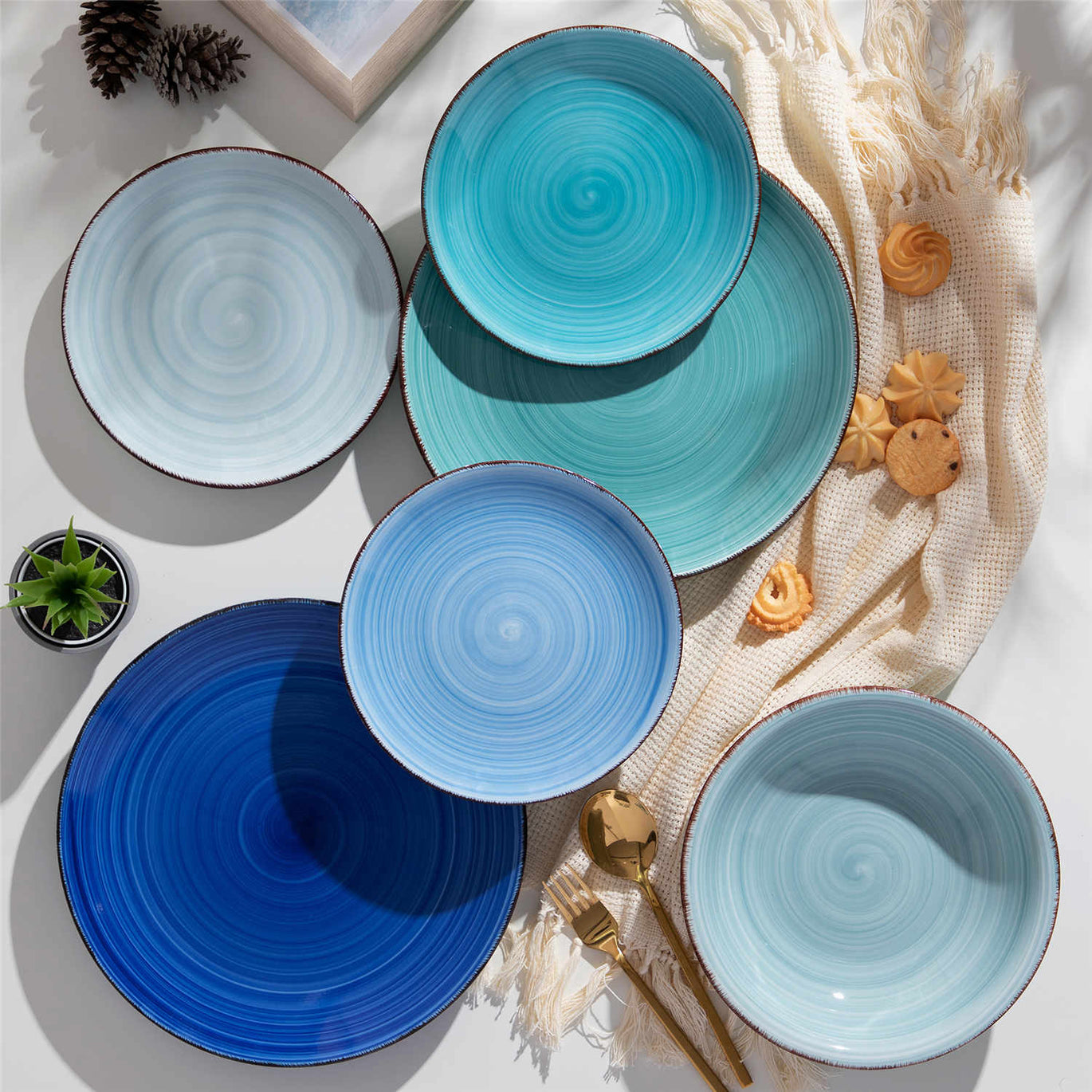


The Preference for Lightweight Ceramics in Earthquake-Prone Areas

Imagine this: the table is set in joyful technicolor, every bowl a tiny sunrise, every plate a painter’s canvas. Then the ground murmurs, the glasses hum, and you suddenly become acutely aware of one thing you rarely think about when picking dishes: weight.
As a colorful tabletop curator who works with homes and hospitality spaces along seismic belts, I’ve learned that choosing ceramics in earthquake country is not just about aesthetics or even durability. It is about how gracefully your pieces ride out a jolt. The same physics that guide engineers designing bridges and high-rise facades can quietly shape the plates on your dinner table.
In recent years, structural engineers, material scientists, and ceramic manufacturers have converged on the same conclusion: lighter, smarter ceramic systems can perform better under seismic loads when they are properly designed and detailed. From structural lightweight concrete and autoclaved aerated concrete blocks to slender lightweight tiles and advanced nano-ceramics, the trend is clear. The big question for us at the tabletop scale is how to translate that knowledge into safer, more joyful everyday dining.
Let’s set the table with science and style and explore why lightweight ceramics are increasingly preferred in earthquake-prone areas.
When the Ground Moves, Weight Becomes a Force
In seismic engineering, designers often describe earthquake force in a simple way: it is roughly proportional to the mass of what is shaking. Turkish engineers writing about lightweight building panels explain it straightforwardly: when the earth accelerates, a heavier structure or element generates higher inertial forces. The same ground motion that gently nudges a light object can whip a heavy one into a dangerous projectile.
This is why earthquake-aware roofing specialists emphasize lighter roofs: heavy clay tiles, water-absorbing and brittle, can become a serious hazard when they break loose, while lighter metal roofing tends to impose smaller seismic forces on the structure. Similarly, structural engineers and building codes in seismic regions increasingly favor lightweight cladding and non-structural components, because reducing unnecessary weight on the building frame lowers the demands on beams, columns, and foundations.
Translate that to a dining room: the heavier the ceramic platter on a high shelf, the more force it will carry into the shelf bracket, the cabinet anchors, and ultimately your floor and your feet during a violent shake. Weight that feels reassuringly “solid” in the hand becomes a liability when it starts moving fast.
This does not mean that all heavy ceramics are bad or that all light ones are automatically safe. It means that mass is not neutral. It is a design parameter, just as important as color, shape, and glaze, especially where the earth likes to dance.

What Counts as “Lightweight Ceramics”?
The term “lightweight ceramics” shows up in different ways across research and practice, so it helps to separate the structural world from the tabletop world before we blend them back together.
Structural lightweight ceramics from recent research
In construction and infrastructure, “lightweight” has a specific meaning. Engineers are not just chasing delicate aesthetics; they are balancing seismic performance, energy efficiency, cost, and durability.
Several research and industry examples illustrate this.
Engineers writing about autoclaved aerated concrete, or AAC, emphasize that AAC blocks are roughly three to four times lighter than traditional fired bricks, yet they still offer good compressive strength. Their air-filled structure lets walls carry much less mass, which directly reduces seismic inertia forces while also absorbing and damping vibration as shaking passes through.
A study published in Nature on plastered cellular lightweight concrete (CLC) block masonry walls found that these lightweight walls, when confined appropriately, had very high displacement ductility. In tests, wall specimens endured storey drifts approaching about 0.8 percent while maintaining load-carrying capacity, showing that well-detailed lightweight block walls can deform significantly without sudden collapse. Their maximum resistance was lower than some conventional brick walls and stiffness degraded quickly after cracking, but they offered impressive ability to flex and dissipate energy instead of failing abruptly.
Structure-focused articles on structural lightweight concrete report similar themes. Using lightweight aggregates made from expanded shale, clay, or slate produces concretes that are 15 to 35 percent lighter than normal-weight mixes while still achieving required strengths. Case studies of bridges, airports, and stadiums demonstrate that these reduced densities can cut the number of piles, shrink foundations, and lower seismic demands on piers and frames. Additional benefits include improved thermal insulation, internal curing that reduces cracking, and fire ratings that meet stringent codes.
In Europe, the ELISSA project on lightweight steel-framed dry-wall systems showed that light, prefabricated walls can be at least 75 percent lighter and about 45 percent thinner than standard brick walls, yet still satisfy seismic, fire, sound, and energy regulations. Mock-up buildings with these walls performed well under seismic tests and delivered substantial energy savings, demonstrating that “lightweight” does not mean “fragile” when design is holistic.
Ceramic technology feeds into this in multiple ways. Technical overviews of construction ceramics highlight porous, lightweight tiles and panels that combine high compressive strength with low thermal conductivity, chemical resistance, fire resistance, and low water absorption. New manufacturing methods have created lightweight yet strong ceramic building elements, along with self-cleaning surfaces and complex 3D-printed forms. Facade and roofing guidance stresses that, when heavy ceramic cladding or tile roofs are used in seismic zones, their connections must be ductile, tested, and detailed to accommodate inter-story drifts without panels or tiles tearing loose.
From Taiwan to New Zealand, regulators and practitioners echo the same message: heavy structural and non-structural materials increase risk, while lighter, well-connected systems can better ride out quakes and protect people.
Everyday lightweight ceramics on your table
On the tabletop, we rarely talk about AAC or CLC, but the material logic is similar. A so-called “lightweight” plate or bowl typically achieves lower weight through one or more tricks:
It may have thinner walls, thanks to refined forming and firing technologies that let porcelain and stoneware develop high strength even at lower thickness.
It may incorporate a degree of porosity or a specially engineered body composition inspired by porous construction ceramics, which can decrease density while maintaining compressive strength.
It may be part of a larger system, such as lightweight ceramic tiles on walls and countertops, which reduce overall load on cabinetry and structural framing.
Modern construction ceramics literature describes ceramic bodies with high compressive strength, low thermal conductivity, and low water absorption that resist chemicals, fire, and environmental wear. These same properties—strength, thermal stability, resistance to staining and moisture—are exactly what we want in hard-working, everyday tableware. The difference is that at the tabletop scale, the goal is to pack those properties into something your wrist loves to lift, again and again.
Here is a simplified comparison that links the structural world to the tabletop world.
Aspect |
Heavy ceramic items |
Lightweight ceramic items |
Typical examples |
Thick stoneware platters, dense floor tiles, classic clay roofing tiles |
Thin porcelain plates, lightweight wall tiles, engineered “slim” ceramic slabs |
Mass and inertia |
High mass, high inertial force under shaking |
Lower mass, lower inertial force for the same motion |
Seismic behavior in structures |
Increases seismic load; needs very robust supports and connections |
Reduces seismic load; easier to keep attached and intact |
Everyday feel |
Substantial in the hand, can be tiring and hits surfaces hard if it falls |
Nimble to handle, less load on shelves and brackets |
The key insight for us as tabletop enthusiasts is that weight is not just a comfort issue; it is part of a wider seismic strategy already used in engineering.
Why Seismic Engineers Love Lightweight Ceramics (and Why You Might Too)
Let’s connect the dots more directly. When structural and materials engineers choose lighter ceramic systems, they are typically chasing five intertwined advantages: reduced seismic demand, better energy performance, faster construction, improved sustainability, and manageable cost. Many of these map directly onto the way we design kitchens, dining rooms, and cafes.
Seismic demand comes first. Lightweight structural systems, such as those described by engineering firms and code commentaries, reduce “dead load,” the permanent weight of a building. This reduction cuts the lateral forces generated during an earthquake. Confined lightweight masonry walls like the CLC systems studied in laboratory tests show that adding confinement and good detailing allows these lighter walls to dissipate energy and undergo large deformations with high ductility, instead of shattering. Lightweight claddings and roofing systems used in post-earthquake reconstructions in places like Christchurch demonstrated that buildings with light, flexible envelopes often fare better than those clad in heavy masonry or stone.
Energy and comfort are a close second. Research on porous and lightweight ceramics highlights their low thermal conductivity. In building envelopes, this helps maintain indoor temperatures and cut heating and cooling loads. In your home, ceramic tiles and backsplashes with similar properties can help keep kitchens comfortable while standing up to heat from ovens and stovetops.
Sustainability and cost round out the picture. Lightweight construction systems, including lightweight tiles, AAC blocks, and structural lightweight concrete, often use less material mass to achieve performance, reducing raw material use and transportation-related emissions. Some editorial and technical sources also emphasize that recycled ceramic materials and lightweight aggregates can turn waste streams into durable building products. While individual elements may cost more per unit, project-level savings appear through smaller foundations, less reinforcing steel, faster installation, and lower operational energy demand.
As a tabletop curator, I see a parallel at smaller scale. Lightweight ceramic dishes:
Place less load on shelves, wall anchors, and cabinets, reducing the stress on fasteners and studs during a quake.
Are easier to move and wash, which matters when you are quickly clearing or resetting tables after tremors.
Put less torque on your wrists and shoulders, especially in restaurant settings where servers may carry multiple plates at once.
And if the worst happens and something flies, a lighter bowl carries less kinetic energy when it lands, which can mean fewer cracked countertops and slightly gentler collisions.
None of this eliminates risk, but it shifts your whole dining environment in a more forgiving direction.

Pros and Cons of Lightweight Ceramics in Earthquake-Prone Homes
Lightweight ceramics are not a magic shield, so a pragmatic look at advantages and trade-offs keeps us honest.
The upsides: safety, comfort, and sustainability
From a safety perspective, lower mass is the headline advantage. Roofing specialists note that lighter roof systems, properly fastened, reduce the risk of catastrophic collapse and are easier to tie securely to walls with metal straps and connectors. Cladding experts point out that lighter facade panels impose less demand on their support brackets and connections. By analogy, lighter tiles on a kitchen wall or lighter ceramic organizers on a floating shelf reduce the load those anchors must carry when the wall sways.
Research on lightweight structural systems also shows comfort benefits. Lightweight concrete and porous ceramic components provide better thermal insulation, keeping floor slabs warmer underfoot and reducing temperature swings. The same micro-porosity that helps a structural panel insulate can keep a ceramic countertop or platter from feeling icy or burning hot, creating a more tactile, inviting experience.
Sustainability flows naturally from reduced material weight. Studies on lightweight structural concrete, AAC blocks, and lightweight tiles highlight lower transportation emissions, less cement and steel, and better operational energy performance. Some construction editorials call for replacing heavy, resource-intensive materials with lighter recycled ceramics and other eco-friendly options, aligning seismic safety with circular-economy goals. Lightweight tiles used on high-rise facades and interiors, for example, can deliver the same scratch and moisture resistance as thicker tiles with less raw material and fuel used in their production and transport.
The trade-offs: strength, perception, and detailing
There are trade-offs, and they matter.
Experimental comparisons between CLC block masonry and traditional brick masonry reveal that lightweight block walls may have lower peak lateral strength and faster stiffness degradation after cracking, even though they can undergo large drifts. In plain language, they bend more before failure but carry somewhat less maximum load and lose stiffness quickly once damage starts. Engineers respond to this by adding confinement, designing proper boundary elements, and carefully detailing connections.
At the scale of tableware, this translates to a simple reality: some ultra-light pieces may feel more flexible or delicate. A wafer-thin porcelain plate might chip more easily at the rim if mishandled, even if its core strength is excellent. Lightweight tiles, if not matched with the right adhesive and backing, can be vulnerable to impact or detachment. Manufacturers address this with strict testing regimes—checking load-bearing capacity, water absorption, slip resistance, impact resistance, and fire performance—before releasing lightweight tile lines for floors and facades.
Cost and familiarity are the other hurdles. Advanced ceramics like nano-ceramic structural components and energy-generating tiles are still premium, and many contractors and homeowners feel more comfortable with the heavy, familiar products they have always used. Building-code provisions and design guidelines for some lightweight systems are evolving; architects and engineers must stay current and interpret new research thoughtfully.
In domestic spaces, however, the risk of over-optimizing is smaller. Choosing a slightly lighter everyday dinner set rarely demands a code review, and upgrading wall tiles from chunky stone to slim porcelain is mostly a question of budget, installer skill, and taste.
To summarize the balance, imagine a quiet little comparison standing behind every purchase.
Dimension |
Lightweight ceramics in structures |
Lightweight ceramics in tableware |
Seismic performance |
Lower seismic forces, high ductility when detailed well |
Lower falling energy, easier on shelves and anchors |
Durability |
Needs proper detailing to avoid rapid stiffness loss |
Needs thoughtful handling to avoid chipping, but can be very long-lasting |
Comfort and energy |
Better insulation and reduced cracking |
Easier to handle, kinder to wrists, often nicer thermal feel |
Sustainability |
Less material and transport load over life cycle |
Less mass per piece and often more efficient firing and shipping |
The lesson is not to fear heaviness but to choose it deliberately, not by default.
Setting a Joyful, Earthquake-Savvy Table
Now for the fun part: translating all this structural wisdom into a table that is both color-charged and quake-conscious.
Choosing plates, bowls, and serving pieces
Start with everyday workhorses. In earthquake-prone regions, I look for dinner plates that feel light enough to hold comfortably in one hand without strain. That sweet spot varies from person to person, but the principle is simple: if lifting a stack of six plates makes your forearms protest, it is also stressing your shelves and brackets more than necessary.
Modern porcelain and refined stoneware bodies can offer high compressive strength and excellent resistance to wear, just like the ceramic building materials described in construction research. Look for pieces that are described as chip-resistant, fully vitrified, or engineered for hospitality use; these often combine thin profiles with robust formulations.
Serving pieces are where we can easily overdo mass. That hand-thrown platter the size of a small moon is a delight, but in earthquake country it belongs low and inward on solid furniture, not perched high and proud on a floating shelf. When setting up a dining room, I group the heaviest pieces on the bottom shelves of closed cabinets and reserve open shelving for lighter bowls, cups, and decorative items.
Color, shape, and stacking strategies
Shape influences seismic behavior more than we might expect. Structural cladding experts warn about re-entrant corners and irregular geometries that create stress concentrations. At the tabletop scale, narrow-footed, tall vessels behave like those problematic corners: they are elegant but easily toppled.
Favor bowls with a generous footprint and plates with subtle curves rather than very tall rims that raise the center of gravity of a stack. When stacking plates, avoid towers that climb toward cabinet ceilings. Lower stacks mean lower potential energy and less chance of catastrophic cascading if a cabinet door pops open during a jolt.
Color and pattern become tools for safety as well as delight. In homes where quick access matters, I often specify brighter, high-contrast colors for everyday pieces stored low, while keeping more fragile statement pieces higher up but close to walls, where motion is smaller. The goal is to make it visually intuitive to grab the right, safer pieces under stress.
Storage that moves with the building
Structural guidance on seismic safety of building envelopes emphasizes that cladding, glazing, and roofing must be detailed to move with the frame. Connections should be ductile and forgiving, not brittle. We can mirror that logic in our storage.
Cabinets that store dishes in seismic zones should be anchored to wall studs, not just drywall. Earthquake latches or magnetic catches on doors keep them from flying open. For open shelving, continuous rails or lips at the front edge provide a crucial stop; think of them as tiny version of the ductile tie-backs used for precast panels.
Non-slip liners on shelves and earthquake putty beneath special pieces can add an extra frictional hug, especially for displays. What matters is that your storage system can drift a little with the walls without your favorite bowl making a break for it.

Restaurants and Hospitality: Colorful Safety at Scale
If you run a cafe, bar, or restaurant in an earthquake-prone region, the stakes and opportunities amplify.
Lightweight structural systems are already recommended for such buildings, because lower mass means fewer seismic demands and often smaller foundations. Articles on structural lightweight construction systems and claddings show that substituting lightweight wall and floor systems can improve acoustic comfort, reduce energy use, and cut construction time, all while enhancing seismic resilience.
At the front-of-house, your tableware and decor act like miniature claddings. Choosing commercial-grade lightweight porcelain or high-alumina ceramic lines reduces the weight that servers carry and the load on storage racks and dishwashers. Smaller stacks of plates, thoughtfully distributed, can prevent dangerous avalanches in busy pass-through windows and prep stations.
Back-of-house, specify lightweight tiles for walls and floors where possible. Reports on high-rise buildings note that lightweight tiles with carefully tested strength and low water absorption can significantly reduce dead load while still resisting abrasion, impact, and moisture. That is good news for long bar lines, feature walls, or expansive restrooms that already demand a lot of structure.
The key is integration. Just as façade and cladding experts urge early collaboration among architects, structural engineers, and cladding specialists, restaurant projects in seismic zones benefit when interior designers, kitchen planners, and structural engineers sit at the same table early on.

Looking Ahead: Nano Ceramics and Smart Surfaces
Ceramic research is not standing still, and the future of quake-savvy ceramics looks surprisingly high-tech.
Nano ceramics, described in conceptual articles on earthquake-resistant structures, are engineered at the nanoscale to achieve remarkable strength-to-weight ratios and improved ductility compared with conventional ceramics. Instead of shattering abruptly, well-designed nano-ceramic components can bend and dissipate energy, absorbing seismic shock more gracefully. While these technologies are currently aimed at structural components and critical infrastructure, the same principles could eventually inspire consumer ceramics that are both feather-light and exceptionally tough.
In construction ceramics, innovators are already bringing intelligence to surfaces. Overviews of sustainable ceramic materials discuss self-cleaning tiles that use coatings activated by sunlight to break down dirt, reducing maintenance needs for high facades. There is also work on smart ceramics that embed sensors for real-time structural monitoring, as well as energy-generating photovoltaic ceramic tiles that contribute electricity to buildings.
Three-dimensional printing of ceramics, discussed in materials science journals, allows the creation of intricate, optimized forms with minimal waste. For structural applications, this means tailored components that put material only where needed. For tableware, imagine future collections where the underside of a plate is a hollow, latticed structure, optimized not just for weight and strength but for how it slides across a tablecloth and how it feels in your hand.
Retrofitting research offers yet another glimpse of what is coming. Composite systems that combine insulating lime-based plasters with basalt textile reinforcement, studied as FRLM composites, show that a single lightweight layer can improve both seismic capacity and thermal performance of historic masonry. It is not a stretch to imagine similar hybrid thinking entering kitchen and dining product design: glazes and bodies designed to manage heat, moisture, and shock all at once.
The common thread across all of this work is alignment: lower mass, better energy management, smarter behavior under stress.
FAQ: Lightweight Ceramics and Quake-Safe Tables
Are lightweight ceramics automatically safer in earthquakes? Not automatically, but they start with an important advantage. Lower mass means lower inertial forces when the ground accelerates, which is why structural engineers repeatedly favor lightweight systems in seismic regions. However, detailing and connections matter just as much. A very light tile poorly attached to a wall can still become dangerous. For tabletop pieces, think in terms of systems: combine lighter dishes with well-anchored cabinets, shelf lips, non-slip liners, and sensible stacking.
Do lightweight ceramic plates break more easily than heavy ones? Not necessarily. Research on structural lightweight and porous ceramics shows that you can achieve high compressive strength and even good ductility at lower density when the material is engineered carefully. Many commercial “lightweight” porcelain and stoneware lines are tested rigorously for impact and chip resistance. What changes is the feel: thin rims may need a bit more mindfulness in handling, but in exchange they are kinder to shelves, hands, and structures when shaking starts.
Should I replace all my heavy tableware if I live in an earthquake zone? There is no need for an all-or-nothing approach. Structural practice shows that the biggest seismic gains come from reducing unnecessary mass and securing critical elements. You can apply the same idea at home by first anchoring cabinets, adding latches and shelf rails, and relocating the heaviest, most hazardous pieces to low, stable storage. Over time, as you refresh your collection, favor lighter, well-made ceramics for everyday use, and reserve your heaviest pieces for special occasions and safer positions.
Closing: Joy, Lightness, and Resilience at the Table
In earthquake country, a joyful table is not one that ignores physics; it is one that dances with it. Lightweight ceramics, inspired by the same engineering logic that shapes resilient bridges and buildings, let you set color-soaked, personality-rich tables that are kinder to your body, your home, and your sense of security. When the ground eventually moves, you will be glad your plates, like your plans, chose lightness with intention.
References
- https://my.civil.utah.edu/~bartlett/LCC/misc/Lightweight%20cellular%20concrete%20for%20geotechnical%20applications.pdf
- https://www.wbdg.org/resources/seismic-safety-building-envelope
- https://www.structuremag.org/article/structural-lightweight-concrete-contributes-to-seismic-resistance/
- https://www.researchgate.net/publication/328674390_Lightweight_fiber-reinforced_clay_as_a_sustainable_material_for_disaster_resilient_architecture_of_future_buildings
- https://www.azobuild.com/article.aspx?ArticleID=8367
- https://journals.ekb.eg/article_361437_e14da723878053bd9c0e76c8cb49be1c.pdf
- https://www.cdohomebuilder.com/post/advantages-of-structural-lightweight-construction-systems
- https://geoblocks.co.in/the-seismic-benefits-of-using-aac-blocks-in-homes/
- https://symetrix.co.nz/lightweight-structural-systems/
- https://www.gcoportal.com/optimising-seismic-design-with-structural-lightweight-concrete-enhancing-safety-and-efficiency/
Sie können auch mögen
Stern 16 Stück Geschirr Set
- Von £58.00
£77.00- Von £58.00
- Stückpreis
- per
-
Blue
-
Green
-
Red
-
Grey
Bonita 18-teiliges Geschirrset
- Von £49.00
£61.00- Von £49.00
- Stückpreis
- per
-
Blue
-
Multicolor
Simi 24 Stück Geschirr Set
- £77.00
£104.00- £77.00
- Stückpreis
- per
Starry 16-teiliges Geschirrset
- £60.00
£70.00- £60.00
- Stückpreis
- per
-
Blue
-
Green
-
Red
-
Gradient Green