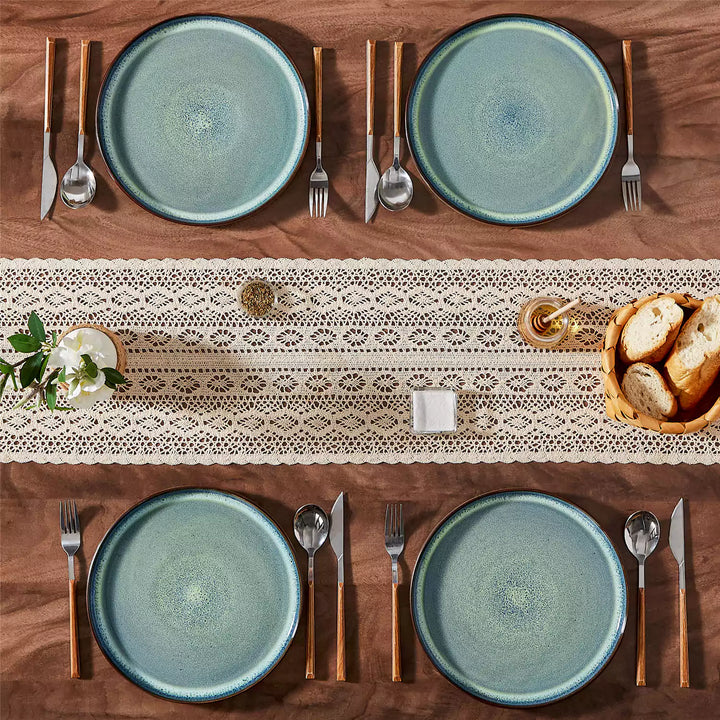


When a new set of ceramic dinnerware arrives, it is natural to inspect every plate, bowl, and cup for differences. However, not every variation means something is wrong. The firing process can create subtle variations in color, texture and pattern in the glaze of dinnerware, especially reactive glaze dinnerware. At the same time, genuine defects such as cracks, chips, sharp edges, or serious instability should never be dismissed as part of an artisan-style finish.
Knowing what to look for after delivery can help you enjoy your new ceramic plates while making it easier to report legitimate concerns.
Why Handmade-Look and Reactive Glaze Dinnerware Pieces Look Different
One of the reasons for the popularity of reactive glaze dinnerware is its unique look. The glaze may change in color, depth, and surface during firing, due to reaction with heat and other materials. This does not imply that two items from the same collection will be an exact match.
This is also true for handmade ceramic plates and dinnerware designed to look handmade. There can be a slight difference in color in one part of one plate, and a different pattern of speckles or glaze movement in another part of the same plate. These differences can be part of the intended visual character rather than evidence of poor quality.
Understanding what reactive glaze is can therefore help set realistic expectations: the finish is designed to have visual variation, not a completely uniform surface.

Normal Variations: Color Depth, Speckles, Shape, Texture, and Foot Rings
There are a number of features that can vary from one ceramic to another. One of the most obvious is the variation in color. A glaze can be lighter, darker, warmer or more concentrated in various places on the same piece or in a set.
The speckles may also be different in number, size and location. The speckles may be more visible on one plate than the other, but the plate is not defective. Slight differences in shape or texture may also occur, particularly with dinnerware intended to create a handmade or handcrafted look.
The foot ring (unglazed part of the bottom of a plate or bowl) may be different in color than the glazed surface. If there are minor differences in the finish or coloration, this does not necessarily mean there is a problem. The key point is whether the piece is structurally sound, stable and safe to handle.
Potential Defects: Cracks, Chips, Sharp edges, and Exposed Ceramic
Not all imperfections are necessarily normal. If there are cracks that penetrate the ceramic, or cracks that can be seen in the structure, you should stop using the affected piece and contact customer service. Sharp areas can be caused by chips, particularly around the edge, and should also be reported.
Visually inspect the edges first. If no damage is visible, gently check them without pressing on any suspected sharp area. Any sharp edges or places that should be glazed but where the ceramic is unexpectedly exposed could be a sign of damage, not just normal glaze variation. Handles deserve particular attention because structural handle damage can affect safe handling.
Severe wobbling is another concern. If a plate does not rest flat and stable on a level surface, it may need to be reviewed again. Avoid assuming that all odd shapes or surface markings are faulty, but do not overlook a structural issue because of the artisan-inspired look of the collection.
After unboxing, it is important to check the stability and glaze condition of the plate.
After opening your order, place each plate or bowl on a clean, flat surface. Test for plate stability by seeing if the plate is stable and not rocking or tipping. Don't press down hard to test it.
Then check the glazed surface under adequate lighting. Check for cracks, chips, unexpected sharpness or places where the ceramic is not covered. Look at edges, handles, rims, and the bottom of the plate, as well as the top of the plate where the food is eaten.
This inspection should be done without damaging the product. No need to scrape the glaze, bend the handles, strike pieces together or use abrasive materials to investigate a suspected problem.

Pinholes, Crazing, Surface Marks, and Uneven Glaze: When to Ask for Help
Minor surface marks, small pinholes, or uneven glaze may be a normal or a defective characteristic in the ceramic production process, depending on the appearance and impact of the mark.
Crazing, or fine lines in a glaze surface, should be considered too. If you notice any unusual crazing, deep lines, major surface changes or anything that makes you concerned about the condition of the dinnerware, please reach out to customer service for guidance.
The safest approach is simple: if you cannot confidently distinguish a glaze characteristic from a potential defect, document it and ask for confirmation.
How to Tell Natural Reactive Glaze Variation from Shipping Damage
Shipping damage may look different from natural glaze variation. If the color change or speckle pattern follows the overall glazed surface, it may be part of the finish. A fresh looking chip, broken rim, broken handle or impact mark, on the other hand, may be shipping damage.
If possible, compare the piece to the packaging. Check for damaged protective material, loose pieces or marks matching an impact. Take photographs before discarding the packaging if you suspect the item was damaged during delivery.
What Photos and Order Information to Send Customer Service
A legitimate claim can be reviewed much more easily with clear documentation. Capture product images with good lighting, then close-up images of the potential problem. Add various angles as needed to make the location and size of the concern clear.
Keep your order information, such as order number, product or set affected, quantity involved, and package received date. Photographs of the outer box and the packaging inside are also helpful if there is any suspicion of shipping damage.
Avoid editing photographs in a way that changes the appearance of the defect. Original, clear images are the best evidence for customer service.
First-Wash and First-Use Checklist for New Ceramic Dinnerware
Prior to use, check each piece for cracks, chips, sharp edges, excessive instability, or other structural issues. If there are any items that look damaged, set them aside and call customer service if needed rather than putting them into regular use.
For pieces that pass inspection, follow the care and use instructions provided with the product. Follow the directions to wash the dinnerware and check it after washing for any unusual changes. Do not expose the dinnerware to extreme temperature changes unless the product instructions explicitly state that this is safe.
Most importantly, remember that visual differences do not automatically equal defects. Variation is appreciated with reactive glaze dinnerware, and structural damage is a concern. A careful first inspection helps you distinguish the two without unnecessarily returning pieces that are simply unique in appearance.

FAQs about Ceramic Dinnerware Variations and Defects
Q1: Is Color Variation Normal in Reactive Glaze Dinnerware?
Yes, color variation can be an expected characteristic of reactive glaze. Some pieces may be more colorful than others or have glaze movement.
Q2: Are Speckles on Ceramic Plates a Defect?
Not necessarily. Speckles may be more or less dense and located in different areas. Any unusual surface damage or exposed ceramic should be considered separately, however.
Q3: Is an Uneven Foot Ring a Problem?
There may be slight variations in the foot ring. If the piece is very unstable, damaged or unsafe to handle, please reach out to customer service for help.
Q4: What Should I Do If My Plate Arrives Chipped?
Avoid using the damaged one. Capture clear product photos, take photos of the packaging if damage is suspected during shipping and give your order details to customer service.
Q5: Should I Return Dinnerware Because Every Piece Looks Slightly Different?
Not automatically. Variations in color, speckles, texture and shape can be a feature of the design with reactive glaze and handmade-look dinnerware. However, structural issues should be recorded and reported.