

Selecting the appropriate dinnerware is not only about appearance but also about the functionality of your plates and bowls in the real world. Whether it is a weeknight dinner or a weekend party, the material you use influences durability, maintenance, and even the way food is consumed at the table. Stoneware dinnerware has become popular among the numerous alternatives in the market today due to its combination of style and strength.
This blog provides a candid, realistic analysis of stoneware dinnerware, comparing its benefits with its limitations. Instead of over-selling, the idea is to assist you in making a decision on whether stoneware suits your lifestyle, cooking patterns, and aesthetic tastes.
What Is Stoneware Dinnerware?
Stoneware dinnerware is produced using refined clay, which is fired at extremely high temperatures, usually between 2,100°F and 2,300°F. The high firing process produces a dense, non-porous material that is stronger and more durable than earthenware. In contrast to porous ceramics, well-glazed stoneware does not absorb moisture and can be used in daily food preparation.
Stoneware is intermediate between porcelain and earthenware in terms of feel. It is heavier and sturdier than porcelain, but more sophisticated and stronger than earthenware. This mixture provides stoneware dishes with their characteristic solid weight and hand-made look, which is frequently complemented by reactive glazes, natural colors, and slight textures.

The Pros of Stoneware Dinnerware
Durability is one of the greatest benefits of stoneware dinnerware sets. Stoneware is also reputed to be chip-resistant when used with normal use, and thus it is a viable choice when it comes to daily meals. Although no ceramic is completely indestructible, stoneware is resistant to everyday handling in comparison to more fragile materials.
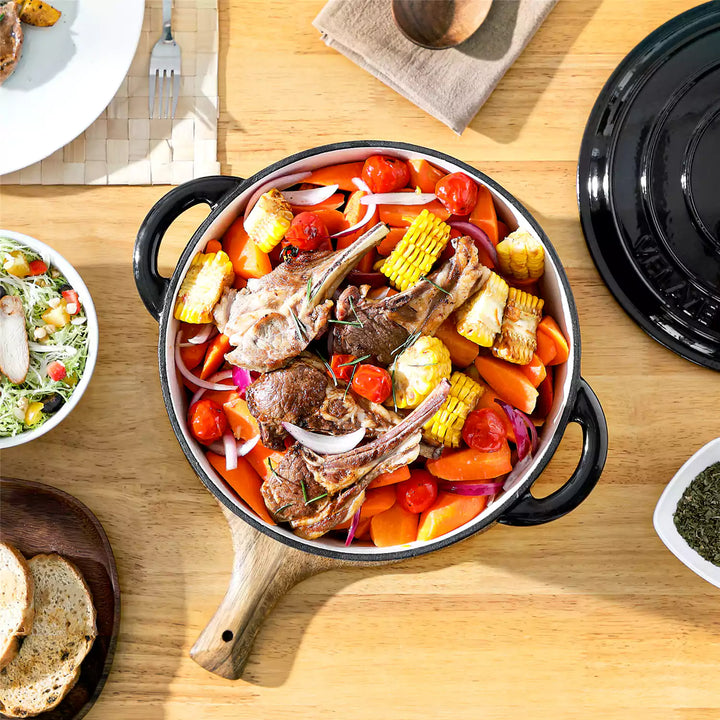
Heat retention is another significant advantage. Stoneware plates and bowls retain heat longer, and this is useful in maintaining the appropriate temperature of food during meals. This renders them particularly attractive to hearty meals, slow meals, and family-style meals.
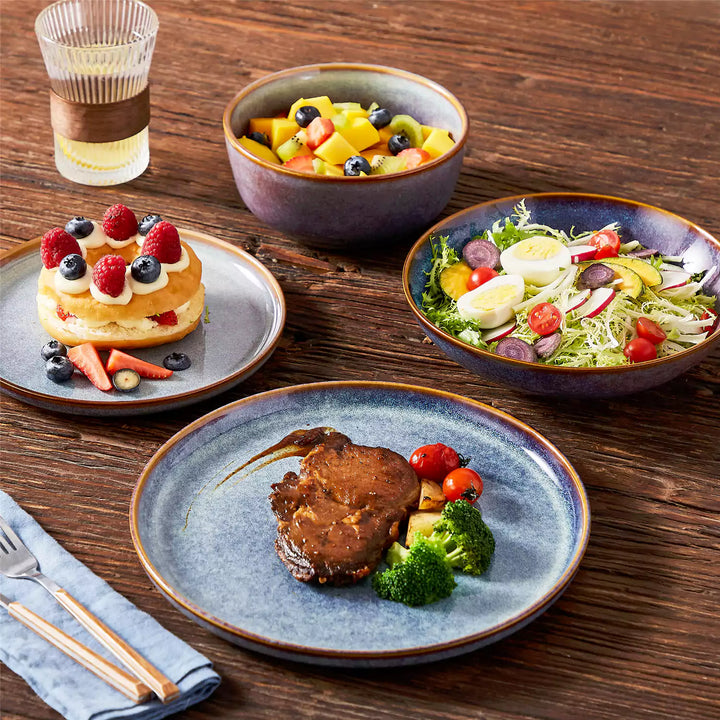
Another strength is aesthetic versatility. Stoneware, in contrast to plain white porcelain, has a great variety of colors, finishes, and textures. Stoneware can be easily adjusted to rustic, modern, or eclectic table settings, with matte neutrals or rich, reactive glazes. This is one of the reasons why stoneware is a favorite of many hosts when it comes to casual entertaining.
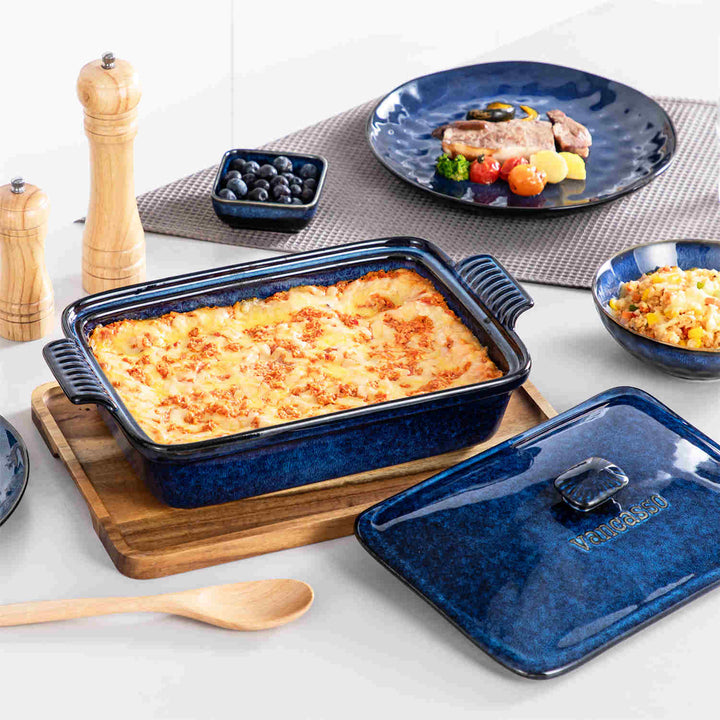
Lastly, the majority of contemporary stoneware is conveniently designed. Many people ask, is stoneware microwave safe? Yes, in most instances, quality stoneware is both microwave safe and dishwasher safe, and thus it can be used in busy households.

The Cons of Stoneware Dinnerware
Stoneware has its weaknesses despite its strengths. Weight is the most conspicuous. Stoneware is heavier and thicker than porcelain, and this may be an issue to people who like lightweight dishes or have limited storage space. Shelving may also need to be stronger to hold large stoneware plates.
Thermal shock is another factor to consider. Although the question of whether stoneware can be placed in the oven is frequently posed, the answer is usually yes, but with restrictions. Stoneware must not be transferred directly out of the freezer to a hot oven or extreme heat to cold surfaces. Cracking can be caused by sudden changes in temperature.
Moreover, not every stoneware is equal. Poor quality pieces can be glazed unevenly or fail to indicate clearly whether they are lead-free. It implies that buyers should be attentive to labels and certifications instead of thinking that all stoneware is the same.
Stoneware vs. Porcelain vs. Earthenware: What’s the Difference?
The differences between these materials become clearer when compared side by side. The chart below highlights why stoneware is often considered the “middle ground.”
| Feature | Stoneware | Porcelain | Earthenware |
|---|---|---|---|
| Firing Temperature | High | Very High | Low |
| Durability | Durable & sturdy | Very strong but thinner | Least durable |
| Weight | Medium to heavy | Lightweight | Medium |
| Look & Feel | Rustic, textured | Smooth, refined | Traditional, rustic |
| Porosity | Non-porous | Non-porous | Porous |
| Best Use | Every day + hosting | Formal & modern | Decorative or light use |
In terms of stoneware vs porcelain, porcelain is more delicate and lightweight, whereas stoneware is heavier and more comfortable. When it comes to the discussion of earthenware and stoneware, the latter is obviously more robust and can be used on a daily basis.
The Selection of Quality Stoneware Dinnerware
Quality checks are important when purchasing stoneware. To begin with, always seek labels that assure that the product is lead-free and understand the potential risks of hazardous lead release from glazed dinnerware. This is safe, particularly in the case of daily meals.
Then, verify instructions on care and usage. The manufacturers are reliable and indicate clearly whether the pieces are dishwasher safe and microwave safe. In case you are sensitive to the use of ovens, ensure that you check the temperature limits before buying.
Examine the glaze and finish. Stoneware must be of high quality with smooth and even glazing without cracks or pinholes. Minor color differences are natural and even desirable, whereas structural defects are not.
Finally, think about the fit of the set to your lifestyle. The weight and heat retention of stoneware can be an advantage instead of a disadvantage, especially when you host frequently or prepare comfort-style meals.

Who Should Buy Stoneware?
Stoneware is the best choice when one desires dinnerware that is both beautiful and practical. It is appropriate for families, regular hosts, and those who appreciate a warm, tactile dining experience.
Nevertheless, stoneware can be more sensitive to handling in case you like ultra-light meals or often transfer food between high and low temperatures. Users who value durability but not indestructibility are better suited to it.
Conclusion: Is Stoneware Dinnerware Worth It?
So, is stoneware dinnerware worth it? The answer is yes for many households- particularly to those who appreciate a sensible compromise between functionality and style. Stoneware provides a dependable durability to use on a daily basis, retains heat to make the dining experience more enjoyable, and has rich colors and textures that make even the simplest meals seem more special.
With that said, one should have realistic expectations of stoneware. It is more sensitive to sudden changes in temperature and is heavier, so it is better to handle it carefully than to use it roughly. Nevertheless, these are small factors compared to its extended life and its versatile appearance.
Finally, stoneware is a real middle-ground solution: it is more durable and expressive than porcelain, but more sophisticated and long-lasting than earthenware. Stoneware is a smart and satisfying investment for anyone who wants to have dinnerware that feels heavy, looks appetizing, and works well in real life.

FAQs
Q: Is Stoneware Microwave Safe?
A: The majority of good stoneware is microwave safe, though it is always important to check the instructions.
Q: Can Stoneware Go in the Oven?
A: Yes, stoneware can generally be placed in the oven, but it must not be subjected to sudden temperature changes.
Q: Is Porcelain Superior to Stoneware?
A: Stoneware is more robust and rough whereas porcelain is lighter and more elegant in the stoneware vs porcelain debate.
Q: How Long Does Stoneware Last?
A: Stoneware can be used over a long period of time with proper care.