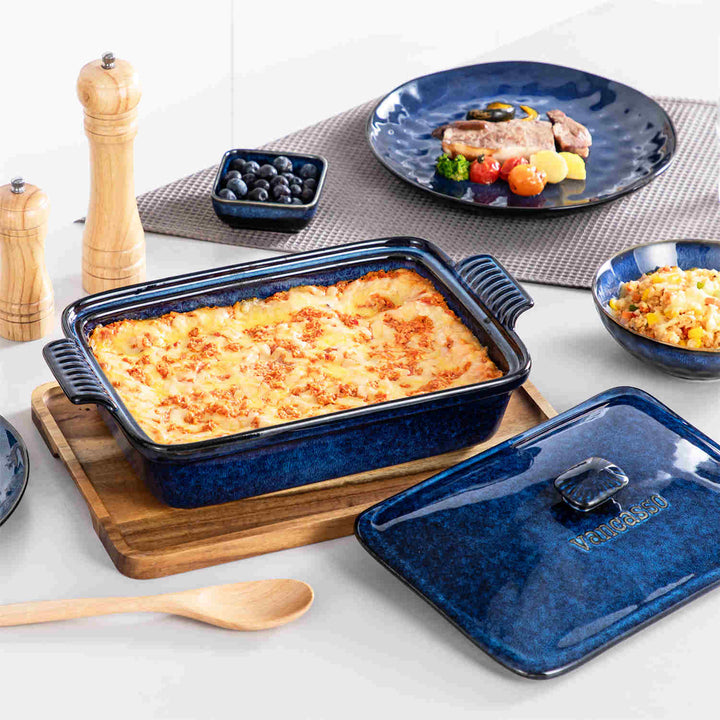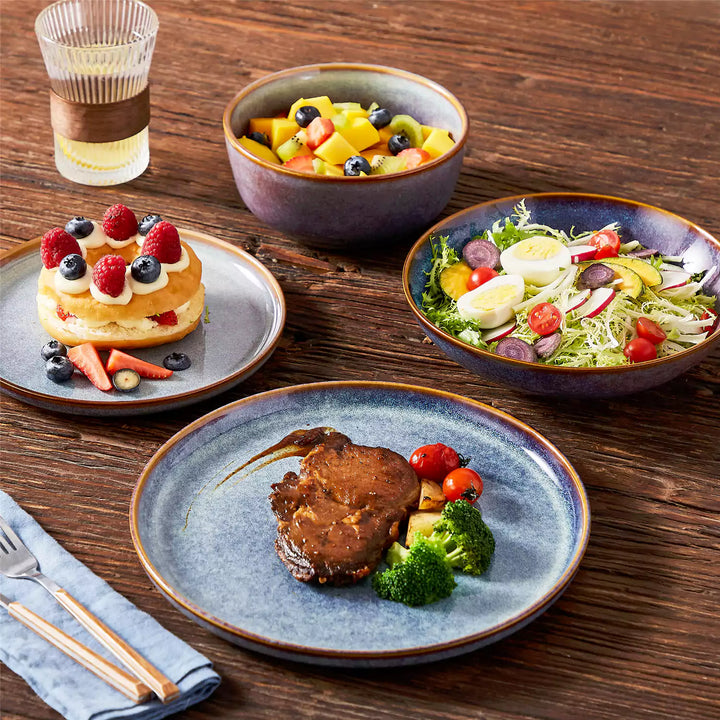


Reactive glaze dinnerware has gained a lot of popularity over the past few years, particularly among individuals who appreciate handcrafted and artistic table settings. The striking color variation, unique finishes, and craftsmanship make it a fashionable addition to contemporary dining rooms. However, as more customers consider glazed stoneware dinnerware and reactive glaze dinnerware sets, a key question often arises: Is reactive glaze dinnerware safe to use daily?
In this guide, we will deconstruct what reactive glaze is, its food safety, the possibility of it containing heavy metals, and how to ensure that your stoneware dinnerware sets are safe. Whether you're purchasing one mug or investing in a full non-toxic dinnerware set, this article will help you understand everything you need to know.
What Is Reactive Glaze?
Reactive glaze involves a specialty glazing method of ceramics that is applied to produce rich, layered, and organic surface patterns. In contrast to conventional solid-color glazes, reactive glaze is a chemical reaction that occurs during high-temperature firing in the kiln. Different minerals, oxides, and stratified glazes melt and mix with each other, producing unpredictable effects—swirls, speckles, gradients, and color transitions.
Due to this reaction process, no two pieces look exactly the same even in the same reactive glaze dinnerware set. This is part of the charm: your bowl or plate seems to be really handmade.
Stoneware dinnerware sets are often glazed with reactive glaze, as stoneware can withstand the high firing temperatures required to enable these glazes to mature. Consequently, the pieces are made strong, durable, and suitable for everyday use. Reactive glaze dinnerware is both beautiful and functional to people who like rustic, artistic, or farmhouse-style dining experiences.

Is Reactive Glaze Lead or Cadmium-Free?
This is the primary concern of many customers. And the good news is: reactive glaze dinnerware can be entirely safe and lead and cadmium-free, provided it complies with the current food-safety standards.
Decades ago, lead and cadmium were more prevalent in traditional ceramic glazes. Currently, reputable manufacturers, particularly those that export to nations with stringent safety regulations, are required to adhere to regulations including:
- FDA (U.S. Food & Drug Administration) standards.
- California Proposition 65.
- EU food-contact safety laws.
- UK Food Standards Agency requirements.
These agencies are very strict on the amount of heavy metals that can be released by glazed surfaces. Products that meet these requirements are categorized as non-toxic dinnerware sets and safe to use on a daily basis.
But you should know:
- The fact that the glaze ingredients contain heavy metals does not necessarily imply that the dinnerware is unsafe.
- The question is whether the metals in the glaze leach into food.
- Well-fired and certified reactive glazes form a sealed, vitrified surface that does not leach.
The trick is to purchase reactive glaze dinnerware of brands that adhere to accepted testing standards. When the glaze is properly applied and fired, the surface becomes non-porous, closed and safe.
Is It Microwave and Dishwasher Safe?
The majority of contemporary reactive glaze dinnerware collections are intended to be microwave- and dishwasher-safe, although this may differ by manufacturer.

Microwave Safety
Stoneware is not unsafe in the microwave because of reactive glaze. What matters more is:
- The quality of the clay body.
- The firing temperature.
- The rate of absorption of the ceramic.
- The presence or absence of any metallic materials in the decoration.
Microwave-safe stoneware is of high quality and is fired at high temperatures, which reduces moisture absorption. Low absorption implies reduced chances of overheating or cracking in the microwave.
Dishwasher Safety
Reactive glazes can be quite durable due to their high firing temperatures. Their sealed surfaces resist:
- Staining
- Etching
- Odor absorption
- Color fading
Nevertheless, glazed finishes are always softer to handwashing. That said, dishwasher-safe stoneware is generally safe to use in the dishwasher provided that the manufacturer certifies it.

The Uniqueness of Reactive Glaze Patterns (and Why It Matters)
Reactive glaze dinnerware's beauty lies in its unpredictability. Every work undergoes a natural melting and blending process in firing. This creates unique color variations and effects including:
- Speckles
- Brush-like textures
- Gradients
- Two-tone or three-tone finishes
- Drips or uneven glaze coverage
These differences are not flaws, but rather an indication of workmanship. However, they are also important for another reason: the reactive glaze can be used to show that your glazed stoneware dinnerware has been fired at high temperatures, which makes the ceramic body stronger and more durable.
In other words, the artistic appearance isn't just aesthetic, but also indicates a well-fired, durable piece of dinnerware, which adds to the overall safety.

How to Check Your Dinnerware to Be Safe to Use
1. Certification Labels
Look at safety signs like:
- "Food Safe"
- "Non-toxic"
- "Lead-free" or "Cadmium-free"
- FDA certification of imported products
- EU or UK food-contact safety icons.
2. Reputable Brands
Established manufacturers apply controlled glazes and properly calibrated kilns that ensure safe firing temperatures.
3. Manufacturer Testing
Documentation or customer support of many brands confirms:
- Heavy metal leaching
- Stoneware certification as microwave safe.
- Dishwasher safety testing
4. Do Not Buy Very Cheap, Unlabeled Ceramics
Ceramics that are unbranded and of low cost and lack safety standards are more prone to glaze leaching or poor firing.
5. Check for Damage
Even safe glazes may be compromised when the piece:
- Chips
- Cracks
- Develops deep scratches
Broken sections can reveal porous ceramic and decrease food safety.
Conclusion
Reactive glaze dinnerware is not only aesthetically beautiful but can also be entirely safe to use in daily meals provided that it is made by a reputable manufacturer and tested according to the current safety standards. Whether you're buying glazed stoneware dinnerware for daily use or investing in a full reactive glaze dinnerware set, the key is to seek the right certifications and reliable brands. When properly fired, reactive glazes create a hard, non-porous surface that is resistant to leaching and works well in the microwave and dishwasher.
Knowing the right thing and paying a little attention to the labeling of the products, you can be sure of the beauty, originality, and craftsmanship of non-toxic dinnerware sets produced with reactive glaze.

FAQs
Q1: Can Reactive Glaze Dinnerware Be Used with Food?
A: Yes, reactive glaze dinnerware is safe if it meets FDA or other international food-safety standards.
Q2: Is It Possible That Reactive Glaze Has Lead?
A: Certain glaze recipes can contain trace minerals, although correctly fired and certified dinnerware will not leak. Always purchase certified lead-free or non-toxic sets.
Q3: Is Stoneware Microwave Safe?
A: The majority of modern microwave-safe stoneware is safe to use, although it is always important to check the label to make sure that the set was tested to perform in the microwave.
Q4: Are Reactive Glazes Time-Fading?
A: Reactive glazes of high quality are tough and do not fade easily even when used in a dishwasher regularly.
Q5: Why Are Two Plates in the Same Set Different?
A: Reactive glaze produces natural variations during firing, which is intentional and part of the artistic value.