



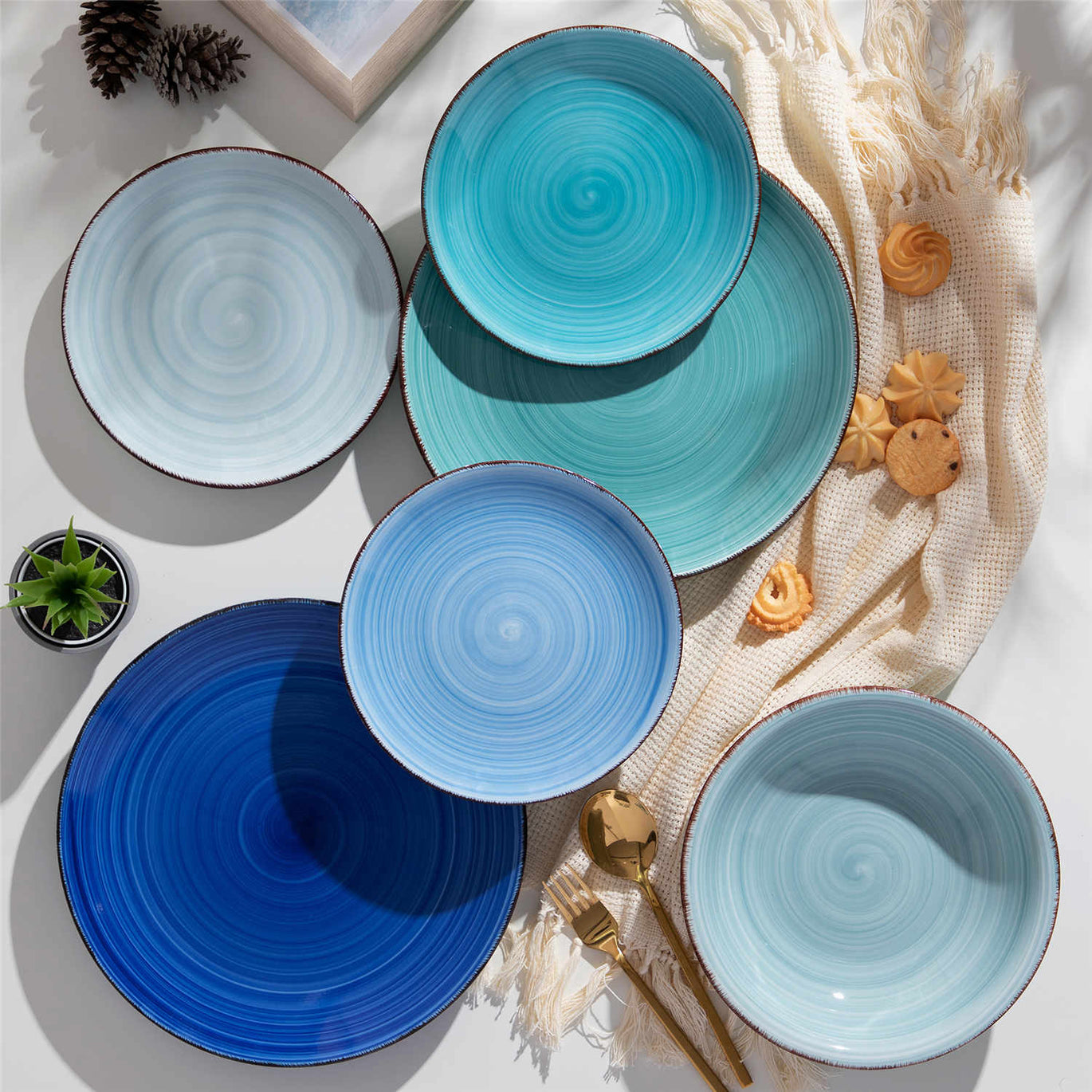


Understanding the Ceramics Consumption Patterns of Gender-Aware Generations

Setting the Table: Why Gender Now Lives in Your Dishes
Pull out a dinner plate and you are holding much more than a flat circle of clay. You are touching a tiny stage for politics, memory, identity, and joy. Today’s gender-aware generations—especially millennials and Gen Z, but also older diners who think critically about gender roles—are using ceramic tableware to express who they are, who they welcome, and what they stand for.
As a Colorful Tabletop Creative and Pragmatic Joy Curator, I spend a lot of time watching people choose plates. Someone arrives insisting they “just need something neutral,” then their eyes widen at a shell-shaped blush bowl or a charcoal stoneware plate edged with sage. They are not only asking, “Will this chip in the dishwasher?” They are also asking, “Does this feel like me? Does this feel like us?”
Research across design, history, and market data backs up what I see at the table. A Global Tableware survey, cited by Yongjian Ceramics, reports that about 76% of consumers believe tableware design directly affects how good a meal feels, and hotels that upgrade their ceramics can raise guest satisfaction by roughly one-third. JOYYE’s analyses show the global ceramic dinnerware market growing from about $12.4 billion in 2024 to $22.2 billion by 2034, with sustainable ceramic categories expected to jump from around $102 billion in 2024 to about $145.5 billion by 2030. Appearance, ethics, and longevity now matter almost as much as whether your lasagna sticks.
This article explores how gender-aware generations are reshaping ceramics consumption: what they buy, how they use it, and how history, feminism, sustainability, and emotional attachment all sit down together at the same table.

From Dynastic Plates to Feminist Mugs: A Short Gendered History of Ceramics
Long before your favorite mug became your emotional support object, ceramics carried gendered power in palaces and convents. Google Arts & Culture’s story of Margherita Gonzaga shows a commemorative plate created for her marriage to Duke Alfonso II d’Este in late sixteenth-century Italy. That dish was part of a grand service that functioned as both dinnerware and propaganda: a glittering ceramic proof of dynastic alliances. When Alfonso died, Margherita reportedly left Ferrara with around fifty carts of objects—paintings, reliquaries, textiles, and likely the entire ceramic service—essentially transporting an entire curated environment she controlled.
She later founded the convent of Sant’Orsola in Mantua, personally overseeing its construction and using it as a semi-private court where she hosted key visitors. Ceramics in that space were not neutral; they were tools through which a noblewoman negotiated political presence, spirituality, and personal identity. Researchers now read that plate and its service as evidence of how women used objects, including tableware, to shape religious and political spaces.
Across continents, women have long been central to clay. A Ghanaian study summarized by Vancasso notes that women make up about 51.4% of the national population and are heavily involved in informal pottery and craft work, yet that labor often remains invisible in formal statistics. Industrialization in European ceramics shifted power toward male factory owners and designers, while many women’s roles were re-labeled as “hobby” or kept lower-paid.
Exhibitions like “Pioneering Women” at Oxford Ceramics Gallery spotlight how women across Europe, Africa, and Asia have defined studio ceramics: Lucie Rie’s modernist vessels, Ladi Kwali’s hybrid coiled and wheel-thrown forms, and Magdalene Odundo’s body-evoking red and black vessels, among others. Historian Moira Vincentelli even describes ceramics made and used by women as a kind of material writing, a visual “feminine script” in clay.
Gender-aware generations inherit this layered history, but they are not content to leave it in museums. They are remixing it every time they choose whether to buy the “his and hers” bowl set or the stackable sage-and-terracotta mix that feels like everyone.

What Does “Gender-Aware” Mean at the Table?
Gender-aware does not mean slapping a slogan on a mug and calling it feminist. Vancasso’s guide to feminist ceramics suggests a deeper lens: asking whose labor, bodies, and stories are centered across the entire life cycle of a piece, from clay sourcing to who dries the dishes.
A gender-aware generation tends to do a few things at once. It notices when tableware has been coded pink for “her” and navy for “him” and asks whether that makes sense. It pays attention to who designed and produced the pieces and who does most of the cooking and scrubbing. It favors collections that allow non-binary, queer, and culturally diverse identities to feel welcome, not squeezed into a pink-and-blue corner.
Research summarized in Vancasso’s piece on gender norms in ceramic design describes how younger consumers, especially Gen Z, treat tableware as self-branding for social media. They gravitate toward inclusive, gender-neutral palettes, sustainable production, and mix-and-match patterns that feel personal rather than stereotypically “feminine” or “masculine.” That means a sage stoneware bowl might sit next to a floral heirloom plate and a black matte mug, creating a table that says “this is our story,” not “ladies on the left, gentlemen on the right.”
Gender-aware consumption is less about rejecting softness and more about reclaiming it. Feminine design can be a language of care and emotion without being a cage.

The Market Backdrop: A Booming, Diversifying Ceramic Landscape
If you feel like everyone suddenly cares about plates, you are not imagining it. JOYYE’s consumer preference brief and other market outlooks paint a lively picture. Ceramic dinnerware sales are forecast to climb strongly over the next decade, with sustained growth of around 6–7% annually in some segments. Household use accounts for much of the demand, as more people cook at home, treat dining as a lifestyle hobby, and share their tables on social media. The hospitality sector remains a powerhouse as well, with hotels, restaurants, and catering businesses seeking durable, stylish ceramics that can handle daily use yet photograph beautifully.
Regionally, North America holds a significant share thanks to strong hospitality and demand for high-quality products, Europe builds on deep craft traditions and eco-conscious buyers, and Asia Pacific is rapidly expanding with urbanization and rising incomes. According to the USDA Foreign Agricultural Service, the United States alone imports roughly 214,000 tons of ceramic tableware each year, indicating a robust appetite for dishes from around the world.
At the same time, sustainability and customization emerge as key growth engines. Consumers increasingly ask whether glazes are non-toxic, whether production reduces emissions, and whether they can personalize shapes or patterns. Luxury porcelain houses and ceramic brands are partnering with designers and artists on limited-edition collections, using design innovation and storytelling as strategic tools.
Gender-aware generations are right in the middle of this shift, pushing brands to align aesthetics, ethics, and emotional resonance.
Aesthetics: Soft, Neutral, Bold, and Beyond Binary
One of the clearest ways gender awareness shows up is in color and form. Vancasso’s “Rise of Soft Design” describes feminine-leaning tableware as a visual language of care, softness, and nurture. Think curves instead of brutal edges, scalloped rims rather than rigid squares, organic silhouettes, hand-painted details, and nature-inspired motifs.
Color research by Vita Joy and Vancasso finds that neutrals such as ivory, beige, taupe, and matte gray still account for almost half of global tableware sales. They form the calm backbone of many tables. Yet these understated tones are increasingly layered with emotionally expressive hues: blush pink and butter yellow for warmth and romance, terracotta and rust for earthiness, sage and deep greens for freshness, and ocean blues for cool serenity. Dopamine décor trends add tomato reds and citrus brights as accents rather than full collections, especially among younger hosts who want energy without chaos.
Shape trends tell a similar story. Reports from JOYYE, MALACASA, and other style guides point to a move away from strict circles and perfect rectangles toward organic, asymmetrical forms. Shell-like platters, coupe bowls with soft lips, and rims that ripple like petals give even weekday meals an intimate, hand-touched feeling. These curves are often read as “feminine,” but gender-aware consumers treat them as human rather than strictly women-only.
At the same time, there is strong demand for gender-neutral serenity. Earthy palettes, geometric motifs, and simple silhouettes create spaces where anyone can feel at home. New parents, for example, increasingly choose woodland, celestial, or rainbow-themed tableware for celebrations instead of strictly pink-or-blue baby showers. Designers are experimenting with color psychology rooted in Feng Shui principles, using earth tones for comfort, greens and browns for growth, reds and oranges for joy, and whites and metallics for clarity—focusing on mood rather than gender.

Materials and Feel: Stoneware, Porcelain, Bone China, and Eco Ceramics
Under all that color and pattern lies the clay body itself. Different materials carry different emotional and practical signatures, and gender-aware buyers are paying attention.
Here is a quick overview grounded in research from JOYYE, World Market style guides, and contemporary porcelain trend reports.
Material |
Feel on the Table |
Key Pros |
Key Trade-Offs |
Often Chosen By |
Stoneware |
Hefty, rustic, cozy, often speckled or matte |
High durability and chip resistance, strong heat retention, oven-to-table friendly |
Heavier in the hand, can feel bulky in small cupboards |
Families, home cooks, casual entertainers |
Porcelain |
Smooth, refined, translucent, can be minimalist or ornate |
Strong yet relatively lightweight, microwave and dishwasher friendly when designed for daily use |
Can chip if very thin; premium lines cost more |
Frequent entertainers, design-conscious households |
Bone china |
Extremely thin, warm-toned, delicate-looking |
Exceptional strength-to-thickness ratio, classic “special” feeling |
Often higher price, traditional look can feel formal |
Heirloom seekers, lovers of romantic tables |
Recycled/eco ceramics |
Matte, earthy, with visible texture or slight variation |
Signals sustainability, aligns with wabi-sabi imperfection, often very durable |
Limited color ranges in some lines, may cost more upfront |
Eco-focused buyers across all age groups |
High-quality stoneware and porcelain are typically fired at temperatures above 2,000°F, creating vitrified, non-porous bodies that resist chipping and staining and are safe for ovens, microwaves, and dishwashers. JOYYE notes that stoneware is gaining share because it combines that technical performance with visible throwing lines, reactive glazes, and a handcrafted look that photographs beautifully. Porcelain retains the luxury crown in many markets, balancing refined aesthetics with everyday practicality.
Sustainable ceramics go a step further. Trend reports from JOYYE and materials-focused platforms highlight low-emission digital inks, water-based adhesives, kilns fired by hydrogen or renewable energy, and recycled ceramic waste being folded back into new products. For gender-aware generations who see climate responsibility as part of social justice, a matte terracotta plate made with reclaimed clay feels more aligned than a flimsy plastic platter, even if the upfront cost is higher.

Feminist and Queer Lenses: Who Designed This Plate, and For Whom?
When gender-aware consumers step into a ceramics store, they are increasingly asking feminist questions, even if they do not use that word. A feminist ceramics guide from Vancasso suggests looking beyond the object’s surface to its life cycle. Who mined the clay and mixed the glaze? Who owns the factory? Whose names appear on the box, and whose labor is invisible?
Historically, industrial ceramics in Europe consolidated design power in male hands, while women’s roles in decoration or finishing were often lower paid or dismissed as “mere craft.” Contemporary feminist ceramicists like Jen Dwyer and Laura Beth Fox-Ezell respond by using both sculptural objects and everyday mugs to foreground women’s bodies, sexuality, domestic labor, and working-class contexts. Their work insists that a mug can be a manifesto, not just a vessel.
The gender norms article on ceramic tableware presents a vivid historical example from Japan: meoto jawan, or husband-and-wife rice bowl sets. Men’s bowls were traditionally more than one-third larger than women’s, with darker blues and greens, while women’s bowls tended to be smaller, in bright reds or florals. Chopsticks followed suit, averaging about 9.1 inches for men and 8.3 inches for women. That design quietly encoded assumptions about appetite, status, and taste.
Contemporary Japanese guidance is shifting toward criteria like hand size, grip comfort, and capacity rather than gender labels, yet gendered sets remain popular for gifts. Feminist researchers caution against romanticizing any one technique or motif as inherently feminine. Archaeologist Rita P. Wright, for example, warns that celebrating women’s ceramic traditions can slide into essentialism if context is ignored.
Gender-aware generations take these lessons seriously. They are drawn to pieces that respect bodies of all sizes and abilities, that do not assume who will wash the dishes, and that avoid treating pink florals as “frivolous” and black stoneware as “serious.” They also worry about new technologies like AI-driven surface design. Eco-friendlier digital printing inks and algorithms can democratize pattern-making, but a feminist lens insists on transparent training data and licensing so women’s and Indigenous visual cultures are not quietly harvested without credit or consent.

Emotional Durability: Why Some Mugs Become Soulmates
Not all plates are created equal in our hearts. An explorative case study in the International Journal of Design on emotionally durable ceramic tableware offers a powerful lens for understanding how gender-aware generations consume. Emotional durability is defined as a product’s ability to sustain a long-term, meaningful relationship with its user. The ambition is to make “fewer better things” that outlast trends and reduce waste.
The study’s researchers worked with thirty participants ranging from teenagers to people in their seventies. Participants photographed or sketched their favorite and least favorite cups or mugs and explained why. Nearly everyone chose a mug rather than a cup-and-saucer combo, suggesting that the mug is a universal everyday companion.
Immediate likes and dislikes were driven by what psychologist Don Norman calls visceral and behavioral responses: weight, size, shape, color, and how comfortable the mug felt in the hand. People loved pieces that felt just right to hold, with well-balanced handles and comforting tactility. At a deeper reflective level, meaning came from stories: who gifted the mug, which city it came from, what stage of life it marked, or what identity it expressed.
The study found that design features that take users on a “journey” of discovery help foster attachment. Think of textural contrasts between glossy and matte, visible traces of making like half-dipped glazes, or a surprising unglazed rim on an otherwise polished cup. Experimental industrial ceramics such as Hella Jongerius’ “Non-temporary ceramics” and the TAC01 teacup show how small surprises can keep objects interesting for years, because people enjoy exploring and showing them to others.
Gender-aware generations, already wary of fast fashion and disposable décor, are especially receptive to this idea. They are drawn to ceramic pieces that feel emotionally durable—items they can defend as “my bowl” or “our anniversary plate”—or that allow each person in a household to pick a slightly different version within a coordinated range. Strictly identical, binary-coded sets start to look less appealing when the goal is long-term love rather than short-term matching.

How Gender-Aware Generations Actually Buy and Use Ceramics
So what does all of this theory look like at checkout and in the kitchen? Joyye’s consumer preference research and market briefs, together with Vancasso’s trend reports, sketch a clear behavioral pattern.
Younger, social-media-savvy shoppers are drawn to visually striking yet affordable items. They often purchase smaller dinnerware sets—four to eight place settings, not twelve—and rely heavily on open-stock buying, where you can pick individual pieces instead of a rigid bundle. They invest in one or two statement items, such as a reactive-glaze serving bowl or scalloped dessert plates, to combine with more neutral basics. That approach is perfect for gender-aware expression because it encourages layering of moods and identities rather than locking into a single pattern for life.
More established buyers and older millennials who entertain frequently are willing to pay more for durable, high-quality sets, especially stoneware and porcelain that promise years of dishwashing and occasional drops. Across segments, functional requirements are non-negotiable: people expect microwave safety, dishwasher compatibility, and durability suitable for daily use, not only “special occasion” china.
Space constraints, particularly in urban apartments, drive demand for stackable, nesting designs. Gender-aware generations want cabinets that feel like curated mini-galleries, not precarious towers of mismatched bowls that chip if you breathe too hard. Designers respond with multipurpose forms that can move from brunch to holiday dinner without feeling out of place, blurring the line between everyday and formal.
Ethical and production-related factors are increasingly central. JOYYE and Vancasso note that millennial and Gen Z shoppers pay close attention to factory conditions, environmental impact, and brand values. They are more likely to choose a smaller, ethically produced stoneware set from a transparent brand than a massive anonymous set at a rock-bottom price. For many, that is a feminist decision as well as an environmental one.
Social media acts as both inspiration board and pressure cooker. Styling guidance from JOYYE and Yongjian Ceramics emphasizes “photo-ready” tableware with strong color contrasts, tactile textures, and unique shapes. Hosts treat the table as a small storytelling stage: a sage stoneware plate from a local studio next to a glossy cobalt mug from a design collaboration, all captured for friends and followers. Gender-aware generations use that stage to communicate inclusion and care, not just style.
Practical Ways to Shop and Design Through a Gender-Aware Lens
If you are ready to let your ceramics reflect your values as well as your recipes, you do not need a complete cupboard overhaul. You need intention.
For home diners and hosts, start with a gentle audit of your shelves. Notice whether your pieces feel divided into “his” and “hers,” or whether certain guests might feel less seen by your tableware. You might keep a beloved floral heirloom plate but pair it with a simple matte stoneware dinner plate underneath and a neutral mug beside it, turning that single nostalgic piece into part of a shared story rather than a gendered assignment.
Next, choose a base set that is neutral in both color and symbolism, but not in personality. A sand-colored stoneware dinner plate, for example, can support countless narratives. Layer on top two or three accent pieces that introduce emotional color or soft silhouettes: a blush salad plate, a sage reactive-glaze bowl, or a black coupe plate with a gently curved rim. This allows people of any gender to pick combinations that resonate without feeling boxed in.
Pay close attention to ergonomics. Consider who actually cooks, serves, and washes in your household. If one person handles most of the physical work, choose dish weights, handle sizes, and bowl capacities that protect their wrists and shoulders. Vancasso’s feminist recommendations emphasize prioritizing ergonomic designs and durable pieces that reduce domestic strain, which is still disproportionately felt by women in many households.
Support women-led and community-based studios where you can. That might look like purchasing a few hand-built mugs from a local potter and mixing them with industrial pieces. Remember that emotional durability often comes from the story behind the object, so tell those stories at the table: who made this, where, and why did you choose it?
For designers, brands, and retailers, the gender-aware challenge is both ethical and exciting. Rethink labeling. Instead of describing items as “for him” or “for her,” focus on use and feeling: lightweight comfort bowls, extra-capacity noodle bowls, petite snack plates, or grounding earth-tone sets. Preserve cultural sets like meoto jawan when appropriate, but consider framing them as “paired bowls for shared meals” rather than rigid his-and-hers.
Offer collections that unify form and surface through design principles like balance and rhythm but allow modular mix-and-match styling. Provide several variations within a range so each person can pick a favorite, enhancing emotional attachment. Be explicit about sustainability metrics and labor practices, and be transparent about any AI use in surface design, especially if your patterns draw from specific cultural motifs.
For hospitality and corporate buyers, remember that tableware doubles as a “silent salesperson.” Yongjian Ceramics highlights how natural-style designs and minimalist sets both signal brand values, whether you want earthy eco-consciousness or sleek modern luxury. Gender-aware guests will notice whether your plates, cups, and bowls feel welcoming to everyone or coded towards a narrow slice of diners. Invest in durable, ethically produced, ergonomically friendly ceramics that make each guest feel subtly cared for.
Looking Ahead: Edible Plates, Smart Kilns, and Joyful Hybrids
The future of gender-aware ceramics is not only about what stays on the table; it is also about what disappears. Malacasa’s exploration of edible plates suggests that by 2030, dining will often involve hybrid settings where durable ceramic pieces provide structure and temperature control while edible surfaces add surprise and minimize waste. Imagine a thin edible wafer resting in a reactive-glaze stoneware plate or a small edible shell perched in a sculptural porcelain spoon. The ceramic remains the long-term companion, while the edible element provides a fleeting, playful accent.
Behind the scenes, advanced ceramics technology is reshaping what is possible. Additive manufacturing, low-temperature and microwave sintering, and AI-driven process control are enabling thinner yet stronger plates and more intricate forms. A case study by Brightpath Associates notes that adding robots and AI-based quality control increased one ceramic manufacturer’s output by about 30% in a year, with improved consistency and reduced waste. At the same time, green-chemistry innovations, renewable energy kilns, and recycled feedstocks are steadily lowering the environmental footprint of tableware.
Gender-aware generations will keep asking hard questions as these technologies evolve. Who benefits from automation? Whose jobs are transformed? Are savings reinvested in better wages and safer conditions, or only in shareholder returns? Are AI-designed patterns crediting the communities whose visual languages they borrow?
The brightest future is one where a Tuesday-night table can host it all: a stoneware bowl made by a woman-led studio using recycled clay, a porcelain plate from a centuries-old factory that now runs on renewable energy, a quirky mug chosen by a non-binary teenager, an edible citrus shell that delights everyone, and a host who knows the story behind each piece. That is the kind of table where gender awareness and color-drenched joy sit comfortably side by side.
FAQ: Quick Answers for Curious, Gender-Aware Plate Lovers
How can I make my existing tableware feel more gender-inclusive without replacing everything?
Start by mixing and re-framing rather than discarding. Pair traditionally “feminine” floral plates with grounded stoneware bases in sand, gray, or charcoal so they read as storytelling pieces instead of “the ladies’ plates.” Introduce one or two organic-shaped items, such as a wavy-edged bowl in a neutral tone, and allow every guest to choose what they like. Talk about pieces in terms of mood and memory—comforting, bold, calm, nostalgic—rather than assigning them to genders.
Is it worth paying more for sustainable or artisan ceramics if I am on a budget?
If funds are tight, think like an emotionally durable designer. Choose a small number of “better” pieces that you genuinely love and that are built to last, rather than a large set you feel indifferent about. A single handmade serving bowl or a pair of artisan mugs can dramatically change how your table feels, especially when combined with more affordable basics. Given that sustainable ceramic segments are projected to grow rapidly, and that ceramics can last for decades when cared for, even a modest investment in a few eco-conscious pieces can pay emotional and environmental dividends.
How do I balance trendy feminine designs with timelessness so I do not get bored?
Treat trends as seasoning, not the main dish. Follow market recommendations from sources like JOYYE by starting with a versatile neutral base set—perhaps white or sandy porcelain with clean lines—and then layering in a few soft-design accents: a blush scalloped dessert plate, a reactive-glaze sage bowl, or a shell-inspired platter. Because your base is calm, you can rotate accent pieces over time without replacing everything. Emotional durability research also suggests that small surprises and subtle irregularities keep objects interesting, so seek out pieces with tactile texture or visible traces of making rather than relying only on surface graphics.
A Joyful Closing
In the end, understanding the ceramics consumption patterns of gender-aware generations comes down to this: plates are no longer just plates. They are tiny, tangible manifestos about who we are, how we care, and what kind of world we are shaping with every shared meal. When you choose a stoneware bowl that fits every hand at the table, or a playful scalloped plate that makes Tuesday’s leftovers feel like a celebration, you are practicing everyday design activism. You are curating a colorful, inclusive, emotionally durable tabletop where everyone has a seat and every dish has a story.
References
- https://pmc.ncbi.nlm.nih.gov/articles/PMC10311548/
- https://www.researchgate.net/publication/395858344_Food_choices_flirt_with_gender_norms_in_mating_contexts
- https://www.healthierhomes.com/organic-dinnerware?srsltid=AfmBOop9VG9pOihq_ysWh2lX28vxE6fIy2nITWZbMFzkFRxK3QkJiSpu
- https://www.futuremarketinsights.com/reports/porcelain-tableware-market
- https://www.happygodinnerware.com/Dinner_Plates/1739007206891.html
- https://www.joyye.com/info-detail/consumer-preferences-in-ceramic-dinnerware-styles?requestId=
- https://www.metastatinsight.com/report/ceramics-tableware-market
- https://finance.yahoo.com/news/ceramic-tableware-market-report-2025-081400697.html
- https://www.coffeemugceramic.com/blogs/%E6%96%B0%E9%97%BB/trends-in-ceramic-tableware-what-retailers-should-know-in-2025
- https://hfcoors.com/blogs/news/sustainable-and-eco-friendly-ceramic-tableware-exploring-ethical-choices?srsltid=AfmBOoqrqIzjuAOYAryv9fdH9rxR3zgo-b1L6CIYEKvnRoyGRpsao_Wt
También te puede interesar
Stern Juego de vajilla de 16 piezas
- £68.00
£77.00- £68.00
- Precio unitario
- por
-
Blue
-
Green
-
Red
-
Grey
Simi Juego de vajilla de 24 piezas
- £77.00
£104.00- £77.00
- Precio unitario
- por
Bonita Juego de vajilla de 18 piezas
- Desde £49.00
£61.00- Desde £49.00
- Precio unitario
- por
-
Blue
-
Multicolor
Starry 16 Piece Juego de vajilla
- £68.00
£70.00- £68.00
- Precio unitario
- por
-
Blue
-
Green
-
Red
-
Gradient Green