





Why Gen Z Isn’t Buying Complete Ceramic Dinnerware Sets (And What They’re Choosing Instead)

Meet Gen Z At The Table
Picture a glossy, twenty-piece ceramic dinnerware set, all identical, sleeping in its box like a wedding registry mood board. Now picture an actual Gen Z kitchen cabinet: a speckled stoneware bowl found at a maker market, a thrifted floral plate, a matte-black ramen bowl, a chipped but beloved mug from a campus cafe. Same generation, completely different story.
Generation Z, usually defined as those born from 1997 onward, is reshaping how dining looks and feels. Research on dining behavior shows that this cohort is digitally native, value-conscious, and intensely visual. Data summarized by Nation’s Restaurant News and Technomic indicates that roughly two-thirds of Gen Z diners visit restaurants at least once a week, especially fast-casual and delivery-friendly spots. Other research cited by ADC Fine Foods notes that about 40% of Gen Z eat on the go, and they gravitate toward bold, “Instagrammable” food and globally inspired flavors such as ramen, curry, falafel, and arepas.
At the same time, Gen Z is deeply attuned to health and sustainability. Among college students, nearly half say that fresh ingredients and transparent sourcing are essential. They care where their food comes from and how it is grown, and they extend those values to the objects that surround their meals. That mindset is a big clue to why a towering stack of identical plates feels less exciting than a small, curated ceramic “cast” with personality and purpose.

What A “Complete Ceramic Dinnerware Set” Really Is
Before we unpack the disinterest, it helps to define the object in question.
A traditional complete ceramic dinnerware set usually means a coordinated collection of plates and bowls in a single pattern or color, sold together in a boxed configuration. Think a full family table: dinner plates, salad plates, soup bowls, maybe mugs, multiplied by four, six, or eight place settings. The promise is simple: unbox this, and your table is “done.”
Ceramic itself remains a fantastic material by modern standards. Health-driven research on tableware, such as reports from Hopein Creations and Ekaceramic, highlights several strengths of good ceramics. High-quality glazes are non-toxic and lead free, ceramics are non-porous and easy to clean, they retain heat well, and they age gracefully without leaching chemicals the way cheap plastics can. Sustainability-focused sources emphasize that ceramics, made from natural clay, can be much more eco-friendly than disposable or low-grade alternatives, especially when production minimizes waste and energy.
So the issue is not ceramics. In fact, a global analysis reported by Joyye notes the ceramic dinnerware market is projected to grow significantly over the next decade, driven by foodie culture and home entertaining. The friction is specifically with the old-school idea that the “proper” way to own ceramics is as a single, perfectly matched, many-piece set.

From Matching Sets To Mixed Stories
Across the tableware world, there is a clear aesthetic pivot away from rigid sets and toward individualized, mix-and-match pieces.
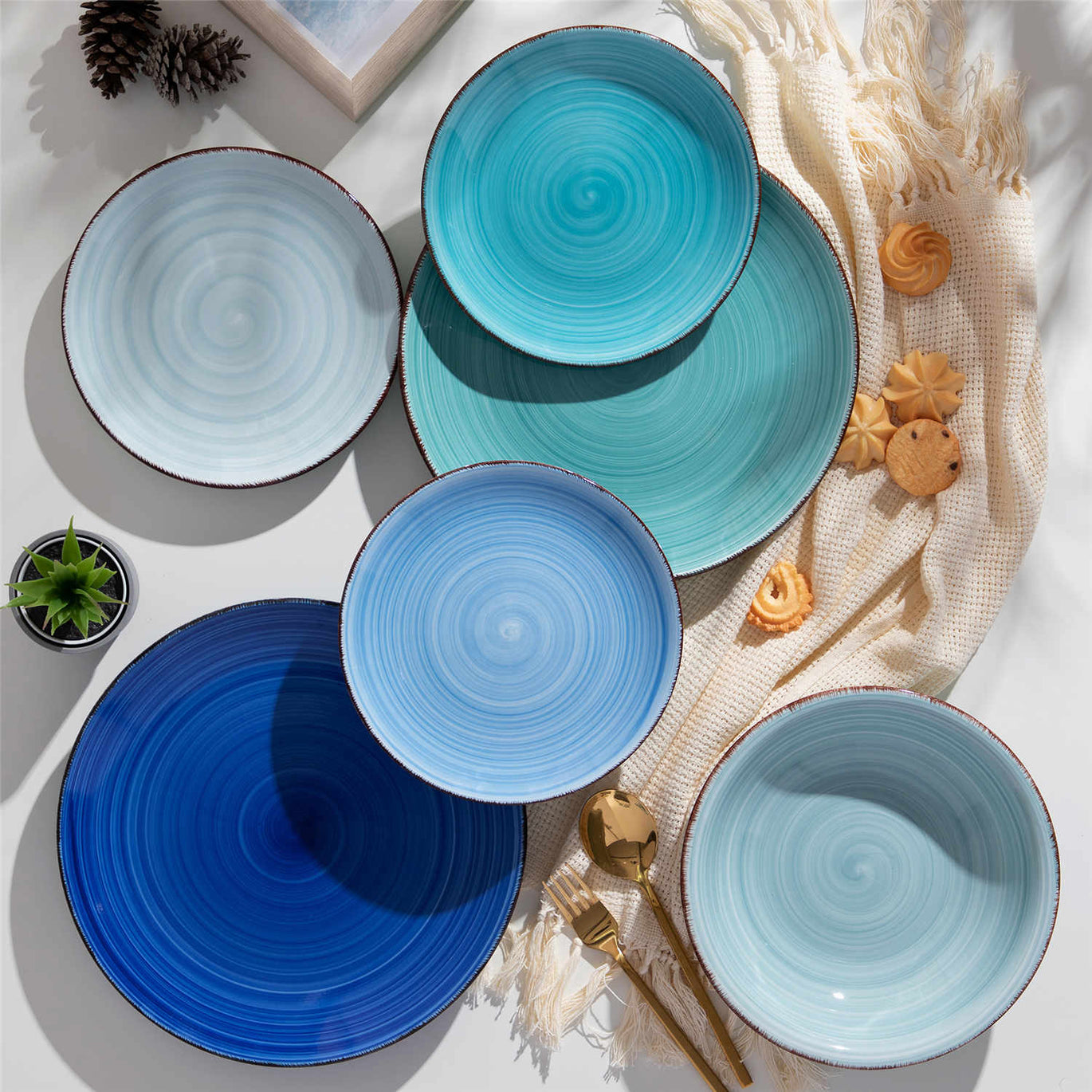
A trend piece from Nestasia describes how hosts are intentionally combining colors, patterns, textures, and even materials to create eclectic tables that feel personal and conversational. Rather than hiding odd pieces, people celebrate them: a vintage patterned plate next to a contemporary speckled bowl, a minimal solid charger under a wildly painted salad plate. This is not a mismatch accident; it is the art of layering visual stories.
Joyye’s analysis of consumer preferences in ceramic dinnerware styles supports the same shift. They note that buyers are moving from large, uniform sets toward smaller sets, open-stock pieces, and the ability to mix and match within a color story. Younger consumers, in particular, are described as prioritizing striking, social media–ready pieces while remaining more price sensitive than older, established buyers.
Tablescaping experts quoted by outlets such as Yahoo emphasize that modern, welcoming tables no longer require every plate to match. They encourage using mismatched pieces creatively, tying everything together through color or a repeating motif rather than a strict pattern. That philosophy is pure Gen Z: personal, expressive, and relaxed.
In other words, culture is legitimizing exactly what an entire generation already feels. Uniform sets belong to an older story about what a “grown-up” table must look like. Gen Z wants the table to look like themselves.
Identity Over Uniformity
Research from Restaurantware on why Gen Z cares about tableware describes table settings as a form of self-branding. Plates, bowls, and cutlery have become part of a personal visual ecosystem that also includes fashion, interior decor, and social feeds. Highly visual digital culture makes every breakfast bowl a potential photo, every dinner party a mini editorial.
In that context, a boxed set that looks exactly the same in every home works against the goal of uniqueness. Gen Z often builds their table the way they build their wardrobe: a few foundational basics and then expressive accent pieces with story and texture.
This is reflected in product trends. Joyye reports strong growth in artisanal, hand-thrown style plates with reactive glazes and organic edges, along with minimalist matte neutrals. Villeroy and Boch, in their discussion of 2025 tableware trends, frame this as “individualization”: some people express themselves through bold colors and unusual shapes, others through understated quality and fine details, but both are deliberately crafting a visual identity through tableware rather than accepting whatever came in a single box.
For a generation that values personal storytelling, uniformity simply is not aspirational.

Digital-First Vibes Beat Formal Place Settings
For Gen Z, dining is as much about atmosphere and experience as it is about flavor. Technomic and Toast’s restaurant studies show that younger diners disproportionately care about quality, speed of service, and digital ease. They book with apps, order from kiosks, and try new restaurants frequently, and they are extremely open to new concepts, from ghost kitchens to self-serve beverage walls.
Shared experiences matter, too. Business Insider, reporting on Resy data, notes that about 90% of Gen Z diners say they enjoy communal tables, compared with roughly 60% of baby boomers. They are comfortable at long tables, sharing space and conversation with strangers, especially when the environment feels safe, inclusive, and photogenic.
At home, that energy translates into casual dinners, communal platters, brunch boards, and themed nights that mirror restaurant experiences. Instead of formal sit-down meals with individually plated courses, there might be a ramen bar one evening, mezze spread another, or a grazing table for game night. Complete sets built around the idea of identical individual place settings feel mismatched to these flexible, vibe-centric occasions.
In practical terms, a large matched set is designed for a world in which you always seat the same number of guests in the same format. Gen Z’s reality is closer to “three friends on the couch tonight, six people sharing the dining table and coffee table next week.” Their tableware needs to flex with that.

Space, Budget, And Real Life
You do not need a formal housing report to know that many Gen Z adults are living in smaller apartments with limited storage. Research on millennial tableware preferences from Ekaceramic already highlighted this pattern for the previous generation, noting that smaller homes and apartments drive demand for stackable, multipurpose pieces that can move between casual meals and entertaining. The same logic applies even more strongly to younger renters, who often share spaces and move more frequently.
Joyye’s market overview observes that buyers are gravitating toward smaller sets and open-stock purchasing so they can replace single plates or build out a collection over time, rather than committing to a huge set up front. They also note that younger consumers are more price sensitive, even as they care deeply about aesthetics and durability.
A complete 16- or 20-piece set asks for a big storage commitment and a big upfront spend. A small, modular collection—four bowls from one brand, a few statement plates from a local potter, some neutral plates from an affordable retailer—feels more manageable, and more fun to shop for.
In short, Gen Z is not anti-ceramic. They are anti-buying-more-than-their-life-can-hold.

Sustainability And Anti-Waste Values
Health and sustainability threads run through nearly every study of Gen Z food and dining. Generation ZAlpha’s survey of food trends emphasizes how deeply this cohort cares about climate change, animal welfare, and ethical sourcing, and how strongly they “vote with their wallet” for brands aligned with those values. Restaurantware notes that Gen Z looks for reusable or long-lasting pieces, ethical production, and small artisans or fair-trade makers, not just aesthetics.
On the dinnerware side, Hopein Creations points out that genuinely durable, lead-free ceramic sets can support a wellness-focused lifestyle and reduce reliance on disposable tableware. Joyye, meanwhile, frames sustainable ceramic tableware as a fast-growing segment, with consumers actively seeking eco-friendly production, non-toxic glazes, and long-lasting, timeless designs rather than short-lived trends.
From that vantage point, a large, fragile set that includes rarely used specialty pieces can feel wasteful. It is much more aligned with Gen Z’s values to buy fewer, higher-quality items that work hard in everyday life—deep bowls suitable for pasta and soup, plates that can go from microwave to table, mugs that survive endless dishwashing—than to invest in eight identical salad plates that rarely see daylight.
A curated, mix-and-match collection is not just a style statement; it is a consumption philosophy.

What Really Matters: Plate Size, Color, And Experience
There is also a growing body of research suggesting that how tableware is designed matters more to eating behavior than whether every piece matches.
A study published on PubMed Central examined tableware size and its effect on “downstream” food intake. Participants ate the same breakfast portion out of small, medium, or large jars. Smaller containers increased immediate feelings of fullness and reduced energy intake at breakfast, but participants later compensated with significantly higher intake at subsequent meals, leading to higher total daily calorie consumption. The authors concluded that simply shrinking tableware is not a magic bullet for long-term portion control; people adjust over the day.
Separately, research summarized by brands such as Vancasso and Malacasa explores how plate color influences appetite and perceived portion size. High contrast between food and plate can make portions look larger and support more mindful servings, while low contrast, such as pale foods on white plates, can encourage over-serving. Warm, vivid colors like red or orange can stimulate appetite and energy, while cool tones like blue may subtly reduce intake and promote slower eating.
Taken together, these findings suggest that what you eat from matters in nuanced ways, but none of the data argue that a coordinated set is necessary for health or enjoyment. For Gen Z, that is liberating. It means they can optimize for mood and function—using, for example, calming natural greens for a wellness-focused salad bowl or high-contrast plates for mindful portions—without worrying whether the salad plate matches the pasta bowl.
A simplified view of these research themes looks like this:
Design factor |
Research signal |
Practical takeaway |
Plate or bowl size |
Smaller containers can increase immediate fullness but may not reduce total daily intake |
Choose sizes that feel satisfying for your routine rather than obsessing over “small plate hacks” |
Plate color and contrast |
High contrast can make portions look larger; pale food on pale plates can hide serving size |
Use contrast when you want to see portions clearly; reserve tone-on-tone pairings for intentional indulgence |
Overall tableware aesthetic |
Visual appeal boosts enjoyment and perceived value |
Focus on pieces you love to look at; they will support more joyful, mindful meals than a generic set |
None of this requires twelve identical dinner plates. It does require thinking about what each piece does for your eyes, your appetite, and your joy.

Pros And Cons Of Complete Ceramic Sets For Gen Z
Complete sets are not villains; they are simply tools, and like any tool, they fit some jobs better than others.
On the plus side, a boxed set delivers instant cohesion. For someone setting up a home from scratch, that can feel calming and efficient. The cost per piece is often lower than buying everything individually. Many high-quality sets are made from durable stoneware or porcelain, and when stored and handled well, they can last for decades. For certain aesthetics—minimalist, hotel-chic, or traditional formal dining—a uniform set provides a clean visual canvas for the food and linens to shine.
However, there are trade-offs that weigh heavily in a Gen Z context. A full set locks in a single color, texture, and mood, even as personal taste evolves. If a piece breaks, it may be difficult or expensive to replace, and if the pattern is discontinued, the “completeness” of the set can never be restored. Storage demands are significant, particularly when the set includes dedicated soup plates, bread plates, and saucers that are rarely used in modern casual dining. Some sets are not optimized for daily life—they may be too heavy, too delicate, or unsuitable for microwaves and dishwashers.
A mix-and-match collection flips that equation. It offers maximum flexibility and self-expression, often with better alignment to real usage patterns. You can own more of what you actually use, fewer of what you do not, and add or swap pieces as your tastes, roommates, or living spaces change. The downside is that it takes more curation and can be slightly more expensive per piece if you lean heavily on small-batch, artisanal makers.
For a generation that treats home as both sanctuary and studio, the freedom of mix-and-match often outweighs the tidy promise of a set.
A simple comparison helps clarify this:
Aspect |
Complete ceramic set |
Mix-and-match ceramic kit |
Visual identity |
Single, fixed look |
Evolving, layered, personal |
Storage |
High demand, often bulky |
Tailored to available space |
Cost pattern |
Larger upfront spend, lower per piece |
Smaller, ongoing investments |
Flexibility |
Limited, tied to one style |
High, easy to adapt and replace |
Emotional vibe |
Formal, traditional, “finished” |
Creative, collected, in-progress |
How Brands Can Serve Gen Z Without Forcing Full Sets
If you design or sell tableware, Gen Z’s disinterest in traditional sets is not bad news. It is an invitation to reimagine how you bundle and tell the story of ceramics.
First, emphasize open-stock options and modular “families” of pieces. Joyye’s data on purchasing patterns suggests that consumers want to add or replace individual items rather than buying entire sets again. Offering coherent color stories or glaze families that can be mixed freely gives Gen Z shoppers a sense of intentional cohesion without forcing them into a rigid configuration.
Second, lean into story-rich aesthetics that photograph well. Millennials helped cement the demand for minimalist Scandinavian, handcrafted, and vintage-inspired ceramics, as Ekaceramic points out, and Gen Z is extending that desire for “Instagram-friendly” designs into bolder color and form. Collections with organic shapes, reactive glazes, and nature-inspired textures, like those highlighted by Joyye and Villeroy and Boch, tap into both the back-to-nature mood and the need for visually striking tablescapes.
Third, center sustainability and transparency in your messaging. Across the sources, younger buyers are described as caring deeply about eco-friendly materials, non-toxic glazes, responsible production, and long product life. That matches broader food trend research from Generation ZAlpha, which emphasizes transparent ingredient sourcing and ethical practices. For ceramics, this means clearly communicating firing processes, safety certifications, energy and water use reduction, and repair or replacement programs.
Finally, design for small spaces and hybrid lifestyles. Stackable forms, nesting sets, and multipurpose pieces that move from oven to table resonate strongly with younger renters and urban dwellers. Ekaceramic notes that multipurpose, space-saving ceramics have been a selling point for millennial buyers; updating those ideas with Gen Z aesthetics—softer color palettes, gender-neutral design, inclusive cultural references—keeps them current.
The goal is not to convince Gen Z to love big sets again. It is to meet them where they are: in compact kitchens, on social feeds, at communal tables, and in values-driven shopping journeys.

How Gen Z Shoppers Can Build A Joyful, Practical Table Without A “Perfect” Set
If you are building your own collection, think of your tableware as a capsule wardrobe rather than a uniform. Start by identifying your daily rhythms. Maybe you eat most meals from a bowl while studying or working, host occasional dumpling nights, and love baking sheet-pan dinners. Your ceramic backbone should match those habits, not a formal hosting fantasy.
Many design-forward brands and trend reports suggest favoring durable stoneware for everyday pieces, thanks to its high firing temperatures and scratch-resistant, non-porous surface. Add a few porcelain or fine ceramic plates if you love a lighter, more refined look for special occasions or photography. Choose shapes that stack easily and feel good in your hands; this is functional sculpture you touch every day.
Color is where you can really play. Research on plate color and appetite from sources like Vancasso and Malacasa suggests that high-contrast combinations help with portion awareness, while calming tones support slower, more mindful eating. You might decide that cool, mossy green bowls are your go-to for salads and grain bowls, while warm terracotta plates come out for comforting pasta or shared dishes. White plates can be perfect for showcasing colorful produce, but pairing pale foods with white can make it harder to judge portion size, so use that pairing intentionally.
Sustainability-wise, give yourself permission to go slowly. Buying one excellent dinner plate or bowl per month, whether new from a transparent, eco-conscious brand or secondhand from a thrift store, can build a meaningful collection over time. Joyye’s sustainability analysis reminds us that long-lasting, timeless design is itself a green choice; choosing pieces you truly love and will keep for years is more important than chasing every micro trend.
If you do end up inheriting or buying a partial set, treat it as a base layer, not a constraint. Tablescaping pros and trend pieces from Yahoo and Nestasia both emphasize that alternating different plates, or “bookending” a table with a matching pair and mixing in the middle, makes an eclectic table look intentional. Your table does not need to apologize for its variety; variety is the point.
When A Complete Set Still Makes Sense
Despite all this, there are scenarios where a complete ceramic set can be a smart, Gen Z–aligned choice.
If you live in a house or co-living space where large group meals are a core part of life, a robust, neutral set of stackable stoneware can be the workhorse foundation that keeps hosting simple. If you truly love a particular design and know your taste leans minimal and consistent, a high-quality set chosen with care can provide years of visual harmony.
The key is that the set should serve your real routines. Look for pieces that are explicitly microwave and dishwasher safe, that fit into your cabinets, and that work across breakfast, solo lunches, and dinner parties. Consider the color psychology and visual contrast you want, and resist the idea that you must buy every matching accessory. It is completely acceptable to own just the parts of the set you will actually use and ignore the rest.
When a set becomes one ingredient in your broader mix—perhaps anchored by a few standout handmade pieces and some thrifted treasures—it can coexist beautifully with Gen Z’s desire for personality and play.
Closing: Curate Your Color Story, Not Someone Else’s Set
Gen Z’s cool distance from complete ceramic dinnerware sets is not a rejection of beauty or quality. It is a clear, creative yes to something else: tables that feel lived-in, values-driven, and delightfully personal. Ceramics still absolutely belong in that picture; they just do not have to march in identical rows.
If you are a maker, retailer, or home cook, the invitation is the same. Build and offer pieces that mix with real life, honor sustainability, and light up the camera and the senses. Curate color, texture, and form like a playlist. When the table looks like your story, every meal, whether a quick solo snack or a Sunday supper with friends, becomes a tiny celebration of who you are.
References
- https://pmc.ncbi.nlm.nih.gov/articles/PMC10048240/
- https://www.dairymax.org/sites/default/files/2024-03/Knit-2022-Gen-Z-Restaurant-Dining-Report-Version-2.0.pdf
- https://www.businessinsider.com/gen-z-dining-trends-communal-table-restaurants-2025-11
- https://ekaceramic.com/the-impact-of-millennials-on-the-ceramic-tableware-market-in-north-america/
- https://www.generationzalpha.com/blog/gen-z-food
- https://www.joyye.com/info-detail/consumer-preferences-in-ceramic-dinnerware-styles?requestId=
- https://kenkuscher.com/gen-z-at-the-table-how-the-next-generation-is-reshaping-the-restaurant-industry/
- https://www.lemon8-app.com/@staceygore795/7372722937188712965?region=us
- https://pourmybeer.com/millennials-restaurants/
- https://www.royalwarechina.com/what-are-the-trends-for-2025-dinnerware/
También te puede interesar
Stern Juego de vajilla de 16 piezas
- £68.00
£77.00- £68.00
- Precio unitario
- por
-
Blue
-
Green
-
Red
-
Grey
Simi Juego de vajilla de 24 piezas
- £77.00
£104.00- £77.00
- Precio unitario
- por
Bonita Juego de vajilla de 18 piezas
- Desde £49.00
£61.00- Desde £49.00
- Precio unitario
- por
-
Blue
-
Multicolor
Starry 16 Piece Juego de vajilla
- £68.00
£70.00- £68.00
- Precio unitario
- por
-
Blue
-
Green
-
Red
-
Gradient Green