



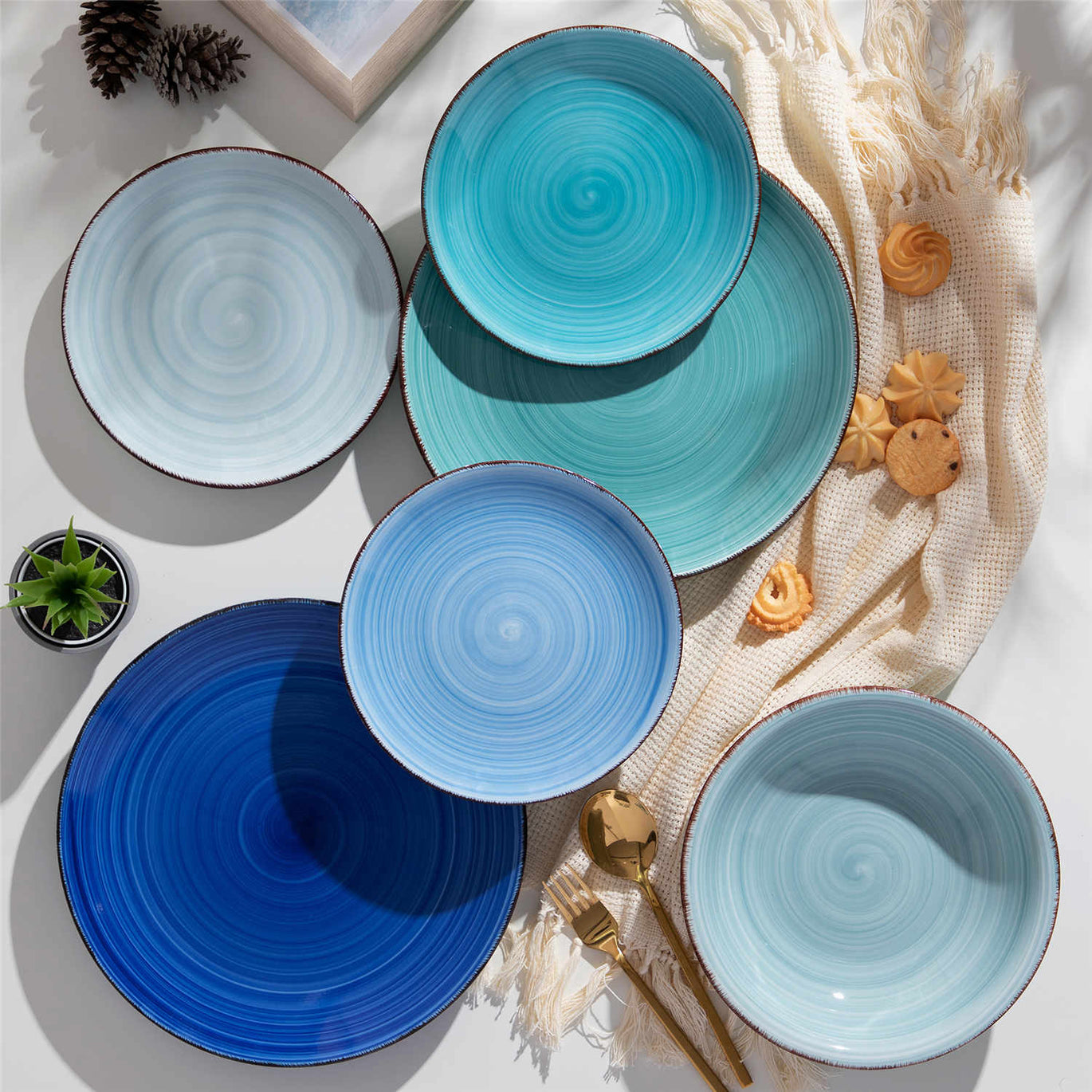


Sustainable Fashion Principles, Reimagined in Ceramic Tableware

When you first hear “sustainable fashion,” your mind probably jumps to linen dresses, organic cotton tees, and capsule closets. Mine certainly did. But in my work curating joyful, colorful tabletops, I’ve learned that the very same principles shaping ethical wardrobes are quietly transforming our plates, bowls, and mugs.
Ceramic tableware has become the dressy-but-dependable denim of the dining world: rooted in natural materials, designed to last, and increasingly produced with serious attention to energy, waste, and chemistry. Manufacturers, studio potters, and eco-conscious brands are reshaping clay the way slow fashion reshaped our closets.
In this guide, we will translate core sustainable fashion ideas into practical choices for ceramic tableware, grounded in what manufacturers, researchers, and educators are actually doing today. Think of it as dressing your table with the same care you bring to your favorite jacket: expressive, intentional, and built for many seasons of use.
From Closet to Cupboard: Why Fashion Thinking Belongs on the Table
Sustainable fashion is ultimately a value system. It favors mindful consumption over mindless accumulation, durability over disposability, and transparency over mystery supply chains. The same shift is happening in ceramics.
A guide from VanCasso Tableware frames anti-consumerism as deliberate, values-driven consumption. Choosing one durable ceramic bowl instead of a stack of disposable options is presented as a practical act against planned obsolescence. That mindset echoes slow fashion’s emphasis on “buy less, choose well, make it last.”
Ceramic producers and educators reinforce why this matters. Environmental overviews from sources such as Grescasa and HF Coors describe ceramic tableware as made primarily from abundant natural materials like clay and minerals, with modern production increasingly powered by energy-efficient kilns and sometimes even renewable energy. Once fired, ceramic pieces are durable, chemically inert, and stable over long periods.
At the same time, sustainability reports and technical pieces from Euro Ceramica and Hosen Home highlight the flip side. Ceramics demand high firing temperatures, often above about 2,150°F, and factory kilns can consume large amounts of energy and water. That is why many manufacturers now pursue energy-efficient kilns, recycled clay, water recycling systems, safer glazes, and reduced packaging impacts.
In other words, the footprint of a plate is very real, just like the footprint of a dress. The question is not whether the impact exists, but how to design it better from the first sketch to the last chip.

Principle 1 – Material Stories: Choosing Better “Fabrics” for Your Table
Fashion people obsess over fibers. Is it polyester, linen, or wool, and where did it come from? On the table, those fibers become clay bodies and glaze systems. The choice between earthenware, stoneware, porcelain, and recycled ceramics is the plate-side equivalent of picking fabrics with different lifespans and environmental profiles.
Technical descriptions from Globalreach Ceramic and Euro Ceramica outline three core ceramic families. Earthenware is lower-fired and more porous, traditionally rustic and more prone to chipping. Porcelain is the refined, high-fired, non-porous option, strong and often used for fine dinnerware. Stoneware sits in the middle but tends to be the everyday hero: dense, non-porous, and fired at very high temperatures, roughly in the 2,150–2,330°F range.
Euro Ceramica’s sustainability-focused article emphasizes that stoneware’s microscopic structure changes at these temperatures, locking pores, resisting deformation, and delivering chip- and crack-resistant pieces that support long lifecycles. Because they need replacing less often, they reduce demand on raw materials and repeated manufacturing. That is the tableware equivalent of a sturdy pair of boots you resole instead of tossing.
HF Coors, a long-running U.S. maker, describes its vitrified stoneware as non-porous, lead-free, and safe for broiler, oven, microwave, dishwasher, and freezer use, with strong resistance to staining, cracking, and crazing. That kind of material performance directly supports sustainable consumption: you keep using the same pieces across seasons, menus, and holidays, instead of cycling through cheap sets.
Meanwhile, eco-focused brands like Joyye and Homey Ceramic underline that eco-friendly ceramic products start with responsible materials. They favor natural or recycled clay, reclaimed grog (ground-up fired ceramic used to strengthen new clay bodies), and biodegradable additives, all aimed at conserving raw resources and reducing landfill waste.
To frame this in fashion language: earthenware can be like delicate silk, beautiful but demanding. Stoneware is your workhorse denim, and recycled clay is the upcycled textile that tells a story of resourcefulness.
Material Comparison: Fashion Logic for Plates
Material Type |
Key Technical Traits (from sources) |
Fashion-Style Interpretation |
Earthenware |
Lower firing temperatures around 1,945°F, more porous and chip-prone, historically widespread because it is easy to fire |
Romantic, rustic “linen dress” of tableware; charming but less hard-wearing for heavy daily use |
Stoneware |
High firing around 2,150–2,330°F, non-porous, dense, chip- and crack-resistant, highly durable |
Everyday, premium denim; strong, versatile, and ideal for a long-term capsule collection |
Porcelain / Bone China |
Very high-fired, non-porous, strong and often translucent; fine dinnerware |
Tailored blazer; refined, light, and elevated, ideal for special or multi-decade pieces |
Recycled / Reclaimed Ceramic |
Uses reclaimed clay or crushed ceramic waste, reduces mining and landfill impacts |
Upcycled textile; resource-saving with unique aesthetic character and a visible sustainability story |
When you choose tableware, you are effectively choosing a fabric story. If you want your table to echo slow fashion, favor materials like dense stoneware or well-made porcelain that are engineered for longevity and, where possible, incorporate recycled or reclaimed content.

Principle 2 – Longevity and Quality over Quick Trends
Sustainable fashion loves pieces that age gracefully. The same is true for ceramics. A stoneware bowl with a soft matte glaze that survives thousands of washes is far more sustainable than a flimsy plate that chips in a season.
Euro Ceramica notes that stoneware’s long lifecycle supports sustainable consumption patterns by reducing the frequency of replacement. Grescasa similarly emphasizes the durability and decades-long lifespans of ceramic items, pointing out that fewer replacements mean less material consumption and less waste over time.
HF Coors backs this up with concrete performance claims: vitrified, non-porous bodies that resist moisture and odors, a wide appliance safety range, and a two-year guarantee against chipping under normal use. This is like a brand promising reinforced seams and long-wear fabric rather than disposable fashion.
Hosen Home’s sustainability article goes a step further by explicitly framing durability as a key sustainability strategy. It highlights design for chip resistance, utensil mark resistance, stackability, and multi-use functionality as ways to cut replacement frequency, transport impacts, and storage needs. That aligns almost perfectly with capsule wardrobe thinking, where each piece must work hard and work often.
VanCasso’s anti-consumerism guide adds a human dimension. It notes research linking visual clutter with elevated cognitive load and stress, while voluntary simplicity and owning fewer, values-aligned possessions are associated with improved well-being and autonomy. Their minimalist baseline for a place setting—a versatile plate and a generously sized bowl, plus one mood-lifting statement mug—mirrors the idea of a tiny but powerful wardrobe of essentials. When your shelves are lined with a few durable, well-loved pieces, your mind and calendar both feel lighter.
Durability has tradeoffs. Ceramics are heavy and can break with impact, as Joyye and eco-village guides from VanCasso acknowledge. In busy communal kitchens, chipping is a real risk. That is where design details matter: slightly thicker rims, stackable forms, and padded storage are the ceramic equivalents of reinforced hems and proper garment care.

Principle 3 – Clean Chemistry and Skin-Safe “Dyes”
In fashion, there is growing concern over toxic dyes, finishes, and microplastics. On the table, the parallel is glaze chemistry and leaching. A plate touches your food as intimately as a shirt touches your skin.
Technical resources from Hosen Home explain that glaze is a glass-like coating that waterproofs ceramic bodies, prevents staining, and adds durability, color, and texture. But not all glazes are created equal. Historically, some used lead or other hazardous components. Modern sustainable practice is about eliminating those risks.
Hosen’s glazing guidelines stress that all food-contact glazes should pass strict lead and cadmium leaching tests to meet standards in regions such as the United States and Europe. They mention using independent labs like SGS and Intertek, as well as in-house simulations that test dishwasher, microwave, cutlery resistance, and thermal shock. Sustainable-ceramics guidance from the same company reiterates the importance of low-lead or lead-free glazes and third-party testing for materials safety.
HF Coors positions itself clearly here, describing its dinnerware as vitrified, lead-free, non-porous, and resistant to staining and cracking, and safe across broiler, oven, microwave, dishwasher, and freezer. Joyye likewise emphasizes lead-free, non-toxic glazes for eco-friendly tableware and vases.
The home-studio side echoes this. Education resources such as LibreTexts and articles from Homey Ceramic and Crafty Clayworks recommend replacing hazardous glaze ingredients like lead and barium with safer alternatives and using modern non-toxic formulas and mineral or plant-based pigments. These choices aim to protect both artisans and end users, especially for dishware and cookware.
There is also nuance in aesthetics. Hosen Home explains that crackle glazes, which deliberately create fine surface cracks, are primarily decorative and must be carefully sealed and certified before heavy food use. Reactive glazes, which chemically react during firing to create layered, one-of-a-kind patterns, can still meet commercial-grade standards if they are properly formulated and fired. Matte glazes may require tighter firing control to maintain durability and cutlery resistance.
In fashion terms, glaze chemistry is the dyehouse. When you shop, asking about lead-free, food-safe, and independently tested glazes is the ceramic equivalent of asking whether your shirt’s dye is certified and if microplastics are minimized.

Principle 4 – Circularity, Repair, and End-of-Life
Circular fashion champions repair, resale, and recycling. Ceramics are inherently different—they do not unravel into threads—but circular thinking still applies.
Multiple sources converge on closed-loop approaches. Crafty Clayworks and LibreTexts describe reclaiming clay by rehydrating and reusing trimmings, failed pieces, and studio waste. Broken or unfired ceramics can be crushed and used as grog in new clay bodies, improving strength and texture while diverting waste from landfill. Some studios aim for zero-waste systems where no ceramic waste leaves the studio.
Hosen Home’s sustainability discussion highlights similar principles at industrial scale, encouraging recycled production scrap and closed-loop handling of clay slurry and glaze wastewater. They recommend filtering and reusing water, separating heavy materials for proper disposal, and documenting practices through audits and certifications.
Articles on recycled ceramics from Nugu Home emphasize that using crushed and reprocessed ceramic waste conserves natural resources, cuts mining impacts, lowers the overall carbon footprint of production, and reduces landfill pressure and methane emissions. They also point out that recycled ceramic tableware often carries unique visual character that sets it apart from mass-produced pieces.
Grescasa notes that at end-of-life, ceramics can be recycled in specialized facilities or ground for use in new ceramics or construction materials. When not recycled, ceramic fragments gradually return to a non-toxic mineral state in the environment, unlike plastics that persist for centuries. VanCasso’s local-clay guidance adds everyday options: using broken pieces in mosaics, garden drainage, or as aggregate.
Repair culture in ceramics is not as straightforward as sewing a seam, but it does exist. Crafty Clayworks and similar sources encourage offering repair services and take-back programs, and some makers experiment with creative reuse of cracked or misfired pieces rather than discarding them. In practice, that can mean turning a chipped dinner plate into a snack platter or wall piece, or rehoming imperfect pieces as discounted “seconds” rather than trash.
From a fashion lens, this is the world of visible mending and upcycling, translated into clay shards and glaze. The principle is identical: honor the material by extending its useful life and closing the loop wherever possible.

Principle 5 – Localism, Transparency, and Ethical Production
Slow fashion asks who made your clothes, under what conditions, and how far they traveled. Tableware is no different.
VanCasso’s eco-village article defines local clay tableware as pieces made from regionally sourced clays by nearby studios or co-ops, often in stoneware or vitrified stoneware bodies. Local supply chains can reduce transport emissions and packaging waste, and nearby studios frequently reclaim clay scraps and favor minimal or plastic-free packaging.
Joyye highlights Spanish and Latin American ceramic studios that blend heritage techniques with solar-powered kilns, recycled or biodegradable packaging, and hand-throwing or hand-painting. Their focus on locally sourced clays and community-based workshops shows how ceramics can support regional economies much like small fashion labels supporting local weaving or sewing communities.
On the industrial side, sustainability overviews from Hosen Home call out certifications and audits as key transparency tools. They mention food-contact safety certificates such as FDA in the United States and LFGB in Europe, materials compliance standards like REACH and RoHS, and ethical labor and factory audits through frameworks such as BSCI and SEDEX. For buyers who care about ethical production, those labels function much like fair-trade or organic certifications in apparel.
HF Coors adds another dimension by emphasizing that its products are fully made in the United States and produced by a certified Service-Disabled Veteran-Owned Small Business in a designated development zone. That story ties dinnerware directly to local jobs, skills, and community resilience.
When you ask a tableware brand about clay sources, glaze safety, energy use, and certifications, you are doing the ceramic equivalent of reading a garment’s care and origin label. Transparency is itself a sustainability principle.

Principle 6 – Capsule Tableware: Timeless Design and Fewer, Better Pieces
The capsule wardrobe has a tableware twin. Instead of a closet of fast-fashion outfits, imagine a cupboard of versatile, mixable pieces that work across breakfasts, dinner parties, and everything in between.
VanCasso’s anti-consumerism article offers an elegant starting point: one substantial plate around 10–11 inches and one tapered bowl holding roughly 20–26 fl oz as a baseline, plus a statement mug that sparks joy. Their advice emphasizes stackability, comfortable grip, and neutral, mixable colors that remain season-proof. Additional hosting pieces can be borrowed, rented, or added thoughtfully rather than purchased in massive sets.
Homey Ceramic’s eco-friendly design guidelines support the same direction. They recommend timeless, versatile aesthetics over trend-driven styles, modular or replaceable components, and multi-functional pieces that are easy to repair or repurpose. Joyye’s focus on earthy tones, unpolished textures, and subtle variations also leans toward timeless rather than trendy.
Research cited by VanCasso links visual clutter to increased cognitive load and stress, while voluntary simplicity is associated with improved well-being and autonomy. A well-curated stack of bowls and plates, with thoughtful shapes and cohesive glazes, becomes a mental exhale rather than a visual shout.
Market reports mentioned in VanCasso’s guide estimate that global ceramic tableware sets are worth tens of billions of dollars, with steady growth projected over the next decade. That economic context matters: demand is strong, but for home users, the most sustainable move is still to buy only what you truly need, and to make those pieces count.
At the table, a capsule approach means choosing forms you reach for constantly, in colors and finishes that harmonize across seasons. Think one deep bowl that handles noodles, salads, and stews, plates that layer under everything from weekday pasta to holiday roasts, and a small set of serving pieces that pull double duty. It is fashion logic applied to forks and soup.

Practical Guide: Shopping and Styling with Sustainable Fashion Logic
Let us turn these principles into real-world choices you can make the next time you are eyeing a stoneware dinnerware line or a handcrafted vase.
Start with your habits, just as you would when building a capsule wardrobe. Do you eat more grain bowls than multi-course meals? Then weight your budget toward bowls with strong rims and comfortable grip. Cook in the oven a lot? Prioritize vitrified stoneware rated for oven and broiler use, as described by brands like HF Coors, and ask explicitly about thermal shock resistance, mirroring the technical focus outlined by Hosen Home.
When evaluating materials, favor dense stoneware or quality porcelain for daily use. Draw on Euro Ceramica’s and Grescasa’s emphasis on long lifespans and chip resistance, and VanCasso’s guidance that stoneware handles everyday knocks better than more fragile bodies. If a brand offers recycled clay content or reclaimed ceramic grog, that is a strong circular-economy signal aligned with Crafty Clayworks, Nugu, and LibreTexts recommendations.
Chemistry should never be a mystery. Ask whether glazes are lead-free, cadmium-safe, and tested to relevant standards, echoing Hosen Home’s insistence on third-party testing and HF Coors’ focus on non-toxic, vitrified surfaces. Be cautious with heavily crackled glazes for primary dinner plates unless the maker can show clear food-safe sealing and certifications. Reactive or matte glazes are fine when properly formulated; Hosen’s myth-busting notes confirm that both can be hygienic and dishwasher-safe if they are non-porous and fired correctly.
Packaging and shipping are part of the outfit. Hosen Home describes replacing foam and plastic with recyclable cardboard, molded pulp trays, water-based printing inks, and compostable wraps. Joyye mentions recycled or biodegradable packaging and even creative options based on agricultural waste. When possible, choose sellers offering such options or ask for reduced-plastic shipping. That step mirrors sustainable fashion brands moving away from plastic polybags in favor of paper or reusable cloth packaging.
Care rituals complete the look. Joyye’s matte-finish guidance and VanCasso’s care recommendations suggest washing matte or light-colored pieces soon after contact with highly pigmented foods like tomato, curry, or coffee to prevent surface staining. Avoid harsh abrasives to keep both matte and glossy finishes bright. VanCasso’s eco-village advice stresses avoiding thermal shock, such as moving a dish directly from fridge to hot oven. Simple interventions like padded shelf liners, rack separators, and gentle stacking help extend the life of rims and foot rings.
Finally, leave room for joy. Sustainable fashion does not mean a closet of only beige basics, and sustainable tableware does not mean joyless plates. Joyye notes that sustainable ceramics often lean into earthy tones and visible handmade variation, while Joyye’s matte-finish article and Hosen’s reactive-glaze insights celebrate unique color layers and tactile textures. One reactive-glaze serving platter or a set of mossy, sage-green cups can become your table’s statement coat, while the rest of your collection quietly does the everyday work.
Pros and Cons: Is Ceramic Tableware the “Organic Cotton” of Your Kitchen?
Ceramic tableware shines in many of the same places as sustainable textiles, but it is not impact-free.
On the positive side, Grescasa and HF Coors emphasize that ceramics are made from abundant natural materials, are non-toxic and chemically inert, and have long lifespans measured in decades when well cared for. Their durability means fewer replacements, less waste, and less overall material consumption. Replacing plastic plates with ceramic, as several sources highlight, reduces plastic waste that would otherwise persist for centuries. Recyclability at specialized facilities, or reuse as aggregate or grog, extends that benefit.
Ceramic cooking and serving pieces often have good thermal performance, retaining heat in ways that can modestly lower cooking or reheating energy, according to Grescasa. They require minimal harsh cleaning agents and generally shrug off everyday detergents.
On the challenge side, sustainability articles from Hosen Home, Grescasa, and VanCasso all underline energy-intensive firing as a major hotspot. Kilns can reach temperatures around 2,200–2,450°F or more, and factories may consume thousands of liters of water per day. Those impacts are being mitigated by energy-efficient kilns, lower-temperature glaze systems, solar-powered electric kilns, water and glaze recycling, and renewable energy sourcing, but the energy reality remains.
Then there are practical tradeoffs. Ceramics are heavy and can chip or break, especially in crowded kitchens and communal settings. Upfront cost is often higher than plastic or thin glass, though long-term durability can offset that. End-of-life recycling is possible but not as ubiquitous as textile donation bins.
Still, when produced with thoughtful materials, efficient kilns, safer glazes, and circular waste practices, ceramic tableware looks remarkably like the organic cotton of the kitchen: grounded in nature, designed to last, and much kinder than the single-use alternative.
Short FAQ: Styling Your Table Like a Sustainable Wardrobe
Q: Is stoneware really more sustainable than earthenware for everyday plates?
Stoneware is generally better suited for long-term, heavy use, which supports sustainability. Euro Ceramica describes stoneware as non-porous, chip- and crack-resistant, fired at higher temperatures that transform its microscopic structure and improve durability. By contrast, earthenware is lower-fired and more chip-prone, as noted in historical and technical overviews from Globalreach Ceramic and VanCasso. When a plate lasts longer and needs fewer replacements, it reduces the total material and energy demanded over time. The energy cost of higher firing temperatures is significant, but many manufacturers are investing in efficient kilns and lower-impact firing schedules to balance that equation.
Q: Are reactive and matte glazes safe, or should I stick to glossy white?
Glossy white glazes have a long track record in hospitality, and Hosen Home acknowledges that they are easy to clean and familiar to diners. However, their technical guidance also notes that reactive and matte glazes can be commercial-grade and fully food-safe when formulated and fired correctly. All food-contact glazes, whatever the finish, should pass lead and cadmium leaching tests and durability checks for dishwasher, microwave, cutlery, and thermal shock performance. Some crackle glazes are primarily decorative unless carefully sealed and certified. If a brand or studio can show testing and certifications and describes its glazes as lead-free and food-safe, a reactive or matte finish can be just as practical as glossy white, with more visual drama.
Q: What should I do with chipped or broken ceramic pieces to keep things circular?
Circular-practice resources from LibreTexts, Crafty Clayworks, Hosen Home, Nugu, and VanCasso all emphasize reuse and recycling. Hairline chips on rims may mean retiring a plate from primary food service, but it can still serve as a tray, plant saucer, or catch-all dish. Fully broken pieces can be used in mosaics, garden drainage, or as decorative aggregate. Studios and some manufacturers may grind waste ceramics into grog for new clay bodies or for construction uses. Where available, look for local recycling or take-back programs that accept ceramics for processing. Keeping shards out of landfill and back in circulation echoes wardrobe resale and upcycling, just in a more mineral, crackly form.
Ceramic tableware may not walk a runway, but every plate and mug carries a design brief that looks strikingly like sustainable fashion. Natural materials stand in for fibers, glazes echo dyes, kilns mirror dyehouses and factories, and your cupboard becomes a capsule collection of forms and colors that support both daily rituals and planetary boundaries.
When you choose durable stoneware in lead-free glazes, favor recycled clay, support transparent makers, and curate a playful but restrained set of pieces, you are doing more than setting a pretty table. You are dressing your dining life in values you can see and touch, one joyful, color-splashed plate at a time.
References
- https://www.academia.edu/121437073/LCA_Case_Study_of_Ceramic_Tableware_Ecodesign_Aspects_of_Ceramics_Production_from_Ancient_Technology_to_Present_Factory
- https://ceramicartsnetwork.org/ceramics-monthly/ceramics-monthly-article/Clay-Culture-Zero-Waste
- https://human.libretexts.org/Workbench/Ceramics/15%3A_Innovative_Uses_of_Ceramics/15.02%3A_Sustainable_and_Eco-Friendly_Ceramic_Practices
- https://www.betterceramic.com/ceramic-plates-enhance-rd-success/
- https://ceramamadinnerware.com/Dinner_Plates/202501121222086231.html
- https://fennhome.com/mastering-ceramic-tableware-a-comprehensive-guide-to-craftsmanship-and-production/
- https://globalreachceramic.com/blog_details/ceramic-factory-and-complete-manufacturing-process
- https://grescasa.com/the-environmental-benefits-of-using-ceramic-products/
- https://homeyceramic.com/how-to-create-an-eco-friendly-ceramic-product-line/
- https://hosen28.com/glazing-techniques/
Tu pourrais aussi aimer
Stern Ensemble de vaisselle 16 pièces
- £68.00
£77.00- £68.00
- Unit price
- pour
-
Blue
-
Green
-
Red
-
Grey
Simi Ensemble de vaisselle de 24 pièces
- £77.00
£104.00- £77.00
- Unit price
- pour
Bonita Service de table 18 pièces
- À partir de £49.00
£61.00- À partir de £49.00
- Unit price
- pour
-
Blue
-
Multicolor
Service de vaisselle étoilé 16 pièces
- £68.00
£70.00- £68.00
- Unit price
- pour
-
Blue
-
Green
-
Red
-
Gradient Green