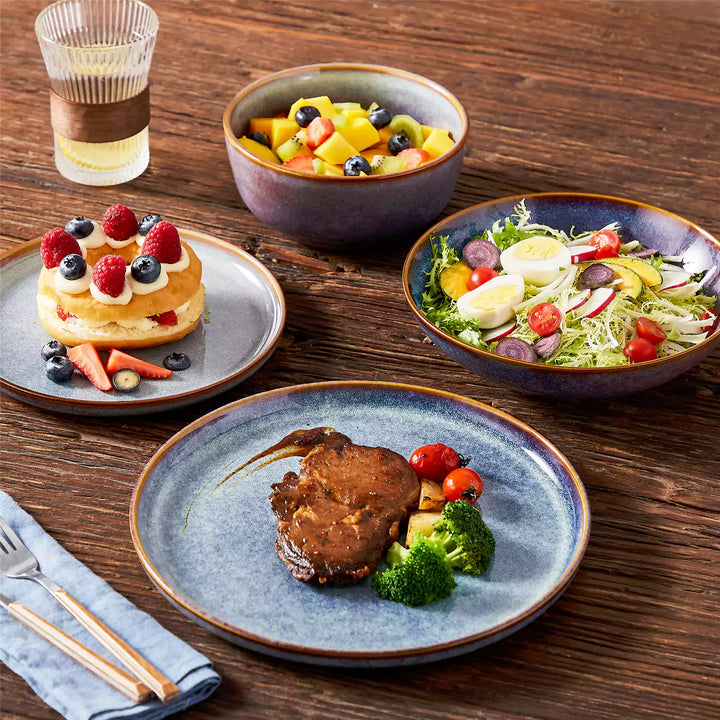


Man mano che sempre più appassionati di cucina diventano consapevoli di ciò che entra in contatto con il loro cibo, le domande sulla sicurezza delle stoviglie non sono più di nicchia: sono essenziali. Gli alimenti acidi fanno parte della dieta quotidiana, dai curry a base di pomodoro alle insalate agli agrumi, fino ai condimenti a base di aceto. Questo porta a una domanda fondamentale: il gres è sicuro per i cibi acidi? E, soprattutto, il gres è atossico nell’uso quotidiano?
Grazie alla sua durata, all’estetica naturale e alla lavorazione artigianale, le stoviglie in gres sono diventate sempre più popolari. Tuttavia, persistono alcune preoccupazioni legate alle stoviglie in smalto reattivo, al possibile rilascio di metalli pesanti e al confronto tra gres e altre ceramiche. Questa guida affronta la sicurezza dei materiali basandosi su scienza, temperature di cottura, chimica degli smalti e applicazioni pratiche, per aiutarti a consumare i pasti con fiducia e sicurezza.
Perché il gres resiste agli acidi
La scienza della vetrificazione è la chiave della sicurezza del gres. Il gres di alta qualità è cotto a temperature superiori ai 1.200°C, temperatura critica alla quale le particelle di argilla si fondono formando una struttura densa e vetrosa. Questo processo riduce significativamente la porosità, rendendo il corpo del piatto chimicamente inerte e resistente agli acidi.
Il gres non è più argilla cruda dopo la vetrificazione. Piuttosto, crea una struttura stabile che non assorbe facilmente liquidi né reagisce con sostanze acide. Il gres smaltato è uno dei materiali più affidabili per l’uso quotidiano se combinato con uno smalto ben cotto.
Questa è una differenza importante nel dibattito gres vs ceramica. Sebbene tutto il gres sia ceramica, non tutte le ceramiche sono gres. La terracotta a bassa cottura, come questa, è molto più porosa e dipende dalla qualità dello smalto per essere sicura. Il gres cotto ad alte temperature, invece, ha una resistenza intrinseca agli acidi grazie alla sua struttura densa.

Le stoviglie colorate e gli smalti reattivi sono sicuri?
Le stoviglie in smalto reattivo possono suscitare dubbi per via dei loro motivi screziati, contrasti di colore e aspetto artigianale. La preoccupazione è naturale, ma lo smalto reattivo non è pericoloso.
Uno smalto reattivo indica semplicemente che i minerali nello smalto reagiscono durante la cottura producendo effetti speciali sulla superficie. Questi smalti sono stabili e sicuri a contatto con il cibo se cotti a temperatura di gres e certificati senza piombo e cadmio.
Il vero rischio non riguarda il colore o il motivo, ma l’integrità dello smalto. Gli alimenti acidi possono agire come solventi deboli se lo smalto contiene metalli pesanti instabili o è stato cotto a temperature insufficienti. In questi casi, i metalli possono essere rilasciati, causando retrogusti metallici o esposizioni a lungo termine.
I produttori testano le stoviglie in smalto reattivo per resistenza al pH, così che gli acidi non penetrino nello smalto. Sicurezza alimentare e bellezza visiva non si escludono a vicenda, se rispettati gli standard di qualità.
Alimenti acidi tipici e consigli d’uso
Gli alimenti acidi non sono un lusso ma parte dei pasti quotidiani. Tipici esempi sono pomodori, agrumi, yogurt, salse a base di aceto, sottaceti, tamarindo, salsa di soia e riduzioni di vino.
Questi alimenti sono adatti a stoviglie in gres di alta qualità poiché uno smalto liscio e denso funge da barriera fisica, impedendo agli acidi di entrare in contatto con l’argilla e prevenendo qualsiasi rilascio o reazione chimica.
- Non conservare alimenti molto acidi durante la notte in piatti incrinati o con smalto screpolato.
- Mai usare il microonde a vuoto con piatti in gres, perché lo smalto può subire stress da riscaldamento irregolare.
- Lasciare raffreddare leggermente cibi molto caldi prima del lavaggio per evitare shock termico.
Il gres resiste bene se utilizzato correttamente, anche con alimenti acidi regolarmente.

Come verificare se il gres ha uno smalto sicuro per alimenti
Non serve un laboratorio per determinare se le stoviglie sono sicure, ma è importante osservare attentamente. Inizia dalle etichette del produttore. Termini come stoviglie senza piombo, senza cadmio o smalto sicuro per alimenti hanno valore se supportati da rispetto agli standard FDA o internazionali.
Esamina la superficie. Il gres smaltato deve essere liscio e vetroso, non gessoso o ruvido. Qualsiasi argilla scoperta, soprattutto sulle superfici di consumo, è un campanello d’allarme.
Controlla i dettagli di cottura se possibile. Il gres cotto a temperature superiori ai 1.200°C è molto più resistente all’interazione con gli acidi rispetto alle ceramiche a bassa cottura. I marchi che dichiarano temperature di cottura e test degli smalti sono trasparenti e affidabili.
4 segnali che le stoviglie ceramiche potrebbero rilasciare metalli pesanti
- Sapore metallico o amaro consumando alimenti acidi.
- Usura evidente dello smalto, scolorimento o sfaldamento.
- Rete di microcrepe (craquelé) che peggiora col tempo.
- Macchie permanenti non rimovibili dallo smalto.
Le ceramiche pre-moderne o più datate possono contenere pigmenti a base di piombo più soggette a rilascio di metalli. Gli alimenti acidi accelerano il fenomeno, perciò integrità dello smalto e metalli pesanti vanno considerati insieme.
Le stoviglie moderne certificate di marchi noti raramente presentano questi rischi.
Istruzioni essenziali per preservare lo smalto del gres
Anche il gres migliore beneficia di una buona manutenzione. Non usare spazzole abrasive che possono graffiare lo smalto a livello microscopico. La maggior parte dei gres è lavabile in lavastoviglie, ma talvolta è consigliato il lavaggio a mano per mantenere la superficie liscia.
Mai impilare piatti pesanti senza cura, perché lo smalto può opacizzarsi per attrito costante. In caso di craquelé, usare il pezzo per cibi secchi invece di cibi acidi.
Con cura adeguata, lo smalto rimane barriera continua, non reattiva, bella e sicura nel tempo.
Godersi i pasti con tranquillità
Il gres ha superato la prova del tempo sia estetica sia chimica. Il gres è atossico, durevole e compatibile con alimenti acidi se cotto ad alta temperatura, smaltato e prodotto responsabilmente.
Conoscere la differenza tra buon gres e ceramiche a bassa cottura permette scelte consapevoli. La sicurezza non significa evitare i materiali, ma capire come sono fabbricati, testati e mantenuti.
Ogni pasto, che sia un’insalata di limone o un ricco stufato di pomodoro, può essere servito con sicurezza e fiducia con le giuste stoviglie in gres.

FAQ
D: Il gres è atossico per l’uso quotidiano?
R: Sì. Il gres ad alta cottura senza piombo è chimicamente inerte e sicuro per i pasti quotidiani, inclusi alimenti acidi.
D: Le stoviglie in smalto reattivo sono sicure?
R: Sì, gli smalti reattivi sono sicuri se cotti correttamente e certificati senza piombo e cadmio.
D: Qual è la differenza tra sicurezza di gres e ceramica?
R: Il gres è cotto a temperature più elevate, rendendolo più denso e meno poroso rispetto ad altre ceramiche, in particolare la terracotta.
D: Gli alimenti acidi possono danneggiare il gres smaltato?
R: No, se lo smalto è intatto e sicuro per alimenti. I danni indicano generalmente scarsa qualità dello smalto o usura nel tempo.
D: Quanto dura il gres?
R: Con cura adeguata, il gres può durare decenni senza compromettere sicurezza o prestazioni.