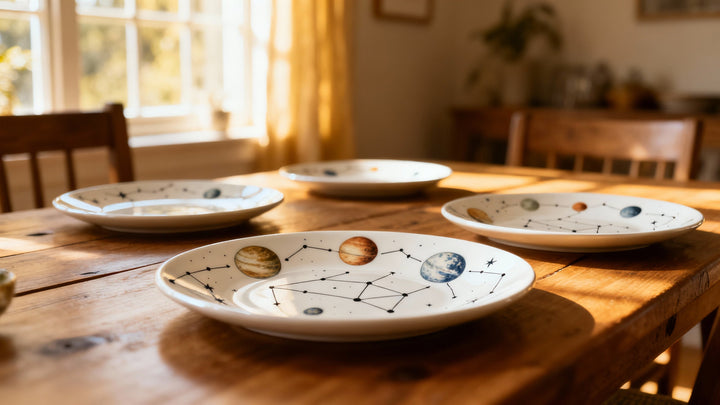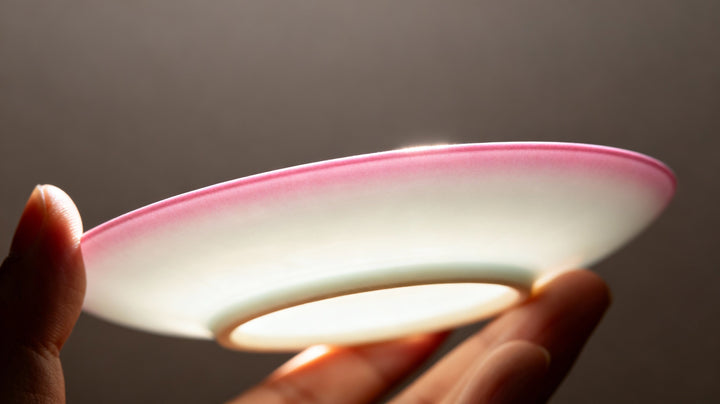


The moment a tiny hand graduates from a silicone suction bowl to a “real” ceramic plate is a big table milestone. Suddenly the table looks more grown-up and more beautiful, but the stakes get higher too. A chipped rim, a cracked glaze, or a too-fragile plate can turn a joyful, colorful meal into a safety worry in seconds.
As a colorful tabletop curator who spends a lot of time with families, product designers, and compliance reports, I’ve learned that durable kids’ ceramics are not an aesthetic luxury; they are a safety system. Durability decides whether a glaze stays intact, whether heavy metals stay locked inside the ceramic body, and whether a plate survives the “peas flying across the dining room” era.
This article gathers what regulators, manufacturers, and health-forward brands have already learned about ceramic safety and translates it into practical, real-world strategies you can actually use to judge and test the durability of children’s ceramic dinnerware—whether you are a parent, a small brand, or an importer building a kid-friendly line.
Durability Is A Safety Issue, Not Just Convenience
When people talk about “durable plates,” they often mean fewer broken dishes and less cleanup. For children’s ceramic dinnerware, durability reaches much deeper than the annoyance of a broken plate.
Regulators and manufacturers emphasize that glaze defects, chips, and cracks do more than look shabby. Emerson Creek Pottery and other ceramic makers explain that once a glaze is damaged, the chances of lead or cadmium leaching into food rise sharply, especially with acidic foods like tomato sauce, citrus, or juice. California’s Proposition 65 rules and guidance from the U.S. Food and Drug Administration are built around this simple reality: the safer and more intact the surface, the lower the risk of heavy metals escaping into food.
Health agencies also repeatedly remind us that children are more vulnerable to contaminants from food-contact materials. Hong Kong’s Centre for Food Safety points out that kids eat more per pound of body weight, use smaller plates and bowls with higher surface-area-to-food ratios, and have immature detox systems. That means any weakness in the dinnerware’s glaze, body, or decoration impacts them more than it does adults.
Durability, then, is not a cosmetic nicety. If a plate cracks under heat, crazes after a few months of dishwasher use, or chips at the rim, you are not only replacing the plate; you may be opening a pathway for heavy metals to reach a developing child. Effective durability testing is how you prevent that from happening.

Key Concepts: Durability, Food Safety, And Ceramic Types
Before we talk strategies, it helps to define a few key ideas that keep showing up in safety and manufacturing guidance.
What Counts As “Durable Enough” For Kids?
Durability for children’s ceramic dinnerware is not about being indestructible. No ceramic plate will shrug off a drop onto concrete forever, and it does not need to. Instead, durability means a piece can handle the stresses it is realistically going to see in family life without failing or becoming unsafe.
Across manufacturer and regulatory guidance, durability for kids’ ceramics usually includes several intertwined qualities. The ceramic body and glaze should resist thermal shock so that a shift between hot and cooler conditions does not cause cracking. They should be chip-resistant enough that incidental bumps on a table, a gentle knock on the sink edge, or stacking in a cabinet do not immediately damage the rim or surface. The glaze should hold up under repeated contact with detergents and mild abrasives in normal handwashing or, when rated as such, dishwasher cycles, without turning dull, crazed, or powdery. The design should avoid sharp edges and fragile decorative features that might break into dangerous shards or small parts.
Manufacturers focused on children’s porcelain and stoneware explicitly call out “sturdy,” “chip-resistant” edges, thicker shapes, and temperature resistance as key selection criteria. They recommend high-fire porcelain and stoneware—fired at temperatures in the neighborhood of 2,200°F and above—because these bodies become dense and less porous, with excellent long-term strength for daily table use.
Food-Safe, Non-Toxic, Lead-Safe, Lead-Free
Durability and safety language can get confusing fast, so it is worth grounding the main terms the way ceramic producers and regulators use them.
Emerson Creek Pottery and other US manufacturers explain that “food-safe” is a regulated claim about the finished pottery. The FDA classifies a piece as food-safe only after leach testing shows that any lead or cadmium released into food under test conditions stays under strict limits. This can be true even if the original glaze recipe contained these metals before firing, as long as they are locked into the fired glaze.
“Non-toxic,” by contrast, is not a regulated certification; it simply means the clay, glaze, or paint formulas avoid known toxins as ingredients. A product may be non-toxic in that sense yet still not have been tested for leaching, or may not meet particular regulatory thresholds.
On top of that, Joyye’s lead-focused guidance distinguishes “lead-safe” from truly “lead-free.” Lead-safe typically means a product’s leaching results are below a regulation’s action level, which still allows low parts-per-million of lead. True lead-free dinnerware, as defined by safety-focused manufacturers, means no lead is intentionally added from raw materials through finishing and third-party lab leaching tests measure 0.0 ppm. That is the strictest standard and the one many health-conscious brands now chase.
For kids, these definitions matter because durability and safety are inseparable. A plate can be made from high-fire, food-safe, lead-safe ceramic and still become a problem if the glaze cracks or if overglaze decoration wears away. When durability fails, all the careful work of choosing safer materials is undermined.
Here is a quick way to think about the terminology in the context of durability:
Term |
Practical meaning in kids’ ceramics |
Why durability matters for it |
Food-safe |
Passed regulated leach tests under defined conditions |
Chips and cracks change leaching behavior beyond the tested condition |
Non-toxic |
Avoids known toxins as ingredients but may not be leach-tested |
Poorly fired or fragile glazes can still break down or release trace contaminants |
Lead-safe |
Leaching below regulatory thresholds but not necessarily zero |
Damaged glazes may raise leaching above those thresholds |
Lead-free |
No intentional lead and 0.0 ppm in leach tests |
Durability protects that zero result for as long as the plate is in service |
How Professionals Test Ceramic Durability
When you peek behind the curtain of responsible ceramic manufacturing, a clear pattern emerges: durability and safety are verified together. Importers and brands that export globally do not guess; they test.
Chemical Leach Testing To Protect Kids From Heavy Metals
For any food-contact ceramic, including children’s dinnerware, leach testing is the foundational safety test. The FDA uses defined test solutions and times to see how much lead and cadmium migrate from glazes into food-like liquids. Manufacturers like Emerson Creek send regular samples to labs and confirm that the pieces stay within FDA limits and, in stricter programs, within California Proposition 65 requirements as well.
Joyye’s lead-free guidance takes this further, insisting on third-party lab reports that show 0.0 ppm lead and cadmium for brands that promise truly lead-free dinnerware. This is especially relevant for children, pregnant women, and nursing mothers, whom multiple sources highlight as more susceptible to heavy-metal exposure.
From a durability point of view, these tests also indirectly stress the glaze. The ceramic is exposed to acidic test solutions—think of how tomato sauce, citrus, or juice behave on a kid’s plate—over time. A stable, durable glaze will resist not only this chemical attack but also repeated real-life exposure to such foods without turning dull or chalky.
Thermal Shock And Heat-Resistance Testing
Durability is not just about chemistry; it is about surviving temperature swings. Homey Ceramic’s importer-focused safety guide treats thermal shock resistance as a core part of ceramic product safety standards. Tableware and bakeware are tested to ensure they can withstand sudden temperature changes without cracking or breaking.
Linkceramics describes a thermal shock test based on ISO 22915, where ceramic pieces are cycled between around 430°F and about 75°F multiple times without cracking. That is a far more extreme swing than a bowl moving from a microwave into a room-temperature kitchen, but it creates a safety margin.
For children’s dinnerware, heat-resistance testing confirms whether a plate genuinely deserves its “microwave-safe” or “oven-safe” label. KimEcopak points out that most ceramic bowls are safe in the microwave only if they have no metallic accents and are explicitly labeled as microwave-safe. Their guidance on oven and air-fryer use is similar: only use ceramics that are clearly rated for that temperature range, and avoid sudden temperature shocks that encourage cracks.
In practice, this means that a kid’s ceramic plate labeled microwave-safe and oven-safe has likely been through some form of thermal testing, whether internal or certified, to ensure that heating does not lead to sudden breakage.
Structural Integrity, Glaze Quality, And Decoration
Durability testing does not stop at heat and leaching. Manufacturers also evaluate the physical resilience of the ceramic body and glazes, though these tests are often less visible to consumers.
Joyye’s safety checklist treats uneven or bubbling glazes, pinholes, bright traditional red or orange decorations, and white “rings” on the bottom of colored pieces as red flags. These surface clues can indicate poor firing curves, low-fire colored overglazes, or incomplete fusion of glaze and clay. All of those issues can compromise both chemical stability and structural strength.
Linkceramics draws a clear line between high-temperature underglaze decoration, where pigments are fused into the glaze during firing above about 2,200°F, and low-temperature overglaze decoration fired below roughly 1,470°F. Under-glaze decorations are less prone to peeling or abrasion, which boosts long-term durability and safety. Overglaze decorations, while often vibrantly colored, are more vulnerable to wear and are recommended mainly for decorative pieces that should not face repeated washing or direct food contact.
Importers who take durability seriously build these factors into supplier requirements. Homey Ceramic recommends that importers rely on certified laboratories for heavy metal and thermal shock tests, perform pre-shipment inspections with random sampling, and maintain compliance reports for each shipment. When children’s products are involved, their guide points out that stricter safety rules apply, including the avoidance of sharp edges or small parts that could break off.
Smart At-Home Strategies To Gauge Durability
Families do not have ICP-MS spectrometers or ISO thermal shock rigs in the pantry, and you are not going to dunk your new plates in a 430°F oven then into cold water just to see what happens. Still, there is a lot you can do at home to judge whether a children’s ceramic plate is likely to stay safe and sturdy in real life.
Step One: Read And Decode The Markings
The story of a plate’s durability and safety is usually printed in tiny type on the base or on the packaging. Several sources, from Emerson Creek and KimEcopak to Vancasso and regulatory agencies, emphasize the importance of reading labels carefully.
A durable, kid-appropriate ceramic plate should explicitly say that it is food-safe or intended for food use and should not carry phrases like “for decorative use only” or “not for food use.” The FDA requires clear warnings when decorative or ornamental ceramicware contains lead in ways that make it unsafe for food contact.
Look for clear statements about microwave safety, oven safety, and dishwasher safety. KimEcopak reminds buyers that microwave safety is not automatic; metallic accents or certain decorations can cause sparking or damage. Vancasso suggests checking whether ceramic dinnerware is marked as dishwasher-safe and microwave-safe when you intend to use it that way, because not all stoneware or porcelain is formulated for that stress.
In the United States, California’s Proposition 65 also adds a layer of information. Pieces sold into California that may expose consumers to specified levels of lead or other chemicals must carry a warning label. While the absence of a Proposition 65 warning does not guarantee absolute purity, a clear combination of food-safe labeling, appropriate use instructions, and, ideally, references to standards like FDA or LFGB compliance is a good first filter when you are vetting new children’s ceramics.
Step Two: Inspect Glaze, Color, And Shape Like A Pro
Once you flip the plate and read the fine print, give it a visual interview.
Joyye’s lead-free guidance, Healthier Homes, Emerson Creek, KimEcopak, Lead Safe Mama, and even Consumer Reports align on several practical clues. Smooth, even glazes without obvious bubbles, pinholes, or rough spots are usually a sign of better firing and more stable surfaces. Glazes that look patchy, cratered, or have visible pinholes may trap food and stress points, making both bacterial growth and microcracking more likely over time.
Color can tell a story as well. Bright red, orange, and yellow glazes on older or imported ceramics are frequently associated with historical use of lead or cadmium to intensify color. Multiple sources warn families to be cautious with such pieces, especially when they are antique, handmade, or bought at flea markets and street markets with unknown firing and glaze practices. For new, reputable products, brands like Emerson Creek explain that modern non-toxic pigments can achieve bright colors that still pass stringent leach tests; the crucial difference is documentation and testing, not the hue itself.
Shape and design also play a quiet but important role in durability. Plates with gently rounded rims and thicker walls tend to be more resistant to chipping than razor-thin edges. Kids’ porcelain and stoneware ranges that intentionally reinforce rims or slightly thicken the profile often call this out as a feature. On the flip side, very delicate, thin-walled ceramics or pieces with lots of protruding, sculptural decoration may be better suited to display than daily toddler service.
Step Three: Observe Performance In Real Life
The most honest durability test is how a plate behaves in your actual kitchen, over time.
Healthier Homes, Emerson Creek, KimEcopak, and Linkceramics all echo a similar theme: pay attention to what wear and tear is telling you. If a kid’s plate is labeled dishwasher-safe, run it through the dishwasher as you normally would instead of babying it by hand if that is not realistic for your household. Then watch for early changes. Does the glossy glaze become dull or chalky in a few weeks? Do faint lines appear that look like spiderwebs under the surface? Does the plate leave a grayish residue on a sponge or cloth, as Emerson Creek notes can happen when glazes start to break down?
If a plate develops chips at the rim after a minor bump on the sink edge, it is giving you a clear signal that the body or glaze lacks sufficient mechanical durability for kids. Healthier Homes and KimEcopak are clear that chipped and cracked ceramics should be retired from food use, not just because of cut risks but because these micro-defects allow moisture, bacteria, and potentially heavy metals to migrate.
Instead of staging dramatic drop tests, let everyday use be informative. If a plate handles months of real family life—pasta nights, quick microwave reheats when you missed the timing, stacks in a crowded cabinet, and regular washing—without cracking, chipping, or changing surface character, it has passed a realistic durability audition.

Strategies For Brands And Importers Building Durable Kids’ Ceramics
If you are on the industry side, your “table” extends to hundreds or thousands of family homes. For you, durability testing is not just about cute product shots; it is about regulatory compliance, recalls you never want, and long-term brand trust.
Start With The Right Base Material
Joyye’s material comparisons and several safety-focused guides converge on one point: high-fire porcelain and high-fire hard-paste ceramic are the “gold standard” for combining safety and durability. Fired at temperatures in the 2,200°F and above range, these materials form dense, vitrified bodies with excellent hardness, acid resistance, and strength for everyday home use.
Stoneware can also perform well when it is genuinely high-fire and uses stable, lead-free glazes. It tends to be a bit thicker and more rustic-looking than porcelain, which can be an advantage for chip resistance in kid-friendly shapes. Earthenware, fired lower and more porous by nature, ranks lower on both durability and safety lists in several sources and is often recommended for decorative use or low-stress tableware rather than as the primary daily plate for children.
For kids specifically, Homey Ceramic suggests matching material choice to age. For very young children still prone to throwing dishes, unbreakable materials like silicone or stainless steel may be more appropriate, with ceramic introduced as kids get older and more coordinated. When you do design ceramic for children, engineer in some extra thickness and stability.
Bake Safety Into Glaze And Decoration Choices
Glaze chemistry and decoration techniques can make or break the durability story even when the base body is excellent.
Linkceramics’ safety guide showcases how modern borosilicate and zirconium-based glazes can achieve glossy, chemically stable finishes without lead fluxes. Chaozhou manufacturers, for example, have documented heavy metal leaching as low as 0.01 micrograms per square centimeter—far below some European limits—by using advanced glazes and rigorous testing.
Decoration method matters too. High-temperature underglaze decoration locks pigments beneath the glaze layer during main firing, making them resistant to abrasion and safer for direct food contact. Low-temperature overglaze designs, while bright and charming, should be positioned away from primary food-contact surfaces on children’s plates or marketed explicitly as decorative. Several sources recommend treating low-fire overglaze ceramics as either decorative-only or for occasional use where heavy wear and hot, acidic foods are not routine.
Joyye’s checklist for avoiding high-risk features can be folded directly into your quality control: reject or re-engineer any production that shows uneven or bubbling glaze, visible pinholes, obviously bright reds and oranges in direct food-contact areas when you cannot guarantee pigment safety, or white rings that signal layered low-fire glazes.
Partner With Accredited Labs And Document Everything
Homey Ceramic’s importer guide lays out a playbook for safety and durability that any serious brand can adapt.
First, work with certified laboratories that can perform heavy metal leach testing, thermal shock tests, and any required regional standards such as FDA compliance in the United States, LFGB in Germany, or broader REACH obligations in the European Union. Incorporate thermal shock tests that mimic real consumer behavior, and maintain written reports rather than relying on verbal assurances.
Second, implement pre-shipment inspections where samples are pulled from real production batches, not just pilot runs. Use these inspections to verify both cosmetic quality and performance tests, including the absence of cracks after thermal cycling.
Third, keep a disciplined documentation trail. Regulatory agencies like the FDA issue import alerts when products show elevated lead levels, and non-compliance can trigger legal penalties, reputational damage, and the cost of recalls or product destruction. Having up-to-date test reports, materials data sheets, and clear traceability back through your supply chain is both a compliance requirement and a brand asset.
Finally, treat children’s ceramics as a special category, not just a scaled-down version of adult plates. Homey Ceramic stresses that items designed for children should comply with stricter safety guidelines, including non-toxic materials, rounded edges, and designs that do not create small detachable parts. Build that extra caution into your product brief from day one.

When Durability Fails: Damage, Heavy Metals, And When To Say Goodbye
Even the best ceramic plate has a lifespan. Recognizing the moment when durability has failed—and acting on it—is one of the most important everyday “tests” you can perform.
Why Chips And Hairline Cracks Are Big Red Flags
Emerson Creek, KimEcopak, Healthier Homes, and multiple public health authorities all repeat the same guidance: do not keep using cracked, chipped, or visibly worn ceramic for food, especially for children, pregnant women, or nursing mothers.
Cracks and chips are more than cosmetic. They allow moisture to penetrate into the clay body, which can expand and contract with temperature changes, leading to bigger fractures or even sudden breakage in an oven or microwave. KimEcopak notes that a cracked dish in the oven can be structurally compromised because moisture trapped in the clay expands at high temperature.
From a chemical safety angle, damaged glazes become more vulnerable to heavy metal leaching. Emerson Creek and Healthier Homes explain that once the protective glaze layer is corroded or worn, lead and cadmium—if present at all—are more likely to escape into food, particularly when acidic foods or hot liquids are involved. Emerson Creek even points out that a grayish residue on the glaze after washing is a signal of surface breakdown.
For children, who, as Hong Kong’s Centre for Food Safety notes, are physiologically more sensitive to contaminants, there is little justification for holding onto a damaged plate. The safest strategy is to retire it immediately from food use and, if you love the pattern, re-home it as a purely decorative prop far away from the snack zone.
High-Risk Items To Keep Out Of The Kids’ Cupboard
Durability testing does not have to start from scratch with every plate on earth. Several sources give clear categories of ceramics that deserve extra skepticism, or that simply do not belong in a child’s dinner rotation.
Consumer Reports and multiple safety advocates advise against eating or drinking from vintage ceramics or unknown imported pieces when you do not have documentation that they meet modern safety standards. Anything produced before the early 1990s in the United States or bought abroad in markets with lax regulations is more likely to contain leaded glazes, especially in bright reds, oranges, and yellows.
KimEcopak lists handmade, antique, chipped or damaged ceramics, and those labeled “Not Food Safe” as higher-risk categories. Lead Safe Mama’s testing archive using X-ray fluorescence instruments has repeatedly found high lead levels in certain vintage patterns and in raised, painted decorations on both ceramics and glass. Their work also shows that home lead swab kits, while sometimes useful for low-fire surfaces, can produce false negatives on high-fire ceramics that still contain very high lead concentrations.
Guidance from the FDA, Consumer Reports, and public health departments reinforces the idea that when in doubt—especially with older or unknown pieces—it is best to stop using them for food and drinks. For children, the cautious, colorful-tabletop-friendly strategy is to keep their everyday plates to modern, well-documented, food-safe ceramics and reserve the mysterious heirlooms and flea-market finds for display.

FAQ: Durability Questions From Color-Loving Parents And Brands
Are ceramic plates safe for toddlers, or should I stick to silicone and stainless steel?
Several kid-focused guides point out that very young children, especially under about three years old, can be rough with dishes. Homey Ceramic suggests unbreakable materials like silicone or plastic for the earliest self-feeding stage and notes that older kids who are more coordinated can handle ceramic or glass. Safety-focused brands designing stainless steel and silicone kids’ tableware highlight impact resistance, non-porous surfaces, and chemical safety as key advantages.
That said, child-friendly ceramic plates designed with thicker walls, chip-resistant rims, and high-fire, lead-free glazes can be safe for toddlers when used under supervision. Childish Plates, for example, uses FDA-approved ceramic with a removable silicone ring to combine weight, stability, and some shock absorption, and designs plates thick enough to resist chips under normal toddler handling. If you choose ceramic for toddlers, keep it at the table rather than on the floor, and watch for signs of damage so you can retire a piece the moment durability fails.
Can I safely put kids’ ceramic plates in the dishwasher and microwave?
You can, but only when the piece is honestly designed for it, and your testing strategy should start with reading the label. KimEcopak and Vancasso both stress checking for explicit microwave-safe and dishwasher-safe markings. Some high-quality porcelain and stoneware are built to tolerate dishwashers and microwave reheats; others are not, especially if they use certain overglaze decorations or metallic accents.
Emerson Creek warns against putting ceramics into dishwashers unless they are known to be dishwasher-safe, because harsh cycles can damage glazes and increase leaching or cross-contamination. Similarly, they advise not heating questionable ceramics in the microwave or oven, since heat accelerates leaching when lead or cadmium are present. Your best strategy is to use only clearly rated, modern kids’ ceramics in the dishwasher and microwave, and to periodically inspect them for early signs of glaze breakdown.
Should I use a home lead test kit on my children’s ceramic plates?
Home lead test swabs sold in hardware stores were designed for house paint, and several experts caution that they are imperfect tools for ceramics. Tamara Rubin of Lead Safe Mama explains that while swabs can sometimes detect lead on low-fire surfaces or exterior decorations, they often produce false negatives on high-fire ceramic glazes, even when those glazes contain high lead levels. KimEcopak notes that a negative swab result does not guarantee lead-free status; it only tells you the test did not detect lead at its relatively high threshold.
If you already suspect a piece because of its age, origin, or damage, a positive swab is a clear sign to stop using it. If the test is negative but you are still uneasy, the safest strategy is the same one Consumer Reports and multiple health agencies recommend: stop using questionable dishes for food, especially for children, and switch to modern, tested, food-safe ceramics from brands willing to share compliance information.
When you step back, effective durability testing for children’s ceramic dinnerware turns out to be a joyful blend of artistry and pragmatism. You let labs handle the heavy science of leach testing and thermal shock; you let labels and certifications tell you how a piece was designed to behave; and you let your own eyes and everyday use confirm whether a plate is truly ready to dance through years of family meals.
Choose high-fire, well-glazed, clearly labeled ceramics for your little eaters, watch how they age, and retire anything that stops looking and acting like its best self. That is how you keep your children’s table both beautifully colorful and calmly, confidently safe.

References
- https://www.fda.gov/food/environmental-contaminants-food/lead-food-and-foodwares
- https://www.consumerreports.org/lead/why-you-should-test-your-vintage-or-imported-dishes-for-lead-a2722202665/
- https://www.anchenggy.com/blog/best-non-toxic-kids-dinnerware.html
- https://www.anzhucraft.com/non-toxic-dinnerware-for-kids/
- https://creamik.com/how-can-you-be-sure-youre-using-food-safe-pottery-glaze/?lang=en
- https://emersoncreekpottery.com/how-to-tell-if-pottery-is-food-safe/?srsltid=AfmBOoocxUQT6_My-SjndEUZrS0Kph8ySdg6xISo8fJqTADisEzdhUuO
- https://www.healthierhomes.com/post/what-is-the-safest-lead-free-dinnerware?srsltid=AfmBOoraD5oGq1bzTx4devI-Ri0KVfpyw-g42vSdzXTHJVRYeRN63-fs
- https://homeyceramic.com/porcelain-dinnerware-for-children/
- https://joyye.com/info-detail/kid-friendly-tableware-that-parents-will-love-too
- https://www.linkceramics.com/ceramic-tableware-safety-guide/=