



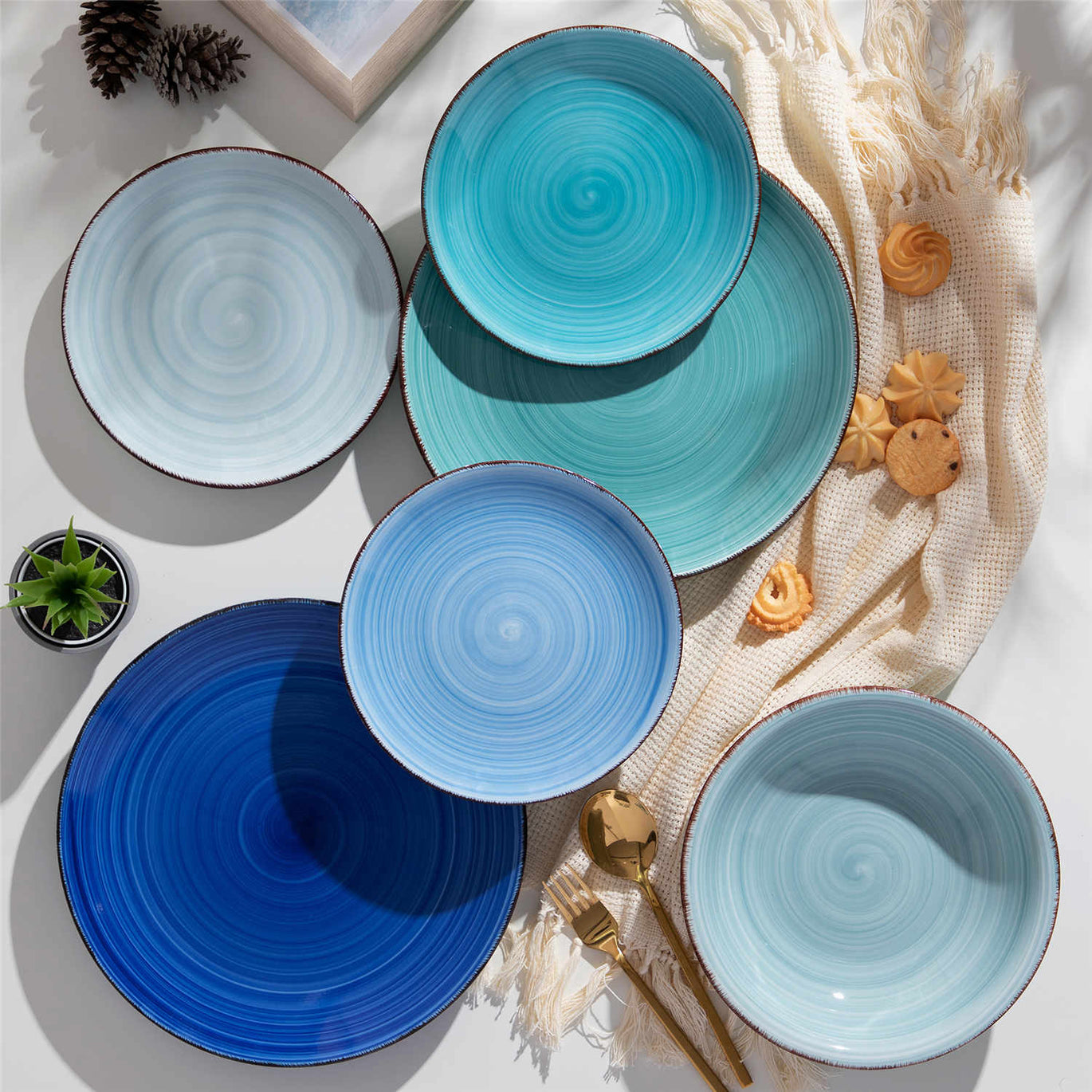


Understanding Gender Liberation Through Ceramic Dinnerware Choices

When you set the table tonight, you are not just deciding between the blue bowl and the floral plate. You are quietly voting for whose taste counts, whose labor is taken for granted, and whose story gets to shine in the center of the table. As someone who spends their days curating colorful tabletops for real homes, I see again and again how ceramic dinnerware becomes a stage where gender roles are rehearsed, resisted, and sometimes beautifully rewritten.
This is a deep dive into how plates, bowls, and mugs can become tools for gender liberation instead of props for old stereotypes. We will weave together design history, research on food aesthetics, relationship psychology, and very practical, joyful advice for your own cupboards and dinner parties.
Welcome to the revolution in your dish rack.
From Gendered Rooms To Gender-Liberated Tables
For most of modern interior history, homes were designed like a map of gender expectations. As Esra Kumbasar notes in a discussion on luxury interior design and gender, traditional houses carved out masculine spaces such as libraries, billiard rooms, and smoking rooms, while women were associated with more private or service-oriented areas like boudoirs and kitchens. Boudoirs literally come from the French word for “to sulk,” signaling how women’s emotions were pushed into the background while men’s activities were centered and legitimized.
Other writers on interiors describe how, even today, an extra room is still likely to become a man cave or study, while the only space routinely “for women” is the kitchen. Articles on the gender divide in interior design emphasize that homes often mirror broader gender gaps in pay, representation, and opportunity. The design community is increasingly aware that space itself can either reinforce or challenge these gaps.
At the same time, language around rooms is slowly shifting. Those gendered labels like “master bedroom,” “boudoir,” and “gentleman’s room” increasingly give way to more neutral terms such as principal bedroom, games room, or wellness space. Brands like IKEA talk openly about aiming for gender equality in their workforce and leadership, and the design press is filled with conversations about inclusive interiors.
Ceramic dinnerware often flies under the radar in this conversation, yet it sits at the literal center of family life. If rooms map gender, the dishes on your table choreograph who is welcome, who serves, who is treated as delicate, and who is expected to be strong and practical. Changing those plates is a surprisingly powerful way to change the script.

How Ceramics Encode Power, Care, And Identity
Why women dominate ceramic tableware design
Vancasso Tableware describes how women’s dominance in ceramic design is rooted in a long history where pottery, food preparation, and domestic aesthetics were coded as “women’s work.” Anthropological research shows that in many traditional societies women made the domestic pots, ground grains, and tended the cooking vessels that fed entire communities. Feminist archaeology has even linked skeletal wear in women at sites like Abu Hureyra to the physical strain of food preparation, connecting women’s bodies directly to clay, grain, and fire.
Yet when those meals scaled up into grand feasts, power shifted. One example cited in Vancasso’s research is Mycenaean palace banquets that consumed up to roughly two tons of meat, driven by women’s labor in food and ceramics, while the social prestige of the event largely flowed to men. Georgian-era Britain offers another vivid picture: men typically controlled the architecture and heavy furniture, but women were responsible for ceramics, textiles, tea sets, and breakfast services. Tableware became a core arena for feminine taste, reputation, and even property, passed on through dowries and bequests.
In the 20th century, institutions like the Bauhaus funneled many women into ceramics and textiles while reserving architecture and metalwork as more “serious” disciplines. That kept clay coded as feminine but also allowed women to build extraordinary technical and artistic authority in tableware. Designers such as Eva Zeisel turned industrially-produced bowls and plates into sculptural, color-rich forms that shaped everyday visual culture around the world.
Today, the global ceramic tableware market is forecast to grow from about $102 billion in 2024 to around $145.5 billion by 2030, and a survey cited by Vancasso suggests that roughly three-quarters of consumers say tableware design directly affects how they perceive a meal. In other words, this is not just decoration. This is an influential, female-led design field with real cultural and economic power.
The invisible mental load in the sink
The flip side of that creative power is the invisible labor attached to dishes. A Vancasso article on gender stereotypes and relationships points to research showing that dishwashing is the single household chore most tightly linked to lower relationship and sexual satisfaction for women in heterosexual couples. That is a brutal indictment of what happens after the plates have dazzled on the table and slump into greasy stacks by the sink.
They define the gendered division of labor as unpaid domestic and caregiving work split along gender lines, with women overloaded with repetitive tasks like cooking, scrubbing, wiping, and worrying about whether there are clean plates for breakfast. Citing UK data, the article notes that women perform around 60 percent more unpaid domestic work than men. On top of the visible work, women frequently carry the “mental load” of noticing what is dirty, planning meals, tracking leftovers, and remembering which plates are “for guests.”
I see this in couples I work with all the time. A partner will lovingly choose an intricate, delicate dinner set, but only one person monitors chips, hand-washes the “good dishes,” and polices how others stack the dishwasher. The pattern becomes: he enjoys the meal; she worries that someone will scratch the plate. The object is the same, the experience is not.
Inequality shows up in professional kitchens too. Vancasso cites research from Turkey’s tourism sector showing women chefs face biased promotion paths, worse conditions, and earn about 10–15 percent less than men in similar roles. At home and at work, women are often positioned as responsible for food and ceramics but given less recognition and less control.
This is what gender liberation at the table is pushing against. Not just pink versus blue plates, but a deeper question: who carries the weight of hospitality?
Ceramics as emotional objects
Ceramic tableware is not just functional. Vancasso underscores that good ceramics are durable, non-toxic, thermally stable, often more eco-friendly than disposables, and able to survive long enough to carry memories across generations. Artists like Emma Hart use ceramic installations to explore how plates and bowls encode family tensions, emotional states, and power dynamics.
I have worked with clients whose chipped, hand-painted plates were the last tangible connection to a grandmother, or whose wedding dishes represented the only large purchase they made together as a couple. Sometimes those heirloom sets are so tightly associated with “the women of the family” that sons and grandsons feel nervous touching them at all. Other times, reclaiming those pieces as shared tools becomes an act of healing.
When you decide which ceramics live on your table, you are also deciding which stories, inheritances, and emotional scripts you center. Gender liberation asks: can those stories belong to everyone, not just the women at the sink?

The Aesthetics Of Gender On A Plate
Color, taste, and gender codes
A ScienceDirect article on “aesthetic appetites” reviews decades of research showing how color and tableware shape what we think food will taste like. Studies summarized there report consistent associations such as white with salty, black with bitter, green with sour, and red with sweet. In one experiment, strawberry mousse served on a white plate was rated sweeter and more liked than the same mousse on a black plate. Other studies found that coffee tasted richer in white porcelain cups than in transparent glasses, and hot chocolate felt more chocolatey in orange cups than in white ones.
Color also changes how much we eat. Research summarized in that article notes that when participants were given cookies on high-contrast white plates instead of red ones, they ate nearly twice as many. In long-term care facilities, however, switching to high-contrast tableware helped patients eat around 25 percent more food and drink 84 percent more liquids, likely because the food was easier to see. The same color contrast that helps an older adult maintain weight can help a party guest slow down.
All of this science underlines a key point: tableware color is not neutral, and it absolutely affects our experience. Meanwhile, mainstream décor conversations have long saddled colors themselves with gender. Decorator’s Choice points out that many parents now avoid the old “pink is for girls, blue is for boys” clichés when decorating nurseries, both because some do not know their baby’s gender in advance and because they want more longevity and freedom in their décor. Jennifer Adams argues that gender-neutral design does not mean beige boredom; it means moving toward earthy greens, rusts, browns, purples, and rich neutrals that feel inclusive.
On ceramic dinnerware, the same logic applies. The goal is not to ban pink, but to detach it from the idea that only women should enjoy it.
Here is one way to reframe common ceramic color choices.
Ceramic color choice |
Traditional gender script |
Liberating reframing at the table |
Baby pink rimmed plates |
“Girly,” fragile, for bridal showers and ladies’ tea |
Use for everyone’s favorite comfort foods, pair with bold stripes or black cutlery so pink reads as powerful and joyous rather than delicate. |
Matte charcoal stoneware |
“Masculine,” serious, chef-like and technical |
Treat as a grounding base, then layer on coral, mustard, or sky-blue linens so the table feels inclusive, not brooding. |
Teal, terracotta, and mustard mix |
Earthy, bohemian, hard to pin to one gender |
Embrace as a gender-fluid palette that works from solo lunches to big family feasts, letting each guest lean into the color that speaks to them. |
Ditsy pastel florals |
Feminine nostalgia, “grandma’s china” for special ladies’ occasions |
Bring florals to Sunday lunch with everyone, and counterbalance with graphic glassware or striped runners to signal that softness belongs to all. |
High-contrast brights (red, cobalt, lime) |
Childlike or “statement” pieces often coded as playful more than gendered |
Use for cross-generational fun, making it clear that joy and boldness are not reserved for any age or gender. |
None of these palettes is inherently oppressive. The question is whether they are only allowed to show up in “her” contexts or whether they are available as creative tools for everyone at the table.
Pattern, motif, and nostalgia
Ideal Home reports that floral tableware is predicted to be a major trend in 2025, wrapped up in a broader wave of nostalgic patterns. Their experts talk about florals evoking memories of gathering around the table, togetherness, and “little bursts of joy.” Cath Kidston’s ditsy flower prints, for example, are described as sentimental and dopamine-boosting, while tableware experts at Alliance Online connect this trend to Rococo Revival, with ornate, European-inspired florals, pastel tones, and touches of opulent gold.
This is precisely the kind of aesthetic that often gets labeled “feminine” and set aside for bridal showers or Mother’s Day brunch. Yet the emotional payload of those patterns, as Ideal Home notes, is about shared memories and meaningful experiences, not about any one gender. When florals are reserved only for women’s gatherings, they become another visual sign that tenderness and nostalgia are feminine traits.
Jennifer Adams suggests that gender-neutral décor often leans toward stripes, abstract graphics, and polka dots, bringing pattern into drapery, rugs, pillows, and accent chairs without skewing heavily masculine or feminine. On the table, that can mean mixing a floral dinner plate with a striped salad plate, or pairing a ditsy flower mug with a simple speckled stoneware bowl. The motif stops announcing “this is for her” and starts whispering “this is for anyone who loves this mood.”
Form, weight, and “masculine” versus “feminine” plates
Breegan Jane writes about blending masculine and feminine design elements in rooms by juxtaposing heavy dark furniture with lighter, more ornate accents. Translating that idea to tableware, you can think of thick, weighty stoneware in dark glazes as the interior equivalent of a leather sofa: substantial, grounded, often coded as masculine. Fine, translucent porcelain with scalloped rims reads like a silk blouse: delicate, refined, traditionally feminine.
Research summarized in the ScienceDirect article shows that plate size, shape, and neatness also change our perception of food. Symmetrical, central arrangements are often judged more attractive and more hygienic, especially when meat is involved. Asymmetrical layouts using off-center placement and unusual vessels are trendy in modern restaurants, but not everyone finds them appetizing. When ingredients are monotonous or the presentation is too messy, people tend to prefer simpler, symmetric plating.
The pros and cons of these forms are as much about gender coding as function.
Dinnerware style |
Pros for everyday life |
Possible constraints |
Gender-liberating twist |
Heavy matte stoneware in dark tones |
Durable, forgiving, restaurant-style presentation; often dishwasher safe and stackable. |
Can feel visually heavy or cold, sometimes read as “his plates.” |
Add playful side plates in unexpected colors or patterns and use the stoneware as a solid canvas for exuberant, mixed-gender meals. |
Delicate floral porcelain with gold rims |
Evokes tradition, nostalgia, and celebration; highly photogenic for special occasions. |
May invite perfectionism, hand-washing, and “don’t chip that” anxiety; often reserved for women’s events. |
Bring these pieces into regular rotation, let all genders eat pizza or takeout off them, and treat patina and wear as shared history, not one person’s failure. |
Colorful melamine patterned plates |
Child-friendly, lightweight, often dishwasher safe and ideal for indoor–outdoor use. |
Sometimes dismissed as “plastic” and less serious, or coded as kids’ or women’s picnic ware. |
Choose artful collections like Elizabeth Sutton’s mix-and-match designs described in Forbes, using them for adults as well as children so practicality and beauty are shared values. |
Neutral stoneware capsule set plus bold accent pieces |
Flexible foundation that can adapt to many moods, easy to style and replace. |
Can feel bland if never personalized; risk of one partner “owning” the accents. |
Co-curate accent bowls and mugs together, explicitly mixing tastes so everyone sees themselves reflected in the final set. |
When you choose forms and materials, ask not only “will this chip?” but “who will feel at home using this?”

Practical Ways To Use Dinnerware As A Gender-Liberating Tool
Co-design the collection instead of dividing it
Jennifer Adams emphasizes that the heart of gender-neutral décor is collaboration, compromise, and the art of the shared vision board. In a home, that might mean couples and children all contributing images, colors, and patterns to a single design direction so no one person’s taste dominates.
At the table, the same principle applies. Instead of silently assuming that one partner picks plates because they are “better at aesthetics” and the other just pays the bill, turn dinnerware shopping into a co-creation ritual. Sit together with photos of ceramics, Instagram saves, or screenshots from brands you like. Have each person choose a few pieces they love without justification, then talk through what those choices express. Maybe one person gravitates toward coastal blues and organic shapes, while another loves gilded rims and exact symmetry.
The goal is not to eliminate differences but to name them. In my experience, when partners articulate “I love the way this bowl feels in my hand” or “this floral reminds me of my grandmother,” it becomes much easier to build a collection that honors both stories. That might mean a neutral base set chosen jointly, plus a rotating cast of “joy plates” that express individual personalities. It might mean two distinct mug styles living happily side by side. The key is that nothing is secretly coded as “hers to manage” or “his to not break.”
Mix and match as everyday liberation
For Gen Z, tableware is a form of self-branding and identity expression. Restaurantware reports that young diners treat plates, glasses, and cutlery as part of how they say “this is me,” especially in an era when every meal is a potential photo on social media. They love mixing thrifted vintage with new pieces, customizing ceramics through DIY painting, and treating tableware as part of the room’s décor, not just something hidden in cabinets.
This instinct is deeply gender-liberating when it is shared. Instead of buying one hyper-coordinated set that silently enforces a single aesthetic and, by extension, a single authority, try curating a family of patterns that deliberately blur gender boundaries. This is exactly what Elizabeth Sutton does in her mix-and-match melamine collection described in Forbes. She created multiple black-and-white and colorful patterns that can be paired in dozens of ways, then pre-curated combinations so people who do not think of themselves as designers can still achieve an artful table.
You can replicate that logic at any budget. Choose one grounding element, like plain off-white or speckled dinner plates. Then layer in salad plates and bowls that swing between what might once have been labeled feminine (florals, scallops, pastels) and masculine (geometrics, bold stripes, dark solids). Use each pattern freely regardless of who is sitting where. The very act of mixing says “no one gender owns beauty, strength, delicacy, or boldness.”
Share the work around your beautiful plates
All the aesthetic liberation in the world means little if one person is still stuck at the sink while the other scrolls their cell phone on the sofa. Vancasso’s gender and relationships article emphasizes that uneven dishwashing is closely linked to lower relationship satisfaction for women. Their summary of broader research points out that women carry a disproportionate mental load for domestic tasks, and that this imbalance is deeply tied to gender roles around food and cleanliness.
On the plus side, there is strong evidence that eating together is incredibly good for people. Vancasso points to data from Utah State University Extension, the American Academy of Pediatrics, Project EAT, and the World Happiness Report, indicating that frequent shared, device-free meals correlate with higher self-esteem and fewer depressive symptoms in both adults and children. A Gozney survey they cite found that about 82 percent of U.S. adults regularly share meals, averaging around four and a half shared meals per week with a partner, with roughly one-third doing so daily.
The catch is that those benefits can be undermined if shared meals simply hide an unfair division of labor. When one partner plans the menu, does the shopping, cooks, serves, clears, and washes dishes, the “togetherness” of the meal can mask resentment.
Ceramic dinnerware can either amplify that imbalance or help correct it. Choosing more dishwasher-safe, durable pieces, like Sutton’s melamine with a fine china aesthetic, can make cleanup easier to share. Agreeing that the person who cooked less that week takes the lead on dishes, or that everyone clears and stacks their own plate immediately, turns your plates into tools for fairness instead of symbols of obligation.
I often suggest that couples create one simple, visible ritual: after dessert, everyone stands up together and spends five minutes clearing, rinsing, and loading. No martyrdom, no disappearing heroes. The message is clear: if we all enjoy these beautiful plates, we all care for them.
Inclusive hosting with gender-neutral cues
Inclusive dinnerware is not just about the couple or family; it is also about guests. A gender-liberating table is a place where non-binary friends, queer couples, older relatives, and small kids all feel equally welcomed and seen.
Gender-neutral décor experts like Jennifer Adams and Decorator’s Choice emphasize creating spaces that are comfortable and representative for everyone, not just one partner or gender. From the culinary aesthetics literature summarized in the ScienceDirect article, we know that diners tend to prefer plates that balance order and creativity, and that color, symmetry, and neatness influence judgments of both taste and hygiene. That gives you a toolkit for inclusive, not stereotyped, hosting.
Think about the physical experience first. Are your plates and bowls light enough for a child or someone with arthritis to carry comfortably, yet substantial enough not to feel flimsy? Do you only own “dainty” cups that encourage tiny pours for women and oversized mugs that quietly gravitate toward men, or can anyone choose the vessel that fits their appetite and mood? Can a guest with sensory sensitivities opt for simpler patterns while others revel in maximal florals?
Then consider the visual cues. If you notice yourself automatically offering larger plates to men and smaller ones to women, or steering male guests away from pink or floral pieces, that is an opportunity to practice liberation. Swap things deliberately. Offer the fanciest flowered plate to the man who always ends up on a plain one. Let the woman who is always expected to be delicate devour her pasta from the biggest, boldest stoneware bowl in the house.
In my styling work, some of the most joyful moments are when a tough, taciturn uncle lights up at a cherry-blossom bowl because it reminds him of his mother’s garden, or when a teenage boy claims the pink mug as “his.” The ceramics did not change his gender; they simply gave him permission to express a softer story.

Short FAQ: Gentle Answers For Curious Tables
Does gender-neutral dinnerware mean everything has to be beige?
Not at all. Jennifer Adams is clear that gender-neutral décor is not about stripping out color; it is about moving beyond stereotypes. Earthy greens, browns, oranges, purples, and reds, along with sophisticated grays and creams, can create incredibly rich, inclusive palettes. The key is that no color is off-limits to anyone.
How do I honor “girly” aesthetics and still practice liberation?
Look to Georgia O’Keeffe for inspiration. As Lucie Kaas highlights, she famously said she resented being told there were things she could not do because she was a woman, and refused to be labeled merely the “best woman painter.” She wore dark, androgynous clothes yet painted sensuous flowers and insisted on just being “one of the best painters.” Apply that spirit to your table: use florals, pinks, ruffles, or gold without apology, but make sure they are not reserved only for women. Liberation means choice, not another set of rules.
What if my budget is tight but I still want a liberating table?
Restaurantware notes that Gen Z is exceptionally good at mixing affordable pieces from big-box retailers with thrifted vintage and handmade ceramics from independent makers. Start with a simple, sturdy neutral set from an accessible store, then slowly layer in one joyful secondhand floral piece, one bold striped bowl, one handmade mug. The gender liberation is in how you use them and share them, not in how much they cost.
In the end, gender liberation through ceramic dinnerware is delightfully ordinary. It is choosing plates that express everyone’s personalities, not just the designated homemaker’s. It is sharing the work of cooking and cleaning as generously as you share food. It is letting florals, dark stoneware, and candy-colored mugs coexist on the same joyful table, open to every guest and every facet of yourself. Your next meal can be a small, beautiful act of equality, one plate at a time.

References
- https://dl.tufts.edu/downloads/n8710280d?filename=xs55mq137.pdf
- https://www.researchgate.net/publication/272832802_Beyond_Pink_It_and_Shrink_ItPerceived_Product_Gender_Aesthetics_and_Product_Evaluation
- https://www.le-jacquard-francais.com/journal_actu.html
- https://breeganjane.com/blending-masculine-and-feminine-design-elements/
- https://www.thewalpole.co.uk/news/esra-kumbasar-on-the-rise-of-gender-inclusive-luxury-interior-design
- https://www.decoratorschoice.co.za/educational/crafting-a-gender-inclusive-interior
- https://www.julieannrachelle.com/blended-decor-blog/female-famous-interior-designers-history
- https://stylegirlfriend.com/gender-neutral-decor/
- https://ir.mica.ac.in/bitstreams/1269b646-fcb5-4dee-b6cb-d0a681e5ca43/download
- https://tgr.com.ph/blogs/psychology-behind-masculine-and-feminine-interior-design/
You may also like
Stern 16 Piece Dinnerware Set
- From $75.00
$100.00- From $75.00
- Unit price
- per
-
Blue
-
Green
-
Red
-
Grey
Bonita 18 Piece Dinnerware Set
- From $63.00
$78.00- From $63.00
- Unit price
- per
-
Blue
-
Multicolor
Simi 24 Piece Dinnerware Set
- $100.00
$135.00- $100.00
- Unit price
- per
Starry 16 Piece Dinnerware Set
- $77.00
$90.00- $77.00
- Unit price
- per
-
Blue
-
Green
-
Red
-
Gradient Green