





Effective Strategies for Cleaning Ceramic Tableware in Dust Storm Areas

Living with dust storms means your plates and bowls get a starring role in a gritty, real‑life weather show. The good news is that with a smart cleaning strategy, your colorful tableware can stay radiant, safe, and ready for joyful meals, even when the air outside turns sepia.
This guide weaves together studio-grade dust science from sources like Digitalfire, Ceramic Arts Network, and the Princeton Office of Environmental Health and Safety with everyday care advice from dinnerware makers and ceramic care experts. The result is a practical, playful roadmap for keeping ceramic tableware truly clean in dust storm regions.
Why Dust Storms Are a Special Challenge for Ceramic Tableware
Dust storms are not just a cosmetic annoyance. The fine powder that settles on your dinner plates can contain soil particles, organic matter, and, depending on your surroundings, respirable crystalline silica. Digitalfire explains that silica is everywhere in clay and glazes and that the tiniest particles can remain suspended in air for long periods and lodge deep in the lungs. Princeton’s environmental health guidance has documented silicosis in potters and clay workers after years of breathing too much dust during clay mixing and sanding.
At home, you are not mixing bags of clay, but the physics of dust is the same. When a storm blows through, that superfine dust slides into every open shelf, carved rim, and stacked plate. If you then swipe it away with a dry feather duster or aggressively dry-sweep the floor, you can put a cloud of invisible particles back into the air right where your family eats.
So in dust storm areas, “clean” tableware is about three intertwined goals. You want surfaces that are pleasant and beautiful to eat from, dishes that are structurally sound and not slowly damaged by bad cleaning habits, and routines that keep your lungs and the air in your home as healthy as possible. That is where dust-smart strategies shine.

Know Your Ceramics Before You Clean
Effective cleaning always starts with knowing what is in your hands. Different ceramic bodies and glazes behave differently under dust, heat, and water. Brands like Decobate, Giraffy, HF Coors, and Fortessa, along with educational sites like Nestasia and the Museum of Royal Worcester, all emphasize the importance of matching care to material.
Here is a quick comparison of common tableware types and how they behave in a dusty world.
Ceramic type |
Typical features |
Porosity and durability |
Cleaning focus in dusty areas |
Earthenware |
Often colorful, thicker, lower firing temperatures |
More porous and delicate, prone to chipping and deep staining |
Gentle handwashing, careful drying, avoid long soaks and extreme temperature swings, store where dust cannot cake into pores |
Stoneware |
Dense, everyday‑friendly, often with rustic glazes |
Less porous, durable but still chip‑able |
Great for regular use; wash promptly after dust exposure, avoid harsh abrasives on matte or textured glazes |
Porcelain / bone china |
High‑fired, strong yet refined and sometimes translucent |
Low porosity, hard but can chip on fine rims |
Handwashing is safest; check labels for dishwasher and microwave guidance; store rims where dust does not build up |
Vitrified restaurant‑grade ware |
Highly non‑porous, engineered for heavy service, often lead‑free |
Very durable, resistant to staining and moisture absorption |
Excellent choice in dusty climates; follow maker’s temperature and dishwasher limits and still avoid harsh abrasives |
Glaze matters just as much as the clay body. A glossy, well‑melted glaze creates a smooth barrier that resists stains and makes dust easier to rinse away. Matte and textured glazes, which Nestasia notes can trap food and stains more easily, will also grab onto dust more stubbornly. These surfaces reward patience, soft sponges, and mild cleaners rather than scouring pads.
Unglazed details, such as clay feet or rustic rims, behave a bit like stone. They absorb moisture and can soak up colored stains and fine dust. Giraffy and others recommend occasionally sealing unglazed areas with food‑grade mineral oil or similar products to slow staining. In a dust storm region, this also keeps dust from bonding as tenaciously, making cleaning less of a battle.

Dust-Smart Habits Between Storms
The most joyful cleaning strategy is one that prevents problems before they pile up. Ceramic studio experts like Dan Ingersoll, writing in Ceramic Arts Network’s “In the Studio: Keeping it Clean,” and safety writers at Digitalfire agree on a core principle: capture dust before it spreads and avoid methods that throw it back into the air.
At home, that begins with where you store your tableware. Closed cabinetry or glass-front cupboards are your best friends in dust storm seasons. Portmeirion and the Museum of Royal Worcester both favor cabinet or display case storage for valued ceramics, partly because doors reduce dust buildup and the need for aggressive cleaning. If open shelving is part of your style, consider using doors on the shelves that hold your most used plates, or adding clear covers that you can wipe with a damp cloth after storms.
On the floor and nearby surfaces, avoid dry sweeping and fluffy dusters that flick debris into the air. Digitalfire strongly cautions that sweeping and ordinary vacuuming without proper filtration can just re‑aerosolize dangerous fine dust. Instead, adopt what a ceramics Facebook group on studio floors suggests: multiple stages of wet mopping. Think of it as a spa ritual for your dining area. The first pass picks up the obvious grit, the later passes chase away the fine haze, and each rinse of your mop keeps you from spreading the same muddy soup back around.
Clothing and shoes are surprisingly powerful dust carriers. Ingersoll calls plastic, canvases, tools, bats, and clothing the “five dirty tricksters” in his studio because they quietly move clay dust into clean areas. At home in a dust storm region, a similar idea applies. Have a clear boundary between outdoor storm gear and the clothes you wear at the table. Leave dusty shoes at the door, keep a mat that you can wet-clean regularly, and avoid sitting down to eat in a jacket that just rode through a sandblasted commute. Digitalfire also recommends laundering dusty clothes frequently and not letting clay or dust-covered garments mingle with the rest of your laundry.
Finally, consider your room layout. Ingersoll redesigned his studio so shelves are wall‑mounted and floors are open enough to vacuum and mop thoroughly. You can borrow that thinking for your dining area by avoiding low, cluttered shelves that trap dust and by choosing smooth, mop‑friendly floor surfaces around your tableware storage.

Safe Cleaning Right After a Dust Event
When the sky clears and everything has a thin taupe frosting, it is tempting to grab the nearest dry dish towel and swipe. Resist that urge, because this is exactly when you can either protect your lungs and dishes or create a mini dust storm inside your kitchen.
Prepare the Space and Yourself
Digitalfire and Princeton’s safety team both stress that dust control should never rely on respirators alone, but when you know you are about to disturb settled dust, a tight‑fitting particulate mask, ideally at least N95 grade, is a wise backup. Even a brief cleaning session after a big dust event can send particles swirling again.
Dress in clothing that you can wash soon afterward and that does not trap dust in deep folds. If your area had significant dust infiltration, treat this cleaning like a light studio cleanup rather than ordinary housekeeping. Open windows only if outdoor air is now clear and less dusty than the inside; otherwise, rely on ventilation that moves indoor dust toward a filtered exhaust.
Pre-clean Shelves and Surroundings With Wet Methods
Before touching your plates, deal with the surfaces around them. Digitalfire recommends using water and sponges instead of dry dusting or sweeping, because moisture captures fine particles instead of launching them. Start by damp‑wiping cabinet doors, shelf edges, and nearby horizontal surfaces with a soft cloth lightly moistened in warm water with a tiny amount of mild dish soap. Rinse the cloth frequently so the dust goes down the drain rather than back onto your plates.
For floors, the multi‑pass wet mopping routine from the ceramic studio community translates beautifully to home. The first mop pass, with clean water, focuses on picking up visible dust and grit. After rinsing the bucket and mop thoroughly, the second pass chases the finer residue. A third, light pass with clean water can erase the remaining haze. This staged approach aligns with Digitalfire’s advice to use wet cleaning and avoid dragging silica-laden dust across the room with brooms.
If you use a vacuum, choose one with a true HEPA filter. Ceramic Arts Network describes how an industrial HEPA vacuum with near‑total filtration efficiency kept a clay studio far cleaner than standard vacuums. For home, a smaller HEPA vacuum is usually sufficient, but the principle is the same: without HEPA filtration, fine dust can go in the front and out the exhaust.
Handwashing Dusty Ceramic Tableware
Once the surroundings are wet‑cleaned, it is time to pamper the plates themselves. A wide range of tableware makers and ceramic care guides, from HF Coors and Fortessa to Giraffy, HF Coors, and The Gallery Store, converge on a very similar cleaning formula.
Begin by gently rinsing each piece under warm running water to float off loose dust. This alone helps ensure that gritty particles will not act like sandpaper when you start scrubbing. Keep the water comfortably warm rather than hot, especially if the dishes are cool from air conditioning, to avoid thermal shock. Multiple sources, including HF Coors and Nestasia, warn that sudden temperature swings can cause cracks, particularly in earthenware and more delicate ceramics.
Next, handwash with a mild dish soap and a soft sponge or dish cloth. Avoid abrasive pads, steel wool, and harsh powdered cleansers, which many brands note can scratch or dull glazes. Gentle circular motions are usually enough to remove the dust film left by storms. If your ceramics are labeled dishwasher‑safe and you prefer to machine wash, HF Coors and Fortessa both support dishwashing within guidelines: use gentle cycles, avoid overcrowding and plate collisions, and keep temperatures within the manufacturer’s recommended range, often under about 400°F for service ware and around 140°F for soaking water.
In dust storm regions, it is wise to give especially dusty pieces a quick pre‑rinse or even a brief pre‑soak in warm, soapy water before putting them in a dishwasher. That keeps the interior of the machine from turning into a dust collection chamber.
After washing, dry with a soft, lint‑free cloth or allow the pieces to air‑dry in a clean area. Many guides emphasize thorough drying to prevent water spots and, in more porous ware, moisture‑related issues like mold or staining. In dusty climates, drying on an open rack right under a frequently opened window is not ideal; pick a less drafty corner or close the window until the dishes are safely back in the cabinet.
Dealing With Stubborn Dust Film and Stains
Sometimes dust storms do not arrive alone. They mingle with coffee stains, tea rings, tomato sauces, and daily life. Several ceramic care guides, including those from Nestasia, Giraffy, HF Coors, and others, converge on a short roster of gentle, effective cleaning partners.
Baking soda and water make a mild, slightly abrasive paste that works well on gray film and light discoloration. You can dab a bit of this paste on the stained area, leave it for a short time, and then gently rub with a soft sponge before rinsing thoroughly. Nestasia suggests baking soda for stain removal on everything from tea rings to sauce marks.
White vinegar diluted in warm water is another recurring hero. Giraffy describes soaking stained ceramics in a solution of one part white vinegar to three parts warm water for up to about an hour. Nestasia recommends roughly ten to fifteen minutes for everyday deep-cleaning soaks. After soaking, rinse very well to remove vinegar smell.
Lemon juice combined with a bit of salt appears in multiple home-care guides as a brightening scrub, while hydrogen peroxide is sometimes recommended by Nestasia for whitening stubborn stains when used sparingly and rinsed away. Across sources, one point is consistent: avoid bleach and highly aggressive chemical cleaners for routine dish care, because they can weaken glazes, especially where microscopic cracks, known as crazing, allow chemicals to penetrate.
In dust storm areas, regular gentle cleaning is often more effective than occasional harsh sessions. When dust does not get months to settle into tiny glaze defects and unglazed pores, you will rarely need anything stronger than soap, baking soda, and diluted vinegar.
Air Quality and Ventilation Around Your Tableware
Cleaning your dishes is only half the story. The air swirling around them matters just as much. Dan Ingersoll’s clay studio setup reads like an industrial case study in airflow. He uses an exhaust fan that draws air across his main worktables and through a hood that also houses a HEPA vacuum. He aims for roughly ten air exchanges per hour in his basement studio and pairs that exhaust with deliberate fresh air intake so the fan does not accidentally backdraft combustion gases from gas appliances into the house.
Most homes will not replicate that exact system, but the principles translate beautifully to dust storm areas. Whenever you clean or put away dishes after a dusty event, think about where the air carries disturbed dust. Ideally, air should move past you and your storage and then out, not from a dirty hallway into your cabinets.
A portable HEPA air cleaner can be a powerful ally. Digitalfire recommends HEPA-rated air cleaners as supplements when full exhaust ventilation is not practical. Placing such a unit near open shelving or in the dining room can reduce airborne dust load between deep cleanings. Just as important, make sure the room has some source of fresh air intake when you are running exhaust fans. Ingersoll warns that exhaust without matching intake can pull combustion gases from gas water heaters or furnaces into living spaces, a risk that always merits professional HVAC advice if you are installing significant ventilation.
In colder seasons, you may not want to run high ventilation all day. Ingersoll solves his Wisconsin winters with a variable-speed control that reduces air changes in the coldest months and supplements with HEPA filtration. At home, you can mirror that strategy by using lower fan speeds and emphasizing localized HEPA filtration during storm season, then doing more thorough open-window airing when conditions outdoors are better.

Health Considerations: Dust, Silica, and Lead
Effective cleaning in dust storm regions is not just about sparkling plates; it is about keeping what you cannot see from quietly becoming a health issue.
Digitalfire explains that silicosis, sometimes called “potter’s rot,” comes from chronic inhalation of respirable quartz dust particles smaller than about five microns. Clay powders and glaze materials are usually ground much coarser, but milling and handling generate a tiny but dangerous fraction of ultra‑fine dust. Princeton’s safety guidance describes real cases of silicosis in ceramic workers who breathed large amounts of silica over years, along with other respiratory issues like kaolinosis and mold-related hypersensitivity.
At home, the risk scale is very different from a clay mixing room, but the basic prevention tools are the same. Keep fine dust out of the air by cleaning with water rather than dry sweeping, use HEPA filtration where vacuuming is necessary, limit how much dust-laden clothing and shoes bring into dining spaces, and wear a properly fitted dust mask when you expect a lot of dust activity during cleaning. Digitalfire explicitly recommends at least an N95 respirator for high-dust tasks while reminding readers that good housekeeping must always come first.
Alongside dust, glaze composition matters. The Princeton Office of Environmental Health and Safety and the US Food and Drug Administration both describe the long history of lead in low-fire glazes and the danger of lead leaching into food and drink. The Princeton guidance notes that even lead frits, which some assume are safer, can leach lead if the glaze is not formulated or fired correctly. FDA reports finding extractable lead at concerning levels even in some traditional pottery labeled “lead free” when old lead-contaminated kilns or processes were still used.
For daily tableware in dusty climates, this means two things. First, whenever possible, favor ceramics that are clearly labeled lead-free and cadmium-free from reputable manufacturers, like the vitrified dinnerware described by HF Coors or the service ware documented by Fortessa. Second, treat traditional or antique earthenware of uncertain origin cautiously. The FDA advises using over‑the‑counter lead test kits on questionable pieces and keeping any item that tests positive or cannot be tested strictly for decorative, non-food use.
Dust storms will deposit material on any surface; you do not want a glaze that might be shedding its own hazardous content into your meal on top of that.

Storage Strategies in Dust Storm Areas
Cleaning your dishes thoroughly after a dust storm only to leave them where dust can resettle quickly is like mopping a floor with the windows wide open in a gale. Storage becomes part of your dust control strategy.
Nestasia, Portmeirion, BosilunLife, and the Museum of Royal Worcester all emphasize some core storage themes. Choose dry, cool, well‑ventilated storage areas and avoid damp zones under sinks or near dishwashers where moisture can combine with dust to produce stains, mold, or microcracks. Nestasia suggests using silica gel packets in cabinets to tame excess moisture for rarely used pieces.
Stacking deserves special attention. Ceramics can be heavy, especially stoneware, and stacking too high can stress the lower plates and trap dust between them. Multiple sources recommend placing soft barriers such as felt pads, cloth napkins, or paper towels between plates and bowls to reduce friction and chipping. That simple cushion also makes it harder for dust to cement itself into tiny scratches.
Plate racks and dividers, whether in closed cupboards or on open shelving behind glass, keep pieces separated and upright. This not only prevents chips but also makes it easier to wipe dust off the front edges without having to unstack an entire tower. Mug trees and cup hooks can work well for cups in cleaner environments, but in heavy dust storm zones, hanging mugs may collect dust in the interiors more readily; storing them rim‑down on a clean shelf or in a glass-front cabinet protects drinking surfaces better.
For long‑term or special-occasion pieces, several conservation-focused sources, including the Museum of Royal Worcester and Portmeirion, suggest wrapping items in acid‑free tissue and bubble wrap and storing them in sturdy boxes with plenty of padding. In dusty regions, this also prevents dust from creeping into rarely opened cabinets and settling invisibly on heirloom wares.
Rotating which plates you use can even out wear and help you spot early chips or glaze issues before they become problems. Regularly used pieces are easier to keep fresh because they go through the wash cycle more often and spend less time sitting exposed on shelves.

Pros and Cons of Key Cleaning Methods in Dust-Storm Regions
Different cleaning methods behave differently when fine dust is the main villain. Drawing from Digitalfire, Ceramic Arts Network, Fortessa, HF Coors, and several home-care guides, here is how the main techniques compare.
Method |
Pros in dusty areas |
Cons and cautions |
Best use case |
Handwashing with mild soap and soft sponge |
Very gentle on glazes, lets you see and feel dust removal, works for all types of ceramics |
Takes more time, uses more personal effort, requires attention to water temperature to avoid thermal shock |
Everyday cleaning of favorite plates and bowls after storms, especially delicate or decorated pieces |
Dishwasher (gentle cycle, correct loading) |
Efficient for large loads, consistent temperature and detergents, convenient in frequent dust conditions |
Needs manufacturer’s “dishwasher safe” approval, risk of chips if items touch, very dusty pieces may spread dust inside machine |
Durable vitrified ware and stoneware that are clearly marked dishwasher safe, after a quick pre‑rinse |
Dry dusting with cloth or feather duster |
Fast and feels easy in the moment |
Digitalfire and safety sources warn it re‑aerosolizes fine dust, offering little real removal and creating inhalation risk |
Only for already washed dishes stored in truly low‑dust cabinets; avoid after storms |
Wet wiping of shelves and cabinets |
Captures dust, prevents re‑suspension, aligns with Digitalfire and Facebook studio-floor guidance |
Cloths must be rinsed frequently, surfaces can stay damp briefly, requires mild soap and clean water |
First pass after any dust event before handling tableware |
HEPA vacuuming of surrounding areas |
Strong at removing settled dust and debris from floors and hard-to-reach corners, praised in Ceramic Arts Network studio case study |
Requires a real HEPA filter, not all household vacuums apply; can be noisy and needs maintenance |
Floors and room surfaces adjacent to tableware storage, especially before wet mopping |
In practice, the winning combination in dust storm regions is usually HEPA vacuuming for floors and heavy debris, wet wiping or mopping for surfaces, and gentle handwashing or carefully managed dishwashing for the plates themselves.

FAQ: Dust Storms and Ceramic Tableware
Do I really have to rewash dishes that sat out during a dust storm?
If a dust storm left visible or even subtle film on exposed plates, treat them as not food‑ready until they have been washed. Digitalfire highlights how fine dust includes respirable particles that can stay airborne and settle invisibly. A quick rinse may remove some grit, but a full wash with warm water, mild dish soap, and a soft sponge ensures that dust, organic matter, and any pollutants that rode in on the storm do not end up in your dinner.
Could my plates themselves be a source of harmful dust?
The main long-term dust hazards described by Digitalfire and Princeton’s safety team arise when ceramic materials are handled in powdered form or aggressively sanded. In normal table use, fired glazes are stable and do not shed micro dust, although glaze defects or poor manufacturing can lead to leaching of substances like lead into food rather than dust. If your tableware comes from reputable manufacturers that advertise lead-free and cadmium-free glazes, and you are not grinding or sanding them, the plates themselves are unlikely to generate hazardous dust. The real concern in a dust storm region is what settles onto them from the environment, which is why wet cleaning and good storage matter so much.
Is it enough to just blow dust off plates and wipe with a dry towel?
Blowing or briskly dusting is exactly what safety experts advise against in clay studios, because it pushes fine particles into the air where they can be inhaled deeply. A dry towel will remove some visible dust but also tends to move particles around and may scratch delicate glazes, especially if the towel traps grit. A brief rinse under warm water followed by handwashing with soap is a small extra step that significantly improves both hygiene and respiratory safety.
How often should I deep-clean my tableware storage in a dusty climate?
The ideal frequency depends on how often storms hit, how tight your building envelope is, and whether your tableware lives in closed cabinets or open shelving. Studio guidance from Digitalfire encourages scheduling dusty tasks at the end of the day so dust can settle and be cleaned before the next work period. Translating that to home, a reasonable approach is to do a light check after every significant dust event and a more deliberate cabinet and shelf wipe‑down whenever you notice a visible film or at least once per storm season. The more your dishes live behind doors, the less often you will need a full deep clean.
A Colorful Closing
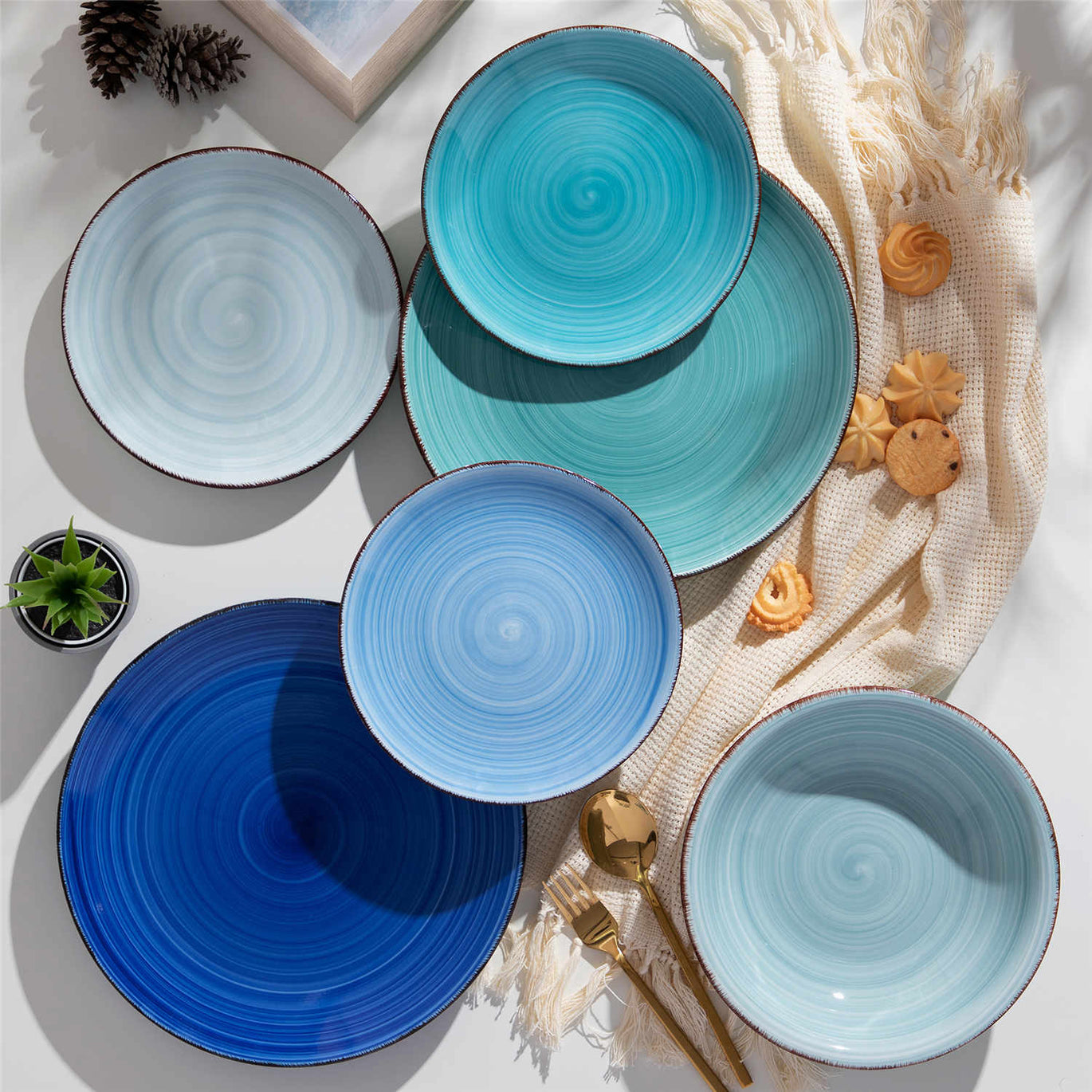
Dust storms may be wild and unruly, but your table does not have to be. With wet‑wise cleaning, smart storage, and health-aware habits borrowed from professional ceramic studios and safety experts, your turquoise bowls and sunburst salad plates can keep glowing long after the sky turns murky. Think of every gentle wash and thoughtful cabinet choice as curating a little pocket of calm, bright, breathable joy right in the middle of the storm.
References
- https://www.fda.gov/food/environmental-contaminants-food/questions-and-answers-lead-glazed-traditional-pottery
- https://www.nps.gov/subjects/museums/upload/08-01_508.pdf
- https://ehs.princeton.edu/health-safety-the-campus-community/art-theater-safety/art-safety/ceramics
- https://community.ceramicartsdaily.org/topic/12000-communal-studio-dust-issues-advice-for-clean-studio-in-nyc/
- https://ceramicartsnetwork.org/pottery-making-illustrated/pottery-making-illustrated-article/In-the-Studio-Keeping-it-Clean
- https://www.museumofroyalworcester.org/discover-learn/china-care/care-of-ceramics/
- https://decobate.com/how-to-care-for-your-ceramic-pottery-dinnerware-and-drinkware/?srsltid=AfmBOooB0bdbuPwzRetHSWj01eOUPpW0cWBB6yVcyZ9M2qkEYLdVp1ha
- https://digitalfire.com/hazard/dealing+with+dust+in+ceramics
- https://www.fortessa.com/care-and-handling-guide/ceramic-dinnerware-care?page=1
- https://madeincookware.com/blogs/ceramic-cookware-maintenance
You may also like
Stern 16 Piece Dinnerware Set
- $88.00
$100.00- $88.00
- Unit price
- per
-
Blue
-
Green
-
Red
-
Grey
Simi 24 Piece Dinnerware Set
- $100.00
$135.00- $100.00
- Unit price
- per
Bonita 18 Piece Dinnerware Set
- From $63.00
$78.00- From $63.00
- Unit price
- per
-
Blue
-
Multicolor
Starry 16 Piece Dinnerware Set
- $88.00
$90.00- $88.00
- Unit price
- per
-
Blue
-
Green
-
Red
-
Gradient Green