





Choosing Dinnerware in Refugee Camps: Human-Centric Considerations

Meals in a refugee camp are rarely just about calories. They are about a family of five leaning over a pot, a toddler gripping a cup with both hands, a grandmother trying to cut food with aching fingers while sitting on a camp mattress. In these moments, plates and cups stop being neutral objects and become tools for dignity, safety, and emotional survival.
Humanitarian standards often talk in the language of kits and specifications. Yet behind every stainless steel bowl and every makeshift paper plate is a design choice that either supports or undermines daily life. Drawing on humanitarian kitchen-set standards from agencies like UNHCR, non-toxic dinnerware research from safety-focused brands and organizations such as Healthier Homes, Vancasso, LeafScore, and AnzhuCraft, and design lessons from healthcare and emergency-preparedness experts, this guide explores how to choose dinnerware in refugee camps in a deeply human-centric way.
Think of this as a colorful, pragmatic tour through the camp kitchen: practical enough for logisticians, playful enough for designers, and grounded in what actually works when life is turned upside down.
The Quiet Power of a Plate in Crisis
Healthcare designers have shown that the right dinnerware can literally change how people feel about themselves. In one analysis on hospital dining by Bauscher Hepp, the authors describe how losing the ability to eat normally can be traumatic and demoralizing, and how redesigned plates, bowls, and mugs helped patients dine with more dignity. They emphasize four pillars for healthcare dinnerware: sanitation, safety, accessibility, and visibility, from non-spill bowl lips to brightly patterned plates that help patients locate different foods.
Refugee camps share similar emotional dynamics. People have lost homes, routines, and often the spaces where family meals used to anchor the day. When a family receives a kitchen set, or sits down with plates that feel sturdy and clean rather than flimsy or suspicious, it sends a quiet message: your well-being still matters, and your daily rituals are worth protecting.
The research on non-toxic, eco-friendly dinnerware echoes this idea. Healthier Homes notes that “organic” or “lead-free” labels alone are not enough and that country of origin and manufacturing practices really matter. LeafScore warns that supposedly “plant-based” plate sets can hide melamine plastics that are neither microwave-safe nor compostable. These details might sound technical, but in a camp they translate into something simple: will this plate hold up when used three times a day, washed quickly, and stacked rough? Is it safe for the toddler licking the rim? Can the family trust it?

From Specifications to Supper: What the UNHCR Kitchen Set Tells Us
One of the most concrete examples of human-centric dinnerware in crises is the UNHCR Kitchen Set. International Logistics Services, a supplier of emergency and core relief items, describes how their UNHCR-specified set is crafted to cover the daily cooking needs of a typical displaced household of five people in camps or emergency shelters. All major metal components are made from stainless steel 200 series, ISO type 1.4016, also known as American grade 430. This material choice is not random; grade 430 is corrosion-resistant and durable, suited to outdoor cooking, frequent transport, and rough handling.
The entire kit is packed into a compact box of about 31 by 31 by 30 centimeters, which is roughly a cube around 12 inches on each side, and weighs about 6 kilograms, roughly 13 pounds. This box is easy enough to stack in warehouses, load into trucks, and carry through camp lanes. That portability matters because families may have to move repeatedly. When dinnerware travels with them, they retain a thread of continuity, instead of having to start over with improvised containers at every new site.
Perhaps the most human-centric aspect of the UNHCR kitchen set is its purpose. It is not designed for staff or for communal canteens, but for families to cook their own meals. As the ILS description notes, by enabling families to cook their own food rather than rely solely on communal kitchens or prepared distributions, the kit supports normal eating routines and cultural food practices, and becomes an “indispensable companion” for health and well-being. That is dinnerware as autonomy.

Human-Centric Criteria for Camp Dinnerware
When we zoom out from one specific kit and think about wider camp contexts, several criteria emerge from the research as non-negotiable. They are the same pillars that show up in hospital dining studies, in emergency-preparedness guidance, and in non-toxic kitchenware investigations; they simply show up in different clothing in a refugee camp.
Durability and Life-Cycle Cost
In restaurants and homes, melamine and other plastic plates often look like an obvious budget choice. Corby Hall’s analysis of restaurant dinnerware makes a strong counterpoint. They describe how melamine dishes are prone to warping, cracking, and discoloring, especially under dishwasher heat. Despite being marketed as “dishwasher safe,” melamine plates often look dull, scratched, and tired after around a year of regular washing. They also cannot usually be recycled when they fail.
In contrast, porcelain, bone china, and high-quality stoneware are made from natural minerals and fired at high temperatures, which makes them tough and long-lasting. Corby Hall notes that these materials perform well in dishwashers, freezers, and microwaves, and that when they eventually break, porcelain can be ground and recycled into more porcelain. Healthier Homes points out that well-made porcelain and modern ceramic dinnerware are nonporous, easy to clean, and resistant to bacterial growth.
LeafScore adds another perspective: heavy but durable stoneware and porcelain can last for years, especially when produced by brands that use recycled clay, closed-loop water systems, and robust glazes. For humanitarian operations, these choices translate into fewer replacements, less waste, and more predictable logistics over time. A plate that survives thousands of uses is usually cheaper, in the big picture, than a plate that looks cheap and fails fast.
Safety, Non-Toxicity, and Sanitation
In crowded camps, many residents are children, older adults, and people with chronic illness. They are the same groups that AnzhuCraft and Kasem International warn about when discussing safe dinnerware for kids. AnzhuCraft defines safe dinnerware as material that stays chemically inert, contains no toxic ingredients such as BPA, lead, cadmium, or problematic glazes, and meets food-contact regulations like FDA or EU standards. Their safest materials list includes plain glass, stainless steel, high-quality ceramic, natural bamboo, and hardwood.
Healthier Homes’ deep dive into “safest material” expands this picture. They explain how:
Porcelain is fired at around 2,400°F, resulting in a very durable, nonporous body.
Stoneware, fired slightly lower, is still moisture-impervious and chip-resistant when well formulated.
Clear modern glass like Pyrex is chemically inert and recyclable, though decorative paints and older leaded crystal should be avoided.
Stainless steel, especially grades such as 304 and 430, is stable, heat tolerant, and shatterproof, though not microwave-safe.
Their guidance emphasizes clear labeling such as “lead-free” and “cadmium-free,” and avoiding chipped or crazed glazes that can increase leaching of heavy metals. Vancasso’s BPA safety guide adds that “BPA-free” labels are not a full guarantee if BPA is simply replaced by similar chemicals like BPS or BPF, and that the safest long-term choices are non-plastic materials like porcelain, stoneware, glass, and stainless steel.
Sanitation is not only about chemistry. Bauscher Hepp notes that poor-quality glaze on hospital plates can wear down through stacking, exposing porous ceramic underneath, which then absorbs food and becomes unsanitary. That insight matters for camps, where plates and bowls are stacked, transported, and washed under pressure. Durable glazes and nonporous surfaces are essential to keep tableware clean with minimal soap and scrubbing.
Water, Fuel, and Everyday Logistics
Emergency Preparedness guidance from the University of Georgia’s Extension service highlights that disaster planners in the United States often aim for at least a three-day emergency food supply, and sometimes a two-week supply. They stress that these reserves should focus on shelf-stable foods that need little water and minimal cooking because safe water is limited. FEMA and emergency gear reviews referenced by the New York Times Wirecutter similarly recommend at least 1 gallon of water per person per day just for basic needs like drinking and simple food preparation.
Translate that mindset into a camp where safe water and fuel are carefully rationed, and dishwashing stops being an afterthought. Every extra pot of dishwater demands precious water, soap, and fuel. Reusable dinnerware that is easy to clean, with non-stick or nonporous surfaces, has a quiet but powerful advantage here. Smooth stainless steel bowls, high-quality glazed ceramic plates, and certain plastics like polypropylene that resist oil and staining, all wash faster than rough, porous, or badly scratched surfaces.
At the same time, there is a case for simple, low-mess disposables or semi-disposables in specific situations. A Facebook car-camping group tip, for example, recommends using basket-style trays with disposable paper sheets to cut down on washing. Campers reported that this system creates less waste than full paper plates and costs less, while still being unsuitable for very wet foods. In a refugee setting, similar hybrid approaches could be considered for high-throughput situations like short-term mass feeding, as long as waste management and safety are thought through.
Accessibility and Dignity for Vulnerable Camp Residents
On a parenting and homemaking forum, one user with arthritis in their hands described how heavy stoneware dishes aggravated their pain and made unloading the dishwasher difficult. Their family had broken many dishes and was considering switching to lighter options like tempered glass, despite a spouse’s dislike of the material.
The details may be domestic, but the principle applies in camps. Many residents will be elderly, recovering from injuries, or living with chronic conditions that make gripping heavy plates and mugs exhausting. Lightweight yet sturdy dinnerware can literally make the difference between eating independently and needing assistance.
Bauscher Hepp’s hospital dinnerware examples show how accessibility can be designed in. Shorter cutlery to fit trays, bowls with steeper walls that help scoop food, and mugs with extra porcelain on the handle to reduce burns are all small details that enable independence. In camps, similar thinking might favor:
Lighter materials like stainless steel or bamboo composite for people with limited grip strength, as long as they are safe and properly specified.
Bowls with shapes that help keep food on the utensil, especially for people with tremors.
Handles and rims that are easy to grasp for small hands and older fingers.
Even if the standard UNHCR kitchen set cannot tailor to every need, humanitarian teams may consider reserving a portion of accessible dinnerware for community kitchens, child-friendly spaces, or households with identified vulnerabilities.
Emotional Comfort, Color, and Visibility
Hospital designers have learned that visibility matters, especially for patients with sensory impairments. Bauscher’s Carat collection uses triple patterns on plates to visually cue patients where the meat, starch, and vegetables are placed. Bright mug handles help people locate hot beverages safely. These design tricks do not change the clinical calorie count, but they do change the dining experience.
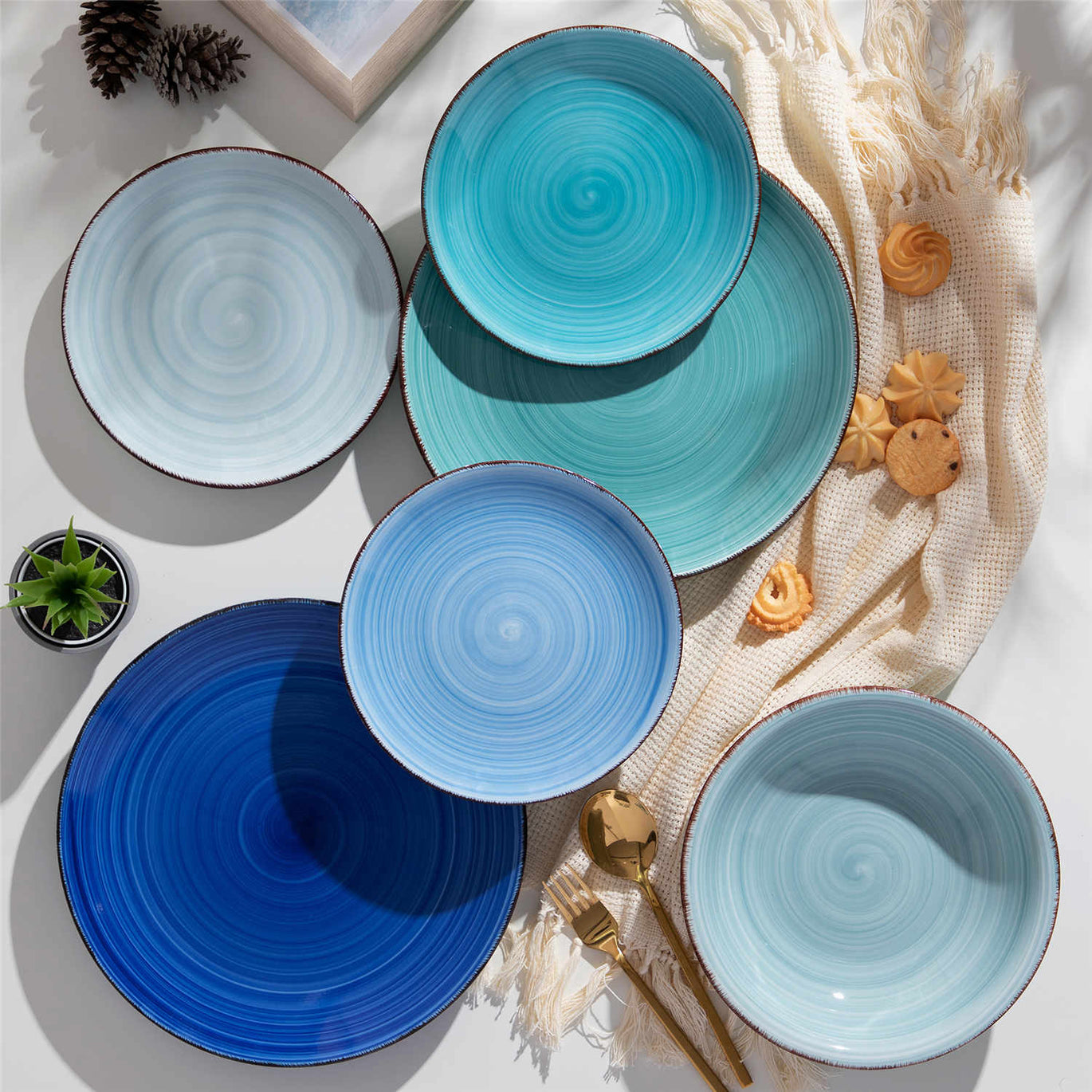
In camps, color and pattern can also be emotional tools. Brighter bowls for children, contrasting rims that make it easier to see food, and even playful designs on kid plates can offer small moments of joy. Brands like Ekobo and Ahimsa, highlighted by Sustainable Review and LeafScore, use vivid colors and kid-friendly shapes in bamboo-based or stainless steel tableware to engage children while also keeping materials safer.
Of course, in emergency contexts, function usually comes first. But whenever a procurement team has a choice between the same safe material in a lifeless gray and a more uplifting color palette, it is worth remembering that families will look at these plates every single day.
Environmental Footprint Under Humanitarian Constraints
Eco-friendly dinnerware is often marketed for cozy home kitchens, but the principles matter in camps too. Arbhu Enterprises and Sustainable Review both define eco-friendly tableware as pieces made from renewable, biodegradable, compostable, or recyclable materials designed to reduce waste and environmental impact. Popular materials include bamboo, palm leaves, sugarcane bagasse, wheat straw fiber, recycled glass, stainless steel, and durable ceramics.
Yet eco claims can be misleading. LeafScore points out that many “wheat straw” or “bamboo” plates online are actually mixtures of plant fibers and melamine plastic, which are not biodegradable, compostable, or microwave-safe. BioLeader’s overview of eco-friendly disposable tableware also stresses that many materials such as PLA and CPLA only fully break down under industrial composting conditions and that real-world benefits depend on proper composting and waste sorting.
Most refugee camps do not have sophisticated waste-management systems, so humanitarian teams should make especially careful choices. As Arbhu-style guidance suggests, prioritizing reusables first, then using genuinely compostable or recyclable disposables only where reusables are impractical, is usually the most sustainable path. Bagasse plates that can compost in around 90 days in industrial conditions, bamboo plates that biodegrade in a few months, or high-quality PP containers that are reused hundreds of times all beat foam polystyrene that lingers for decades.

Reusable Materials in Camps: How They Compare
Different materials shine under different constraints. The table below summarizes key reusable options frequently discussed in the research and how they align with camp realities.
Material |
Key strengths |
Main limitations in camps |
Stainless steel |
Shatterproof, long-lasting, nonporous, lightweight |
Not microwave-safe, can feel harsh or noisy |
Porcelain/stoneware |
Durable, nonporous, visually appealing |
Heavier, can chip or break, higher transport weights |
Clear glass |
Chemically inert, non-leaching, recyclable |
Breakable, risk of sharp shards, heavier than steel |
Natural bamboo/wood |
Warm aesthetics, biodegradable, lightweight |
Needs handwashing, lower heat resistance, limited lifespan |
Safe plastics/PP |
Light, tough, microwave-safe when specified |
Non-biodegradable, recycling depends on local systems |
Fiber composites (wheat straw etc.) |
Light, can use agricultural byproducts |
Safety depends on binders; compostability varies |
The following sections unpack these options with a camp lens.
Stainless Steel: The Humanitarian Workhorse
UNHCR’s choice of stainless steel grade 430 for kitchen-set components is a strong endorsement. AnzhuCraft frames stainless steel as one of the most stable food-contact metals, especially in grades like 304, 316, and 430. It is shatterproof, corrosion-resistant, and well-suited to kids, camping, and travel, as long as users remember never to put it in microwaves.
Ahimsa, profiled by LeafScore, demonstrates what stainless steel can look like when designed for children. Their kid dinnerware features age-appropriate portion compartments and a weighted cup to minimize spills. It is dishwasher-safe, plastic-free, and fully recyclable at end of life. In a camp, similar compartmented plates could help with portioning food distributions in child-focused programs.
The pros for camps are clear. Stainless steel does not break when dropped on rock, is nonporous and easy to clean, and can last for years. The cons are mostly about heat (no microwaves) and occasional metallic taste if acidic foods sit for many hours. For core camp dinnerware, especially in contexts where microwaves are rare and open-air stoves are common, stainless steel may be the single strongest candidate.
Porcelain, Stoneware, and Ceramic: Beauty, Strength, and Breakage Risk
Porcelain and stoneware bring an elevated dining experience, even in hardship settings. Corby Hall highlights how porcelain and china are made from feldspar, quartz, and kaolin, creating dishes that perform well in high heat and intense cold and stay beautiful for years. They are dishwasher-safe, freezer-friendly, and fully recyclable when eventually broken.
Healthier Homes and LeafScore both underscore that high-fired porcelain and stoneware from reputable makers are nonporous, durable, and often safer than many plastics, as long as glazes are certified lead-free and cadmium-free. The Good Trade and LeafScore also describe these materials as heavy but resilient, suitable for daily use with proper care.
In camps, the heaviness can be a drawback. Transporting large quantities of ceramic dinnerware increases shipping weight, and breakage on rough ground is a real risk, especially when families have little storage. Ceramic may be most appropriate in more stable, long-term settlement settings, in clinics, or in child-safe spaces where surfaces are gentler and storage is more controlled.
Glass: Chemically Gentle, Physically Fragile
Plain glass receives high marks from AnzhuCraft and Healthier Homes for being chemically inert, non-leaching, and usually microwave- and dishwasher-safe. It is one of the safest materials from a toxicity standpoint, particularly when free from decorative paints and heavy-metal-laden rims.
However, glass is fragile. In crowded tents and shelters, a dropped plate that shatters into sharp shards is a safety hazard. That does not mean glass has no place in camps, but its use might be best reserved for clinics, staff areas, or specific purposes where breakage risk can be managed. For family kits distributed to thousands of households, the tradeoff often leans toward steel or certain ceramics instead.
Bamboo and Wood: Natural Warmth with Careful Limits
Bamboo and hardwood tableware bring warmth and tactility, and they feature prominently in eco-dinnerware guides from Sustainable Review, AnzhuCraft, and Kasem International. Kasem describes bamboo fiber tableware for babies as lightweight, durable, naturally antibacterial, and biodegradable. AnzhuCraft stresses that bamboo is safest when it is 100 percent natural bamboo or fiber without melamine or plastic binders and should be clearly labeled and certified.
The maintenance side is more demanding. AnzhuCraft explains that natural bamboo and wood have lower heat resistance, should not be microwaved or dishwashed, and require handwashing, thorough drying, and occasional oiling. Items that warp, crack, or become rough should be replaced. In camps, where drying space and careful handwashing time are limited, these care requirements can be challenging.
Still, bamboo or wooden items might be excellent for child-friendly or communal spaces where touch and warmth matter, as long as staff understand the care routine and have the time and materials to follow it.
Plastics, Wheat Straw, and Hybrid Composites
Plastics and plant-fiber composites sit in a gray zone. On one hand, polypropylene (PP) and certain food-grade plastics are tough, light, and microwave-safe. BioLeader notes that PP is non-biodegradable but recyclable, highly resistant to oils and many chemicals, and often used for reusable bowls and tableware. On the other hand, conventional plastics can take centuries to break down, and poorly chosen plastics can leach chemicals, particularly when scratched or heated.
Wheat straw and bamboo composites add more nuance. Ancheng’s comparison of wheat straw, plastic, and bamboo notes that wheat straw plates use leftover agricultural fibers and can range from fully compostable to non-compostable depending on binders such as PLA or PP. They sit in the middle on both sustainability and price, with an earthy look. Bamboolike plates use a fast-growing renewable resource, but bamboo composites or melamine-containing blends may need special disposal and can release harmful compounds with high heat.
Product examples echo this complexity. One wheat-straw dinnerware set described in a retail listing is made from wheat straw blended with food-grade PP. It is non-toxic and BPA-free, unbreakable, and safe up to about 250°F, as well as microwave, dishwasher, and freezer safe. This kind of set can be attractive for camps because it is stackable, light, difficult to break, and easy to wash. At the same time, its plastic content means it is not truly biodegradable, so planners must accept a long-term waste footprint.
LeafScore and AnzhuCraft both warn against plant-fiber dishes that secretly rely on melamine resin. These products are not compostable and may release undesirable chemicals when heated. In humanitarian procurement, that means any wheat-straw or bamboo composite dinnerware should come with clear composition disclosure and food-safety certifications, not just “eco” branding.

Disposables, Semi-Disposables, and Creative Hybrids
There will always be situations in camps where reusables are not practical, especially in the earliest days of a sudden displacement or in large communal feeding centers. Here, eco-focused research can help differentiate truly better disposables from simply different plastics.
BioLeader’s overview of eight eco-friendly disposable materials notes that sugarcane bagasse is a by-product of sugar production that can replace both tree-based paper and plastics. Bagasse tableware is sturdy, resistant to oil and water, safe for microwaves and freezers, and can decompose in industrial composting in about 90 days. Wheat-straw and cornstarch-based plates, when properly formulated, are also biodegradable and compostable under certain conditions, though often less suitable for very high temperatures.
PLA and CPLA, plant-based bioplastics made from corn or sugarcane starch, offer clear or opaque options for cups, lids, and cutlery. They are fully biodegradable under industrial composting conditions, but PLA becomes brittle above moderate heat and is mainly suitable for cold drinks, while CPLA has higher heat resistance but still needs industrial composting to break down.
Paper-based tableware has the advantage of being light, printable, and widely understood. Uncoated paper can be recyclable and compostable, while coated paper can handle hot, greasy foods but often requires specialized recycling. Again, the actual environmental benefit depends heavily on whether the camp can keep paper waste dry, separated, and routed to appropriate disposal.
A pragmatic way to think about disposables in camps is to pair them with reusable supports. The car-camping tip about basket trays with paper sheets is a simple example. The tray remains reusable, and the disposable element is a thin paper liner rather than a whole plate. In camps, lightweight reusable trays or platters combined with replaceable sheets or wraps could reduce washing without exploding the waste volume, as long as food is not too wet and liners are made from safer, paper-based materials.
Whenever disposables are considered, it is important to remember BioLeader’s warning: biodegradable tableware usually requires proper composting and waste sorting to fulfill its promise. Without that, even the greenest plate can end up as just another piece of trash on the edge of the camp.

Putting It All Together: A Practical Approach for Humanitarian Teams
Choosing dinnerware for refugee camps is not about finding one perfect plate. It is about orchestrating a set of materials and formats that collectively support safety, dignity, and operational reality.
One useful starting point is the UNHCR model. A robust stainless steel kitchen set for each household of five offers a resilient baseline: pots, utensils, and bowls that work across cooking fires and stoves, resist corrosion, and endure frequent moves. Familiar grades like stainless steel 430 behave predictably in harsh conditions and are easy to justify on both safety and durability grounds, as AnzhuCraft’s materials analysis suggests.
From that baseline, planners can layer design choices for specific needs. In child-friendly spaces or therapeutic settings, brightly colored, non-toxic tableware such as stainless steel kids’ sets or bamboo-based pieces from brands like Ahimsa and Ekobo can make meals feel special, as long as products are certified and used within their temperature and cleaning limits. In clinics, nonporous, high-quality glazed ceramic or porcelain, as highlighted by Corby Hall and Healthier Homes, may offer the best combination of hygienic cleaning and visual comfort.
Water and fuel availability should shape decisions about reusables versus disposables for large-scale feeding. In situations where washing hundreds of plates is impossible, truly compostable bagasse or appropriately specified paper plates may be worth the waste-management challenge, especially if combined with reusable trays. In more stable settings with reliable water, investing in durable steel, porcelain, or PP containers aligned with LeafScore’s and Healthier Homes’ non-toxic recommendations will pay off in fewer replacements and lower environmental impact.
Accessibility, too, should be deliberately planned. The arthritis forum story reminds us that heavy stoneware can be a barrier to independent eating. Where possible, offering some lighter dishes for older adults, people with disabilities, or caregivers juggling multiple children can be a simple yet powerful dignity intervention, echoing the accessibility features celebrated in Bauscher Hepp’s patient-centered dinnerware designs.
Above all, rigorous material safety checks, like those urged by AnzhuCraft, Vancasso, and Healthier Homes, should anchor every purchase: clear labels for lead and cadmium, avoidance of melamine-fiber composites for hot foods, and rejection of chipped, crazed, or untested ceramics. In the rush of emergency procurement, these checks protect many thousands of meals.
FAQ: Common Questions About Dinnerware in Refugee Camps
Is stainless steel really better than plastic in a camp?
Research from AnzhuCraft and the UNHCR kitchen set specification suggests that stainless steel offers a safer and more durable option than most plastics in high-use, resource-poor environments. Steel is shatterproof, nonporous, and highly heat-tolerant, and grade 430 used in UNHCR kits is specifically chosen for corrosion resistance. While durable plastics like polypropylene can be useful for lightweight storage containers, melamine and mixed plastics often warp, discolor, cannot be recycled, and may leach chemicals or fail under repeated heat, as Corby Hall’s restaurant case study illustrates.
Are “wheat straw” or “bamboo” plates safe and sustainable enough for camps?
They can be, but only if the details are right. Ancheng and BioLeader explain that wheat straw and bamboo tableware can turn agricultural byproducts into useful plates, sometimes even fully compostable ones. However, LeafScore and AnzhuCraft both warn that many “plant-based” products mix fibers with melamine resin or other plastics, making them non-compostable and potentially unsafe at high temperatures. In a camp, any wheat-straw or bamboo product should disclose its exact composition and have clear food-safety certification. Pure fiber or fiber-plus-PLA designs aligned with BioLeader’s guidance may be suitable for specific uses, especially where industrial composting or well-organized waste disposal is available.
How can we protect children from toxins in camp dinnerware?
Kasem International, Vancasso, and Healthier Homes all emphasize that children absorb more chemicals per pound and need higher safety margins. They recommend avoiding BPA, lead, cadmium, PFAS, melamine plastic, phthalates, and vague “plant-based” claims without testing. For kids in camps, this translates into choosing non-toxic materials like stainless steel, high-quality porcelain or stoneware with certified glazes, safe bamboo composites with clear formulas, or properly tested bioplastics. Labels such as “lead-free,” “cadmium-free,” and relevant certifications like FDA, ISO, or MadeSafe should be treated as minimum requirements.
A Colorful Closing
When you look at dinnerware in a refugee camp through a human-centric lens, a bowl stops being “just a bowl.” It becomes a tiny stage where safety regulations, logistics constraints, cultural tastes, and quiet moments of joy all meet. By leaning on the best evidence we have—from UNHCR kitchen-set standards to non-toxic material guides and dignity-centered hospital tableware design—we can curate plates, cups, and utensils that feel as resilient and hopeful as the people using them. In every camp kitchen, there is room for both toughness and tenderness; the right dinnerware lets both show up at the table.

References
- https://www.fcs.uga.edu/extension/preparing-an-emergency-food-supply-short-term-food-storage
- https://www.unhcr.org/sites/default/files/2023-06/kitchen-set_1.pdf
- https://www.healthierhomes.com/organic-dinnerware?srsltid=AfmBOop8B7gFpZozbTFtNO8CUf6JI-YhmepF_7zvoOsC9cfgCmqI9IA6
- https://www.alibaba.com/showroom/unbreakable-microwavable-dinnerware.html
- https://www.anchenggy.com/blog/choosing-sustainable-tableware-wheat-straw-plates-vs-plastic-vs-bamboo-plates.html
- https://www.anzhucraft.com/safest-dinnerware-material/
- https://deepplate.bauscherhepp.com/blog/how-dinnerware-can-help-patients-dine-with-dignity
- https://www.bioleaderpack.com/8-different-kinds-of-materials-used-in-eco-friendly-disposable-tableware/
- https://corbyhall.com/whats-the-most-sustainable-and-budget-friendly-restaurant-dinnerware/
- https://kasem-international.com/5-innovative-materials-revolutionizing-sustainable-tableware/
You may also like
Stern 16 Piece Dinnerware Set
- $88.00
$100.00- $88.00
- Unit price
- per
-
Blue
-
Green
-
Red
-
Grey
Simi 24 Piece Dinnerware Set
- $100.00
$135.00- $100.00
- Unit price
- per
Bonita 18 Piece Dinnerware Set
- From $63.00
$78.00- From $63.00
- Unit price
- per
-
Blue
-
Multicolor
Starry 16 Piece Dinnerware Set
- $88.00
$90.00- $88.00
- Unit price
- per
-
Blue
-
Green
-
Red
-
Gradient Green