

Baking is one of the most satisfying activities in the kitchen, and even the most perfect recipe may fail when the baking dish is not of the correct size. Too shallow, and your dish will overflow; too deep, and it will never cook evenly. Baking dish sizes are important whether you are making lasagna, brownies, or a soufflé in your ramekin set. There are so many choices, small individual ramekins or large casserole dishes in a bakeware set, it can be overwhelming.
This guide will assist you in knowing how the size of the baking dish influences your food, the typical sizes, and how to make intelligent decisions that fit your preferred recipes and stoneware bakeware line.
The Influence of Baking Dish Size on Your Food
The dimensions of your baking dish directly influence cooking time, texture, and final results. A larger dish spreads the batter or filling more thinly, cooking it faster, but it can also become dry if you're not careful. A smaller dish will hold thicker ingredients, which take longer to cook and may result in a richer, denser texture. For example, brownies baked in an 8-inch square pan will be thick and fudgy, whereas the same batter in a 9x13-inch dish will produce thinner, chewier bars. Likewise, a casserole cooked in an excessively large dish can dry out on the edges before the center is cooked. That is why recipes indicate the size of the pan—they are designed to reach the optimal level of moisture and doneness. Proper doneness is crucial for baking food safety, especially when preparing dishes with dairy or eggs.
Stoneware bakeware is particularly sensitive to size since it retains heat longer. When you bake in stoneware dinnerware, you can anticipate that your dish will remain warm once it has left the oven but also that it may require minor timing changes.

Typical Baking Dish Sizes and Shapes
Baking dishes are available in various sizes and shapes, and being aware of the standard measurements can make it much easier to shop for a bakeware set. The most common ones are as follows:
- Square Dishes (8x8-inch or 9x9-inch): Ideal with brownies, cornbread, or small casseroles.
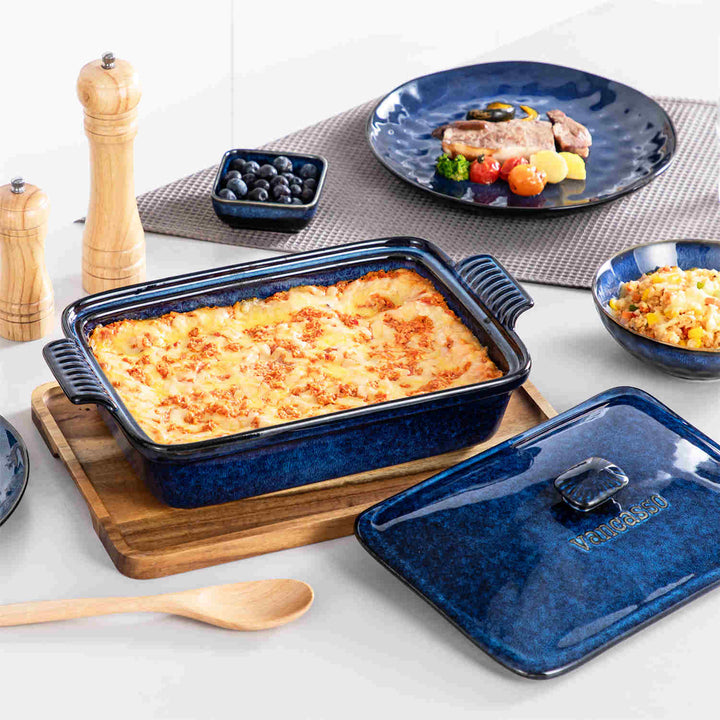
- Rectangular Dishes (9x13-inch): The most common size, which is used to prepare lasagna, baked pasta, and sheet cakes.
- Round Dishes (9-inch or 10-inch): These are used with cakes, cobblers, and pies.
- Oval Dishes: Fashionable with gratins and casseroles, and are common in stoneware bakeware collections.
- Ramekin Set (4 to 8 ounces each): Perfect with creme brulee, souffles, or single-serving desserts.
In creating your bakeware set, it is wise to invest in some of the necessities: one 9x13-inch dish, one 8-inch square dish, and a ramekin set. These combined comprise 90 percent of the recipes you will come across.

What Size for Your Favorite Recipes?
The selection of the appropriate baking dish is largely dependent on the recipes that you enjoy most.
- Brownies and Bars: Best in 8x8-inch or 9x9-inch pans. These sizes ensure that the center remains sticky without overcooking the edges.
- Casseroles and Lasagna: The standard is a 9x13-inch dish. When you frequently have dinners, a bigger stoneware bakeware dish is ideal since it keeps the food warm during serving.
- Cakes: The majority of layer cakes require 9-inch round pans. A springform pan of the same size is suitable in the case of denser cakes, such as cheesecake.
- Souffles and Custards: A ramekin set is essential to these delicate recipes. The small size guarantees even cooking.
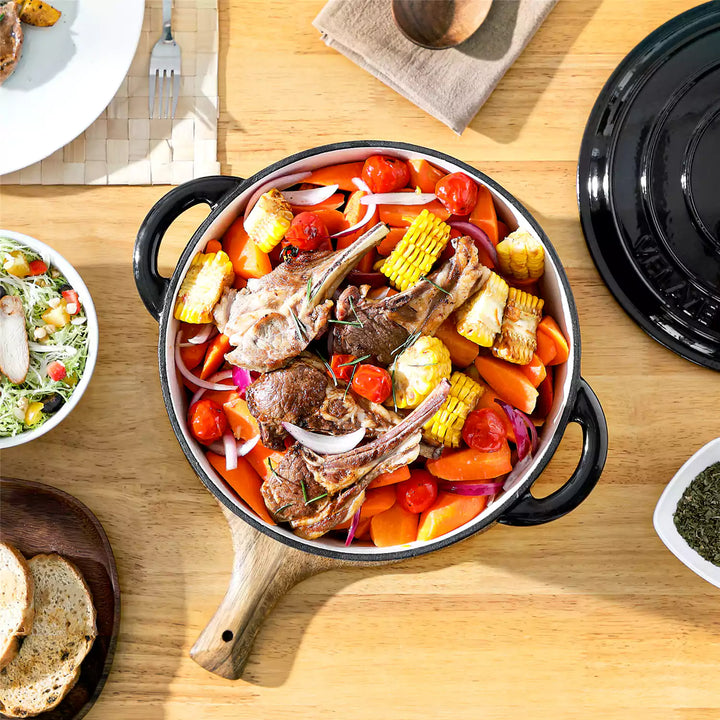
- Roasts and Gratins: Stoneware bakeware dishes are oval or rectangular and offer a classy method of baking and serving these meals directly out of the oven to the table.
When you have a small kitchen, you should pay attention to such versatile items as a 9x13-inch dish and a ramekin set. These items are capable of dealing with daily meals and special desserts.

How to Adjust a Recipe for a Different Size Dish
You might not always have the exact dish that a recipe requires, and that is all right, as long as you know how to make changes.
- Surface Area Matters: Compare the surface area of the pan the recipe requires with the one you are using. The surface area of a 9x13-inch dish is approximately 117 square inches, whereas the area of an 8x8-inch dish is 64. When you change the size to a smaller one, your food will be thicker and will take more time to bake.
- Change Time, Not Temperature: Reducing the temperature may distort textures, so rather than reducing the temperature, bake at the same temperature and test earlier or later, depending on your replacement.
- Test Doneness: Visual cues such as golden edges, a set center, or a toothpick test are used on cakes and brownies.
- Scaling Recipes: When doubling a recipe, a larger rectangular dish can be used, but with cakes and custards, two individual pans should be used to ensure even baking.
Stoneware bakeware holds heat better, so when modifying recipes, remember to allow your dish to cool down a bit before cutting or serving to prevent overcooking due to the remaining heat.
5 Factors to Consider When Choosing a Baking Dish
When buying a bakeware set, size is not the only consideration. You must consider the following aspects as well:
- Material: Glass warms up and cools down rapidly; metal is light and works well with crisp textures; stoneware bakeware is heavier, holds heat well, and can be used as serveware.
- Depth: Casseroles and baked pastas are better in deeper dishes, whereas shallower ones are better in gratins and brownies. This depth principle also applies to dinner plates, where shallow plates enhance presentation while deeper plates offer better portion control.
- Handles: Large, heavy handles ensure that a heavy stoneware bakeware dish is easier to lift.
- Flexibility: There are dishes that can be taken out of the oven, to the fridge, and to the table. Dinnerware made of stoneware is frequently glamorous in this area since it is both durable and elegant.
- Storage Space: A ramekin set can be stacked, whereas larger rectangular dishes might require their own cabinet space.

Baking Dish Sizes and Recipes
To prevent guesswork, the following is a brief guide:
- 8x8-inch Square Dish: Brownies, blondies, cornbread.
- 9x9-inch Square Dish: Fudge brownies, coffee cake.
- Rectangular Dish 9x13: Lasagna, casseroles, sheet cakes, enchiladas.
- 9-inch Round Pan: Layer cakes, cheesecakes.
- Oval Stoneware Dish: Baked chicken, potato gratin.
- Ramekin Set: Creme brulee, chocolate lava cake, mini pot pies.
Pairing your recipe with the right dish will make it bake evenly and will be beautiful to serve. With time, you will automatically pick the dish that goes with your favorite recipes.
The Right Baking Dish, The Right Result
Selecting the appropriate baking dish is not merely a matter of following a recipe but rather a matter of knowing how size, shape, and material influence the result of your food. The 9x13-inch dish is versatile, and the ramekin set is elegant, but each item has its place in a complete bakeware set.
Stoneware bakeware is stylish and functional, keeping food hot on the table and providing consistent performance in the oven. The right dish makes all the difference—whether you're baking a simple batch of brownies or preparing a layered lasagna for guests. You will take your baking and presentation to the next level by investing in the correct sizes and understanding how to modify recipes.
FAQs about Baking Dish Size
Q1: Can Stoneware Dinnerware Be Used as a Baking Dish?
Yes, most Stoneware Dinnerware can be used in the oven, but it is always important to consult the instructions of the manufacturer before using it in high temperatures.
Q2: What Is the Most Useful Baking Dish to Have?
The most versatile is a 9x13-inch rectangular dish, which can be used with cakes, casseroles, lasagna, and desserts.
Q3: How Do I Determine Whether a Recipe Will Fit in My Dish?
Measure the volume and surface area of your dish against the one in the recipe. When the batter or mixture is more than two-thirds full in your dish, it can overflow.
Q4: Do We Need Ramekin Sets to Bake?
A ramekin set can be handy if you like to prepare custards, souffles, or individual desserts. Otherwise, they are optional but a nice addition to a bakeware set.
Q5: Is It Possible to Replace Metal Pans with Stoneware Bakeware?
Yes, but be mindful of timing. Metal warms and cools faster than Stoneware, which can influence doneness.