





The Hygiene Revolution of Ceramic Tableware During the 1918 Spanish Flu

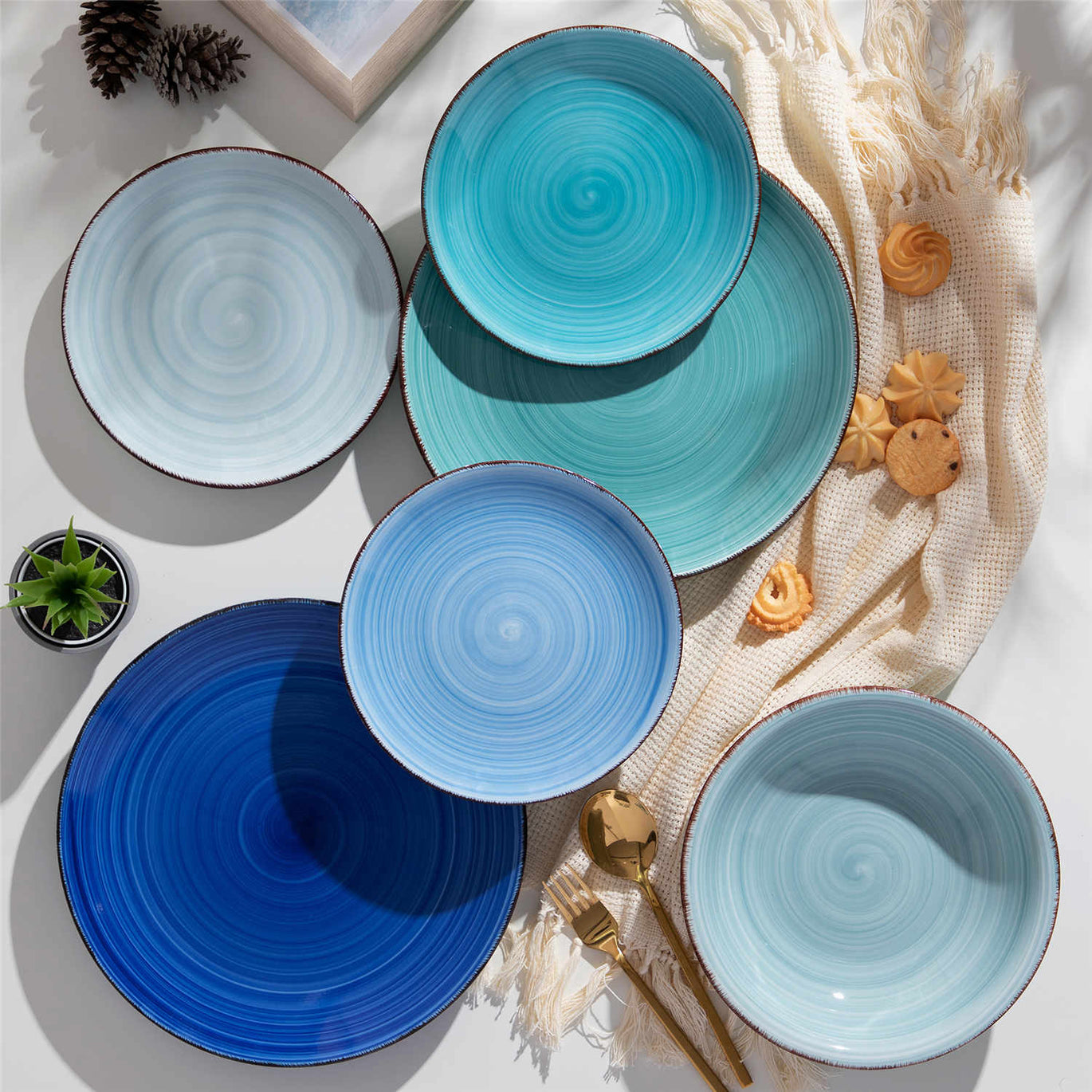
I love a joyful breakfast table: a lemon-yellow mug, a sky-blue plate, a raspberry-red bowl catching the morning light. It feels purely aesthetic, almost frivolous, until you remember that a century ago, in the middle of the 1918 “Spanish” influenza pandemic, these same everyday objects—cups, plates, spoons—suddenly became quiet characters in a very serious public-health drama.
As a Colorful Tabletop Creative & Pragmatic Joy Curator, I spend a lot of time thinking about what sits between your hands and your meal. And the more I’ve read the history of 1918 from medical historians and public-health archives, the more I see that “hygienic” ceramic tableware is not just about pretty glazes and dishwasher-safe labels. It is rooted in a pandemic that taught people to fear shared cups, cherish clean surfaces, and eventually embrace scientifically designed ceramics.
Let’s set the table for that story.
A Crowd Disease That Changed How We Looked at Cups
In 1918–1919, influenza swept the globe with extraordinary force. Historical analyses archived in medical literature estimate that roughly one-third of the world’s population was infected and that at least tens of millions died, often cited around fifty million worldwide, including about 675,000 in the United States. Historians describe this strain as a classic “crowd disease,” a respiratory infection that thrives in dense urban spaces, packed streetcars, army barracks, churches, and cinemas.
Unlike earlier influenza waves, this one hit at a moment when germ theory was firmly accepted. Public-health departments already had legal tools sharpened by campaigns against tuberculosis, diphtheria, and typhoid: quarantine, isolation, business closures, and fines. Railways and newspapers stitched cities together into a new mass society, and the virus rode those rails.
In that context, a cup was no longer just a cup. It was a potential conduit for throat and nose secretions, a shared mouthpiece for a crowd disease.
From Tuberculosis Posters to Dinner Tables
Public-health officials did what people always do in a crisis: they reached for what they knew. They imported tools and messages from the anti-tuberculosis crusades of the preceding decades. Historians writing in a National Institutes of Health–archived article explain how officials emphasized ventilation, avoiding spitting, covering coughs and sneezes, using handkerchiefs properly, resting when ill, and eating well.
Crucially for our tabletop story, they also preached a new etiquette: do not share cups or utensils.
Guidance summarized by Stanford University’s historical overview of the 1918 flu shows the American Public Health Association warning that influenza spread through discharges from the nose and throat. Their recommendations included controlling sputum, banning common drinking cups, regulating coughing and sneezing, promoting handwashing, and tailoring these measures to both rural and metropolitan communities.
In practice, that meant the familiar communal tin cup at a public pump or office water cooler suddenly looked like a loaded weapon. Schoolchildren learned not to pass cups down the row. Families were cautioned not to sip from each other’s glasses. The dining table became a micro-battleground where new hygiene habits were drilled, meal after meal.

When Surfaces Became Part of Public Health
Public-health responses to the pandemic were not just about cups. They remade daily life. Authorities closed “nonessential” venues like saloons, dance halls, and cinemas; limited public funerals; trimmed church services; and staggered business hours to thin crowds. Some cities rapidly layered interventions and held them longer, and later historical analyses show those places generally had lower mortality. Others delayed, wavered under political pressure, or lifted restrictions too quickly.
School closures were hotly debated. Britain widely closed elementary schools. France tried more targeted rules, excluding sick students and briefly dismissing classes when absences soared. In large American cities, experts sometimes doubted school closures, worrying about both limited epidemiological benefit and the social cost of lost education. On top of that came quarrels over mask mandates, with small fines, selective enforcement, and organized resistance revealing the limits of coercive hygiene.
Amid all this, surfaces moved from background scenery to center stage. Stanford’s account of hospital practice during the pandemic is almost obsessive in its detail: dedicated influenza wards, fewer beds in each ward, separation of pneumonia cases, sheets hung between beds to simulate isolation, and rules to keep patients in bed until they had been fever-free for forty-eight hours. Ambulance trains were washed with weak disinfectant solutions. Bedding and rooms were routinely disinfected. Sputum cups were emptied and disinfected twice daily. Nasal discharges were collected in paper napkins. Staff used antiseptic hand solutions and wore removable ward clothing.
Suddenly, wood, metal, cloth, paper, and ceramic surfaces were not neutral props. They were either barriers or bridges for germs.
And back at home, that mindset filtered into daily rituals. Covering your cough, washing your hands, and using your own cup were not just politeness. They were part of a survival strategy.

The Lessons That Lingered After the Pandemic Faded
By the 1920s, many communities tried to forget the trauma. A historical analysis of the 1918 pandemic observes that explicit public memory faded surprisingly quickly. Parades resumed. Cinemas filled. Masks disappeared.
But the behavioral lessons refused to vanish.
They were woven quietly into school health programs and nursing practice. They were also monetized in commercial products that capitalized on fears of “streetcar colds” and contaminated objects: disposable handkerchiefs, paper cups, antiseptic mouthwashes. Everyday items were rebranded as hygienic technology.
If you care about ceramic tableware, that shift is crucial. It set up a world where plates, cups, and tiles are not just carriers of food and pattern. They are expected to prove themselves in the invisible arena of microbiology.
Ceramics Grow Up: From Craft to Ceramic Engineering
Ceramics are ancient, but their modern hygiene story is surprisingly young and surprisingly scientific.
In 1894, The Ohio State University established the world’s first degree program in Ceramic Engineering. As a ceramic engineer writing in a contemporary professional forum points out, that moment marks the formal beginning of ceramics as an academic discipline rather than a purely craft-based practice. The early curriculum focused on the science and technology of clay, glass, and refractory materials—exactly the foundations needed to design sanitary tiles, durable dinnerware, and industrial ceramics.
Over the following decades, ceramics became one of the most thoroughly studied material families. Clay and glaze manufacturers today rely on well-established standards grounded in chemistry and physics to decide which clay bodies are “fit for purpose” in functional, food-contact use. In that same forum, the author is blunt: choosing to ignore modern sanitation and safety standards in functional ceramics is unethical, especially for ware that will touch food and drink.
One key concept running through both that professional guidance and everyday product labels is vitrification. Vitrification is the process of firing clay to a dense, glassy, non-porous state. In simple tabletop terms, it is the difference between a mug whose body quietly shrugs off coffee stains and one that slowly absorbs them.
Contemporary ceramic professionals recommend that clay which does not reach vitrification be used only for decorative or purely artistic pieces, not for functional ware intended to hold food or drink. The reason is practical, not snobbish: non-vitrified bodies are typically more porous and more difficult to sanitize to modern standards.
When you read that and then look back at 1918, you can see the seeds of a hygiene revolution. The social scientists and public-health reformers were teaching people not to share cups. The ceramic engineers, meanwhile, were giving manufacturers the tools to design better cups.

Why Vitrified Ceramic Feels So Clean
Fast-forward to current research, and the link between ceramic surfaces and hygiene becomes even clearer.
A review on antimicrobial glazed ceramic surfaces, published via the ScienceDirect platform, describes how bacteria, viruses, and fungi differ in size, structure, and survival strategies. Most bacteria and fungi can persist for months on dry inanimate surfaces. Many viruses survive for days. Their persistence depends on humidity, temperature, surface roughness, pH, and whether they are embedded in biofilms.
Environmental conditions matter. The review notes that some bacteria, such as Enterococcus faecalis, can survive even at extremely low humidity, while many respiratory viruses with envelopes tend to persist longer at moderate relative humidity. Many pathogens are destroyed at temperatures above about 140°F.
This is where materials choice meets hygiene. The same review highlights that ceramic materials—floor and wall tiles, sanitary ware, cookware, countertops—are widely used because they are durable and, once glazed, are designed to be easily cleaned while carrying color, pattern, and texture. They are critical inanimate surfaces in homes, hospitals, hotels, and industry where pathogen transmission can occur.
The glaze layer is not magic, but it does shape the micro-landscape. Smooth, dense, non-porous glazes present fewer nooks and crannies where organic residue and microbes can hide. They also withstand hot water and chemical cleaners better than many softer materials.
To make this more concrete on our colorful table, it helps to compare two ends of the spectrum.
Property |
Porous decorative clay |
Vitrified functional ceramic |
Typical use |
Intended for artistic or decorative pieces; not recommended to hold food or drink |
Designed and recommended for plates, bowls, mugs, and other functional tableware |
Surface and body |
More absorbent, with microscopic pores; often not engineered to meet food-contact standards |
Dense, glassy, non-porous body and glaze, engineered for durability and repeat cleaning |
Hygiene implications |
Harder to sanitize to modern standards; manufacturers and professionals advise against using for everyday food contact |
Easier to wash thoroughly; aligned with contemporary food-safety and sanitation expectations |
Lifestyle twist |
Wonderful for vases, sculptural centerpieces, and purely visual joy |
Everyday heroes for soups, stews, coffee, and nightly takeout, where color meets serious practicality |
That comparison is not about shaming rustic clay. It is about matching the right ceramic to the right role. A raku-fired vase can absolutely gleam in the center of your table. A vitrified plate is simply a smarter choice for the salmon tartare.
Hospitals, Heat, and the Birth of Surface Thinking
To see how thoroughly the 1918 pandemic rewired thinking about surfaces, it is worth returning briefly to hospitals and military camps.
Stanford’s overview of the 1918 public-health response describes how hospitals implemented contagion-control protocols based on germ theory. Influenza cases were housed in dedicated wards. Bed numbers were reduced to create space. Pneumonia cases were separated. Sheets were hung between beds to simulate isolation. Soldiers in camps were spaced about five feet apart at meals and made to sleep head-to-foot to reduce face-to-face exposure.
Disinfection and sterilization practices were equally detailed. Bedding and rooms were regularly disinfected. Ambulance trains were washed with weak antiseptic solutions such as izal. Sputum cups were emptied and disinfected twice a day. Paper napkins were used to collect nasal discharges. Staff had antiseptic hand solutions and wore removable ward clothing that could be cleaned separately.
Gauze masks were widely used, especially in U.S. hospitals and in cities like San Francisco and San Diego, and some officials reported rapid declines in cases after mask mandates. Yet a Great Lakes study cited in the historical record found similar infection rates among mask users and non-users, underlining that single measures rarely perform miracles.
These examples matter for our modern ceramic tableware, even though they are not about dinner plates. They show how people began to see surfaces as active participants in infection control. Fabrics, metal carts, bed rails, and yes, cups and dishes became objects that required protocols: clean them this way, at this frequency, under these conditions.
That surface-thinking has matured into today’s scientific and regulatory frameworks for antimicrobial ceramics.

The Promise and Limits of “Antimicrobial” Ceramic Surfaces
Modern ceramic research has taken the hygiene imperative to a new level. The ScienceDirect review distinguishes between biocidal (pathogen-killing) and biostatic (growth-preventing) surfaces and focuses on how glazes can be engineered to actively reduce microbial load.
Regulators have responded with test standards. For antibacterial activity, commonly used standards include JIS Z 2801:2000 and ISO 22196, where a typical threshold is achieving a reduction of at least two logarithmic units in bacterial count—a fancy way of saying that only one percent of bacteria may survive. Some regulations explicitly require greater than 99 percent reduction to allow tiles to be marketed as antibacterial, reflecting concern that even small surviving fractions can quickly recolonize a surface.
For antiviral activity, tests like ISO 21702:2019 and ISO 18061:2014 are frequently used, while fungal resistance is often assessed with culture tests because specific standards for glazed tiles are lacking. Researchers also emphasize that while glazed ceramics resist many external agents, the detailed mechanisms by which pathogens die or fail to grow on these surfaces, and how antimicrobial additives change optical, mechanical, and processing properties, are still not fully understood.
So there is a catch. We now have ceramic tiles and tableware marketed as “antibacterial” or “antimicrobial,” but the science is still evolving. Standards differ. Some tests were originally designed for plastics, not glazes. And laboratory reductions in bacteria on a test tile do not erase the need for hot water, soap, and sane habits.
Public-health historians studying 1918 make a similar point from a different angle: in contemporary pandemics, non-pharmaceutical interventions like early, sustained social distancing and everyday respiratory hygiene remain vital. Their effectiveness depends as much on political will, economic support, clear communication, and public willingness to adjust behavior as on the scientific properties of any material.
Your dish can help. It cannot carry the whole show.
Hygiene Meets Sustainability: The Ecodesign Question
There is another revolution running alongside the hygiene story: the environmental one.
Ceramic tableware is a relatively small but growing part of the broader ceramics industry. A life-cycle assessment case study in the journal Sustainability notes that rising demand and ever-changing shapes and designs mean rising total production and associated environmental impacts. The main burdens of mass ceramic production are depleting mineral raw materials and the very high energy consumption needed for processing and firing.
Here is the twist: once fired, ceramic bodies and ceramic waste are largely inert and non-toxic. The big environmental problem is not dishes leaching harmful substances into your food or landfill ecosystems; it is the energy and emissions generated in getting those dishes from soft clay to vitrified plate.
The same Sustainability study frames ecodesign as a systematic process that considers environmental impacts over the full product life cycle alongside affordability, function, ergonomics, and aesthetics, including packaging and end-of-life. Two challenges stand out. Designers need appropriate environmental indicators, and they need robust ways to measure and compare performance based on those indicators.
To tackle this, the researchers modeled five production scenarios for ceramic tableware in the Czech Republic: an automatized factory, small studio production by wheel, small studio slip-casting, experimental ancient-technology production, and a small studio using high-energy-rate forming. They built life-cycle inventories in software using a mix of manufacturer-specific data and generic databases to compare environmental performance.
The point is not that one scenario magically outperforms all others in every dimension; the article focuses on understanding which parameters drive impacts. It also reports that in an earlier survey of producers in Portugal, Spain, and Greece, many firms lacked systematic information and education on sustainability adaptations, even though they saw ecodesign as key to competitiveness and were actively asking for guidance on eco-efficient materials and techniques.
For our purposes at the dinner table, the message is simple: a well-made, vitrified plate is hygienically strong and, if you love it for years instead of treating it as disposable decor, environmentally defensible. The revolution is not just that ceramics help us manage germs better. It is that we can design them to do so while respecting the planet.
Designing a Joyful, Hygienic Ceramic Table Today
This is where history, science, and daily life finally meet.
When I curate a colorful tabletop, hygiene is never the buzzkill in the corner. It is the invisible baseline. The lemon-yellow mug has to pass the same quiet tests as the hospital tiles and LCA spreadsheets: is it made from a vitrified body? Does the manufacturer label it as food-safe and dishwasher-safe? Does the glaze cover every surface that will touch food and lips? Is it meant to be functional, not just decorative?
In my own kitchen, I treat highly porous, matte, or crazed pieces—especially those without clear food-safe labeling—as candidates for dry foods, flowers, or pure display. They can still live on the table as sculptural interest: a dramatic black stoneware vase, a textural centerpiece, a hand-built platter that holds wrapped chocolates instead of stew. That way, the pieces doing the day-to-day heavy lifting with soups, sauces, and cappuccinos are those designed and fired for that job.
Cleaning rituals carry echoes of 1918 but with a lot more ceramic color. Public-health guidance from that time stressed handwashing, controlling respiratory secretions, and not sharing cups. On my tables, that translates into small, joyful habits. When someone in the house is sick, they get their own mug for the day. Dishes and mugs go through a full wash cycle instead of languishing with quick rinses. When I handwash a favorite handmade bowl, I use the hottest water I can comfortably stand and let it dry completely before nesting it away.
Knowing that many pathogens die at higher temperatures, as current ceramic-surface research notes, I also appreciate dishwasher cycles that advertise sanitizing modes around 140°F. The exact degree matters less in everyday life than the pattern: consistent, thorough cleaning and drying on surfaces designed to handle it.
And sometimes, yes, I simply retire a piece. If the glaze chips on the rim of a daily-use mug or plate, I may keep it as a succulent planter or a paintbrush holder rather than a cereal bowl. Partly that is aesthetics; partly it is respect for the idea that modern ceramic safety standards exist for a reason.
Spanish Flu, Covid, and the Ceramics Comeback
Living through the Covid-19 pandemic has given all of us a grim but useful empathy for the world of 1918. Mask debates, school closures, business restrictions, and tensions between public health and economic survival feel eerily familiar when you read the historical articles.
They have also reshaped the clay world. A report on European ceramic regions during Covid-19 shows how art and tableware producers across Italy, Romania, Finland, Portugal, and France struggled with collapsed tourism, canceled fairs, and shifting markets. Some regions turned aggressively toward digital tools and distance selling. Others leaned into innovation grants and new support schemes connecting small ceramic businesses with university research to improve materials, processes, and marketing.
At the same time, there has been a widely reported resurgence of ceramics as a hobby and craft. A cultural feature from PBS SoCal describes how pottery studios have multiplied, especially in urban areas, as people seek analog, hands-on activities after long days of screen time. Ceramics are framed as meditative, grounding, even therapeutic. In addiction recovery programs and nursing homes, clay work is used to provide a sense of control and visible impact.
This surge of new makers and new tableware is exhilarating for someone who loves a vibrant place setting. It also raises an old question in a new form: will all this new pottery respect the same food-safety standards that ceramic engineers and public-health experts have developed over more than a century?
The professional ceramic engineer who sounded the alarm on misinformation about vitrification would say that makers have a responsibility to do so. Clay that does not vitrify belongs in the decorative lane. Functional ware must meet modern sanitation and safety expectations. Our glamorous speckled dinner plates are, at heart, tools in a hygiene system built on hard-won lessons from 1918 and beyond.
FAQ: Everyday Questions from a Colorful Tabletop Perspective
Does ceramic tableware kill germs on its own?
Most ceramic tableware does not actively kill germs; it simply offers a smooth, durable, non-porous surface that is easier to clean effectively. Research on antimicrobial glazed surfaces shows that some specially engineered tiles and glazes can reduce bacterial counts significantly under test conditions, and there are standards for measuring that reduction. Yet bacteria and fungi can still survive for long periods on dry surfaces, and viruses can last for days, depending on humidity, temperature, and surface texture. Even with antimicrobial features, routine cleaning with hot water and detergent, plus sensible habits like not sharing cups when someone is sick, remain the real workhorses.
What exactly does “vitrified” mean on a mug label?
Vitrification is the process of firing clay until it becomes dense, glassy, and non-porous. In practical terms, a vitrified mug or plate absorbs very little water and is better suited to repeated use with hot liquids, detergents, and dishwashers. Ceramic professionals emphasize that non-vitrified clay bodies are best kept for decorative pieces, because they are more absorbent and harder to sanitize to modern standards. When you see “vitrified stoneware” or “fully vitrified porcelain” on functional tableware, it is a reassuring sign that the maker and manufacturer have aimed for a durable, hygienic body.
Are “antibacterial” tiles or dishes necessary in a home kitchen?
For most home kitchens and dining tables, they are not strictly necessary. The ScienceDirect review of antimicrobial glazed ceramics explains that antibacterial claims are tied to specific test standards showing a high percentage reduction in bacterial counts under controlled conditions. These materials can be very useful in high-risk settings like hospitals or commercial kitchens, but they do not replace basic hygiene. In everyday dining spaces, choosing vitrified, food-safe ceramic tableware and cleaning it thoroughly—ideally with hot water and appropriate detergents—is usually enough. The core lessons from both 1918 and present-day research are that behavior, from handwashing to not sharing cups during illness, matters as much as clever material science.
Closing: Plates as Quiet Public-Health Partners
The next time you set your table with a rainbow of ceramic plates and bowls, you are not just styling a meal. You are rehearsing a century of public-health learning—about droplets, surfaces, heat, and the simple power of having your very own cup. In that sense, the hygiene revolution of ceramic tableware is not a single historical moment but an ongoing collaboration between science, craft, and the everyday pleasure of eating beautifully. When your dishes are both joyful and thoughtfully chosen, they become quiet public-health partners, letting safety fade into the background while color and flavor take the spotlight.
References
- https://www.archives.gov/news/topics/flu-pandemic-1918
- https://www.lib.ncsu.edu/news/special-collections/foodie-friday%3A--invalid-cookery--during-the-1918-flu-pandemic
- https://pmc.ncbi.nlm.nih.gov/articles/PMC2862334/
- https://library.wustl.edu/news/worst-among-housekeepers-perspectives-on-st-louis-and-the-1918-influenza-pandemic/
- https://www.nursing.upenn.edu/history/publications/calm-cool-courageous/
- https://www.neh.gov/humanities/2014/marchapril/feature/the-devastation-1918
- https://www.worldhistory.org/Medieval_Hygiene/
- https://my.clevelandclinic.org/health/diseases/21777-spanish-flu
- https://www.pnas.org/doi/10.1073/pnas.0611071104
- https://www.gfdrr.org/sites/default/files/USAID%20Toolkit%2C%20Leadership%20During%20a%20Pandemic.pdf
También te puede interesar
Stern Juego de vajilla de 16 piezas
- Desde €67,95
€90,95- Desde €67,95
- Precio unitario
- por
-
Blue
-
Green
-
Red
-
Grey
Bonita Juego de vajilla de 18 piezas
- Desde €56,95
€70,95- Desde €56,95
- Precio unitario
- por
-
Blue
-
Multicolor
Simi Juego de vajilla de 24 piezas
- €90,95
€121,95- €90,95
- Precio unitario
- por
Starry 16 Piece Juego de vajilla
- €69,95
€81,95- €69,95
- Precio unitario
- por
-
Blue
-
Green
-
Red
-
Gradient Green