



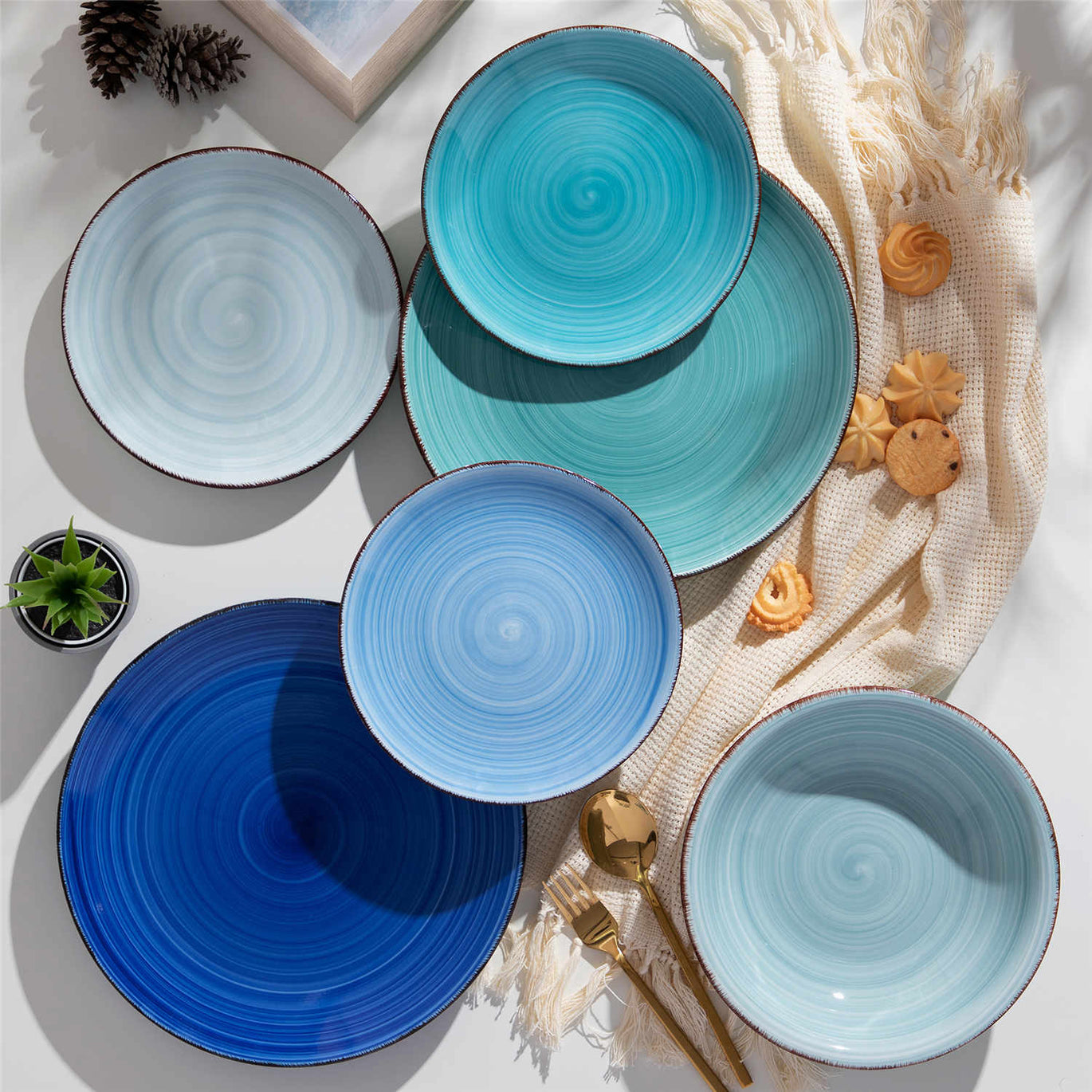


Understanding Fine Motor Skills Development with Ceramic Dinnerware for Children

Ceramic dinnerware and tiny, determined hands are an unexpectedly powerful duo. I have watched many children go from splashing in a cereal bowl to carefully carrying a small ceramic cup like a treasured object, and the transformation is not just cute; it is deeply developmental. When you combine fine motor science with a colorful, thoughtfully set table, everyday meals become one of the most joyful “therapy sessions” your child will ever have.
In this guide, I will unpack what fine motor skills actually are, why they matter so much for eating and learning, and how ceramic plates, cups, and bowls can become beautiful tools for growth rather than just fragile grown‑up things to keep out of reach.
What Fine Motor Skills Really Are (And Why They Matter at the Table)
Fine motor skills are the small, precise movements that use the tiny muscles in the hands and fingers, along with the wrists and sometimes the eyes and arms. Pediatric sources like Circle of Care and Michigan State University Extension describe them as the movements you need for buttoning a shirt, tying shoelaces, holding a pencil, using utensils, opening containers, and manipulating small toys and tools.
These skills are different from gross motor skills, which involve larger muscles and whole‑body coordination for actions like walking, running, hopping, climbing, and jumping. Both matter, but at the table, fine motor skills take center stage. Lifting a cup without spilling, keeping a plate steady with one hand while cutting or scooping with the other, and spearing a piece of food with a fork all rely on those smaller muscles working in harmony with the eyes and bigger body.
Fine motor skills are not just about looking “neat and coordinated.” Research summarized by early education experts shows that fine motor abilities are closely tied to school readiness. Scholarly work cited by Continued Early Childhood Education links fine and gross motor abilities to early math and reading performance, including evidence that finger-based number representations and early fine motor activities are associated with later reading and preacademic skills. The University of St. Augustine for Health Sciences also highlights findings that fine motor skills significantly predict mathematical ability in preschool-aged children.
Occupational therapy researchers from the University of North Dakota describe fine motor skills as critical for core childhood occupations: self-care, education, play, and social participation. Handwriting remains a primary way children communicate in the classroom, and about 10–30% of children experience handwriting difficulties that can interfere with academic achievement if underlying fine motor skills lag behind.
When you zoom in on a child at the table—gripping a spoon, repositioning a small ceramic bowl, or pinching peas between fingers—you are watching the same fine motor foundations that will later support writing, drawing, using a computer mouse, playing an instrument, and tying shoes.

How Children’s Hands Learn: A Quick Development Tour
Fine motor development starts astonishingly early. Bright Horizons and NAEYC describe how it begins with a baby grasping a caregiver’s finger and evolves into a thumb-and-finger pincer grasp as the child starts to pick up small objects. From there, children gradually learn to coordinate both hands, refine their grip, and control pressure as they draw, cut, and manipulate tools.
Early childhood experts talk about a key principle: proximal stability for distal mobility. As outlined by Continued Early Childhood Education, strong core, shoulder, and wrist stability create the foundation for efficient finger movements. That is why posture at the table matters. When a child has a solid base—feet supported, trunk steady, wrist slightly extended—they can control a fork or a ceramic cup much more gracefully.
Researchers also emphasize that early childhood, especially around ages four to six, is a “golden age” for motor development. A study on goal‑oriented play activities published in a medical journal on early childhood motor skills found that a structured 12‑week program of playful, task-based movement produced statistically significant improvements in multiple motor areas for preschool children. The authors note that repeated, meaningful movement experiences in this window build strength, balance, agility, and coordination. Those gains support both gross and fine motor skills.
Another important reminder from sources like Bright Horizons and the American Academy of Pediatrics, as summarized by Fraser, is that development is not perfectly linear. Children progress at different rates, and pandemic-era disruptions and increased screen time have contributed to delays in some children’s fine motor, gross motor, and social skills. The key is frequent, varied, and playful opportunities to use those small muscles, rather than rigid timelines or comparisons.

The Inner Workings of Fine Motor Skills (Through a Tabletop Lens)
To curate a table that truly supports development, it helps to understand the ingredients inside fine motor control. Occupational therapy and early education sources highlight recurring components that show up constantly around the dinner table.
Pincer grasp is the ability to pinch an object between the thumb and index finger. It is essential for picking up small foods, peeling stickers, handling buttons, and later for pencil control. Wrist stability allows a child to move and manipulate tools like utensils or a small ceramic cup without the hand flopping or collapsing inward.
Bilateral coordination means using both hands together, either doing the same thing or different but complementary tasks. At the table, this looks like stabilizing a plate with one hand while scooping with the other, or holding a small ceramic bowl steady while scraping the last bites with a spoon. Crossing the midline, another milestone described by Edutopia and Continued, is when a child can comfortably reach across the center of the body. Pouring from a small ceramic jug placed on one side of the plate into a cup on the other side can gently encourage this skill.
Hand–eye coordination and visual motor integration connect what the eyes see with how the hands move. They are involved when a child guides a spoon into a mouth, matches a fork to a food target, or lines up a ceramic cup with a coaster. In-hand manipulation skills, described in more detail by Continued, involve moving objects within one hand, such as shifting a crayon or rotating a utensil to get a better angle.
Sensory systems are in the mix as well. Proprioception gives children a sense of how heavy objects are and how much force to use, which matters when lifting heavier ceramic dishes versus lighter plastic ones. Tactile perception helps them feel and adjust their grip on smooth or textured surfaces. Vestibular function supports balance and postural control so they can sit upright and coordinate arm and hand movements without tipping over.
When we pick child-friendly ceramic pieces with intention, we can support all of these components in small, repeatable ways.

Ceramic Dinnerware as a Fine Motor Playground
Now to the fun part: the dishes themselves. In my work designing colorful family tableware and watching children interact with it, ceramic pieces behave very differently from lightweight plastic or silicone. When you understand that difference through the lens of fine motor development, the table becomes a creative lab.
Weight, Texture, and Temperature
Ceramic is heavier than plastic, and that weight is not just an aesthetic detail. In practice, the extra heft provides rich proprioceptive feedback. Children feel the weight in their wrists and fingers as they lift a small ceramic cup or carry a plate from the counter to the table. Occupational therapists frequently use resistance—through playdough, putty, clothespins, and tongs, as noted by NAPA Center and NAEYC—to strengthen small muscles. Ceramic can offer a similar “natural resistance” in daily routines when the pieces are sized appropriately for children.
The surface of ceramic also offers sensory contrast. A glossy glazed plate feels different from a matte-finished bowl. A gently ridged rim gives the fingers a natural resting place and anchor point for stabilizing the dish. That sensory variety matters because, as Continued and other sources point out, tactile perception supports motor planning and control. Children learn how firmly to grasp smooth versus slightly textured pieces and adjust their grip accordingly.
Temperature adds another layer. A cool ceramic cup of water or a warm ceramic bowl of oatmeal gives immediate feedback. The point is not to serve anything too hot, of course, but to let children notice and learn how temperature changes the way they handle dishes, always under safe adult supervision.
Shapes That Invite Useful Movements
A thoughtfully shaped piece of ceramic dinnerware quietly encourages certain hand positions and motions. A small, low open cup invites a two-handed grasp at first, then gradually a more refined three-finger hold. A short, wide handle supports a thumb-index-middle finger pinch similar to a mature pencil grip, which occupational therapists emphasize as a key prewriting pattern.
Shallow, slightly higher-walled plates give children a defined edge to push food against as they learn to scoop with spoons or forks. That edge becomes a training partner for hand–eye coordination and bilateral use, much like bead threading or pegboard activities described by NAPA Center and Michigan State University Extension.
Small bowls that gently taper at the base are easier for little hands to hold underneath, encouraging wrist extension and stabilizing strength. When you design or choose pieces this way, you are essentially embedding tiny occupational therapy goals into every bite.
Everyday Motions, Hidden Workouts
Think about a typical child-centered meal with ceramic pieces in play. The child reaches to steady a plate while cutting soft food, uses a fork to spear a piece of fruit, and brings a small cup to the mouth without spilling. Between bites, they might spin a spoon between fingers absentmindedly, slide a bowl closer, or stack plates and bowls at the end of the meal.
Each of these motions taps into the underlying skills described by occupational therapy literature: pincer grasp, hand–eye coordination, bilateral coordination, visual-motor alignment, and in-hand manipulation. The magic is that they are happening within a meaningful, goal-oriented context. The early childhood motor study on goal‑oriented play emphasizes that when children move through purposeful tasks, like balancing, running, and manipulating objects to reach a goal, motor gains are significant. Mealtimes with ceramic dishes provide their own sequence of little goals: carry, place, scoop, sip, wipe, and stack.

Ceramic vs. Other Materials: Pros and Cons for Fine Motor Practice
Ceramic is not automatically “better” than other materials, but it offers a different set of opportunities and constraints. Here is a simple comparison from a fine motor point of view.
Material |
Fine Motor Benefits |
Considerations and Tradeoffs |
Child-sized ceramic |
Heavier weight builds strength and proprioception; firm surface offers clear feedback for utensils; varied shapes and handles support mature grasps; feels “real,” which can boost care and attention. |
Breakable if dropped; requires supervision and realistic expectations; best introduced gradually with child-sized pieces. |
Plastic or melamine |
Very light, easy to lift for younger toddlers; often durable; abundant child-specific designs. |
Less resistance means less strengthening; slippery surfaces can slide easily; may encourage more casual handling. |
Silicone |
Soft, grippy base reduces sliding; flexible and forgiving if dropped; good for early self-feeding practice. |
Very soft sides can collapse; less precise feedback for cutting and scooping; different oral and tactile sensory experience. |
Metal (kid cutlery, small cups) |
Firm feedback for cutting and scooping; good for graded pressure; durable. |
Temperature changes quickly; can be noisy or startling against ceramic; weight varies by design. |
In my own experience, a mixed-material approach works beautifully. Silicone or lightweight plates are helpful in the earliest self-feeding experiments, while one or two carefully chosen child-sized ceramic pieces gradually introduce more challenge and responsibility. The goal is not a perfect “only ceramic” table, but a curated collection that evolves as your child’s skills grow.

Setting Up a Fine-Motor-Friendly Ceramic Table
A child-centered ceramic table is not about perfection; it is about tiny upgrades that add up. When I work with families, we start with three practical questions: what pieces, what posture, and what routines.
Choosing the Right Pieces
Look for ceramic plates and bowls that are scaled to your child’s hands, not just scaled down adult place settings. A plate roughly the width of the child’s outstretched hand span is often easier to manage than a full-size dinner plate. Low, slightly curved rims help contain food and give a tactile edge for scooping. Bowls with a wide, stable base and gently sloping sides invite two-handed lifting and easier spoon use.
For cups, many families have success starting with a short, wide-mouth ceramic tumbler that fits both hands around the outside. As the child’s control improves, you can introduce a small handled cup, watching how their thumb and fingers wrap around the handle. That wrapping motion mirrors the tripod or quadrupod grasps occupational therapists aim for with writing tools around ages three to four, as described in Continued’s overview of grip development.
Color can play a quiet supporting role. A contrasting rim color or a small motif near the edge of a plate can give visual cues for where to place hands or how far to fill a cup. Just be sure the design is smooth enough not to interfere with easy cleaning.
Positioning and Posture Around the Table
Because proximal stability is so important for finger control, how your child sits with ceramic dishes matters. Aim for a setup where feet are supported on the floor or a stool, hips and knees are roughly at right angles, and the table height allows forearms to rest comfortably with wrists near neutral or slightly extended. This echoes the positioning advice from motor experts who emphasize that a solid, supported base of support frees the hands for skilled work.
Ceramic pieces add another layer of learning about space. Placing the cup slightly to one side, the plate centered, and a small bowl or dipping dish nearby invites gentle reaching, crossing midline, and planning movement sequences. Over time, children learn their own preferred setup and begin to replicate it with pride, just as NAEYC encourages children to participate in household routines like setting the table.
Routines That Turn Mealtimes into Mini Therapy
Fine motor experts across sources—from NAEYC to Michigan State University Extension and NAPA Center—agree on one big idea: the strongest gains happen when practice is built into everyday routines. The table is a perfect place for this.
You might invite your child to carry one or two child-sized ceramic plates to the table, using both hands and walking carefully. They can place napkins, arrange utensils, and later clear their own dishes. Pouring small amounts of water from a pitcher into a ceramic cup, stirring yogurt in a bowl, or sprinkling toppings over food all build fine motor control while keeping the focus on participation and connection rather than performance.
After the meal, a child can wipe the ceramic plate with a sponge, rinse it under supervision, or place it carefully into the dishwasher. Occupational therapists and early childhood educators repeatedly emphasize that giving children real, meaningful tasks—rather than isolated exercises—strengthens both skills and confidence.

Playful Ceramic‑Inspired Activities for Fine Motor Growth
Fine motor literature is rich with play ideas: stickers, beads, clothespins, playdough, sorting games, and more. You can borrow these well-tested activities and weave them into your ceramic tabletop world.
One favorite hybrid activity borrows from sticker peeling games recommended by Bright Horizons and NAPA Center. You can create a “placemat design studio” by taping a sheet of paper where a plate would go and inviting your child to peel and place small stickers to mark where the plate, cup, and bowl belong. Peeling strengthens pincer grasp and finger isolation, while placing targets visual-motor coordination. Later, they match real ceramic pieces to their own design.
Bead threading, highlighted by NAPA Center, Michigan State University Extension, and several therapy guides, can be reimagined as creating “menu chains” or name tags for each plate. Children thread larger beads at first, then smaller ones, onto ribbon or string to make simple napkin rings or place markers. This supports bilateral coordination, visual alignment, and the translation and shifting components of in-hand manipulation described by Continued.
Water play is another classic fine motor booster. Instead of a random tub, you might set up a safe “dishwashing station” using a sturdy ceramic bowl in a shallow bin of water, plus sponges, squeezable bottles, and eye droppers, which NAPA Center recommends for hand strength. Children squeeze water from sponges, transfer water from bowl to bowl, and experiment with how much force is needed to squeeze a dropper versus a sponge. All of this directly supports the graded pressure needed to handle ceramic pieces without dropping them.
Playdough, championed by NAEYC, Michigan State University Extension, and many occupational therapists, is perfect for tabletop pretend play. Children can roll, pinch, and sculpt “food” that they serve on their ceramic plates, cut into pieces with child-safe utensils, and arrange like small chefs. Rolling and shaping dough mirrors several fine motor strength activities described by NAPA Center and Skill Point Therapy. Because the play is anchored to the real plates and bowls your family uses, transitions from pretend to real food feel natural.
Clothespin and clip activities, which appear in NAPA Center and household-activity guides, can also join the table. Children may clip napkins to the edge of a platter, decorate plates with clipped-on paper “tickets,” or use clips to hold recipe cards upright. The open-and-close motion of clothespins builds the same pinch strength that supports pencil grasp and scissor skills.
The common thread across all these activities is what multiple sources emphasize: make it playful, meaningful, and embedded in daily life rather than a strict “therapy session.” Celebrate small successes and let your child’s interests lead the way.
When to Wonder About Fine Motor Delays
While every child’s timeline is unique, it helps to know when to pause and ask questions. Circle of Care outlines signs of fine motor delay such as persistent difficulty manipulating small objects, frequent trouble with dressing and undressing, poor hand–eye coordination, and ongoing challenges with coloring, cutting, or writing as peers begin to manage those tasks. Fraser notes that pandemic-related isolation and increased screen time have contributed to weaker fine motor skills in some young children, along with difficulties with imaginative play and emotional regulation.
At the table, persistent difficulties might look like an older preschooler who cannot consistently bring a cup to the mouth without significant spilling, refuses or struggles to use utensils long after peers are experimenting with them, or avoids any task that involves grasping smaller objects. The key is patterns over time, not one messy dinner.
Across the research and clinical sources in our notes, there is strong consensus on early intervention. Circle of Care and Skill Point Therapy highlight that delays in motor skills can stem from genetics, medical conditions, or environmental factors, and that early assessment by a pediatrician and pediatric occupational therapist is recommended when concerns persist. The early childhood goal‑oriented play study also points out that motor exercises are particularly valuable for children with developmental delays, with larger benefits in those with greater delay.
If you notice ongoing challenges, you are not failing, and your child is not failing. You are simply getting a useful signal. Talk with your pediatrician and ask whether an occupational therapy evaluation would be helpful. Therapists use play-based, child-friendly approaches and can give you tailored tabletop strategies that align with your family’s style, including how to safely and productively use ceramic dinnerware.

Frequently Asked Questions about Kids, Ceramics, and Fine Motor Skills
When can I start letting my child use ceramic dinnerware?
There is no single research-backed age in the sources we have, but the developmental literature does emphasize matching challenges to each child’s current abilities. In my own practice with families, we generally begin experimenting with a small, sturdy ceramic plate or bowl once a child can sit steadily at the table and bring lightweight cups or utensils to the mouth with some control. At first, parents often supervise closely and limit ceramic use to certain meals or snacks. Over time, as the child’s fine motor control and judgment improve, ceramic pieces can become part of everyday routines.
Is ceramic dinnerware safe for toddlers?
Ceramic is breakable, which means it requires realistic expectations and adult supervision. The fine motor and proprioceptive benefits of the extra weight and firm surface are real in everyday practice, but you want to choose child-sized, stable pieces and introduce them gradually. Many families use a combination of silicone or lightweight dishes and select ceramic pieces, so that children can gain experience with both without turning every meal into a high-stakes balancing act.
Does it really matter whether we use ceramic or plastic for fine motor development?
All of the research and clinical sources in our notes emphasize movement, repetition, and meaningful tasks, not one “perfect” material. Children can build strong fine motor skills using plastic plates, metal utensils, paper cups, playdough, beads, clothespins, and more. Ceramic simply offers a different sensory and motor profile: more weight, different tactile feedback, and a sense of “realness” that often invites careful handling. Think of ceramic as one more tool in the toolkit rather than a requirement. The most important factors are frequent opportunities to grasp, lift, stabilize, pour, and manipulate objects during everyday routines.
How much “fine motor practice” do children need?
The research study on goal‑oriented play used a fairly intensive schedule in a school setting, but families do not need to recreate that in a formal way at home. Experts from NAEYC, Michigan State University Extension, and Skill Point Therapy consistently recommend weaving fine motor challenges into daily life: cooking, setting the table, dressing, drawing, building, and playing. The American Academy of Pediatrics, as discussed by Fraser, emphasizes that children thrive with plenty of active, playful time rather than extended passive screen time. If your child is regularly busy with hands-on activities, including those at the table, you are already offering valuable practice.
When we zoom out, fine motor development is not a separate track from family life; it is woven into every turn of a spoon and every carefully carried plate. Ceramic dinnerware, chosen with care and offered with trust, turns the table into a gallery of small triumphs: steadier hands, bolder attempts, and a growing sense of “I can do it myself.” That is the heart of colorful tabletop curation for children—beautiful objects, practical skills, and joyful independence blooming together, one messy, marvelous meal at a time.

References
- https://www.canr.msu.edu/news/building_fine_motor_skills_and_why_it_matters
- https://nsuworks.nova.edu/cgi/viewcontent.cgi?article=1069&context=edp
- https://help-for-early-years-providers.education.gov.uk/areas-of-learning/physical-development/fine-motor-skills
- https://pmc.ncbi.nlm.nih.gov/articles/PMC8625902/
- https://commons.und.edu/ot-grad/308/
- https://www.usa.edu/blog/how-to-improve-fine-motor-skills/
- https://openbooks.library.baylor.edu/lifespanhumandevelopment/chapter/motor-development/
- https://napacenter.org/fine-motor-activities/
- https://my.clevelandclinic.org/health/articles/25235-fine-motor-skills
- https://www.edutopia.org/article/promoting-fine-motor-skills-preschool/
También te puede interesar
Stern Juego de vajilla de 16 piezas
- €79,95
€90,95- €79,95
- Precio unitario
- por
-
Blue
-
Green
-
Red
-
Grey
Simi Juego de vajilla de 24 piezas
- €90,95
€121,95- €90,95
- Precio unitario
- por
Bonita Juego de vajilla de 18 piezas
- Desde €56,95
€70,95- Desde €56,95
- Precio unitario
- por
-
Blue
-
Multicolor
Starry 16 Piece Juego de vajilla
- €79,95
€81,95- €79,95
- Precio unitario
- por
-
Blue
-
Green
-
Red
-
Gradient Green