



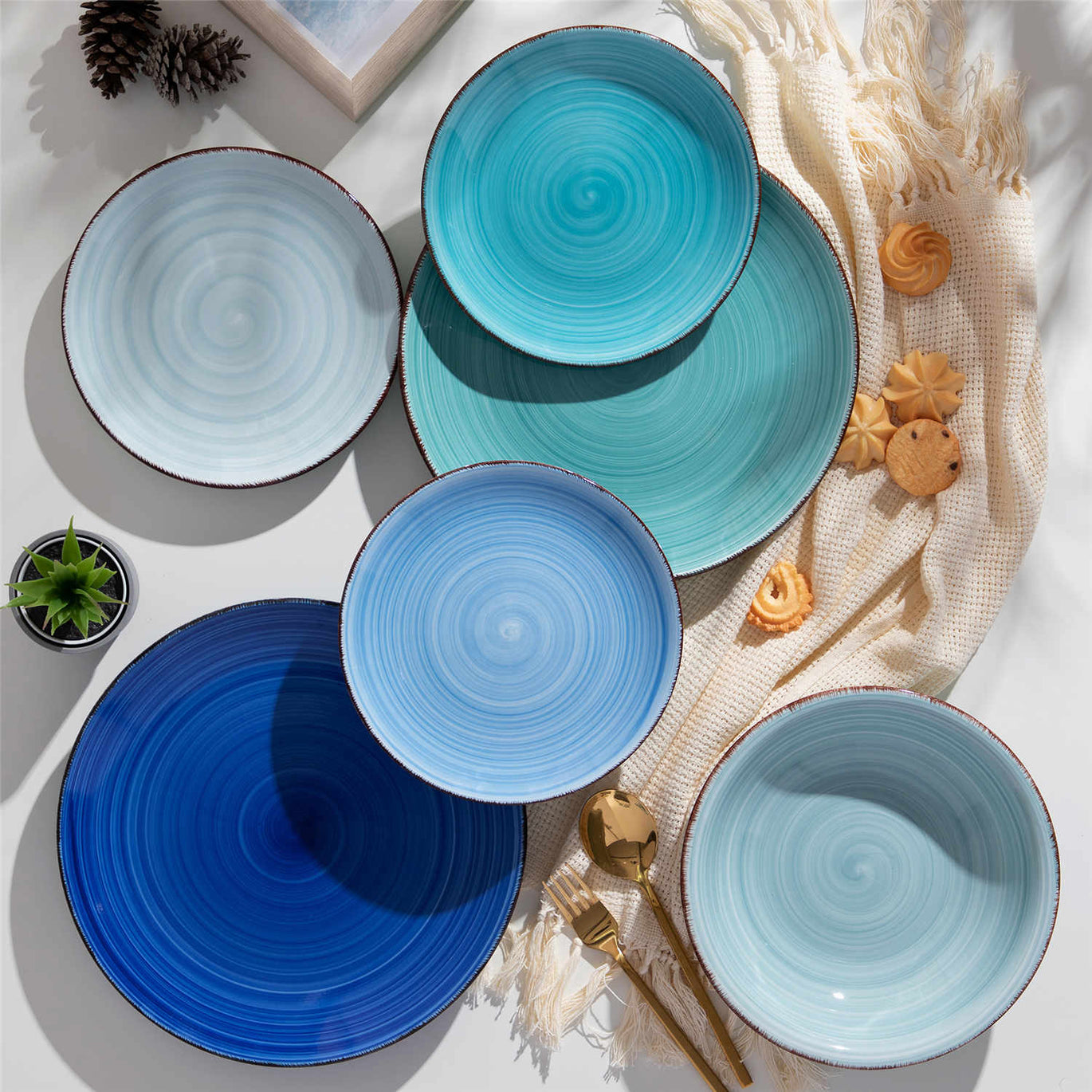


The Appetite of Sound: The Psychology of Ceramic Tableware Clinks

Ceramic plates kiss, forks flutter, glasses answer with a bright, brittle chime. Even before the first bite, a dining room composes a score, and our bodies listen. As a Colorful Tabletop Creative & Pragmatic Joy Curator, I’ve spent years staging tabletops where color, texture, and—yes—sound are deliberate tools. The clink of porcelain can make a Tuesday dinner feel like a celebration. It can also nudge how fast we eat, what we choose, and how satisfied we feel. Today, we’ll tune into the quiet star of the meal—the sound of ceramic tableware colliding—and explore how it plays with appetite and perception.
The Science Behind a Single “Clink”
The soundtrack of eating is more than ambiance. Research in multisensory perception shows that sound interacts with taste, smell, and texture to shape flavor and behavior. A body of work from the Oxford Crossmodal Research Laboratory demonstrates that changing the sounds generated while we eat—especially the high-frequency “crisp” components—can heighten perceived freshness and crispness without altering the food itself. In classic experiments summarized in Chemical Perception, boosting the brightness of bite sounds made identical chips seem fresher and crisper. That matters for ceramics because the small percussive collisions between plates and utensils occupy a similar high-pitch, fast-attack region of our hearing, which is especially salient against a quiet backdrop.
Noise matters too. The Flavour journal highlights that louder environments can dampen the ability to discriminate sweetness and saltiness and make conversation harder, conditions that often accelerate drinking and eating speed. A field and lab pattern appears repeatedly: as loudness rises, pace and consumption tend to rise, while sensory discernment can fade.
We also synchronize to sound. Studies summarized by Cathe Friedrich and a Nutrients meta-analysis emphasize that tempo and volume shape eating behavior. Faster tempi can quicken our pace; slower tempi tend to stretch the meal and invite deliberation. While the effect sizes in the Nutrients review are modest overall, they are consistent enough to be operationally useful.
Finally, pitch maps to taste. Crossmodal correspondence research, including reports summarized by Food Unfolded, suggests that higher pitches associate with sweetness and brightness, while lower, bass-forward sounds skew toward bitterness and depth. Ceramic clinks, being bright and high-pitched, may subtly steer impressions toward lightness and sparkle, especially with desserts or crisp salads. These are not deterministic switches; they are biases that gently color perception.

How Ceramic Clinks Influence Appetite: Three Pathways
Arousal, Pace, and the Energy of a Room
Short, sharp transients like utensil-on-plate clinks increase arousal. Pair that with a room’s overall loudness and music tempo, and you have a recipe for pace control. The Flavour journal reports that elevated background noise can push faster consumption; real-world bar studies show quicker drinking when levels hover around the high 80s to low 90s in decibels compared with the low 70s. In restaurants, a field experiment published in a peer‑reviewed medical database found that slow-tempo playlists increased dwell time compared with faster ones, even when overall spend did not change. Ceramic clinks do not act alone, but they contribute to a livelier, brisker soundscape when the room is already loud or the music is fast. If your goal is leisurely savoring, especially for courses where aroma and texture are the stars, controlling clatter will help slow the meal.
Masking the Food’s Own Voice
Your food talks. Crisp lettuce exclaims, sourdough crackles, a good tempura whispers with delicate fizz. Studies synthesized by Chemical Perception show that when we can hear those bite sounds clearly—particularly higher frequencies above roughly a few kilohertz—crispness and freshness jump. The opposite is also documented: broadband masking noise can reduce the reported moistness of a snack, and Flavour notes that white noise can undermine taste discrimination, particularly for sweetness and saltiness. Ceramic clatter adds bright transients that can distract the ear from your dish’s authentic acoustic cues. In quieter rooms, carefully controlled plate and utensil sounds can frame and enhance the food’s own signals. In noisier rooms, unmanaged clatter risks burying them.
Pitch, Expectation, and Flavor Color
High-pitched soundscapes boost perceived sweetness and sparkle; low-pitched ones tip into richness and bitterness. Food Unfolded and crossmodal research popularized by Charles Spence describe these mappings. Ceramic collisions skew high and glass-like, which can subtly complement citrus, greens, and meringues, but may work against the silky warmth of a braise or the round savor of umami if the room becomes a hard, bright echo chamber. The key is congruence: let your tableware’s “voice” support the story of the dish, not compete with it.

Loudness Benchmarks That Matter at the Table
Acoustics can feel abstract until you anchor them to simple, observable levels. Flavour provides a practical scale: below 60 dB reads quiet; 60–70 dB is the sweet spot for easy conversation; 71–80 dB requires raised voices; above 80 dB becomes extremely loud and potentially hazardous with sustained exposure. Marketing science adds a provocative nudge: a Swedish field study in the Journal of the Academy of Marketing Science found that shoppers in quieter environments near 55 dB selected more fruits and vegetables, while in louder settings around 70 dB they leaned more toward ultra‑processed items and red meat. In other words, sound level nudges decisions. For dining, that means a quieter table invites more mindful choices, while an amped‑up room may push toward speed and indulgence.
Loudness (dB) |
Conversation Feel |
Likely Eating Effects |
Evidence Notes |
<60 |
Quiet |
Heightens perception of food sounds; encourages slower savoring |
Flavour guidance on quiet environments |
60–70 |
Comfortable |
Supports conversation, mindful pacing, healthier choices |
Journal of the Academy of Marketing Science field data around 55 dB |
71–80 |
Voices raised |
Speeds pace; risks masking taste cues; more indulgent choices |
Flavour on noise effects; multiple field observations |
>80 |
Extremely loud |
Fastest pace; reduced taste discrimination; fatigue |
Flavour caution on exposure and sensory impairment |
Numbers are guideposts, not absolutes. Architecture, crowd density, and music content will shift the feel. Still, they’re helpful targets for tuning a room or a dinner party.

Ceramic Sound, Designed: Turning Clinks into a Feature
Ceramic clinks can be lively punctuation or abrasive static. The difference depends on materials around them and what else you want your guests to hear. The Flavour journal and industry practice agree that hard, reflective surfaces amplify sound, while soft textiles and porous finishings absorb it. If your goal is sparkle without fatigue, think in layers. Cloth napkins and a runner tame collisions without silencing them. Felt separators between stacked plates prevent pre‑meal chatter. A wood or cork trivet under serveware stops heat‑induced micro-movements that tick-tick through the tabletop. You can still let a celebratory toast ring; you’re simply damping the background so the bright moments feel intentional.
Plating can help your food speak up. Crossmodal research reviewed in Chemical Perception shows that amplifying the high-frequency bite signature increases perceived crispness. Translating that to the plate, keep delicate crunchy elements near the surface and avoid saturating them in sauces until the last moment. If the dining room is lively, offer a dramatic audible bite early in the course—a shard of brittle, a crisp herb leaf—so guests register that freshness before conversation and clinks rise again.
Match your soundscape to your menu. Food Unfolded explains that high pitch favors brightness and sweetness, while lower pitch suggests depth and bitterness. In a salad‑forward, citrus‑zesty menu, a few crystalline ceramic accents can complement flavor. For a slow, savory stew night, soften the space so lower, longer sounds from cutlery and conversation can breathe. The goal is not silence; it’s harmony between what the ear hears and what the tongue tastes.

The Pros and Cons of a Clinky Table
A little sparkle can be delightful. Ceramic clinks create energy, telegraph sociability, and cue celebration. In a brunch rush or during a festive dinner, that energy can lift mood, help with flow, and make the experience feel vivid and memorable. It’s the aural equivalent of candlelight flicker: movement and life.
There is a tipping point. Flavour documents that at higher loudness, taste perception blurs and pace accelerates. Cathe Friedrich’s summary of marketing science research notes that louder, chaotic environments bias choices toward indulgence, while quiet ones foster healthier selections. A Nutrients meta‑analysis puts a reality check on the magnitude—effects are generally small—but they show up consistently enough that hospitality pros can steer them. The con of unmanaged ceramic clatter is not the clink itself; it’s cumulative. Stack hard reflections from floors, walls, exposed ceilings, music, and chatter onto utensil hits, and dishes lose their voice while bodies enter hurry mode. In that state, diners are less likely to register subtleties you worked hard to plate.
A Practical Tuning Guide for Homes and Restaurants
Begin with intention. Decide what you want the meal to feel like. If it’s a long, talky evening with layered flavors, aim for conversation‑easy loudness and preserve the food’s acoustic signals. If it’s a quick‑turn lunch, a bit more energy is useful, but keep the highs from getting brittle.
Work the absorbers. Table linens do more than look good. A runner down the middle, cloth napkins at each setting, and a soft pad under the tablecloth reduce the amplitude of ceramic‑to‑table impacts without muting all sparkle. Curtains, upholstered chairs, and even a bookshelf full of spines break up slap‑back echoes. Flavour points out that minimal, reflective interiors amplify sound; adding a few soft materials restores balance.
Mind the stack. Before guests arrive, separate plates with thin felt or paper to prevent tap‑tap resonance every time you reach for one. During service, set serving spoons on small linens or quiet rests rather than bare ceramic.
Stage the “food voice.” If crispness is part of the story, serve it early in the bite and protect it from masking. In louder settings, this might mean switching the order of elements on the plate or placing a crisp garnish where the fork first lands. The Chemical Perception review suggests that the brain privileges high-frequency bite cues for “freshness” and “crispness”; give those cues a clear shot.
Keep an eye on loudness. The 60–70 dB band is a safe, friendly aim for mixed company. If you host often, a simple decibel app can help you learn your room. The marketing science study from Sweden indicates that pushing levels down toward the mid‑50s can tilt people toward more mindful, wholesome choices, at least in shopping contexts. For dining, a similar quiet lean can help guests notice when they’re satisfied.
Use music like a lens, not a floodlight. The Tel Aviv field experiment showed that slow tempo extends stays; faster tempo quickens pace. For a calm dinner, pick slower, softer tracks and resist turning them up to overcome clatter. If the room gets loud, more volume rarely fixes it; absorbing some reflections does. Frontiers in Psychology and Music & Science speak to how tempo and loudness map onto autonomic arousal; keep that map in mind when choosing playlists.
Let your ceramics sparkle on purpose. A single bright toast, a gentle tink to signal a shared course, or the musicality of scoops on a platter can be charming. The magic happens when these moments float over a calm sea rather than fight a storm of reflections.

Micro‑Experiments You Can Try Tonight
Try a salad in two moods. First, serve it with a soft runner on the table and napkins at the ready, then let the room fall quiet for the first bite so that the leaves can crackle. Next, repeat the course with background chatter or brighter clinks. Notice whether the greens feel crisper or the dressing more nuanced in the quieter moment. You are not testing taste buds; you are testing attention and cue clarity.
Play with dessert sparkle. Pair a lemon tart with a restrained clink—one celebratory toast and then gentle plates—or pair it with a muffled setup. Expect that the brighter aural moment leans the perception slightly toward lift and sweetness, in line with crossmodal pitch mappings summarized by Food Unfolded. Keep expectations realistic. The shift is subtle rather than dramatic.
Host a stew night with soft surroundings. Pad the table, dim the room, and lower the music tempo. Watch whether guests settle into longer bites, more conversation, and a slower pace. Flavour’s loudness guidance and the Tel Aviv tempo study suggest you will notice a change.

What the Evidence Says—and What It Doesn’t
It is tempting to treat sound like a seasoning knob that guarantees an outcome. The Nutrients meta‑analysis is a useful humility check: across controlled studies, music and sound show small average effects on intake. Individual differences and context matter. Some mechanisms are well‑supported—tempo’s influence on pace, noise’s impact on taste discrimination, pitch–taste correspondences—while others remain mixed or modest. That is not a bug; it is a feature. Small nudges are exactly what most hosts and operators want: gentle, ethical ways to encourage savoring, support better choices, and align the room with the menu.

Ceramic Sound in Hospitality: A Servicescape Perspective
Servicescape, the physical and sensory setting in which a service is delivered, is a proven lever. The Tel Aviv restaurant experiment kept genre familiar and manipulated tempo; behavioral outcomes followed. Marketing science points to quieter, calmer environments nudging healthier selections. Flavour reminds us how room materials set the acoustic baseline. Ceramic clinks sit inside this ecosystem. They are neither villain nor hero. They are a color in the palette. A few design decisions—softening high‑energy reflections, staging audible food cues, matching pitch to plate—help them land as sparkle, not static.

FAQ
Is quiet always better for appetite and enjoyment?
Quiet is better for perception and conversation, and several studies suggest it encourages more mindful choices. That said, a celebratory vibe with some sparkle can lift mood and make meals feel special. The balance depends on your goal for the gathering.
How loud is too loud at home?
Aim for a conversation‑friendly 60–70 dB. If you consistently push above 80 dB, expect faster pacing and dulled taste discrimination over time. Flavour flags sustained exposure above that level as potentially hazardous, especially for staff in professional settings.
Do bright clinks really make desserts taste sweeter?
Crossmodal work summarized by Food Unfolded shows that higher‑pitched soundscapes bias sweetness perception. Ceramic clinks live on that high end, so they may subtly align with sweet, bright flavors. Consider them a garnish for the ears, not a sugar substitute.
A Joyful Close
Ceramic clinks are the bells on the bicycle of your meal—little bursts of light that can either dance or distract. Give your dishes a voice, soften the room until conversation feels easy, and let the plates sing when it matters. Appetite loves a soundtrack that flatters the food and frees us to savor, smile, and stay a little longer.
References
- https://www.academia.edu/47946581/Assessing_the_Role_of_Sound_in_the_Perception_of_Food_and_Drink
- https://scholarworks.uark.edu/cgi/viewcontent.cgi?article=1904&context=etd
- https://pmc.ncbi.nlm.nih.gov/articles/PMC11673941/
- https://deepblue.lib.umich.edu/bitstream/handle/2027.42/166275/arcp1069.pdf?sequence=2
- https://dl.acm.org/doi/fullHtml/10.1145/3544548.3580755
- https://www.researchgate.net/publication/305073568_Using_Sound_to_Enhance_Taste_Experiences_An_Overview
- https://www.brandtrack.ai/blog/the-impact-of-background-music-in-restaurants
- https://cathe.com/rhythms-of-appetite-how-music-shapes-what-we-eat/
- https://www.controlplay.com/how-music-amplifies-dining-experiences-and-drives-revenue/
- https://www.foodunfolded.com/article/how-do-sound-and-music-affect-the-way-we-eat
También te puede interesar
Stern Juego de vajilla de 16 piezas
- Desde $75.00
$100.00- Desde $75.00
- Precio unitario
- por
-
Blue
-
Green
-
Red
-
Grey
Bonita Juego de vajilla de 18 piezas
- Desde $63.00
$78.00- Desde $63.00
- Precio unitario
- por
-
Blue
-
Multicolor
Simi Juego de vajilla de 24 piezas
- $100.00
$135.00- $100.00
- Precio unitario
- por
Starry 16 Piece Juego de vajilla
- $77.00
$90.00- $77.00
- Precio unitario
- por
-
Blue
-
Green
-
Red
-
Gradient Green