

If you’ve ever wished your dinnerware could whisper the truth about what’s on your fork, you’re not alone. As a Colorful Tabletop Creative & Pragmatic Joy Curator, I live for dishes that delight and tools that make mindful eating feel effortless. Lately, the buzz has been all about “smart” plates and wrist-worn devices promising to translate our bites into data. Can a beautiful ceramic plate really help you manage calories? Can a wristband estimate what you ate while you savor a perfectly roasted carrot? Today, I’m setting the table for a grounded, artful tour of the smartest trends at dinner, from AI-enabled plates to portion-savvy ceramics and photo-logging apps—what works, where the hype shows up, and how to use these tools with joy.
The Seductive Idea: A Plate That Knows Your Meal
The fantasy is irresistible: you place dinner on a plate, glance at your cell phone, and—presto—calories and macros appear. That promise has driven years of innovation in connected plates that combine cameras with weight sensors. Fitly’s SmartPlate, widely covered by MedCity News, Gadget Flow, Yahoo Life, and Ben Franklin Technology Partners, exemplifies the approach: identify foods with computer vision, weigh them with sensors under each section, and push the nutrition breakdown to an app. Early coverage has highlighted claims of rapid identification, high recognition accuracy, and clever behaviors like alerting you if you’re eating too fast. ABC7 spotlighted a diabetes use case for precise carb counting, even noting reported testing by dietitians at a leading children’s hospital.
Reality is more nuanced than a single swipe-and-done moment, but the category has real momentum. These plates can help with portion awareness and macronutrient estimates; they’re also limited by what the camera can see, how foods are plated, and how mixed dishes disguise ingredients. That’s not failure—it’s physics and food. The right mindset is to treat smart plates as helpful sous-chefs, not oracles.

What “Smart” Means at the Table
Smart plates on the market and in development generally pair image recognition with load cells. You set the plate on its base, add food, and a phone app returns a readout of carbohydrates, fat, protein, and sometimes sugars. Early reports described algorithms learning to spot preparation styles—fried versus grilled—and distinguishing lookalikes like whole wheat versus regular pasta. Some brands highlight database coverage for popular restaurant dishes; others emphasize balancing convenience with coaching. Publishers such as MedCity News, Gadget Flow, Trendhunter, and Yahoo Life have all covered these features. Crucially, most hardware is not dishwasher safe, and several are not microwave safe, although lids designed for microwave use do exist. It’s dinnerware, but it’s also electronics.
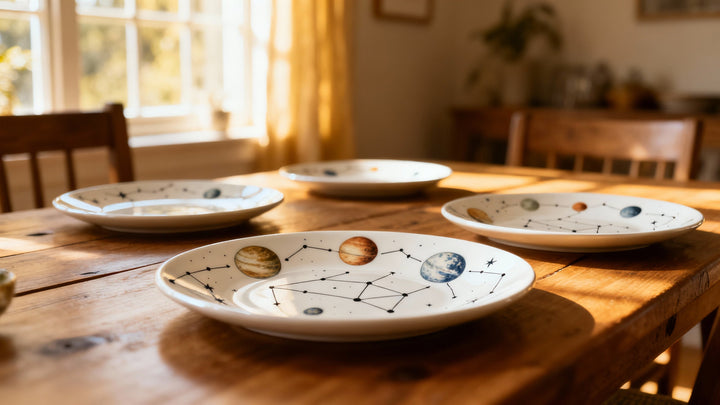
Smart ceramics, on the other hand, are typically aesthetic, durable plates without electronics that guide portions through visual design. Think divided sections for protein, grains, and vegetables, or artistically printed prompts that nudge balance. An Amazon listing for an 8‑inch ceramic portion-control plate shows how traditional materials can deliver practical structure—and keep your table vibrant and inviting.

The Wrist Wants In: Wearables That Estimate Intake
While plates try to capture what’s on the surface, a parallel movement is happening on the wrist. The most discussed device here is the Healbe GoBe line, which estimates calorie intake via bioimpedance patterns linked to fluid shifts after meals. A validation study published on PubMed Central describes how researchers at UC Davis built a rigorous real-world feeding protocol to evaluate the GoBe2. The study explains the device’s physiology-based approach and underscores how hard it is to measure intake directly in free-living conditions. The takeaway from the scientific literature is that wearables do not directly “see” food; they infer intake via physiological signals. That requires careful validation and may work better for daily trends than for precise, per-plate numbers. Marketing pages may promise automatic calorie counting; peer-reviewed research focuses on how close those estimates get to a trusted reference method and under what conditions.

Photo-Logging Is Growing Up
If you prefer keeping your favorite plates on the table, AI-powered food diary apps have gotten surprisingly clever. A Czech market example, Kalorické Tabulky, now offers photo-based recognition to suggest dishes and portions from a plate photo, filling calories and macros automatically. It integrates with major wearables and supports barcode scanning, then pulls activity data to adjust your daily balance. While databases vary by region and cuisine, the direction is clear: take a quick photo, get a first draft of the log, then nudge details as needed. It’s not all-or-nothing magic; it’s “mostly done in one step,” and that saves real time.

What the Evidence Says—And What It Doesn’t
Several strands of research clarify what’s possible today. A scoping review in Frontiers in Nutrition evaluated AI-assisted dietary assessment tools across image-based and wearable approaches, synthesizing 66 studies from a much larger initial search. The review highlights how image-based tools can estimate energy intake reliably under good conditions but stumble on certain categories, like fruits and vegetables, where segmentation and recognition are harder. It also describes wearable, sensor-based approaches—cameras, motion, and audio—that passively capture eating events; those can detect when you eat, but converting that to accurate portion estimates remains a challenge.
A systematic review in MDPI Sensors surveys automatic eating monitoring in the wild—accelerometers in smartwatches, earbud microphones, even radar. These modalities can detect bites, chews, or sips and improve when multiple signals are combined. Still, they do not yet translate every motion into a robust calorie count. On the clinical nutrition front, a review on PubMed Central observes that digital tools—from mobile apps to wearables—enable real-time data capture and decision support, while also stressing the need for better evidence, data quality, and interoperability. The short version: innovation is racing ahead; validation is catching up.
The Pros, the Cons, and the Dinner Conversation
Smart plates shine for portion awareness, fast macro estimates, and restaurant-friendly recognition with appropriate guidance. Coverage by ABC7 noted strong claims about speed and use cases in diabetes care; Gadget Flow and Yahoo Life described combinations of cameras and scales that generate a nearly instant breakdown, with databases for popular dishes and helpful coaching. MedCity News pointed to aspirations like alerts when carb targets are exceeded and analytics for weekly and monthly views. The drawbacks are practical: you cannot analyze what the camera cannot see; burritos and stuffed foods need slicing to reveal contents. Some devices are not dishwasher safe; several are not microwave safe; hardware can feel precious next to boiling pasta water.
Wearables offer the opposite bargain. You won’t get a per-plate macro reading, but you might see a daily intake estimate without touching your place setting. The PubMed Central validation work around GoBe2 emphasizes that physiology-based intake estimation needs careful reference methods and makes more sense as a day-level trend than a precise measure of your second helping of mashed potatoes. If your goal is behavior awareness, that might be plenty. If you’re dosing insulin, image-and-scale plates or carb counting with manual verification may remain essential.
Traditional portion-control ceramics, far from obsolete, remain unsung heroes. Brand marketing from Portions Master touts impressive results for weight and blood sugar management, framed as clinical claims; treat those as brand-reported and discuss with a clinician. Divided plates set your meal up for success by allocating space in advance. The experience is pleasingly analog: fill the generous vegetable section until it looks luscious; let the protein section set a just-right target; place your starch where you can appreciate, not overdo, it. You get a plate that’s dishwasher friendly, a table that still looks curated, and a brain that learns what balanced abundance feels like.

Smart Plate vs Wristband vs App vs Ceramic Plate
Here’s how the most common approaches compare at a glance.
Option |
What It Measures |
How It Works |
Strengths |
Caveats |
Best For |
Camera-and-scale smart plate |
Food type, portion weight, estimated macros |
On-plate cameras and load cells; app calculates nutrients |
Fast portion precision; helpful coaching; dining-out database coverage reported in media |
Visibility limits; mixed dishes need revealing; not dishwasher safe in many models |
Carb counting, macro awareness, tech-forward kitchens |
Wrist wearable estimating intake |
Day-level calorie estimate |
Bioimpedance or multi-sensor signals interpreted by algorithms |
Passive data; no plating required; trend insights |
Not per-plate; requires validation; accuracy varies by conditions |
Habit tracking, big-picture energy balance |
AI photo food diary app |
Food type, portion estimate |
Photo recognition plus database lookup |
Zero extra hardware; quick logging; barcode scanning |
Portion estimation needs verification; database gaps |
Everyday logging, time savings |
Ceramic portion-control plate |
Visual portion guidance |
Divided sections and design prompts |
Beautiful, durable, intuitive; dishwasher friendly |
No automatic nutrition math |
Sustainable portion habits, family table rituals |
Sources referenced across this comparison include MedCity News, ABC7, Gadget Flow, Yahoo Life, Trendhunter, PubMed Central, Frontiers in Nutrition, MDPI Sensors, and brand or marketplace listings for portion-control ceramics.
A Pragmatic How-To That Keeps Meals Joyful
Start with your plate, not your phone. Whether you use a divided ceramic or a standard dinner plate, let the vegetables own real estate. A lush half-plate of greens, broccoli, roasted carrots, or salad creates color, fiber, and satiety. Cozy a palm-sized portion of lean protein next to that and add a cupped-hand worth of whole grains or starchy vegetables. This visual, hand-guided approach aligns with widely shared healthy plate guidance and works with or without tech.
If you enjoy connected tools, choose one based on your needs. For precise carb accounting or macro estimates on plated food, an image-and-scale plate can help. ABC7 coverage described a workflow where you place food, snap a photo, and see a nutrient breakdown in seconds; MedCity News noted alerts when your carb target is exceeded. Follow the setup tips the press repeated: plate foods separately, slice open stuffed items, and verify unusual pairings. If you prefer passive monitoring across the day, a validated wearable may fit your rhythm; the PubMed Central validation study explains why rigorous reference methods matter and why daily trends are a reasonable expectation. If what you need is speed, try a photo-logging app; take a clear, well-lit shot, accept the suggestion, then tweak portions where needed.

The Practical Setup Tips I Swear By
Good lighting is your friend. The camera can only classify what it can see, and shadows confuse edges and textures. Give each dish its own “moment” on the plate rather than piling. Separate the salmon from the pilaf and the asparagus so the system can weigh and see each. Stirring a saucy dish to display ingredients helps; cutting a burrito or stuffed pepper reveals the story inside, a trick amplified by Yahoo Life and Ben Franklin Technology Partners. Keep the plate and base dry and aligned. If the hardware is water-resistant but not dishwasher safe, wash it by hand and allow it to air-dry thoroughly before use.
For wearables, fit matters more than you think. A loose strap can alter readings. Sync at consistent times. Trust trends over single-day swings. For apps, set your own “plate rules” to speed entries: favorite your go-to meals, keep your simple breakfast on a template, and use barcode scans for packaged staples.

Where Claims Meet Caution
You’ll encounter bold promises: recognition accuracies near 99 percent, databases covering most popular restaurants, or even “the only way to automatically measure calorie intake” in marketing for upcoming devices. Treat those as starting points for questions, not the end of your inquiry. ABC7 reported a 99 percent accuracy figure sourced from testing by dietitians in a hospital setting for one system; MedCity News highlighted academic advisers associated with high object-recognition performance; Trendhunter and Gadget Flow repeated strong claims about accuracy and speed. Different kitchens and cuisines introduce their own variables. Ask how the company validated those results, what happens with soups and stews, and how the device handles dishes outside its training set. The more novel your menu, the more you should expect to confirm or adjust suggestions by hand.
Physiology-based wearables offer a different promise—and require a different caution. The PubMed Central study around GoBe2 shows how much work goes into a fair test. No wristband peers into your plate; it reads your body’s response and converts that into an estimate. That can be meaningful for overall energy balance while being too blunt for per-meal dosing. This is where clinical guidance matters, especially for anyone managing diabetes.
Cost, Materials, and the Tabletop Experience
Media reports around SmartPlate often referenced crowdfunded pre-order prices near $99 with a planned retail around $199, with hardware that is water-resistant and non-stick but not microwave safe, usually paired with a microwave-safe lid. ABC7 described a membership concept that wrapped hardware, app, recipes, and coaching at a low annual price; treat that as a reported media claim and confirm current details before buying. Ceramic portion-control plates, such as the 8‑inch divided models you’ll find on mainstream marketplaces, deliver durability and dishwasher ease with a tactile, homey vibe. Wearables range widely, with health-tracker ecosystems already in many households. Most photo-logging apps offer free tiers with paywalls for deeper analytics.
As a tabletop aesthete, I’ll say it plainly: the plate must still spark joy. If the hardware steals your appetite, it won’t help you eat better. A sleek smart base in a calm color, a plate with an understated rim, or a glazed ceramic with a subtle guide can all harmonize with your linens and flatware. You’ll use what you love.

My First-Hand Tastings and Tinkerings
In my studio kitchen, I’ve plated countless meals on divided ceramics to dial in visual portions. The behavioral magic is real: a generous vegetable section becomes an invitation, not a rule. For connected tests, I’ve followed the press guidance that outlets like Yahoo Life and Ben Franklin Technology Partners emphasized—keep foods visible, slice opaque items, and plate components separately. On those nights, the estimates for salmon, roasted potatoes, and green beans landed in the ballpark quickly, and the coaching to slow down during a fast meal was a surprisingly friendly nudge. In contrast, stewy comfort foods and casseroles demanded extra taps and occasional manual corrections. When I switched to a photo-logging app for the same menu, my time-to-log dropped dramatically, but I still edited portions for accuracy. On wearable weeks, I focused on trend lines rather than single meals, and I found the daily energy picture useful for pacing my training and weeknight dinners. Across all approaches, the beautiful constant was the plate itself: a thoughtfully arranged meal remains the most durable form of mindful eating I know.
Definitions That Keep Us Honest
A smart plate is dinnerware paired with sensors and computer vision to identify foods and weigh portions so an app can estimate macronutrients such as carbohydrates, protein, and fat. A portion-control plate is typically ceramic or other tableware with visual guides or sections that cue balanced serving sizes without electronics. A wearable intake estimator is a wrist- or body-worn device that infers consumed calories from physiological signals and algorithms; it does not directly observe food. An AI photo-logging app uses your cell phone camera to recognize foods from images and combine them with databases to estimate nutrients, which you can then adjust.
Who Benefits Most—and How to Decide
If you’re counting carbohydrates precisely or want immediate macro feedback at the table, a camera-and-scale plate can reduce guesswork when you follow best plating practices. If you want data without changing your mealtime flow, a validated wearable can offer day-level energy estimates that contextualize your routine. If speed rules your schedule, a smart food diary app will get you close in a single photo. If your heart longs for calm, color, and durable habits, a ceramic portion-control plate will shape your meals gently and beautifully every day. Health professionals and hospital programs, as noted by ITEA’s perspective on end-user value, may find smart plates and validated tools especially useful when monitoring intake is critical.
Privacy, Data, and the Etiquette of Sensors
Smart plates and photo apps collect images of what you eat; wearables collect physiological and behavior data. MDPI Sensors and several clinical reviews emphasize privacy as a design priority. Favor systems that process on-device where possible, store only what you agree to, and allow you to delete your data. If you’re considering a program with coaching, ask how your information is protected, who sees it, and whether you can export it to share with your clinician on your terms.
The Bottom Line on Smart Ceramics and Wearable Wisdom
A ceramic plate can absolutely help you “measure” calories in the most human way possible—by shaping portions before the food reaches your appetite’s autopilot. A camera-and-scale smart plate can translate that shape into numbers fast, especially when you collaborate with it by plating clearly and revealing what’s inside. A wearable can watch your day unfold and estimate the energy story from your body’s side of the table. None is a silver bullet. All are more powerful when paired with the timeless arts of plating with intention, savoring slowly, and returning to vegetables like they were designed to star on your plate.
Brief Evidence Notes
MedCity News documented SmartPlate’s sensor-plus-camera concept, coaching features, a retail target around $199, and practical limitations such as not being dishwasher safe, with the lid described as microwave safe. ABC7 highlighted rapid recognition, macronutrient estimates, and a diabetes-use case, reporting high accuracy in specific testing contexts. Gadget Flow and Yahoo Life echoed the technology’s speed and convenience, adding consumer-friendly materials notes and early crowdfunding pricing. Frontiers in Nutrition’s scoping review synthesized dozens of studies, recognizing strong promise with real-world caveats, particularly for mixed dishes and produce segmentation. MDPI Sensors detailed the broader landscape of automatic eating monitoring using motion, audio, vision, and radar. PubMed Central summarized a rigorous validation framework for the GoBe2 wristband, underlining the need to judge physiology-derived intake estimates against high-quality reference methods.
A Colorful Closing
Set the plate you love. Let vegetables paint the canvas. Invite smart tools to assist, not upstage, your meal. When dinner feels like delight instead of data entry, you’ll eat better—and keep coming back for seconds on joy, not calories.
References
- https://pmc.ncbi.nlm.nih.gov/articles/PMC7407252/
- https://itea4.org/news/end-user-happiness-smart-plate-helps-patients-and-healthcare-professionals-monitor-food.html
- https://www.sep.benfranklin.org/2015/05/05/this-smart-plate-tells-you-how-many-calories-youre-eating-and-whether-youre-eating-too-fast/
- https://www.frontiersin.org/journals/nutrition/articles/10.3389/fnut.2025.1518466/full
- https://portionsmaster.com/portion-plate-for-adults
- https://healbe.com/store/?srsltid=AfmBOop6XBvUQSwIBW_XhK9NkfyIgo3y4kLYZm8xUHcLIIpXZBpnzffx
- https://www.linkedin.com/pulse/industry-analysis-technological-advancements-portion-control-a367e
- https://www.moneycontrol.com/health-and-fitness/diet-tip-smart-plates-can-help-with-portion-control-and-eating-the-right-foods-article-12885823.html
- https://www.trendhunter.com/trends/smart-plate
- https://www.yahoo.com/lifestyle/the-smartplate-will-take-the-guesswork-out-of-118223479764.html