



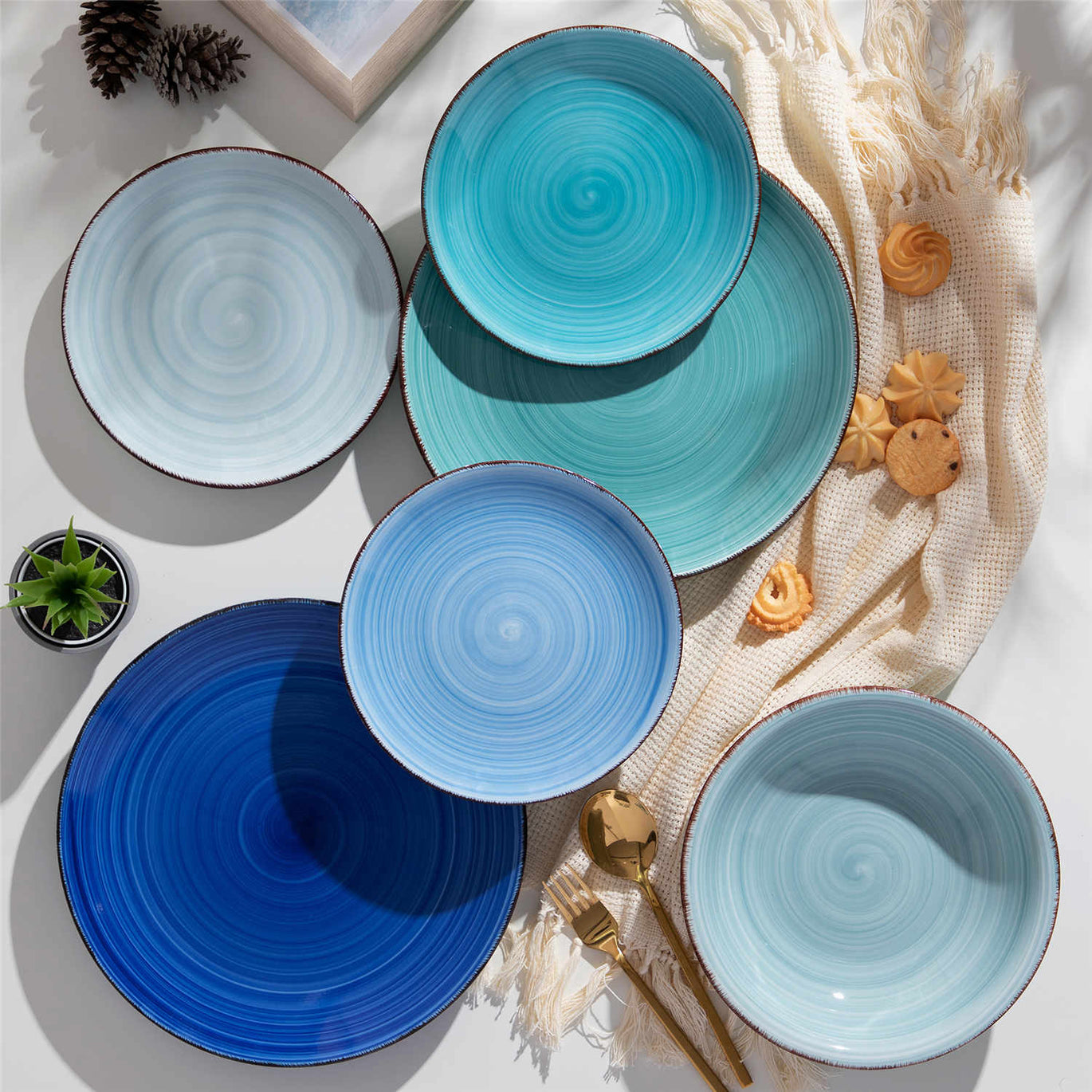


Comparing Laser Engraved and Hand Painted Ceramics for Collectors

Ceramic surfaces are irresistible canvases for stories at the table—from heirloom brushwork to razor‑crisp inscriptions. If you collect decorative tiles, mugs, and plates, you’ll increasingly encounter two very different techniques: laser engraving and hand painting. This guide unpacks how each is made, how they age, how they’re cared for, and when one might serve your collection better than the other. Along the way I’ll draw on documented studio methods and tests shared by the Glowforge Owners Forum, OMTech, EnduraMark, Ignite Studio, LaserPecker Support Center, xTool, the Yale School of Architecture, and a technical study on Academia.edu to keep the comparison practical, neutral, and grounded.
What We Mean by “Laser Engraved” vs “Hand Painted”
Hand painted describes an artist applying pigments, slips, or glazes by hand, then firing the piece to fuse the decoration. The value proposition is unmistakable—visible gesture, variation, and maker’s intent on the surface.
Laser engraved describes using a focused beam to alter or bond material at the surface of glazed ceramics to create permanent marks. Makers typically use one of two workflows. The first is direct engraving that ablates or micro‑fractures the glaze to reveal a design. The second is a coated approach that uses titanium dioxide (TiO₂) in paint or marking media so the laser bonds a dark image to the glaze without breaching it. Glowforge Owners Forum contributors discuss feasibility and cautions on fired clay, while tutorials and lab‑style writeups from OMTech, EnduraMark, Ignite Studio, LaserPecker, and xTool document specific ceramic workflows and settings.

How Laser Engraving Works on Ceramics
Laser engraving on ceramics is a surface‑level transformation driven by heat and optics. CO₂ lasers and blue diode lasers are commonly used. Yale’s raster engraving tutorial notes that ceramics can be successfully marked via coated processes, where a laser bonds a compound to the surface. EnduraMark and Ignite Studio describe direct engraving pathways too, though with different tradeoffs.
A widely cited coated method for white ceramic tile is the Norton White Tile (NWT) process, profiled by OMTech. The tile is sprayed with a TiO₂‑bearing white paint, then engraved so the TiO₂ layer darkens and sinters to the glaze, yielding a permanent black image. It behaves like a binary on–off pixel: darker where engraved, unchanged where not. Photo realism comes from dithering—the same dot‑pattern trick newspapers use—rather than traditional grayscale. OMTech further notes that a compound engraving lens can shrink the dot size and push practical photo resolution to around 254 DPI with better energy density at the beam spot.
There is also a non‑paint variant favored by small diode machines: black “engraving paper” or marking sheets. LaserPecker’s support guide shows how a black sheet wrapped around a mug or tile can absorb laser energy to create a mark, then be removed after engraving. xTool’s walkthrough describes soaking the sheet for adhesion, drying for roughly half an hour before engraving at about 90% power and 45 mm/s, then re‑soaking to peel the sheet cleanly. The resulting marks can range from black to bluish depending on the coating chemistry and the ceramic.
Direct engraving routes are documented by Ignite Studio and EnduraMark as well. With CO₂ lasers, ceramics often prefer high power with tuned speed and 600 DPI for clean detail. Directly ablating the glaze produces a light‑to‑gray contrast, but OMTech cautions that this micro‑fractures the waterproof glaze layer, making tiles unsuitable for wet locations unless sealed afterward. That warning matters for collectors buying utilitarian pieces.
Advanced testing helps explain material behavior. An Academia.edu study of pulsed lasers on industrial tiles reports two photothermal regimes and distinct responses between porcelain and clay bodies. It observed near‑linear ablation depth up to several passes before plateauing, with porcelain engraving more efficiently and clay bodies forming melt that can hinder removal. The practical read for collectors is simple: not all ceramic bodies will engrave alike, and the glazed surface matters as much as the underlying clay.
Aesthetic Results: Precision or Painterly Character
Laser engraving excels at crisp geometry, thin text, serial numbers, and photographic imagery through dithering. The coated TiO₂ method produces deep, neutral black pixels on white tile with rich contrast. Direct engraving, by comparison, typically yields pale gray or white marks where glaze is scuffed or ablated. LaserPecker’s sheet method can lean toward gray‑blue depending on media and soak‑and‑peel technique.
Hand painting leans into gesture, layering, and translucency. The appeal here isn’t only the motif but also the human signature in brushwork and glaze pooling. From a collecting perspective, laser engraved pieces shine when you want exactness or “editioned” repeatability across sets; hand painted pieces shine when you want expressive variance and visible hand.
Durability, Waterproofness, and Daily Use
The coated NWT pathway documented by OMTech is the standout for durability: the sintered TiO₂ image bonds to the glaze and remains waterproof. OMTech reports that finished tiles withstand aggressive washing, even dishwashers, without the image lifting. In contrast, direct engraving with a CO₂ laser intentionally breaches or micro‑fractures the glaze; OMTech cautions that tiles treated this way are no longer fully waterproof and shouldn’t live in wet areas without additional sealing.
In day‑to‑day cleanup, Ignite Studio notes that engraved ceramics often need only a dry or damp towel to wipe minimal residue after engraving. For ongoing care, Thunder Laser recommends gentle washing for decorated plates, hand washing with mild soap, and if using a dishwasher, orienting the engraved area upward so it doesn’t rub on adjacent tableware.
For mugs and other cylindrical forms, device setup matters more than you might think. NW Custom Apparel emphasizes using a rotary attachment for even, undistorted wraps, notes a typical imprint area around 3 in by 3 in for many mugs, and suggests 300–600 DPI art preparation—a figure EnduraMark also supports for sharp marks on ceramics.
Food Contact and Surface Integrity
Collectors often ask whether a particular engraved piece belongs in the dining rotation or on display. OMTech’s guidance is clear: when direct engraving removes glaze, you lose the protective barrier; that’s a yellow flag for wet environments and, by extension, frequent food contact. The coated NWT process leaves the glaze intact beneath a sintered mark, which helps preserve the functional water barrier. Because studio methods vary and manufacturers use different glaze chemistries, the most collector‑safe practice is to ask the maker which method they used and how they recommend using the piece.
Costs, Gear, and Why You’re Seeing More Laser Work
A big reason laser engraved ceramics are appearing in contemporary studio catalogs is practical. NW Custom Apparel explains that a CO₂ laser in the 40–60 W range suits many mug and tile jobs, while inexpensive diode units help makers prototype quickly. EnduraMark and Ignite Studio provide baseline parameter ranges that reduce trial‑and‑error. LaserPecker and xTool publish straightforward marking‑sheet workflows. Together this accelerates production for makers who want tight repeatability across sets or personalized commissions without long, hand‑painted lead times.
Care and Handling Tips for Collectors
Think of engraved ceramics in three categories and care accordingly. First is coated engraving such as NWT on white tile; it yields a bonded, waterproof black image, so standard gentle washing is appropriate. Second is direct engraving that scuffs the glaze; those pieces belong on shelves or walls rather than by the sink, unless the maker has sealed the surface afterward and explicitly recommends utilitarian use. Third is marking‑sheet variants, which can leave clean marks but depend on the media’s chemistry; once the sheet is removed, handle as you would a standard glazed surface—Thunder Laser’s advice about mild soap, soft sponges, and careful stacking applies here too.
If you suspect residue was part of the process, OMTech’s technical notes indicate that makers use ethanol or acetone to clean TiO₂ test tiles after parameter grids; this is a process step, not a home care recommendation. As a collector, simply confirm that post‑engraving cleanup was completed by the studio so you don’t have to do any chemistry at home.
A Buying Checklist That Respects Both Craft and Tech
When the listing says “laser engraved,” ask which method created the mark. If the seller used a TiO₂ coating, ask whether it follows the Norton White Tile approach for waterproof bonding. If the mark came from direct engraving, ask whether the piece is intended for display or daily use, and whether any sealing was applied. For mugs, ask whether a rotary attachment was used for uninterrupted lines and whether the studio ran a framing test to confirm alignment, as xTool recommends. On hand painted works, ask about the painter, firing schedule, and glaze type; provenance and studio practices are central to value in that category.
On both technologies, one diagnostic is image structure. Laser photo engravings may reveal a dithered dot pattern under a loupe, especially on NWT black‑on‑white tiles. Hand painted imagery generally shows continuous brushwork rather than pixel density. Neither is “better”—they’re simply different signatures to learn.
Side‑by‑Side: What Changes on the Surface
Dimension |
Laser Engraved |
Hand Painted |
Visual character |
Crisp vectors, micro‑text, and photo dither patterns; deep neutral black possible with TiO₂ on white tile |
Visible brushwork and layering; color blending and gesture central to appeal |
Glaze integrity |
Coated NWT bonds to glaze and stays waterproof per OMTech; direct ablation removes or fractures glaze and is not waterproof without sealing |
Glaze intact by design; decoration fused during firing |
Reproducibility |
High; parameter libraries and digital files repeat across sets |
Lower; variation by brush and firing adds uniqueness |
Typical use notes |
Coated marks suit wet areas; direct‑engraved glaze breaches belong on display unless sealed |
Broadly intended for use if fired for tableware; follow maker guidance |
Care |
Gentle wash; for plates, face designs upward in dishwasher per Thunder Laser; keep abrasives away |
Gentle wash; defer to studio guidance for specific glazes and overglaze enamels |
Signs of quality |
Even contrast; consistent pixel density on photos; no unremoved mask residue; alignment on cylindrical pieces |
Confident line, even firing, stable color; coherent composition and maker mark |
Laser Methods at a Glance with Reported Parameters
Method |
What it changes |
Reported notes from studios |
Norton White Tile (TiO₂ coating on white tile) |
Sintered black image bonded to glaze; glaze remains intact |
OMTech documents durable, waterproof, dishwasher‑resistant marks; photo images rely on dithering rather than grayscale; a compound lens can push dot size smaller for about 254 DPI; example TiO₂ mix of 2 tbsp powder to 4 fl oz ethanol if not using spray paint |
Direct CO₂ engraving (no coating) |
Ablates or micro‑fractures glaze for pale marks |
OMTech cautions that tiles are no longer fully waterproof and unsuited to wet areas; EnduraMark recommends around 600 DPI and high power with tuned speed; Ignite Studio shares example ceramic settings around speed 300 and power 85 with minimal post‑soot |
Black marking sheet or paper |
Transfers absorbed energy through a temporary medium; sheet removed post‑engrave |
LaserPecker details soaking and applying black engraving paper on mugs and tiles; xTool shows soak‑apply‑dry workflow with a typical starting point near 90% power and 45 mm/s; the revealed color can vary by chemistry, sometimes reading as light blue |
All parameter values above are provided as studio examples rather than universal prescriptions; actual ceramics, glazes, and lasers vary, which is why makers run test tiles and parameter grids. EnduraMark’s guidance to prefer 600 DPI for ceramics and tune only speed while holding power/DPI steady during tests is a practical sanity check.
Conservation and Long‑Term Behavior
A durable engraving is about the relationship between the mark and the glaze. NWT‑style bonding has repeatedly tested as dishwasher durable and waterproof in OMTech’s community documentation. Direct ablation, while visually interesting, intentionally compromises the glaze, which makes water and stain ingress more likely over time. The Academia.edu study’s observation that porcelain and clay bodies respond differently to laser regimes is a reminder that not all substrates age the same; porcelain generally engraves cleaner and deeper, while clay‑rich bodies can melt and form insulating debris. If you collect across clay bodies, this nuance matters.
Hand painted work, by contrast, is designed to be fused as part of the glaze system. Conservation of hand painted ceramics revolves around light exposure, abrasion, and compatibility of any later overpainting, all of which you would discuss with the studio or a conservator. The value conversation for hand painted pieces ties to the artist’s practice, provenance, and condition more than to production settings.
When Each Choice Shines in a Collection
Choose laser engraved when you want precise inscriptions, editioned photo tiles, or sets that require identical marks. Makers can personalize commemorative pieces, wedding tiles, and corporate gifts with predictable outcomes, including on dishwasher‑ridden white tiles using the NWT method. Choose hand painted when you want immediacy of mark and painterly variation—the little deviations that build narrative and rarity over time.
One is not a replacement for the other. They simply add different notes to your cabinet of curiosities: the crisp harmony of pixels where every dot is in its place, and the jazz of brushwork where every gesture tells a story.

Practical Buying Scenarios
If you’re evaluating a black‑on‑white photo tile, ask the seller if it was made with a TiO₂ coating such as the NWT approach and whether the studio’s tests included dishwasher cycles. That is an efficient way to confirm both contrast and waterproofness without guessing. If you’re holding a pale gray direct‑engraved tile, plan to display it away from sinks unless the studio sealed the glaze after engraving. For mugs, ask whether a rotary attachment was used to avoid stretch or skew, as shop guides from NW Custom Apparel recommend for cylindrical forms. For any laser method, encourage the maker to share their test tile grid—the most telling proof that the result is tuned rather than lucky.
Takeaway
For collectors, laser engraving brings museum‑label precision into ceramics, with coated methods like the Norton White Tile process delivering waterproof permanence on white tile and direct engraving offering subtle, scuffed tonalities at the cost of glaze integrity. Hand painting brings irreplaceable gesture and studio provenance. Choose laser when you need exactitude and resilience, choose hand painting when you want expressive authorship—and relish how both make the table more alive.
Short FAQ
What makes some laser engraved tiles truly waterproof while others are not? Community documentation from OMTech shows that a TiO₂‑coated method bonds a black image to the glaze without breaching it, which preserves the tile’s waterproof surface and endures dishwashing. Direct engraving ablates or micro‑fractures the glaze, which compromises water resistance and suitability for wet areas unless the surface is later sealed.
Are laser engraved ceramic mugs and plates safe for everyday use? Safety depends on how the mark was made and what the maker recommends. If the glaze is intact after a coated process, studios such as Ignite Studio and Thunder Laser frame care in terms of gentle washing, soft sponges, and cautious dishwashing orientation. If the glaze was breached by direct engraving, treat it as decorative unless the studio sealed it for service.
How can I tell if a design is laser engraved or hand painted? Under magnification, photo‑style laser engravings often reveal dithered dot patterns, especially on white tiles processed with TiO₂ coatings. Hand painting shows continuous brushwork and variation rather than pixel structure. When in doubt, ask the seller about their process; reputable studios will share it.
What settings should a studio use for strong contrast on ceramic tiles? There is no single recipe, but several sources offer starting points. Ignite Studio reports CO₂ results around speed 300 and power 85 for certain tiles; EnduraMark suggests 600 DPI on ceramics; xTool shows roughly 90% power and 45 mm/s for marking sheets on a diode. Makers tune speed against power on test grids because ceramics, glazes, and lasers vary.
Can laser engraving work on handmade pottery, not just tiles? Glowforge Owners Forum contributors note that opinions on fired clay vary; if the clay and glaze ingredients are known to be laser‑safe, careful testing is possible. Many makers prefer to laser‑mark tiles and tools or use engraved stamps and bats rather than engrave directly on unknown ceramic bodies.
Why do some laser photo tiles look almost photographic while others look grainy? OMTech explains that coated methods operate as black‑and‑white pixels, so photo quality rides on dot size, focus, and dithering. A compound engraving lens on a CO₂ laser can reduce spot size and enable about 254 DPI, increasing perceived smoothness. Lower effective DPI or poor focus can produce coarser dots and a grainy look.
Sources Cited in This Comparison
Glowforge Owners Forum, OMTech, EnduraMark, Ignite Studio, LaserPecker Support Center, xTool, Yale School of Architecture tutorial on raster engraving, and an Academia.edu study on laser engraving of ceramic tiles.
References
- https://www.academia.edu/20393202/Laser_Engraving_of_Ceramic_Tiles
- https://epubl.ktu.edu/object/elaba:242185588/242185588.pdf
- https://www.architecture.yale.edu/advanced-technology/tutorials/146-raster-engraving-with-laser-cutters
- https://www.colorado.edu/lab/barthelat/sites/default/files/attached-files/bb2015.pdf
- https://news.etown.edu/index.php/2022/07/18/summer-scarp-series-laser-cutting-and-engraving-designing-in-the-digital-age/
- https://ignite.hamiltoneastpl.org/how-to-laser-engrave-ceramic-tile-and-galvanized-steel/
- https://nwcustomapparel.net/laser-engraving-mugs-guide/
- https://lumitool.net/blogs/blog/how-to-laser-engrave-ceramic-all-you-need-to-know?srsltid=AfmBOorX2jsdTseedfPQ0jna53P8qi4Xgy7axwSczMK5RhHbXDTOhBcp
- https://support.laserpecker.net/hc/en-us/articles/10284182779151-Ceramic-Laser-Engraving-A-Step-by-Step-Guide-in-2024
- https://www.heatsign.com/ceramic-marking/
Tu pourrais aussi aimer
Stern Ensemble de vaisselle 16 pièces
- €84,95
€96,95- €84,95
- Unit price
- pour
-
Blue
-
Green
-
Red
-
Grey
Simi Ensemble de vaisselle de 24 pièces
- €96,95
€129,95- €96,95
- Unit price
- pour
Bonita Service de table 18 pièces
- À partir de €60,95
€74,95- À partir de €60,95
- Unit price
- pour
-
Blue
-
Multicolor
Service de vaisselle étoilé 16 pièces
- €84,95
€86,95- €84,95
- Unit price
- pour
-
Blue
-
Green
-
Red
-
Gradient Green