





The Rising Popularity of Men’s Cooking and the New Thirst for Ceramic Dishware

The Quiet Revolution: Men at the Stove
Walk into almost any weekend brunch today and the chances are high that you will see a guy in an apron, wielding a chef’s knife with the focus he once reserved for a car project or gaming setup. In my tabletop styling work, I increasingly meet men who introduce themselves not by job title, but by what they love to cook and how they like to plate it. The kitchen has become their studio, and the plate has become their canvas.
This isn’t just a vibe; it is measurable. A landmark University of North Carolina study that tracked American cooking habits from the mid-1960s to 2008 found that the share of men who cooked rose from roughly 29 percent to 42 percent, while women’s participation dropped from about 92 percent to 68 percent. A later analysis of the American Time Use Survey, published in a public health journal, showed the trend continuing between 2003 and 2016: by 2016, about 46 percent of men and 70 percent of women in the United States were cooking at home on a given day, with men still cooking less time overall but closing the gap.
Curbed’s reporting on gender and kitchen design echoes this arc, noting that more than 40 percent of American men aged 19 to 60 now cook, compared with under 70 percent of women. A separate study of Gen X found that men in that cohort, single and married, now cook and shop more than their fathers did, preparing around eight meals per week on average. Add contemporary brand data that nearly 46 percent of men in the United States report preparing meals at home several times a week, as cited via Pew Research in a 2025 kitchen tools article, and the pattern is hard to ignore: men are not just “helping out” in the kitchen anymore; they are often leading.
Globally, women still do more cooking. The Cookpad and Gallup World Cooking Index estimates that as of 2021, women prepare about 4.3 more home-cooked meals per week than men on average. Yet there are striking exceptions, such as Jamaica, where men slightly out-cook women, and Iceland, where cooking is evenly shared. This mix of persistence and change is exactly where ceramic dishware starts to matter, because it signals how cooking is experienced, shared, photographed, and celebrated.
What the Numbers Say: A Snapshot of Men’s Cooking
Here is a quick way to see the shift in context.
Snapshot and metric |
Men’s cooking behavior |
Women’s cooking behavior |
Source |
1965–2008, US adults |
Share who cooked at home rose from about 29% to 42%; time spent increased from around 37 to 45 minutes per day among those who cooked |
Share who cooked dropped from about 92% to 68%; time spent fell from roughly 113 to 66 minutes per day |
University of North Carolina study on trends in food preparation and consumption |
2003–2016, US adults |
Share who cooked increased by about 9 percentage points to roughly 46% of men in 2016; average per-capita cooking time near 20 minutes per day |
Around 70% of women cooked in 2016; average per-capita cooking time around 50 minutes per day |
Analysis of American Time Use Survey data published in a public health journal |
Early 2020s, US households |
Nearly 46% of men say they prepare meals at home several times a week |
Specific percentage not given in the cited report; global surveys still find women cooking more meals per week overall |
Pew Research data as summarized in a 2025 article on men’s kitchen tools |
Women remain the backbone of home cooking in most regions, but men are clearly moving from occasional weekend cook to everyday participant. That shift has profound implications for the kinds of tools and tableware that feel “right” in a modern kitchen.
Why Men Are Cooking More: Health, Identity, and Family
The reasons men are cooking more are as flavorful as a good stew: many ingredients, slowly simmered.
A hospitality research piece from a European hotel and culinary institute points out that home cooking is tied not only to gender, but also to work patterns, income, culture, and family structure. Yet the benefits are consistently clear. A United Kingdom study they cite found that people who ate homemade meals more than five times per week, compared with those doing so less than three times per week, consumed about 2.2 oz more fruit and 3.4 oz more vegetables daily. They were also 28 percent less likely to have an elevated body mass index and 24 percent less likely to have excess body fat.
That kind of evidence resonates with men who want better health in a world of ultra-convenient food. Wellness coach Jeff Siegel, writing for his male audience, frames cooking as an antidote to a screen-heavy life. He describes modern men as overloaded with digital tasks and numb from constant scrolling, and positions cooking as a tactile, sensory practice that brings them back into their bodies and into real time. For many, wielding a knife, feeling the heat of a pan, and smelling garlic bloom in oil is not just about macros; it is about meaning.
Family life is another powerful driver. A 2025 piece on men’s cooking tools notes that fathers increasingly see cooking as a way to connect with children and partners, pass down family recipes, and create rituals like Sunday barbecues. Men told that author they cook out of curiosity and love of food, but also out of a desire to contribute more fairly to daily life.
Put simply, cooking has become a way for men to live their values: health, presence, contribution, craft. Once cooking becomes part of identity, everything around it, including dishware, becomes charged with new importance.

From Pink Crock-Pots to Matte-Black Mixers: How Gendered Design Shifted
If you want to understand why so many men are now drawn to matte-black ceramic plates, you need to start with the slow cooker.
In the 1970s, brands like Crock-Pot targeted harried working mothers with floral, pastel slow cookers marketed as miracle time-savers. Curbed’s deep dive into the history of gender and kitchen design notes ad copy like “Busy Woman’s Roast Chicken” and gift-guide spreads pitched to men as holiday shoppers for their wives. Older appliance ads from Westinghouse, Sunbeam, and Toastmaster spoke almost exclusively to women as housewives and mothers, relegating men’s role to that of the gift buyer.
By the 1990s, sales stagnated. Crock-Pot responded by reimagining the product: stainless steel exteriors, digital timers, and eventually models emblazoned with NFL and college football logos. The palette shifted from pastel flowers to brushed chrome, stainless, and black. According to Curbed, sales of these black-and-silver slow cookers jumped about 30 percent in the early 2000s, and by 2017, plain steel and black models dominated online best-seller lists.
This evolution mirrors a broader product strategy. Where older marketers “feminized” products by, as one critic put it, shrink it and pink it, the modern “masculine” template is to steel it, matte-black it, and make it heavier. Dark finishes, weighty metals, and tactical aesthetics signal seriousness and toughness. No surprise that glossy dark-finished stand mixers, sports-branded grill tools, and rugged cast-iron skillets feature prominently in men’s magazines like GQ and Men’s Health.
At the same time, some companies consciously lean away from gender coding. OXO’s Good Grips line was designed for ergonomic performance across a wide range of hands, including children, older adults, and people with arthritis or disabilities. The brand markets through chef partnerships and foodie channels rather than explicitly male or female imagery, modeling what intentionally neutral design looks like.
All of this shapes how men feel about color and materials in their kitchen. They have been trained, by decades of marketing, to read black, steel, and heft as grown-up and “serious.” That expectation does not stop at cookware; it flows right onto the dining table.

Kitchen as Workshop, Lab, and Stage
A widely cited article on men transforming the concept of the kitchen describes how male cooks bring the same affection for engineering and detail that they once reserved for cars or audio gear. The kitchen shifts from a cozy domestic corner into a workshop for culinary excellence. Professional-grade cookware, specialty gadgets, and restaurant-caliber appliances flood the home: Calphalon instead of generic nonstick, pro-style ranges instead of basic stoves, serious refrigerators instead of simple white boxes.
A 2012 University of North Carolina study highlighted in that piece documented the same numerical trend as earlier research: between 1965 and 2008, the share of men cooking rose from 29 percent to 42 percent, and the time they spent cooking increased, while women’s cooking time fell. The article argues that men, lacking the inherited kitchen role many women had, looked instead to professional male chefs for inspiration. The result was “out with the Teflon, in with the Viking and Sub-Zero.”
The aesthetic spills into layout and storage. One writer memorably called the modern male kitchen “the new shed”: knives in precise racks, heavy-bottomed Le Creuset pots hanging on hooks, a batterie de cuisine proudly displayed. Gadgets multiply: blowtorches, digital thermometers, sous-vide water baths, patio kitchens with full gas grills and even wood-burning ovens. Food preparation tilts toward food science.
When a space feels like a lab or workshop, surfaces and dishware matter. Men who invest in those tools often look for plates and bowls that can hold up visually and physically, from handling thick steaks to showcasing meticulously sliced vegetables. This is where ceramic dishware demand begins to rise, especially in formats that feel both rugged and refined.

The Kitchenware Boom: Men, Markets, and Materials
The broader kitchenware industry is already responding to a surge in home cooking across genders. A 2025 trends piece from ASD Market Week projects the U.S. kitchenware market will reach about $25.3 billion by 2027. That growth is attributed to renewed enthusiasm for cooking at home, a comeback in home entertaining, and a stronger focus on healthy eating.
This report emphasizes that kitchenware has become a reflection of personal identity and values. Consumers increasingly want products that signal environmental responsibility, from bamboo utensils to recycled-glass containers. In data reported via Real Simple, 80 percent of design professionals say their clients are asking for more recycled or upcycled products, 95 percent now include recycled materials in their projects, and 68 percent of brands offer products made from recycled materials.
Artisanal and handcrafted pieces are also on the rise. The same ASD Market Week content notes that traditional craftsmanship, classic wooden boards, cast-iron pans, and vintage furniture are being embraced for their authenticity and durability. Pinterest data shows bold, eclectic “kitschens” with thrifted finds and saturated colors, café-style coffee corners, and “hot metals” trends that bring silver and chrome into everyday décor.
On the cookware side, a stainless steel cookware market report estimates the global market at roughly $12.98 billion in 2025, with projected annual growth of 5.1 percent through 2033. Production is heavily concentrated in Asia, but sales are strongest in North America and Europe, where consumers often prefer premium brands and are drawn to multi-layer constructions, induction compatibility, and PFOA-free coatings.
A U.S. cookware report from Mintel distills consumer desire into a simple sentence: people want cookware that lasts. Durable, safe, and versatile tools that improve the cooking experience as skills grow are seen as the winning formula.
If cookware is about the heat and the work, ceramic dishware is about the reveal. As men cook more, entertain more, and share more, their interest naturally extends from the pan to the plate.
From Cast Iron to Clay: Why Ceramics Speak to the New Male Cook
Ceramic dishware sits at a fascinating intersection of the attributes male cooks now value: durability, performance, aesthetics, sustainability, and story.
The durability and performance piece links directly to the cookware research. Just as people invest in heavyweight steel or cast iron for lasting performance, they increasingly want plates and bowls that can withstand daily use without chipping or fading. High-fired stoneware and porcelain, when made well, meet that brief. They resist heat shock reasonably well, handle the dishwasher, and feel substantial in the hand, which pairs nicely with the “make it heavier” design language men have been taught to trust.
Aesthetics connect to the Instagram and Pinterest trends. A kitchen trends report describes how modern kitchens are becoming “Instagram-worthy” spaces where vivid hues, especially blues, greens, and deep reds, are replacing strictly neutral palettes. Warm woods and mixed materials create depth and personality. Ceramic dishware is one of the easiest ways to bring that color and texture into everyday life, without remodeling cabinets or changing countertops.
Sustainability and story matter too. Recycled materials and long-lasting products are increasingly non-negotiable for eco-conscious consumers. While the research notes focus more on metals and gadgets, the same values apply to ceramics. A thoughtfully produced, long-lived plate that you use for years aligns nicely with the trend away from disposable culture and toward meaningful objects.
Finally, there is an emotional factor. When I help a client design a tabletop, I often watch them reach instinctively for a plate that feels “like them” before they fully articulate why. Men who see themselves as serious about cooking tend to choose ceramics that feel grounded and grown-up: matte glazes, rich earth tones, simple but confident forms. They want plates that are worthy of the work they put into the food.

Matching Priorities: What Male Cooks Want and How Ceramics Deliver
We can map the priorities revealed in the research to what works in ceramic dishware.
Priority of many male cooks today |
How ceramic dishware can respond |
Durability and longevity (“cookware that lasts”) |
Use well-fired stoneware or porcelain with reinforced rims and glazes designed to resist scratching and crazing; emphasize that the set is meant for daily use, not a special-occasion cabinet. |
Performance and versatility |
Offer plates and bowls that move easily from microwave to table, and baking dishes that go from oven to serving, mirroring the multifunctional, space-saving spirit of modern kitchenware. |
Identity and self-expression |
Provide strong but flexible color stories: charcoal paired with moss green, indigo with sand, or warm off-white with a single saturated accent plate, so men can build a table that looks like their personality rather than a showroom. |
Sustainability and values alignment |
Highlight durable construction that reduces the need for replacement, as well as any recycled or responsibly sourced materials and low-toxin glazes, echoing the eco-conscious focus seen in kitchenware and interior design. |
Ease, order, and “lab-like” organization |
Design stackable pieces with clean silhouettes that look sharp on open shelves or rails, satisfying the workshop aesthetic described in articles about the kitchen as a new shed. |
This is exactly where ceramic brands, retailers, and lifestyle creators can serve as guides: translating the gear-head mindset into a joyful, colorful tabletop experience.
Practical Guide: Building a Ceramic Collection for the New Male Cook
Let’s get practical and playful for a moment. If you are a man who has fallen in love with cooking, or someone helping one set up a kitchen, how do you build a ceramic collection that matches this new role without drowning in clutter?
Start with a Tight Core Set
Think of your dishware the way professional chefs think about tools. They rarely own twenty knives; they own a few that do serious work. The same logic works beautifully on the table.
A simple starting point is enough dinner plates, side plates, and deep bowls to cover your household plus a couple of guests. For a solo cook or couple, that might mean four to six of each; for a family, eight often feels comfortable. Choose one main color or glaze family rather than scattering across many styles. This keeps the table feeling considered, even when the food is casual.
Deep bowls are the unsung heroes of modern cooking. They handle noodles, grain bowls, stews, big salads, and even breakfast. Many male cooks I work with could happily live off a good bowl and a good spoon; a generous, comfortable bowl may get more use than a traditional flat plate in a weeknight rotation.
Choose Finishes That Fit Your Food and Lifestyle
Matte-black plates photograph beautifully and look undeniably cool. They also raise practical questions. Dark matte glazes can show cutlery marks more easily and can flatten the colors of certain foods. If your cooking leans heavily into steaks, seared burgers, and charred vegetables, the contrast may be stunning. If you love subtle pastas or pale fish, a softer neutral plate might be more flattering.
Glossy finishes reflect more light and can make colors pop, which is helpful if you share meals on social media. They are also generally a touch easier to wipe clean, though good matte glazes can be quite forgiving. The key is to balance what excites your eye with what will be easy to live with on a Tuesday night after a long day.
From a purely practical standpoint, neutral bases with one or two accent pieces are incredibly flexible. Warm whites, sand, and light gray work with almost any dish, while a ring of indigo or a splash of rust on a few pieces lets you inject personality without locking yourself into a rigid palette.
Plan for Oven-to-Table Moments
The male cooking trend is full of gear that encourages slow, dramatic dishes: Dutch ovens, cast-iron braises, and bubbling casseroles. Ceramic baking dishes and gratins that match or complement your plates turn those recipes into true centerpieces.
Look for baking pieces with sturdy handles, a glaze that does not cling to baked-on sauces too aggressively, and proportions that suit how you actually entertain. A medium rectangular baker for lasagna or roasted vegetables, a round gratin dish for mac and cheese or baked eggs, and perhaps a shallow serving bowl for salads will cover a surprising number of occasions.
When oven-safe ceramics share a color story with your plates, the whole table reads as intentional without feeling fussy. That coherence supports the “restaurant kitchen at home” feeling that so many male cooks enjoy, but with a more welcoming, less clinical energy.
Consider Color Psychology for the Table
Color is where you can turn the volume up or down on the mood you want.
Earth tones like clay, rust, olive, and charcoal support the rugged, outdoorsy narrative often wrapped around cast iron and grilling. They frame roasted vegetables, grains, and meats in a way that feels grounded and comforting.
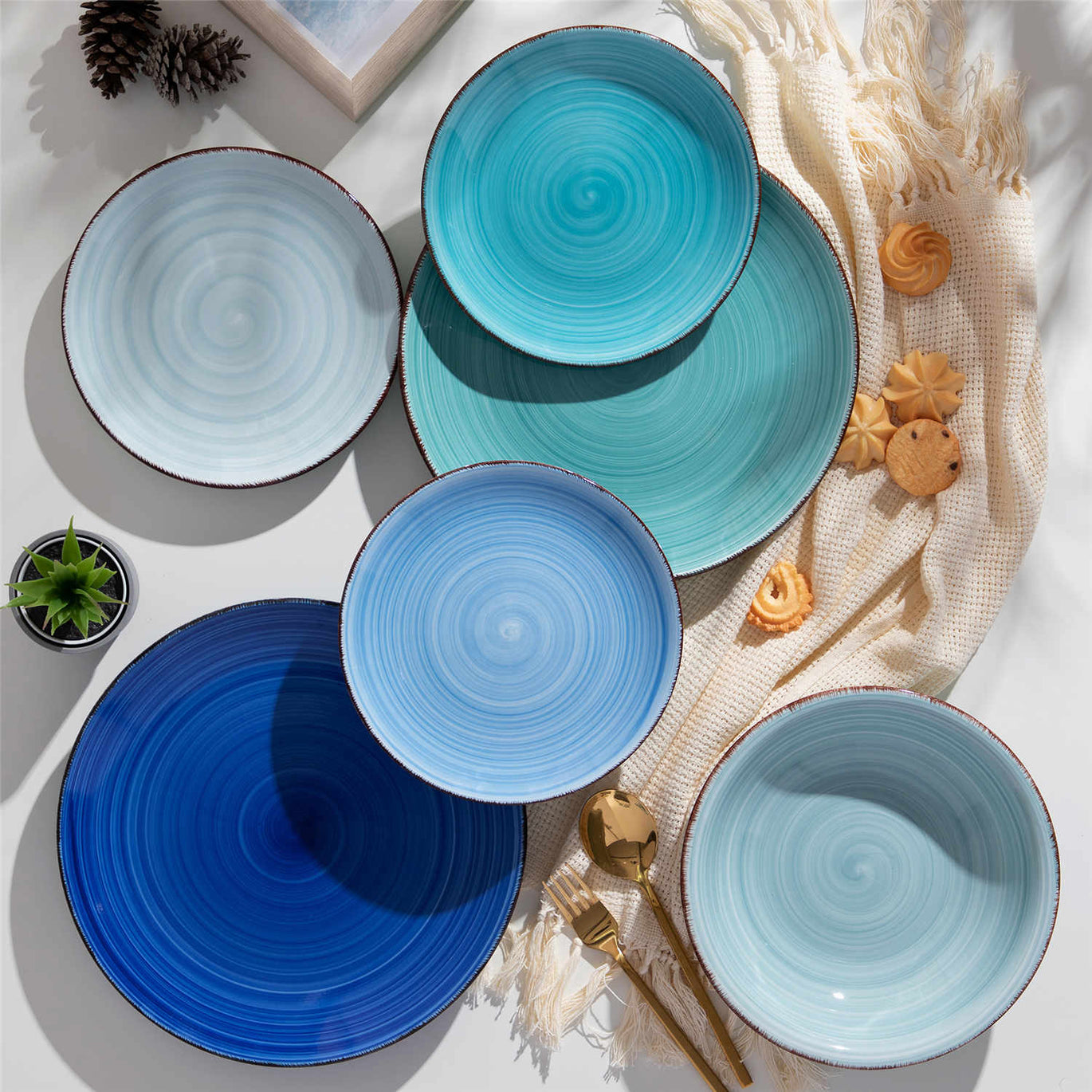
Blues and greens, which trend strongly in kitchen cabinetry and décor, bring freshness and work beautifully with salads, seafood, and plant-forward dishes. Deep navy with a fine rim, for instance, can feel as serious as a suit while still letting the food stand out.
If you love high-contrast aesthetics, consider pairing one dark element, such as a charcoal dinner plate, with lighter bowls or side plates layered on top. This keeps the table from feeling like a black hole, but still delivers the drama many men find appealing.

Opportunities and Pitfalls for Brands and Retailers
For brands and retailers in ceramic tableware, the rise of men’s cooking is not just a demographic curiosity. It is a design brief.
Move Beyond “Bro-Black” Design
The temptation is strong to simply apply the “steel it, matte-black it, make it heavier” rule to everything, including plates. While some pieces like this are absolutely welcome in a collection, a table full of tactical-looking black can end up feeling closed-in and slightly aggressive, especially in smaller apartments.
Curbed’s profile of OXO as a genuinely gender-neutral brand offers a useful counterpoint. Their success shows there is appetite for products that are ergonomic, high-performing, and aesthetically calm without screaming male or female. Ceramics can follow a similar path with restrained silhouettes, thoughtful textures, and colors that include but are not limited to dark and “tough” tones.
Align Storytelling with Men’s Real Motivations
The research and commentary we have walked through suggest that men are cooking to be healthier, to show up for their families, and to reclaim a sense of presence in a distracted world. Wellness coach Jeff Siegel’s idea of cooking as skilled engagement, and the family-focused framing of pieces on men’s cooking tools, point in the same direction.
Ceramic brands can speak directly to those motives. Instead of leading only with style adjectives, talk about how a heavy bowl becomes the vessel for a screen-free family breakfast, or how an oven-to-table baking dish helps a busy dad get a nourishing meal on the table with fewer steps and fewer dishes. This is not embellishment; it is translating the product’s function into the life outcomes men say they care about.
Make Sustainability Concrete and Credible
The ASD Market Week and Real Simple data show that interest in recycled materials and sustainable products is not a niche concern. It is becoming standard. Yet sustainability language can easily slide into vague claims that sophisticated consumers increasingly distrust.
For ceramics, being specific helps. Highlight when a line is designed to be particularly durable, reducing the need for replacement. If you incorporate recycled clays or packaging, explain that in plain language. When glazes are formulated to avoid certain heavy metals or questionable chemicals, describe the benefit without fear-mongering. Anchoring these claims in clear details mirrors the way health researchers talk about home cooking and nutrition: evidence first, slogans later.
FAQ: Men, Cooking, and Ceramic Dishware
Do men really care about how plates look, or is it all about function?
The research on kitchenware trends makes it clear that both men and women increasingly see their kitchens as reflections of their identity and values. That ASD Market Week report describes kitchen products as extensions of personal style and beliefs, not just tools. In my own styling work, men often start by insisting they only care about performance, but once they see the same dish on different plates, they immediately notice how color, shape, and rim thickness change the mood. Function gets them to the table, but aesthetics keep them excited about plating and sharing what they make.
Are ceramic plates durable enough for serious, everyday male cooks?
Durable construction is a top priority across the cookware market, and there is no reason ceramic dishware cannot meet that expectation. High-fired stoneware and porcelain, made with everyday use in mind, can handle constant rotation, dishwashers, and the occasional bump. The key is to choose pieces that do not feel overly delicate in the hand, avoid ultra-thin edges for your main everyday set, and treat them like any good tool: respect them, but do not baby them. If you are the kind of cook who also owns a cast-iron skillet or a tri-ply stainless pan, think of the right ceramic plate as that same philosophy translated into clay.
Should a new male cook buy a matching set or mix and match?
There is no one right answer, but there are helpful principles. A fully matching set is the fastest way to instant visual coherence, which many new cooks appreciate because it removes decision fatigue. It also photographs cleanly and makes entertaining feel pulled together. Mixing and matching works best when you keep some common thread, such as color family, finish, or shape. For example, you might use the same off-white base plate with a variety of accent bowls in different hues. The research on personalization and modularity in kitchen design suggests that consumers enjoy being able to adapt and evolve their spaces, and ceramic dishware can absolutely be part of that evolving story.
A Colorful Closing for the New Men’s Table
Men’s growing presence in the kitchen is not a passing fad; it is a slow, data-backed transformation that is reshaping how we cook, eat, shop, and share our lives. As more men embrace cooking as craft, care, and creative play, ceramic dishware steps into the spotlight as both tool and stage. Thoughtfully chosen plates and bowls can honor the engineering mindset, reflect personal values, and keep the table joyful and inviting. As a Colorful Tabletop Creative and Pragmatic Joy Curator, my invitation is simple: let the heat of the pan be matched by the color and character of your plate, and turn every home-cooked meal into a small, everyday celebration.
References
- https://hospitalityinsights.ehl.edu/home-cooking-trends-techniques-benefits
- https://scholarworks.utep.edu/cgi/viewcontent.cgi?article=1044&context=open_etd
- https://pmc.ncbi.nlm.nih.gov/articles/PMC5881182/
- https://dspace.mit.edu/bitstream/handle/1721.1/123421/1135054558-MIT.pdf?sequence=3&isAllowed=y
- https://publications.kon.org/urc//v6/hammar.html
- https://www.foodandwine.com/tools-chefs-use-8406950
- https://mannkitchen.com/?srsltid=AfmBOoo4qEsV97fQh_R8Xcj5u5CpYetKYphvbtkOlPdalIcYFbtbAFyf
- https://www.seriouseats.com/best-kitchen-gadgets-tools-11744439
- https://www.apetogentleman.com/kitchen-essentials-men/
- https://www.archivemarketresearch.com/reports/stainless-steel-cookware-231596
Tu pourrais aussi aimer
Stern Ensemble de vaisselle 16 pièces
- À partir de €72,95
€96,95- À partir de €72,95
- Unit price
- pour
-
Blue
-
Green
-
Red
-
Grey
Bonita Service de table 18 pièces
- À partir de €60,95
€74,95- À partir de €60,95
- Unit price
- pour
-
Blue
-
Multicolor
Simi Ensemble de vaisselle de 24 pièces
- €96,95
€129,95- €96,95
- Unit price
- pour
Service de vaisselle étoilé 16 pièces
- €73,95
€86,95- €73,95
- Unit price
- pour
-
Blue
-
Green
-
Red
-
Gradient Green