





The Impact of Virtual Restaurants on Traditional Ceramic Tableware

Virtual restaurants are booming, delivery apps are buzzing, and somewhere in the middle of all that your poor ceramic dinner plate is wondering if it still has a job. As a colorful tabletop obsessive who has styled tables for both cozy neighborhood bistros and bare-bones ghost kitchens, I can tell you this: the plate is not dead. But its role is absolutely changing.
In this deep dive, we will explore how virtual restaurants and delivery-only models are reshaping the demand for traditional ceramic tableware, where ceramics are quietly thriving in this new landscape, and how restaurateurs, makers, and home diners can adapt without losing the joy of a beautifully set table.
What Exactly Is a Virtual Restaurant?
Before we can talk about ceramics, we need to define the stage. Virtual restaurants go by many names: ghost kitchens, dark kitchens, cloud kitchens, delivery-only concepts, or digital-only restaurants. They share one core trait: no traditional dining room. Orders come in through apps or websites, the food is cooked in a back-of-house production space, and everything leaves in a bag or box rather than on a plate.
Research summarized by restaurant technology and strategy writers shows why this model took off. Forbes has projected that online food delivery could reach around two hundred billion dollars by 2025. Analysts cited by LinkedIn expect the global cloud kitchen market itself to exceed seventy billion dollars by 2027. The Guardian reports that in the United States, roughly three-quarters of restaurant traffic is now off-premise, meaning food is eaten away from the restaurant.
In other words, for a huge and growing share of meals, the “table” is a couch, a desk, or a park bench, and the “server” is a delivery driver. That dramatically changes how often traditional ceramic plates, bowls, and cups touch the customer experience.
The Old Love Story: Restaurants and Ceramics
In classic hospitality, ceramics are not just vessels; they are co-stars. Global research from Joyye and Metastat Insight shows the ceramic tableware market growing steadily, with estimates in the tens of billions of dollars and projected annual growth around six to seven percent over the next decade. That growth is powered by people caring deeply about how food looks and feels on the table.
Traditionally, front-of-house tableware does heavy emotional lifting.
When I walk into a dining room for a tabletop consult, the plates tell me who the restaurant thinks it is. Heavy, earthy stoneware says “slow, cozy, rustic.” Thin, bright porcelain whispers “precise, elegant, almost couture.” Matte reactive glazes feel handcrafted and intimate, while glossy white coupe plates say “let the food shout, we will quietly frame it.”
Consumer research from Joyye and others adds more detail. Diners increasingly favor:
- Mix-and-match collections over rigid sets, so each dish can have its own “stage.”
- Stoneware and other sturdy ceramics that can move from oven to table and keep heat for long, slow meals.
- Eco-conscious production, non-toxic glazes, and long-lasting pieces that support a “fewer, better, longer” lifestyle, as Malacasa’s anti-consumerist guidance emphasizes.
In this traditional setup, restaurants buy large sets of coordinated plates, bowls, cups, and serveware precisely because every dish is seen in the dining room. The tabletop is where the brand lives.

How Delivery-Only Dining Disrupts the Ceramic Tabletop
Ghost kitchens and virtual brands flip that logic. The guest never steps into the room, so the dining room often does not exist.
Less Front-of-House, More Back-of-House
Industry analysis from Modern Restaurant Management and logistics firms notes a clear shift in what restaurants buy. As delivery-centric models grow, supply chains ship more kitchen equipment and technology, and less front-of-house furniture and decor. If you do not have tables and chairs, you also do not need hundreds of plates to dress them.
Virtual restaurants typically operate in shared commissary kitchens or low-rent industrial spaces. Capital flows into equipment, ventilation, software, and packaging rather than place settings. Instead of a wall of neatly stacked plates, you see towers of takeout containers and labels.
From the ceramic perspective, that means fewer giant orders of identical white plates for new build-outs. The traditional bread and butter of many tableware brands is under pressure.
Packaging Replaces Plates at the Customer Touchpoint
Delivery-first brands obsess over packaging design the way a classic dining room obsesses over flatware patterns. Articles aimed at operators, such as those from PackagingFG and Wisk, highlight how menu design and packaging now work as a duo:
Crispy foods need vented containers so fries do not arrive as sad, steamed strings. Sauces need leak-proof cups. Hot dishes may need insulated or double-walled packaging.
All of this happens in paper, plastic, or compostable fiber, not porcelain. The plate still exists in the kitchen as a tool during preparation, but often disappears before the door. The customer’s first visual impression is the branded bag and the container, not a shimmering plate.
The “App Table” Changes Plate Economics
The Guardian shares that in the United States, off-premise sales for quick-service and fast-casual chains jumped from about forty six percent in 2019 to seventy five percent in 2024. Full-service chains saw takeout and delivery rise from roughly twelve percent of sales to nearly twenty percent.
When three out of four meals are eaten off-premise, a purely dine-in plate strategy no longer makes sense. Restaurants cannot justify investing heavily in fragile or design-forward ceramic patterns if only a fraction of revenue ever sees those plates.
The result is a calmer but very real reduction in volume demand for traditional front-of-house ceramic sets, especially in concepts that pivot hard toward delivery.

Where Ceramics Still Shine in a Virtual-First World
Now the joyful part: ceramics are not disappearing. They are migrating, shapeshifting, and in some cases gaining new importance.
Hero Plates for Social Media and Brand Storytelling
Ceramic Arts Network has chronicled how social media turned studios and kilns into stages. The same thing is happening in restaurants. Instagram, TikTok, and YouTube have become the new “front-of-house” for many virtual brands.
In my styling work with delivery-first concepts, there is almost always a “content shelf” somewhere in the kitchen: a tiny stash of beautiful plates, bowls, and mugs that never ride along with the delivery driver. Instead, they live under studio lights or near a bright window.
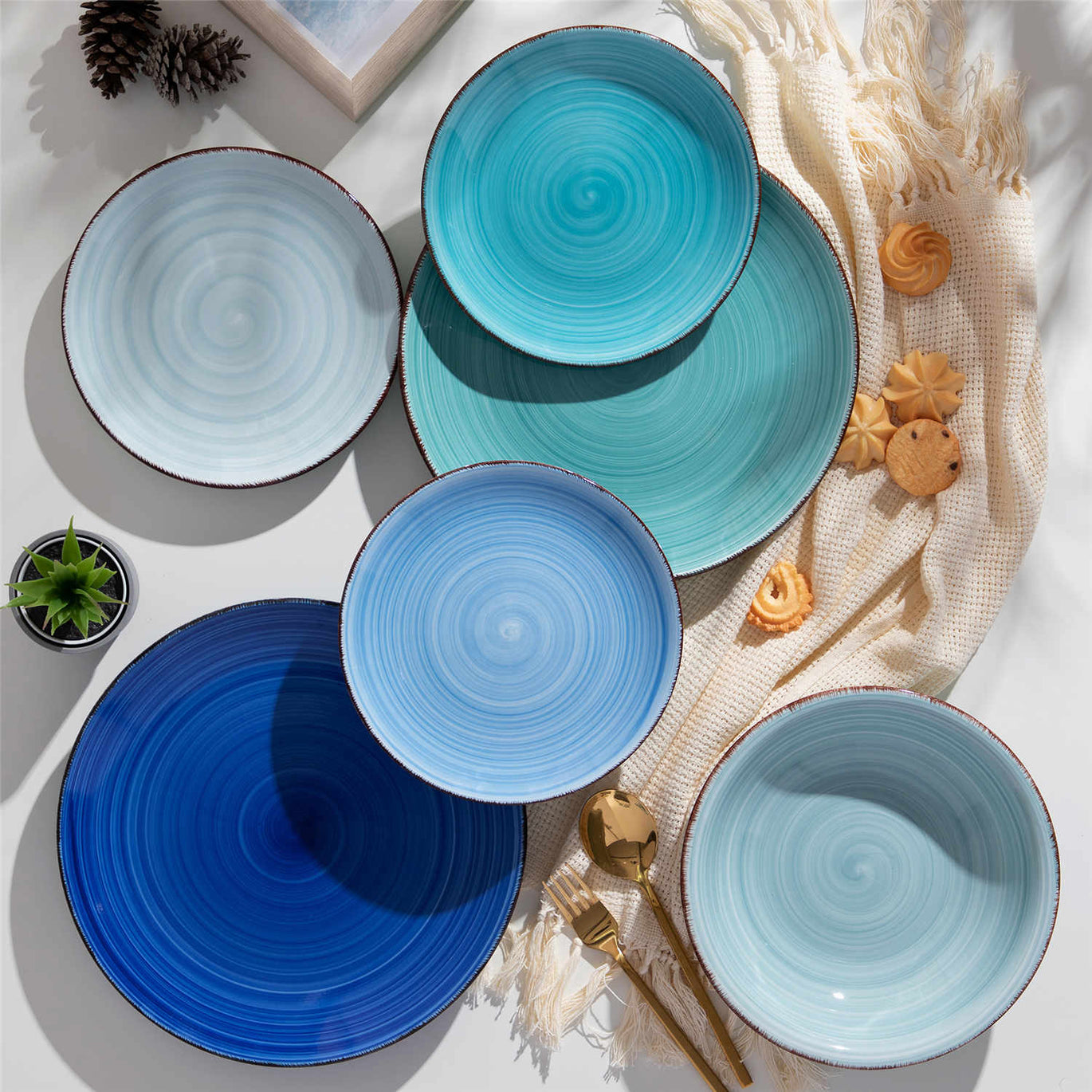
The process looks like this. The kitchen prepares a menu item in standard takeout packaging for real orders. For photos and video, the team replates onto carefully chosen ceramics: a teal ombre stoneware bowl for a ramen brand, a satin-white coupe plate for a minimalist salad concept, a speckled terracotta platter for tacos.
This is where research from Joyye and Malacasa about bold colors, reactive glazes, and tactile finishes shows up. Bright and earthy ceramics photograph beautifully, align with the younger, social media–driven audience that often uses delivery platforms, and give a virtual restaurant a visual identity that would otherwise be lost inside cardboard.
So even when ninety percent of sales leave in containers, that remaining ten percent of “hero plating” can drive nearly one hundred percent of the digital brand perception.
Hybrid Models Still Need Real Tables
Many virtual restaurants are not totally virtual. Articles from Incentivio and Wisk explain that existing brick-and-mortar restaurants often layer one or more virtual brands onto the same kitchen. A casual pizza place might run a delivery-only wing brand on the side, or a bistro might push a separate vegan bowl concept through apps.
In these hybrid setups, ceramic tableware remains essential for the dine-in side, while delivery creates new pressures and opportunities. Dine-in guests are often paying more and arriving less frequently, especially as The Guardian notes that restaurant prices have risen faster than grocery prices over the past decade. Those guests expect an elevated experience to justify the outing. Plates, bowls, and mugs are part of that justified splurge.
That means the ceramic tabletop becomes more curated, more intentional, and sometimes more colorful, even if the overall volume of pieces shrinks.
Ceramics as Signals of Safety, Quality, and Calm
Sustainability and material health show up strongly in Malacasa’s anti-consumerist guide and in Joyye’s consumer preference research. Customers increasingly care that their dinnerware is lead-free, cadmium-free, and made under credible environmental and labor conditions.
Ceramics perform well on that stage. Properly fired stoneware and porcelain are non-porous, resilient, and can remain in service for decades. Life-cycle analysis cited by Malacasa shows that while firing ceramics requires high temperatures, the environmental impact per meal drops sharply once a piece has been used a few hundred times.
For diners exhausted by piles of disposable packaging, a simple, weighty plate at home feels like a relief. Many people now order delivery in compostable or recyclable containers, then immediately replate onto their own ceramics. From a lifestyle perspective, the dinnerware at home becomes the new dining room, even if the kitchen that cooked the food is virtual.

Market Snapshot: Virtual Restaurants and Ceramic Tableware
Here is a concise comparison, drawing on Joyye, Future Market Insights, Metastat Insight, Forbes, LinkedIn analyses, and The Guardian.
Market or Trend |
Key Figures from Research |
Tableware Implication |
Global ceramic tableware |
Joyye and Future Market Insights project growth from about one hundred two billion dollars in 2024 to roughly one hundred forty five and a half billion dollars by 2030, around six point one percent annual growth. Metastat Insight forecasts the ceramics tableware market reaching about twenty eight point nine billion dollars by 2032 with similar growth. |
Demand for ceramics is still rising overall, even as dining patterns change, driven by home dining, hospitality, and design-conscious consumers. |
Heat-resistant ceramic tableware |
Future Market Insights expects heat-resistant ceramic tableware to grow from around twenty nine point nine billion dollars in 2025 to about fifty two point one billion dollars by 2035, roughly five point seven percent annual growth. |
Oven-to-table, thermal shock–resistant ceramics support premium dining and could bridge kitchen and packaging needs for delivery and hybrid models. |
Online food delivery |
Reporting referenced by Forbes anticipates the online food delivery industry reaching around two hundred billion dollars by 2025. |
More meals skip restaurant dining rooms, so plates are used either in home settings or as behind-the-scenes styling tools rather than at the point of purchase. |
Cloud kitchens and virtual restaurants |
Analysts cited on LinkedIn forecast the global cloud kitchen market surpassing seventy billion dollars by 2027. The Guardian reports ghost kitchen sales already topping sixty billion dollars annually. |
Significant share of new restaurant capacity is being built without dining rooms, which pressures traditional front-of-house ceramic demand while opening new niches in content and home use. |
The headline: delivery and virtual concepts are growing fast, but so is the ceramic tableware sector. The story is not extinction; it is redistribution and reinvention.

Pros and Cons of Virtual Restaurants for Ceramic Tableware
Virtual restaurants change the business model for plates in ways that help some players and challenge others.
For Restaurateurs
From an operator’s perspective, the virtual model’s advantages are clear. Lower rent, less decor, no servers, and flexible hours can all support healthier margins, as articles from Transgenie, Zetaton, and Wisk explain. Operators can stack several virtual brands in one kitchen and test new ideas quickly.
The downside is that you lose one of your most powerful and relatively affordable brand tools: the tabletop itself. In a dining room, a thoughtful ceramic choice can compensate for limited marketing budget. A guest might forget the restaurant’s logo but remember “the place with the cobalt plates and that olive-green rim bowl.”
In a virtual brand, the ceramic tabletop survives only where you intentionally create it: in photography, pop-up events, limited seatings, or occasional chef’s table experiences. Choose not to invest there and you often end up with a brand that feels generic, easily swapped out within a delivery app list.
Practically, the clever move is not to abandon ceramics, but to right-size them. I advise many virtual operators to invest in a tiny, high-impact ceramic toolkit: a small family of plates, bowls, and mugs that match the brand’s color language and food style. Those pieces live in the content studio and in any occasional in-person activations, rather than in every single service.
For Ceramic Manufacturers and Designers
For makers and brands, virtual restaurants are both a threat and an opportunity. Large, uniform tableware contracts for new chains and casual dining rooms may slow when those chains instead roll out ghost kitchens using disposables.
At the same time, research from Joyye, Future Market Insights, and Malacasa shows strong demand for:
- Personalized, mix-and-match dinnerware.
- Durable stoneware sets for households that cook and eat at home more often.
- High-performance, heat-resistant tableware in hospitality.
- Distinctive pieces that photograph beautifully on social media.
Virtual restaurants amplify the last point. Every delivery-only concept that wants to feel premium online needs a visual language. Ceramics, especially bold and expressive ones, are perfect for that. Articles from EKA, for example, highlight how bold colors, gradients, and culturally inspired palettes in ceramic kitchenware are winning younger consumers who want joyful, expressive pieces.
Manufacturers can respond by creating:
- “Styling kits” for ghost kitchen brands, each kit offering a small set of photogenic pieces designed for specific menu categories.
- Takeout-friendly ceramic forms sized to modern delivery containers so food can be quickly replated at home.
- Heat-resistant, chip-resistant lines that can go from oven to counter to packaging, easing kitchen workflow for hybrid models.
- Augmented reality–ready catalogs that let buyers preview how pieces will look on their actual tables, as discussed in Malacasa’s overview of AR in ceramic tableware and by Wilmax’s forward-looking perspective on smart tableware.
The work may shift from shipping thousands of identical plates to one restaurant chain toward shipping smaller, curated collections across many brands and consumers. That favors agile, design-driven, digitally fluent ceramic producers.
For Home Diners
If you are on the receiving end of all those delivery bags, you may already feel the shift. Instead of investing in twenty or thirty place settings for entertaining, many households now buy smaller, more flexible sets. Malacasa recommends starting from how you actually use dishes, suggesting that a four-person household may be perfectly fine with around four dinner plates, four pasta bowls in the twenty to twenty six fluid ounce range, and four mugs, then building up slowly as hosting needs grow.
Joyye’s data shows that consumers favor open-stock purchasing, smaller set sizes, and mix-and-match aesthetics. That aligns beautifully with a delivery-centered lifestyle. You can have a bright, dopamine-colored bowl for noodle nights, a wide coupe plate that makes takeout pizza look like a trattoria moment, and a couple of deep cereal bowls that turn grain-bowls-to-go into something Instagram-ready.
The pros for the home diner are emotional as much as practical. A streamlined but beloved ceramic set cuts down on clutter, reduces the urge to buy endless novelty pieces, and makes even “I ordered pad thai again” feel like a small ritual rather than a rushed refuel. The main con is that you have to be intentional; without a restaurant dining room to stage the scene for you, your table, counter, or coffee table becomes the creative canvas.

AR and Smart Tableware: Reconnecting Virtual and Physical Dining
One of the most exciting bridges between virtual restaurants and physical ceramics is digital visualization. Malacasa, summarizing industry research from Joyye, Globalreach Ceramic, Hosen Home, and major trade fairs such as Cersaie, describes how ceramic manufacturing has quietly gone digital: designs start as three dimensional models, surface patterns live as print files, and AI-driven quality control inspects pieces on the line.
Augmented reality simply extends that digital DNA all the way into your dining room, onto your phone. Instead of guessing whether a twelve inch plate will overwhelm your small dining table, you can point your camera and see it virtually “hovering” where it would sit. Joyye notes that retailers are already integrating AR table-setting tools alongside three hundred sixty degree views and detailed product data.
For ceramics in a world of virtual restaurants, AR offers several practical advantages.
First, it helps home diners choose pieces that suit their actual delivery habits. If eighty percent of your takeout containers are roughly the same base size, you can see which plates give you just enough rim and negative space.
Second, AR supports the kind of personalization consumers want. With digital models, a brand can let you cycle through bold colorways, reactive glazes, or metallic accents, all inspired by color roadmaps and trend forecasts, before committing to a real firing. This reduces waste and overproduction, something Future Market Insights and sustainability-focused brands are keenly aware of.
Third, AR helps virtual restaurants plan their tiny but mighty ceramic investments. A delivery-only brand can virtually test a few plate shapes and colors against their food photography style and brand palette. They can even mock up a pop-up dining event in AR, choosing plate forms that complement their existing furnishings or those of a partner venue.
The key is to treat AR as an advisor, not a final judge. Malacasa stresses that screen color rarely matches glazes perfectly and that the feel of weight, texture, and rim shape still needs real-life checking. But as a first pass, especially for virtual-first businesses, AR makes it easier to bring ceramics back into the strategic conversation.
Looking ahead, Future Market Insights sees smart ceramics on the horizon: self-sanitizing surfaces, temperature-adaptive tableware, and interactive glazes. As those features become real, AR may also serve as the interface, showing you heat retention zones or safe handling cues layered over your plate on screen.

Practical Strategies to Make Ceramics Matter in a Delivery-First Era
Let us get concrete, colorful, and tactical. Different players can take specific steps to keep ceramic joy alive while respecting the realities of virtual restaurants.
If You Run a Virtual or Delivery-First Restaurant
Start by defining your brand’s sensory signature. Are you bright and playful, or moody and minimal? Do your dishes lean soupy and saucy, or crisp and structured? Once you know the vibe, choose a tiny ceramic “cast” to match it: perhaps two plate sizes and one bowl shape that show your core dishes at their best.
Use those pieces in every photoshoot, for your website, app imagery, and social content. When you host any real-world activation, from a one-night pop-up to a photo-driven tasting for influencers, bring those same pieces. Consistency makes you recognizable across platforms and experiences.
Operationally, keep ceramics out of the chaos of everyday delivery service if that is unrealistic. Think of them as reusable stage props, not as every-order workhorses. That lets you invest in high-quality, expressive ceramics without worrying about breakage on a rushed Friday night.
Finally, collaborate. Many ceramic artists are already adept at social media and accustomed to small-batch production. Partnering on a limited-edition plate or mug that mirrors your brand can create both storytelling and merchandise opportunities. Consumers who love your food might be thrilled to buy the mug that appears in your feed every morning with latte art.
If You Design, Make, or Sell Ceramic Tableware
This is a perfect moment to design for the delivery lifestyle. Study the shapes and sizes of common takeout containers in your key markets, then create plates and shallow bowls that receive those portions gracefully. A slightly raised coupe rim can corral saucy dishes; a wide, flat surface can make burgers and sandwiches look editorial.
Color and texture matter even more now that so much dining is photographed. Insights from EKA and Joyye show that bold teal, olive, mustard, and deep blues are resonating, along with earthy, speckled neutrals. Consider building families of mix-and-match pieces in these palettes so both home diners and virtual brands can layer personality onto takeout food.
On the business side, embrace digital tools. Use three dimensional models of your forms not only for manufacturing and decoration, as Hosen Home and Globalreach Ceramic describe, but also for AR catalogs aimed at both consumers and hospitality buyers. Make it easy for a ghost kitchen operator to “drop” your hero plate onto their digital table and immediately see the fit.
Lean into the “fewer, better, longer” philosophy highlighted by Malacasa. Communicate clearly about durability, chip resistance, lead-free glazes, and care, and consider offering repair or replace options for long-lived collections. That positions ceramics as the sustainable antidote to endless disposable packaging.
If You Are a Home Diner Living on Delivery
Your table does not need to be big, but it does deserve a little theater. Take a cue from Joyye’s research and Malacasa’s pragmatic guidelines and curate a small, joyful ceramic wardrobe. For many people that means a handful of ten or eleven inch dinner plates, a few deep pasta or grain bowls in the twenty fluid ounce range, and two or three favorite mugs.
Then build micro rituals. When the doorbell rings, slide food gently from its container onto a plate or into a bowl before you sit down. Toss a small cloth napkin under the plate, light a candle if you can, and suddenly your Tuesday takeout feels like a moment instead of a blur.
Choose colors that support your mood rather than fight your space. If your apartment is small and neutral, a burst of sunny yellow or ocean blue stoneware can turn the coffee table into a mini resort. If your decor is already loud, speckled off-white plates can calm the composition while still showcasing the food.
You do not have to own a huge set. In fact, the anti-consumerist approach suggests that a compact, versatile ceramic collection reduces clutter, lowers long-term environmental impact, and makes every meal, delivered or cooked, feel more intentional.
Short FAQ
Are virtual restaurants killing demand for traditional ceramic plates?
Not exactly. They are shrinking some kinds of demand, particularly bulk orders for identical front-of-house sets in new dining rooms. At the same time, research from Joyye, Future Market Insights, and Metastat Insight shows that global ceramic tableware demand is still growing, fueled by home dining, hospitality, and more design-conscious consumers. The role of ceramics is shifting from mass background player to smaller, more curated, and more emotionally charged star.
If most of my meals are delivery, which ceramic pieces are the smartest to buy?
Think in layers rather than in giant sets. A couple of sturdy stoneware dinner plates, a few deep bowls that can hold noodles, pasta, or salads, and one or two mugs you genuinely love will cover most delivery scenarios. Focus on pieces that stack well, feel comfortable in hand, and are microwave and dishwasher safe, as consumer guides from Joyye and Malacasa recommend. You can always add a special platter or dessert plate later if hosting becomes part of your routine.
How can a small ghost kitchen use ceramics without blowing the budget?
Start tiny and intentional. Commission or purchase a very small set of photogenic plates and bowls that match your brand colors and menu style. Use them solely for photography, social content, and occasional special events, not for everyday delivery workflow. This way you get the visual and storytelling benefits of ceramics with a fraction of the cost and risk of breakage, while still running a lean, efficient kitchen for regular orders.
Every wave of food culture changes the stage, but not the human craving for beauty, tactility, and ritual. Virtual restaurants have pulled a lot of the action into apps and warehouses, yet the ceramic plate is still waiting in the wings, ready to turn a plastic container into a moment of color, calm, and joy. If we treat ceramics as creative allies rather than nostalgic relics, they can make our delivery-driven dining lives not only more convenient, but more deliciously alive.
References
- https://questromworld.bu.edu/platformstrategy/wp-content/uploads/sites/49/2021/07/PlatStrat2021_paper_9.pdf
- https://ceramicartsnetwork.org/pottery-making-illustrated/pottery-making-illustrated-article/in-the-studio-craft-s-digital-revolution
- https://www.transgenie.io/what-are-delivery-only-restaurants
- https://www.apsense.com/article/866797-the-tableware-transformation-customization-and-sensory-dining-trends-in-2025.html
- https://arccardinal.com/food-trends-shaping-hospitality-in-2025-and-the-perfect-dinnerware-pairings/
- https://ekaceramic.com/how-bold-color-choices-are-changing-ceramic-kitchenware-trends/
- https://www.incentivio.com/blog-news-restaurant-industry/how-ghost-kitchens-and-virtual-restaurants-are-changing-the-food-industry
- https://www.joyye.com/info-detail/consumer-preferences-in-ceramic-dinnerware-styles?requestId=
- https://www.linkedin.com/pulse/consumer-preferences-ceramic-dinnerware-styles-bx2mc
- https://www.metastatinsight.com/report/ceramics-tableware-market
Tu pourrais aussi aimer
Stern Ensemble de vaisselle 16 pièces
- À partir de €72,95
€96,95- À partir de €72,95
- Unit price
- pour
-
Blue
-
Green
-
Red
-
Grey
Bonita Service de table 18 pièces
- À partir de €60,95
€74,95- À partir de €60,95
- Unit price
- pour
-
Blue
-
Multicolor
Simi Ensemble de vaisselle de 24 pièces
- €96,95
€129,95- €96,95
- Unit price
- pour
Service de vaisselle étoilé 16 pièces
- €73,95
€86,95- €73,95
- Unit price
- pour
-
Blue
-
Green
-
Red
-
Gradient Green