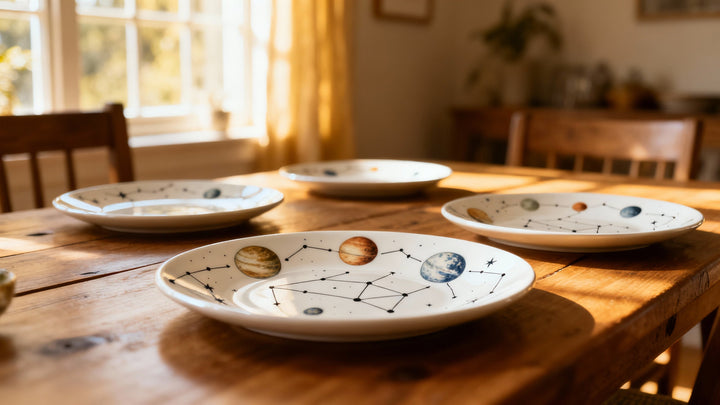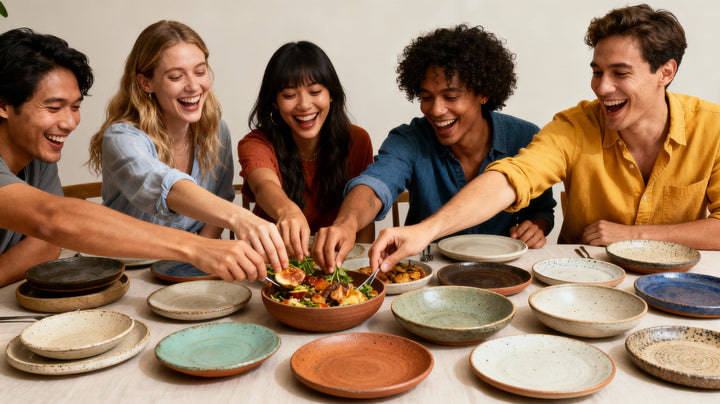


Ceramic plates, bowls, tiles, mugs, and hand-built clay pieces may look like quiet supporting characters on the stage of daily life, but psychologically they are anything but neutral. Again and again, research shows that ceramic surfaces tug on our senses, shape our expectations, and even nudge our emotions and behavior. When you look closely, they are almost like glazed mirrors for the inner world.
As a Colorful Tabletop Creative & Pragmatic Joy Curator, I love this intersection: the way a sunny plate or a moody tile can reveal something about a person long before they say a word. In psychology, that idea has a name: projection. In this article, we will explore how ceramics can participate in projection-based work, what current research actually supports, and how to use ceramic objects wisely in both professional and everyday contexts—without pretending we already have a fully standardized “ceramic Rorschach test,” because we do not.
Instead, we will pull carefully from what the existing evidence says about ceramic art therapy, tile aesthetics, tableware design, and multisensory flavor perception, then translate those findings into grounded, practical ways to think about ceramics in projection-style exploration.
Projection 101, Now Set at the Table
Projection, in classic psychological terms, is the process by which we attribute our own feelings, desires, or conflicts to something outside ourselves. Projective techniques use ambiguous or open-ended stimuli—inkblots, drawings, storytelling tasks—to invite people to “fill in the blanks.” What they see and how they respond may highlight themes they are not fully aware of yet.
Most traditional projective tests rely on paper, images, or simple drawing tasks. Ceramics rarely appear in that formal list. However, research on art therapy, tableware, and tiles shows that people consistently read meaning into ceramic color, pattern, weight, and shape. They also express emotion through the way they shape and handle clay. Taken together, those responses operate very much like projection: internal states are poured into external ceramic surfaces or actions.
The key here is to distinguish between two things. On one side, there are validated psychological tests with scoring manuals and norms. On the other side, there are projective principles used more loosely in art therapy and design research, where the goal is exploration or hypothesis generation rather than a formal diagnosis. Ceramics are firmly in this second camp right now.

What the Science Actually Says About Ceramics and Inner Life
Current evidence does not describe a standardized “ceramic projection test,” but it does give us several solid strands:
Clay Creation as Embodied Emotional Work
A case study published on PubMed Central followed a ceramic art course for 53 university students and measured anxiety with the Self-Rating Anxiety Scale. The students, drawn from several year levels, participated in a structured sequence of clay actions: kneading the clay into balls, slapping clay slabs, rolling coils, merging clay pieces, painting greenware, and decorative carving.
Across the course, anxiety scores decreased. Among all actions, slapping the clay slab stood out as especially effective for relieving anxiety. The authors interpret this within an art therapy frame: creating with clay engages the senses, demands focused attention, and allows tension to be externalized into material form.
In art therapy terms, these key points matter for projection:
When students knead, slap, and carve clay, they are not just making objects; they are enacting and symbolizing internal states through their hands. Clay is malleable, responsive, and forgiving, so it naturally invites experimentation and emotional discharge. Visual and tactile images created in clay become concrete metaphors. The student can look at, touch, and modify something that “stands in for” their feelings, which supports reflection and reframing.
From a projection perspective, the clay piece and the process both become surfaces for the psyche. A flattened slab with deep, aggressive marks may capture anger; a carefully smoothed bowl might echo a desire for safety and containment. The research here is clear on anxiety reduction, not on specific interpretive codes, but the mechanisms described—externalization, symbolization, and focused engagement—are core ingredients of projective work.
Ceramics as Powerful Sensory and Emotional Cues
A different body of research looks not at clay in the hand but at ceramic tableware in use. Studies reported in Flavour Journal and other food and design journals show that plates, bowls, and cups:
Change how intense flavors seem. Strawberry mousse served on a white plate was rated roughly 15 percent more intense and about 10 percent sweeter and more liked than the same mousse on a black plate. Salty snacks have been rated differently when eaten from red, blue, or white bowls, with small but reliable shifts in perceived sweetness or saltiness.
Alter appetizingness and quality impressions. In a restaurant field study, lighter desserts on white plates looked significantly more appetizing and better presented at lunch, whereas darker, richer desserts were judged more intense and more liked on black plates. The impact depended on dessert type and context, but plate color clearly influenced perceived quality.
Shift emotional tone and value judgments. A study on plate patterns showed that more beautiful patterned plates made identical food seem tastier and healthier, while unattractive expressive patterns dragged ratings down. This aligns with the “halo effect of beauty”: beauty cues in the plate transfer to judgments about the food.
Modulate appetite behavior through illusions. Design work on “MindFull” tableware used heavier, wide ceramic bowls with specific curves and bases to make standard portions feel more substantial. In a small preliminary test, participants took significantly fewer spoonfuls of rice in the MindFull bowl compared with a standard bowl, even when told to serve a “normal” portion.
These findings make one thing unmistakable: ceramic tableware is psychologically loaded. Plates and bowls are not blank canvases; color, pattern, shape, and weight all quietly feed forward into expectations and experience. When someone insists food tastes “flat” on one plate and “alive” on another, that is not just picky aesthetics. It is a glimpse of their internal associations and cross-sensory wiring.
Tiles, Aesthetics, and Implicit Preference
Ceramic tiles have their own research trail. Studies in Frontiers in Psychology and other outlets investigated how people respond to tiles with different patterns, lightness levels, and color systems, using both questionnaires and event-related potentials (ERPs) measured via EEG.
Several robust patterns emerge:
Preferred tiles engage attention early. Like-tiles tend to trigger larger N100 components, reflecting early attentional capture by aesthetically pleasing designs.
Disliked or less beautiful tiles trigger stronger mid-stage responses. Non-preferred tiles, or tiles with low beauty scores, often elicit larger P200 and sometimes N200 components, indicating additional processing and a kind of neural “flagging” of mismatch or dislike.
Visual factors matter. Pattern, lightness, and color interact to shape preference. Lighter, well-designed tiles often feel more pleasant and spacious; specific combinations can evoke calm or nervousness, well-being or discomfort.
Rather than asking participants, “Tell me how you feel about this tile,” implicit tasks and ERPs allow the brain’s timing and intensity of response to speak. In a sense, tiles act as controlled projective surfaces for aesthetic preference, with the neural data capturing reactions that might be faster, deeper, or less self-edited than a simple “like/dislike” scale.
This does not replace clinical projective testing, but it clearly demonstrates an underlying principle: when people encounter ceramic surfaces, they rapidly project preferences, emotions, and meaning onto them, and those responses can be measured.
Color Semantics and Ceramic Design
Another line of work, reported in an MDPI journal, used a backpropagation neural network to map between perceptual semantic ratings and ceramic color values in the CIELAB space. Participants from different age groups and backgrounds rated color combinations using five semantic dimensions. Because human responses were complex and non-linear, a neural network was trained on 500 color combinations and could then predict colors that best fit certain semantic profiles.
The takeaways for projection-style thinking are subtle but important. Words like “calm,” “energetic,” or “elegant” were bridged to precise color values in ceramic samples. That model lets designers intentionally create ceramics that are likely to evoke specific feelings. When someone strongly agrees or disagrees that a tile looks “calm” or “tense,” they are effectively projecting their inner associations onto the glaze.

How Ceramics Can Support Projection-Based Work
We now have four well-supported pillars: clay-based art therapy that reduces anxiety, tableware that shifts flavor and value judgments, tiles that generate distinctive neural responses depending on aesthetic preference, and color–semantics models that connect emotional words to ceramic hues. None of these is a projective test in the narrow clinical sense, yet they collectively justify some careful, creative applications.
Three Ceramic Pathways for Projective Exploration
You can think of ceramic-supported projection in three broad modes: making, choosing, and responding.
Mode |
What the person does |
Evidence base |
Projection-style value |
Making |
Shapes, slaps, carves, paints clay or ceramic pieces |
Case study of university ceramic art course; broader art therapy literature |
Externalizes feelings into form and gesture; reveals themes in process and product |
Choosing |
Selects plates, bowls, mugs, or tiles from curated options |
Tableware color/shape studies; tile preference studies |
Highlights implicit preferences and associations without demanding verbalization first |
Responding |
Looks at photos of ceramic settings and describes impressions |
Plate pattern beauty study; food color and emotion research |
Encourages storytelling and metaphor around an ambiguous but structured scene |
In therapeutic or coaching settings, the “making” mode is closest to traditional art therapy, where the emphasis is on process and meaning-making rather than scoring. The “choosing” and “responding” modes echo projective card tasks, where people pick or interpret images that resonate with them.
The crucial point is intent. If a practitioner treats a ceramic plate choice as an absolute indicator (“you chose black, so you must be depressed”), that is overreach and not supported by research. Used as a gentle probe—“tell me what drew you to this heavy, dark bowl”—ceramics can open valuable windows into a person’s inner narrative.

Designing Ceramic Stimuli with Psychological Intent
If you want to use ceramics in projection-style work, you need to design the stimuli thoughtfully. The research offers several levers you can pull, each with known directions of effect.
Color: Contrast, Warmth, and Learned Associations
Studies in Flavour Journal, restaurant field research, and consumer-focused work show that plate and tile colors influence both sensory judgments and emotional tone.
High contrast between food and plate, or between tile and surrounding surfaces, amplifies perceived intensity and clarity. Low contrast blurs boundaries and can prompt overeating or underdetection of detail.
Warm hues such as red, orange, and some yellows are linked to energy and appetite. They are famously used in fast-food branding, but they also risk overstimulation if the goal is calm reflection.
Cool hues—blues and many greens—tend to feel calming and “fresh.” Blue is especially unusual in natural foods, and diet-oriented tableware deliberately uses blue plates to soften appetite.
In a projection framing, a client who feels instantly soothed by a muted celadon tile but restless around a glossy red plate is giving you a starting point: a color-linked emotional pattern that might mirror how they seek or avoid intensity in other life domains.
Pattern and Beauty: The Halo Effect
In the plate-pattern study, beauty level had strong effects on how tasty and healthy identical food seemed. Beautiful expressive patterns and beautiful classical patterns both elevated tastiness and healthiness judgments, while less beautiful expressive patterns especially dragged ratings down. The authors describe this as a halo effect: perceived effort and aesthetic quality in the plate wash over into evaluations of the food.
In projection terms, if someone is consistently drawn to highly ornate expressive glazes, or conversely to very plain classical ones, the pattern may echo their relationship to effort, complexity, and order in life. Asking what makes a pattern feel “too much” or “too bare” can bring rich material into the conversation.
Shape, Weight, and Size: Embodied Expectations
Research on tableware materials and the MindFull bowl illustrates how physical properties carry psychological weight.
Heavier ceramic pieces often feel higher quality and make contents seem more substantial. Bowls with wide forms and certain interior curves make portions look larger, even when the actual amount is unchanged. Square plates create clearer visual boundaries than round ones. Wide rims make the central area seem smaller and can quietly nudge portion sizes down.
In projection work, these physical cues can mirror relational patterns. For example, a client may favor hefty, enclosing bowls and describe them as “grounding,” or bristle at heavy pieces and reach for thin, delicate ones that feel “barely there.” Those preferences can mirror how they seek containment, freedom, or control.
Pulling It Together
Here is a simple way to align design levers with psychological questions.
Design lever |
Typical psychological effects reported in research |
Possible projection-focused question |
Color contrast |
Higher contrast → stronger intensity, clearer boundaries; low contrast → softer, sometimes overeating |
“Do you feel safer when boundaries are clear and high-contrast, or when everything blends gently together?” |
Warm vs cool hues |
Warm → energizing, appetite-stimulating; cool → calming, sometimes suppressing |
“When you are stressed, do you reach for colors that rev you up or cool you down?” |
Pattern beauty |
High beauty → halo of care, value; low expressive beauty → especially negative |
“What feels ‘beautiful enough’ to you, and where does something start to feel overdone or neglected?” |
Weight and size |
Heavy and enclosing → more substantial, sometimes more valued; large surfaces → portions and content feel smaller |
“Do you like objects that make things feel bigger or smaller than they are, and how does that parallel how you frame your own experiences?” |
Notice that the questions invite meaning-making; they do not claim that a specific plate equals a specific diagnosis.

Pros and Cons of Ceramic-Based Projection Approaches
Anytime we bring playful, beautiful materials into psychological exploration, it is easy to get swept up in enthusiasm. To stay grounded and ethical, it helps to hold both advantages and limitations in view.
On the plus side, ceramics are embodied and everyday. Many people who freeze at a blank test form relax when their hands are in clay or when they are simply choosing a cup they like. Clay work taps sensory and motor channels that are strongly tied to emotion. Tableware and tiles are culturally rich, so they naturally invite stories about family meals, childhood kitchens, dream homes, or favorite cafés.
Ceramic objects are also flexible. The same set of plates can support mindful eating in a wellness context, a design preference study in a lab, and a narrative exploration in therapy, depending on how they are introduced and framed.
On the downside, there are no widely validated, normed projection tests that use ceramics as their primary medium. That means any interpretation remains exploratory and should be treated as hypothesis, not fact. Cultural differences in ceramic traditions and meanings are vast; a blue-and-white bowl may signal comforting heritage to one person and hospital cafeteria to another. Research so far has focused mostly on students and specific contexts, often with modest sample sizes.
Finally, projection by its nature is ambiguous. The richness that makes a ceramic bowl a wonderful conversation partner also makes it a slippery assessment tool. Practitioners must resist the urge to over-interpret and should use ceramic-based insights alongside more established methods, not instead of them.

Practical Ways to Play with Ceramic Projection in Everyday Life
You do not have to be a clinician to use some of these ideas in a gentle, self-reflective way at your own table.
One simple practice is a “ceramic mood check.” When you set the table, pause and notice which plate or bowl you instinctively reach for. Is it the heavy stoneware you reserve for winter stews, or the delicate pastel plate that feels like spring? Ask yourself what quality that piece carries for you right now. Comfort, adventure, structure, nostalgia? You are watching mini projection in action.
Another approach is a tiny clay ritual. Even air-dry clay will do. On days when your mind is buzzing, try five minutes of simple clay actions inspired by the university study: kneading, rolling, or even gently slapping a flat slab on a board. Afterwards, observe the shapes your hands created. Are they tight and angular, smooth and rounded, full of repeated marks? Without forcing an interpretation, let a few words surface: “This looks like…”. It is less about making a perfect object and more about giving your inner state a chance to appear in three dimensions.
At shared meals, you can invite conversation by treating ceramics as story starters rather than background props. Ask guests which plate feels most like them tonight and why. You will often hear uncensored little truths about what they need—stability, play, elegance, simplicity—long before the dessert course arrives.
Frequently Asked Questions
Is using ceramics this way a substitute for formal psychological testing?
No. Current ceramic-related research supports art therapy applications, sensory and emotional modulation, and implicit preference measurement, but it does not provide standardized diagnostic tools. Ceramics can add depth and texture to understanding, especially in therapy or coaching, yet they should complement, not replace, established assessments.
Can my choice of plate color really say something about my personality?
Research shows that plate color and pattern influence how food tastes, how intense flavors seem, and how appetizing dishes look. Those effects come from the interaction between the plate and your own learned associations. Your repeated choices may reveal stable preferences and emotional tendencies, but any single choice is just one data point in a much larger picture of who you are.
Is clay work safe for people with high anxiety?
The ceramic art course study on university students suggests that structured clay creation, especially actions like slapping the clay slab, can reduce anxiety scores, and broader art therapy literature agrees that art-making can relieve tension. However, people with severe anxiety, trauma histories, or other mental health conditions should ideally engage in clay-based therapy with trained professionals who can hold the emotional material that may surface.

A Colorful Closing
Ceramics are not just décor or dining hardware; they are vivid, tactile invitations for the psyche to speak. Whether a student is slapping a clay slab and feeling their anxiety soften, a diner is unconsciously reading “quality” into a beautifully patterned plate, or a homeowner is drawn to one tile over another for reasons they cannot quite name, ceramic surfaces are quietly hosting projection all the time.
When we treat plates, bowls, and tiles as collaborators rather than background scenery, the table becomes a small yet potent stage for self-discovery. Curate your ceramics not only for style but also for the stories and feelings they invite, and you turn every setting into a gentle, colorful laboratory for understanding the mind.

References
- https://scholarworks.calstate.edu/downloads/dn39xb221
- https://academicworks.cuny.edu/cgi/viewcontent.cgi?article=2342&context=gc_etds
- https://pmc.ncbi.nlm.nih.gov/articles/PMC10954310/
- https://dl.acm.org/doi/10.1007/978-3-031-35946-0_43
- https://bulletin.ceramics.org/article/holistic-health-how-ceramics-and-glass-contribute-to-our-physical-and-mental-wellbeing/
- https://www.frontiersin.org/journals/psychology/articles/10.3389/fpsyg.2023.1139687/full
- https://www.researchgate.net/publication/382632351_Research_on_the_Application_of_Ceramic_Tableware_Design_for_Young_Chinese_Consumers
- https://www.intechopen.com/chapters/57142
- https://flavourjournal.biomedcentral.com/articles/10.1186/2044-7248-1-7
- https://charles-saunders.com/articles/plate-psychology-how-plate-colour-and-shape-influence-our-perception-of-food/