



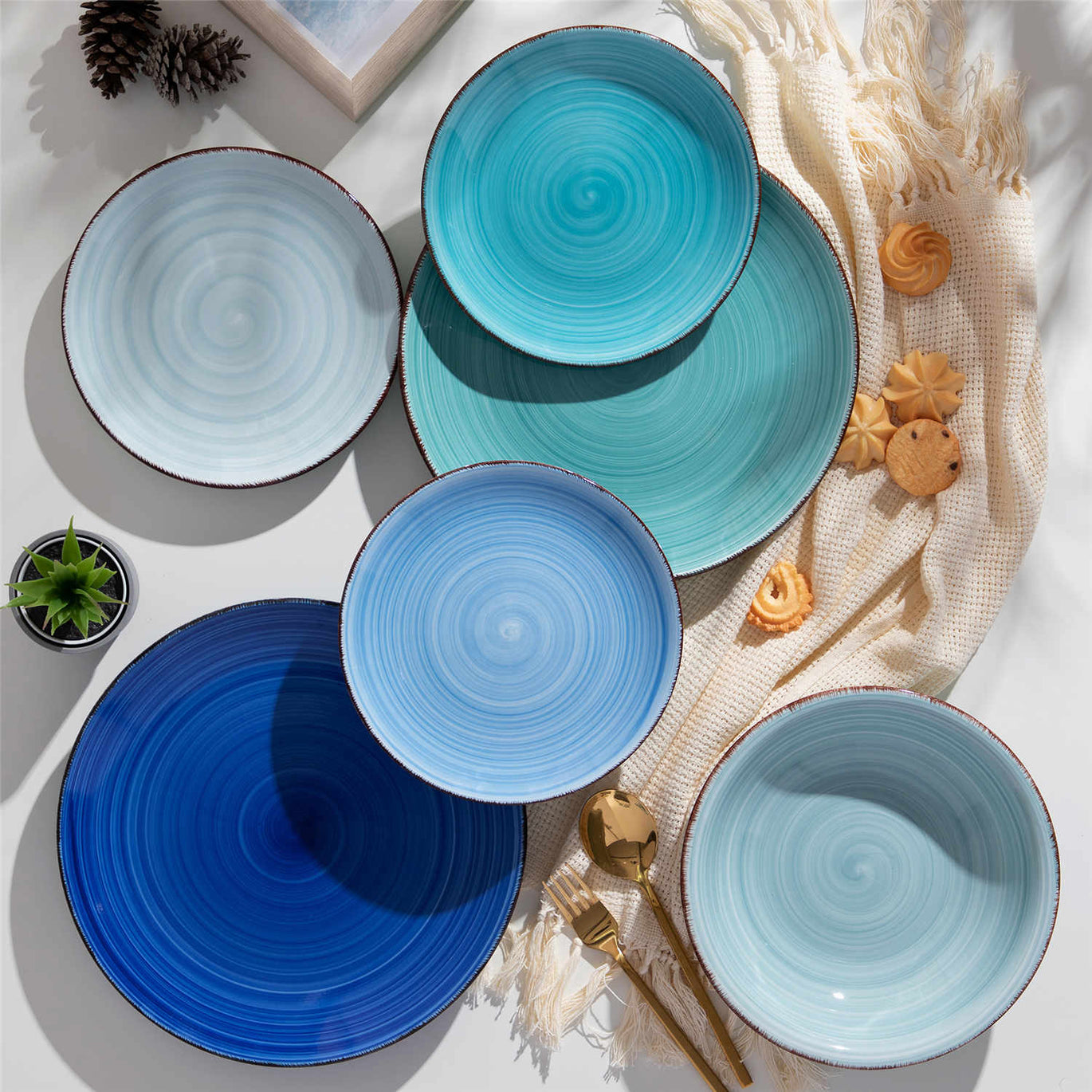


The Secret Craft Behind Handcrafted Ceramic Tableware Techniques

When you pick up a handmade plate and notice a faint finger groove along the rim or a soft swirl under the glaze, you are seeing the record of how that piece was built, shaped, and fired. As a Colorful Tabletop Creative & Pragmatic Joy Curator, I live for these tiny clues. They are not accidents. They are the fingerprints of technique, the quiet evidence that your dinner plate is more than a flat circle for food. It is the memory of clay, heat, tools, and a maker’s rhythm.
In this deep dive, we will walk through the unique techniques that set handcrafted ceramic tableware apart: how the clay body is formed, how surfaces are carved and textured, how glazes are engineered and applied, and how firing and care turn those choices into everyday durability. I will draw on practical advice and definitions from educators and makers at places such as Ancient Pottery, The Crucible, Glazy, Kilnfire, Hosen Home, and other studio-based resources, and fold that into first-hand, tabletop-centered experience. The goal is simple: help you see your plates and bowls as living design decisions, not just pretty dishes.
What Makes Handcrafted Tableware Truly Different?
Hand building and careful wheel work create a direct, tactile connection between potter, clay, and earth. Andy Ward at Ancient Pottery describes hand building as a machinery-free way of forming pottery that emphasizes an almost “primitive” connection with the material. That intimacy is exactly what you feel when a handmade bowl fits your hand better than any mass-produced piece ever could.
In factory tableware, machines and molds aim for uniformity. That has its place in banquet halls and budget restaurants. In handcrafted tableware, slight variations in wall thickness, rim profile, and glaze break are part of the aesthetic. Brands like Gifts For Israel describe their plates as “functional artworks,” shaped by wheel throwing, slab construction, or press molding before being bisque fired and glaze fired to vitrify the clay above about 2190°F. That high heat locks in durability, but the process remains personal. Two plates from the same series may share a design language, yet no two will be identical.
Another difference lies beneath the surface. Handcrafted pieces are often built from clays chosen for tactile quality and firing behavior, not just price. Crafist and Glazy both emphasize that clay body and glaze must be matched in firing range and thermal expansion. Makers decide whether a stoneware clay for hearty dinner plates, a speckled body for visual warmth, or a porcelain body for luminous color will best serve the food and the mood. This is where artistry meets engineering. The same stew looks rustic in a heavily textured, reactive-glazed bowl and almost architectural in a smooth, white porcelain one.
In the studio, technique is not only about “how to make a pot” but “how to make this plate take the beating of real life.” Articles from Ceramic Arts Network and Hosen Home highlight concerns like warp resistance, chip resistance, and glaze durability. Compression of slabs, slow, even drying, and thermal shock testing are not romantic, but they are exactly why your handmade plate can go from hot food to a cool countertop without drama. When technique is thoughtful, beauty and robustness sit on the table together.

Forming by Hand: Techniques that Shape Plates and Bowls
Pinch, Coil, and the Power of the Palm
If you have ever made a pinch pot in a beginner class, you already know one of the simplest yet most expressive forming techniques. Ancient Pottery and YouTalent both describe pinch pots as starting with a fist-sized lump of clay. The potter presses a thumb into the center and then gently pinches and rotates, stretching the walls outward. Done well, this creates thin, even walls that respond directly to the pressure of the fingers. The improvement curve is steep; the more you pinch, the more the clay seems to anticipate your next move.
Ward distinguishes three specialized pinching methods for coil-built forms that are also powerful tools for tableware. A bonding pinch secures coils to each other, structurally holding the pot together. A flat pinch thins walls evenly while the potter feels for thicker spots, like a baker evening out dough. A compression pinch pulls walls inward to refine profiles, ideal for shaping a narrow-mouth jar or tightening the curve of a cereal bowl so it nestles in your hand.
Coil building itself is a foundational method for both vessels and tableware. YouTalent explains that potters roll long “ropes” or coils of clay and stack them, bonding each layer before adding the next. Ancient Pottery adds another step: once a cylinder of coils has been built, the potter can “push out” the form from inside, often using a gourd scraper or similar tool. This is how a straight cylinder becomes a softly rounded soup bowl, a wide salad bowl, or a voluptuous serving piece. The rhythm of rolling even coils, stacking, pinching, and pushing becomes second nature with practice, and the result is a bowl whose curves are literally drawn by the potter’s fingertips from inside out.
Slabs, Wheel-Assists, and Plates That Stay Flat
Plates are deceptively technical. They need to be wide and flat yet not warp; lightweight enough to handle easily yet strong enough for everyday use; and consistent enough to stack. Ceramic Arts Network’s “In the Potter’s Kitchen” article on slab and wheel-made plates breaks down a hybrid technique that balances precision with handmade character.
The process starts with about 4 lb of firm clay rolled into a slab roughly 1/4 in thick, just large enough to cut a circle about 14 in across. The slab is thoroughly compressed to reduce the risk of warping. A 14 in bat serves as a template to cut a clean circle, which is then transferred to a bat on the wheel head. On the wheel at low speed, roughly 1/2 in is trimmed from the rim to bring the slab to about 13.5 in. This trimming simultaneously centers the slab and ensures an even wall height when the rim is lifted.
From there, the potter lifts the plate walls by supporting the slab between wet hands and raising the edge to around 1.5 in tall at nearly a right angle. After drying to a firm leather-hard state, the plate is removed not with a wire, which can leave an uneven bottom, but by gently popping it off the bat by hand. At this stage, a rubber rib smooths the bottom and interior, and the maker can choose between a flat bottom for tight stacking or a defined foot for more visual lift.
To fight the eternal enemy of handmade plates, warping, Ceramic Arts Network recommends three extra steps: compress the initial slab thoroughly, dry plates very slowly under cover for about a week once they reach leather hard, and if warping starts to appear, place a small weight on the center during drying. These technique choices are invisible in the finished plate, but when your entire stack sits flat in the cupboard, you are feeling the benefit.
Clay Preparation and Moisture: The Invisible Technique
Before pinch, coil, or slab comes a less glamorous but crucial step: preparing the clay. YouTalent describes wedging methods such as stack-and-slam, ram’s head, and spiral wedging, along with using pugged or recycled clay. The purpose is simple but vital: remove air pockets, even out texture and moisture, and prevent cracks or structural weakness. In functional tableware, a hidden air bubble can become a crack or even an exploded piece in the kiln.
Both YouTalent and community discussions like the Mayco Mudroom Society emphasize moisture control as a core skill. Clay that is too wet slumps or collapses when you lift a rim; clay that is too dry may crack as you form it, or later during drying and firing. Understanding the feel and appearance of different moisture levels, and matching them to the technique and form, is a quiet superpower. Plates and bowls built at the right moisture content, then allowed to dry slowly and evenly, are far less likely to warp or crack.
Even at the wheel, where centering looks like the main act, fundamentals such as consistent moisture, even wall thickness, and appropriate clay weight for the intended form “trump everything,” as one studio note puts it. For functional bowls, YouTalent recommends around 2½ lb of clay as a versatile starting point. Centering that weight well, pulling even walls, and refining with ribs at the right stage of dryness are what give you a bowl that feels simultaneously robust and light.

Surface as Story: Texture, Carving, and Inlay
Once the form exists, the surface becomes a canvas. This is where handcrafted tableware starts to express mood, theme, and personal signature long before glaze color is chosen.
From Sgraffito to Mishima: Illustrated Plates and Bowls
For potters who love drawing, sgraffito is a dream technique. Meesh Pottery defines sgraffito as scratching a design through a colored surface layer to reveal the clay body beneath. Typically, the potter waits until the piece is leather hard, applies a colored slip or underglaze to the surface, and lets it dry completely. A blunt pencil can lightly map out the design without cutting into the clay, and the pencil marks are safe because the graphite burns away in the kiln. Then the real magic begins, carving with a tool or ball stylus to reveal crisp lines. Loose clay crumbs are brushed away with a soft brush to keep the line work clean.
YouTalent extends this surface vocabulary by describing techniques such as Mishima, also called inlay. In Mishima, the potter incises lines into the clay and then fills those lines with a contrasting colored slip or underglaze. After drying and sometimes a light scraping, the result is a smooth surface where the color sits neatly in the carved channels. On a dessert plate, this might become a subtle ring of inlaid pattern around the rim; on a soup bowl, a lane of tiny inlaid motifs that catch the eye as you reach the bottom.
Slip trailing is another highly expressive technique. It uses a squeeze bottle to draw raised lines of liquid clay on leather-hard ware. YouTalent notes that these raised lines become tactile after firing and glazing. On a dinner plate, a restrained, radiating slip-trailed pattern can frame the food like a sunburst. On a mug or small bowl, the raised lines add both grip and visual rhythm.
Underglaze painting and transfers extend the possibilities even further. YouTalent highlights the use of colored underglazes and brushes to paint fine motifs and illustrations, sometimes supplemented with underglaze transfers that wrap detailed designs around a form. These methods let makers treat plates like paper, but with the added challenge that color will intensify and sometimes shift slightly after firing and glazing.
Imprints, Stamps, and Layered Effects
Not every surface treatment needs a drawing hand. Stamping and imprinting techniques, as described by YouTalent, use custom stamps, textured rollers, and found materials such as leaves, lace, and nets to press patterns into clay. A tea plate rolled on lace might emerge with a delicate textile pattern, later highlighted by a transparent or slightly tinted glaze. A ramen bowl whose outside is wrapped with netting while the clay is still soft can come out of the kiln with a grip-friendly, organic texture.
Water etching and wax resist create layered visual contrast. In a typical workflow, a potter might brush on a layer of slip, then apply wax resist to areas they want to protect. When they wash or wipe away the exposed slip, the waxed areas retain the original layer, creating a high-contrast pattern after firing. YouTalent notes that these methods are especially effective at the leather-hard stage, when the surface is firm yet workable. On a plate, water etching can carve away subtle valleys that catch darker glaze pools; on a serving bowl, wax resist can reserve a playful, unglazed stripe that invites your fingers.
All of these techniques are timed to specific stages in the clay’s life. Leather hard is a recurring hero: stiff enough to hold definition, soft enough to carve or impress. Working too early leads to slumping; too late, and you risk chipping or cracking. The unique aspect of handcrafted tableware is that the maker is constantly reading the clay and choosing a surface method that fits not just the design but also the moment.
Here is one way to think about popular surface techniques at the table:
Surface technique |
Worked at which stage |
Visual and tactile feel in use |
Especially charming on |
Sgraffito carving |
Leather hard with dry slip or underglaze |
Graphic, line-based imagery with crisp contrast but smooth to the touch under a clear glaze |
Dessert plates, side plates, story-rich mugs |
Mishima/inlay |
Leather hard during and after incising |
Clean, colored lines sitting flush with the surface, ideal for subtle patterns |
Minimalist dinner plates, refined rice bowls |
Slip trailing |
Leather hard with squeeze bottle |
Slightly raised lines that become tactile ridges beneath glaze |
Soup bowls, handle details, playful breakfast ware |
Stamping/imprinting |
Soft to leather hard |
Repeating or organic textures that catch glaze and light |
Rustic chargers, salad bowls, rustic-glam platters |
Water etching and wax resist |
Leather hard through early bisque |
Layered matte and glossy zones with visual depth |
Showpiece serving bowls, statement plates |

Glaze Choices: The Science and Drama on Your Table
If clay is the skeleton, glaze is the skin, mood lighting, and protective shell all at once. The unique character of handcrafted tableware often comes from how thoughtfully a maker uses glaze chemistry and technique.
Glaze Basics and Firing Ranges
Glaze is, in the words of Glazy, a specialized glass formula applied to bisqued clay and refired to fuse into a thin, durable coating that makes ceramics waterproof and visually appealing. The chemistry is built from three core oxide groups. Glass formers, typically silica, create the glassy network. Fluxes such as sodium, potassium, calcium, and boron lower the melting point so the glaze can mature at kiln temperatures typical for ceramics. Stabilizers, often alumina-bearing clays like kaolin, keep the molten glaze from running off the pot during firing. Colorants and opacifiers, such as various metal oxides or zircon, are layered on top of that foundation.
Glazy notes standard firing ranges expressed as pyrometric cones. Low-fire earthenware glazes usually sit around cone 06 to cone 02, roughly 1800–2050°F. Mid-fire stoneware glazes are often designed for cone 5 to cone 6, around 2160–2230°F. High-fire stoneware and porcelain glazes live around cone 8 to cone 11, roughly 2300–2380°F. The Crucible echoes these ranges with practical examples, citing low-fire glazes fired around 1845°F for bright, controlled colors, mid-fire glazes around 2192°F for more variation and melting together of colors, and high-fire glazes around 2305°F for strong, vitreous ceramics.
For tableware, matching glaze cone range to clay maturation temperature is more than academic. Glazy stresses that poor “glaze fit,” where the thermal expansion of glaze and clay do not align, can lead to crazing (fine cracks), shivering (flaking), or more serious structural issues. Makers of functional plates and bowls usually choose a clay body and glaze family that mature in the same temperature neighborhood, such as mid-fire stoneware with cone 6 glazes, or high-fire stoneware with cone 10 glazes.
Valentine Clays describes the general workflow: clay is first bisque fired to harden it, then glaze is applied by dipping, brushing, spraying, or pouring, and finally the piece is glaze fired at roughly 1830–2550°F depending on the glaze system. Kilnfire adds that base glaze recipes often act as neutral canvases that can be colored and modified, and that the firing cycle, including ramps, soaks, and cooling schedules, strongly influences final surface quality.
Glossy, Matte, Reactive, and Crackle: How Surfaces Change the Mood
From a tabletop point of view, glaze sheen and behavior are just as important as color. Hosen Home’s overview of glaze types for tableware is especially useful for understanding pros and cons in real use.
Glossy glazes are traditional, reflective, and smooth. They enhance bright colors, are easy to clean, and feel familiar to most diners, making them a favorite for everyday restaurant ware and classic white porcelain collections. Valentine Clays similarly notes that glossy glazes emphasize color and pattern and are widely used for functional ware. The main tradeoff is that high-gloss surfaces can show smudges and every speck of dried sauce if the glaze is not perfectly applied.
Matte glazes are non-reflective and soft to the touch, often used for contemporary, tactile aesthetics. Hosen points out that matte surfaces can hide small scratches but tend to require more precise firing control and may mark more easily under metal utensils unless the glaze is carefully formulated. Valentine Clays adds that matte and satin glazes are popular for decorative work and sophisticated, subdued finishes. For a handmade breakfast plate, a velvety matte glaze can make toast and eggs look like a still life painting, but the potter has to balance that look with practical cutlery resistance.
Between those extremes, satin or semi-matte glazes offer a muted shine that many boutique hotels and bistros favor. They are often easier to maintain than full matte while feeling softer than high gloss. They can give dinner plates a refined glow rather than a mirror-like sheen.
Reactive glazes are the visual showstoppers. As Hosen explains, these glazes chemically react during firing to create unique, unpredictable patterns. Layered flows, pools, and variegated colors are common. Historically, some diners assumed reactive glazes signaled lower quality, but modern controlled reactive glazes can meet full commercial standards with proper formulation and testing. Each plate becomes a mini-landscape, and no two are exactly alike.
Crackle glazes deliberately develop fine surface cracks. Both Hosen and general glaze literature caution that crackle surfaces for heavy-use dinnerware should be fully sealed and certified food-safe, since the microscopic cracks can otherwise harbor moisture or stains. When properly sealed and used strategically, crackle effects can lend an “antique” charm to serving dishes and decorative pieces.
Metallic lusters and raku glazes, while gorgeous, are more specialized. Ceramic Arts Network warns that metallic lusters are not microwave safe, and The Crucible notes that raku wares, typically fired to around 1800°F and then reduced in combustible materials, are not waterproof or food-safe. On the table, raku is best reserved for decorative pieces or dry-service items like fruit that do not involve prolonged contact with liquids or acidic foods.
You can visualize some of these glaze options this way:
Glaze type |
Everyday strengths |
Typical caveats for tableware |
Glossy |
Easy to clean, bright color, familiar feel |
May show smudges and utensil tracks visually |
Satin/semi-matte |
Soft sheen, refined look, good compromise |
Needs balanced firing to avoid dullness |
Matte |
Tactile, hides small scratches visually |
Can be cutlery-mark prone without good fit |
Reactive |
Each piece unique, rich layered effects |
Needs strict testing for consistency and safety |
Crackle |
Distinctive, antique-like visual interest |
Requires sealing and certification for heavy use |
Metallic luster |
Spectacular metallic sheen |
Not microwave safe and often decorative only |
Raku-style |
Dramatic, smoky, unpredictable effects |
Not waterproof or food-safe in standard practice |
Gishyanceramics reminds us that glazing is “an art form in itself,” not just an afterthought. Understanding how these surfaces behave under light, with food, and in the dishwasher is part of designing a joyful, practical tabletop.
Glaze Testing, Food Safety, and Everyday Use
No matter how poetic the glaze, functional tableware must pass a series of very unromantic tests. Hosen Home notes that glazes intended for food-contact surfaces are tested for lead and cadmium leaching under standards used in regions such as the United States and the European Union. They are also evaluated for dishwasher and microwave colorfastness, cutlery resistance, and thermal shock performance. Hosen reports using third-party labs like SGS or Intertek alongside in-house simulation testing before approving glazes for mass production.
Glazy and Valentine Clays both underscore the importance of avoiding toxic lead in functional ware and matching glaze and clay bodies so that fit is good over repeated heating and cooling. A well-fitting glaze should not craze excessively, nor should it shiver or peel from the surface. Kilnfire adds practical guidance on diagnosing glaze defects such as pinholing, crawling, crazing, and blistering, and recommends systematic testing on small tiles and test pieces before using experimental glazes on finished work.
The Crucible offers simple at-home checks for makers and even for curious collectors. To test durability and safety, they suggest using lemon juice on a cooled piece to see if the acid shifts color or texture, which could indicate instability or leaching in a surface. To test waterproofing, you can fill a piece with water and see if moisture seeps through the ceramic or leaves a damp ring over time; if it does, the body or glaze is not fully vitrified or sealed. These tests do not replace formal lab analysis, but they give valuable signals.
For clay choice, YouTalent clearly distinguishes air-dry clay from kiln-fired clays like stoneware and porcelain. Air-dry clays harden in air without firing and are not waterproof, making them suitable only for decorative, non-food items. Kiln-fired clays, once bisque fired and glaze fired to appropriate temperatures, become strong, vitrified, and suitable for food contact when paired with certified food-safe glazes. For functional bowls and plates used with hot foods and daily washing, YouTalent recommends kiln-fired clay bodies and proper glazes, reserving air-dry clay for display-only pieces.
In practical terms, when choosing handcrafted tableware for everyday use, you can ask the maker a few key questions. What clay body do you use, and at roughly what cone do you fire? Are the glazes on food-contact surfaces tested or verified as food safe? Are pieces dishwasher and microwave suitable, and if not, how should they be used? Makers who reference mid-fire or high-fire ranges, testing practices, and specific caveats for special surfaces like crackle or metallic lusters are treating technique as the backbone of your everyday eating experience.

Caring for Handcrafted Plates and Bowls
Thoughtful technique continues after the kiln cools. The way you care for handcrafted pieces can either honor the maker’s effort or quietly undermine it.
Gifts For Israel offers clear care advice for their handcrafted ceramic plates. They recommend hand washing with mild dish soap and a soft sponge, avoiding abrasive pads and harsh detergents. This approach protects both glaze sheen and any carved or textured surfaces that might catch scouring pads. They also suggest stacking plates carefully with felt separators or plate dividers and avoiding overstacking to prevent chipping. While many high-fired, well-glazed plates can be dishwasher safe, they encourage owners to confirm each piece’s specific dishwasher suitability with the artisan.
Both Gifts For Israel and The Crucible emphasize avoiding extreme temperature shocks. Even when clay and glaze bodies are designed for high temperatures, moving a plate straight from the refrigerator into a very hot oven or from a hot oven onto a cold countertop can provoke cracking. Most quality handcrafted ceramics can handle typical baking temperatures when used as specified by the maker, but they still appreciate gentle handling. Think of them as athletes: built to perform, but happiest when not jerked abruptly from ice bath to sprint.
If you own reactive, matte, or crackle-glazed pieces, treating them as you would a favorite piece of clothing is a good rule of thumb. Give them a quick rinse soon after use to minimize staining, avoid soaking them for hours in highly colored or acidic liquids, and respect any “decorative use only” notes. And for decorative or cold-finished pieces painted with non-ceramic paints or sealed with craft varnishes, follow the maker’s lead and keep them away from direct food contact.

Short FAQ on Handcrafted Ceramic Tableware Techniques
Are reactive and matte glazes safe for everyday dining?
They can be. Hosen Home directly addresses the myth that reactive glazes are low quality, noting that modern reactive glazes can meet full commercial standards when properly formulated and tested. Matte glazes can also be fully dishwasher safe if they are fired correctly and have low porosity. The critical factors are glaze chemistry, firing range, and testing for leaching and durability. When choosing reactive or matte-glazed plates and bowls, look for makers who mention food-safe formulations, appropriate firing temperatures, and testing for cutlery resistance and dishwasher performance.
Why do handmade plates sometimes have slight warping or variation?
A slight soft curve is often the price of a very human process. As Ceramic Arts Network explains, even carefully made slab and wheel-assisted plates need thorough slab compression and slow, covered drying for about a week after reaching leather hard, and sometimes a small weight in the center to stay flat. Variations in moisture, micro-differences in clay thickness, and tight firing schedules can all leave subtle evidence in the final form. Within a reasonable range, that gentle individuality is part of the charm. If a plate rocks badly, that usually points to skipped steps in slab compression, drying control, or kiln loading.
Can I use air-dry clay for functional tableware?
For pieces that will touch food and drink, the answer is no. YouTalent clearly distinguishes air-dry clay, which hardens in air and is not waterproof, from kiln-fired clay bodies such as stoneware and porcelain that become strong and vitrified after bisque and glaze firings. Air-dry clay is wonderful for decorative objects, jewelry, or sculptural elements that never hold liquids or food. Functional tableware needs the full cycle: wedging, forming, slow even drying, bisque firing, glazing, and glaze firing to temperatures often between roughly 1800 and 2300°F, depending on the system.

Closing: Setting a Joyful, Informed Table
Every handmade plate, bowl, and mug on your table is a layered story of technique. Coils rolled and bonded by hand, slabs compressed and lifted on the wheel, surfaces carved, stamped, and inlaid at exactly the right stage, glazes mixed and tested, then fired through carefully controlled heat and cooling. When those techniques are chosen with intention, you get tableware that is not only beautiful but quietly engineered for daily life.
The next time you set the table, run your fingers over a carved rim, trace the break in a reactive glaze, or notice how perfectly a bowl cradles soup and fits your hand. You are not just feeling “style.” You are feeling hand-built structure, surface artistry, glaze chemistry, and firing expertise working together. That is where the joy lives: in knowing your everyday meals are served on small, durable works of art, crafted with both creative play and practical rigor in every step.
References
- https://citeseerx.ist.psu.edu/document?repid=rep1&type=pdf&doi=8f57b6a07aeb7ee7675c7547c523d52fc49dbdce
- https://uknowledge.uky.edu/cgi/viewcontent.cgi?article=1029&context=ees_facpub
- https://researchrepository.wvu.edu/cgi/viewcontent.cgi?article=12109&context=etd
- https://www.academia.edu/Documents/in/Handmade_Pottery
- https://help.glazy.org/concepts/glaze
- https://ceramicartsnetwork.org/pottery-making-illustrated/pottery-making-illustrated-article/in-the-potter's-kitchen-slab-wheel-made-plates
- https://www.thecrucible.org/guides/ceramics/how-to-glaze/
- https://www.artsy.net/article/artsy-editorial-5-ceramic-techniques-you-need-to-know
- https://ancientpottery.how/hand-building-clay-techniques/
- https://ceramic-resource.com/glazing-and-firing-in-ceramics-a-complete-guide/
Potrebbe piacerti anche
Stern Set di stoviglie da 16 pezzi
- £68.00
£77.00- £68.00
- Prezzo unitario
- per
-
Blue
-
Green
-
Red
-
Grey
Simi Set di stoviglie 24 pezzi
- £77.00
£104.00- £77.00
- Prezzo unitario
- per
Bonita Set di stoviglie da 18 pezzi
- Da £49.00
£61.00- Da £49.00
- Prezzo unitario
- per
-
Blue
-
Multicolor
Set di stoviglie stellate da 16 pezzi
- £68.00
£70.00- £68.00
- Prezzo unitario
- per
-
Blue
-
Green
-
Red
-
Gradient Green