





The Case for Imperfect Beauty in Children’s Ceramic Dinnerware

Why Imperfect Plates Belong on a Kid’s Table
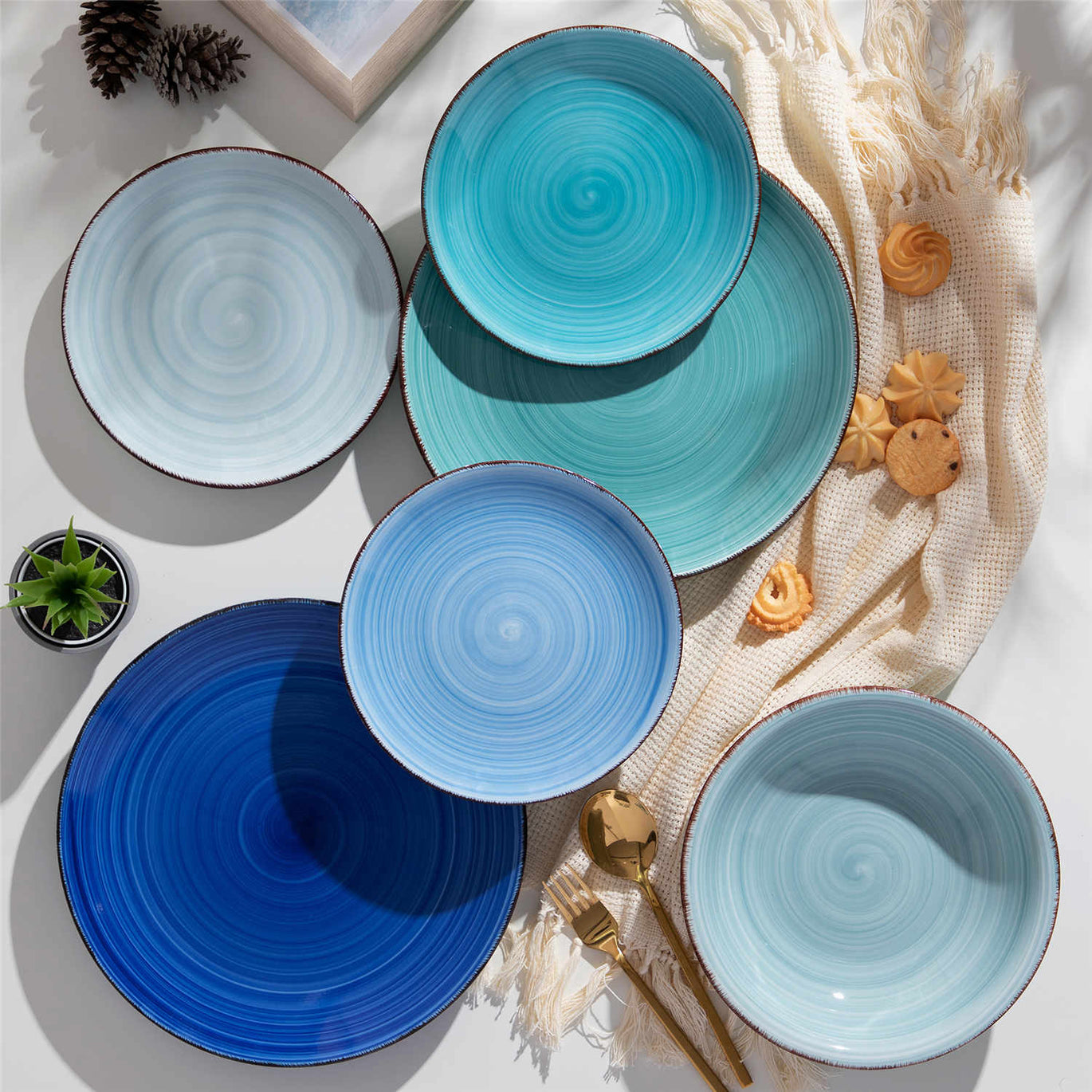
Set a children’s table in glossy, identical plastic plates and everything looks neat, predictable, and… a little flat. Set it with hand-glazed ceramic dishes where the rim dips slightly, colors pool in tiny constellations, and each plate is just a little different, and the mood changes. The table suddenly feels like a story, not a catalog.
In my work curating colorful tabletops for real family life, I see this shift all the time. When children sit down to “real” dishes that are beautiful but not flawless, they lean in closer. They trace ridges with their fingers. They notice color. They ask questions. Mealtime becomes a tiny gallery visit they can touch.
This idea has deep roots. Japanese aesthetics, especially the philosophy of wabi-sabi described by writers and museums such as Japanese Taste, Zenbird, and the Denver Art Museum, celebrates the beauty of things that are imperfect, modest, and aging. Tea bowls in traditional ceremonies are intentionally bumpy and quietly asymmetrical; guests are invited to feel every variation. Cracks are not automatically a reason to throw something away. Through the art of kintsugi, broken ceramics are repaired with lacquer and gold, turning fractures into glowing lines that honor an object’s history.
At the same time, contemporary research on kids’ tableware emphasizes safety and durability. Brands like Joyye and Wellthya highlight stainless steel, silicone, and bamboo composites as sturdy, non-toxic options that survive drops and dishwasher cycles. Coton Colors presents melamine as almost unbreakable, easy for parents to love, and fun for kids. Malacasa makes the case for porcelain sets that elevate children’s meals while holding up to daily bumps.
So why argue for ceramic plates that may chip or crack over a long childhood?
Because the right kind of imperfection, paired with good safety sense, can help children:
feel trusted and capable around real objects,
eat more attentively and adventurously, and
grow up with a healthier relationship with both food and “flaws.”
Let’s unpack how the science of aesthetics, the philosophy of wabi-sabi, and practical tableware research all point toward an unexpectedly powerful idea: the bumpy, lumpy, lovingly imperfect ceramic plate absolutely belongs on a child’s table.

What Aesthetics Do to a Child’s Appetite
We Really Do Eat With Our Eyes
Long before a bite reaches the tongue, the eyes are working hard. Research on food aesthetics summarized by wellness platforms like Wellcure points to work by Oxford psychologist Charles Spence and others: what and how much we eat is strongly shaped by sensory cues such as color, plating, and the atmosphere around us, not just by hunger.
A University of Bari study described in that article showed that simply changing the color of juice altered how people expected it to taste. Greenish juice seemed more sour, yellowish juice more bitter, and intense yellow looked fresher. Separate research from Ferran Adrià’s culinary school found that the color of the plate itself changes taste judgments: desserts on white plates were rated sweeter than the same desserts on black plates, while brown and blue plates could dampen appetite or shift perceived flavor.
Nutritional psychology research reviewed by the Nutritional Psychology Institute adds another piece: the overall aesthetic environment matters. In experiments by Wu and colleagues, identical foods were rated as better smelling, better tasting, and more desirable when eaten or imagined in more beautiful settings. Participants in high-aesthetic environments also reported more positive emotions, which closely tracked their ratings of food’s look, smell, and taste.
For children, visual cues are even more powerful. A summary from Vancasso Tableware of studies involving children and color notes that kids tend to prefer plates with more different foods and more colors than adults do. One set of photo-based experiments found that children gravitated to plates with about seven foods and roughly six colors, while adults preferred simpler arrangements. Other research cited in that article shows that color strongly steers selection: children chose more red candies than any other color even when all candies were identical, and red packaging often beat green in attractiveness.
Taken together, reputable research points to a clear conclusion: the way we present food, including plate color and pattern, shapes both appetite and emotion. We eat with our eyes, and kids do it with extra intensity.
Plates, Patterns, and Feelings
A study on plate-pattern beauty published in a consumer research journal and summarized in the “Tasting More Than Just Food” review took this one step further. It examined how the beauty and style of plate patterns—classical versus expressive—change perceived tastiness, healthiness, and even price impressions.
Classical aesthetics meant orderly, symmetrical, more traditional designs. Expressive aesthetics meant creative, original patterns that bend or break those rules. Across several experiments, beautifully patterned plates made food taste better and seem healthier, while low-beauty plates had the opposite effect. Expressive designs amplified this effect: beautifully expressive plates produced some of the highest tastiness and healthiness ratings, but less-beautiful expressive plates produced the lowest ratings of all.
In other words, beauty itself carries a halo. But expressive, highly individual patterns are riskier. When they are thoughtfully designed, they elevate the experience dramatically. When they feel chaotic or cheap, they can drag it down.
That is exactly why imperfect ceramic dinnerware is such an interesting canvas for kids. A hand-glazed plate with a slightly uneven ring of color or a scattered constellation of speckles can be “expressive” without being harsh or cartoon-loud. It can feel special, artistic, and personal, especially if it avoids the low-beauty traps of muddy color and cluttered imagery.

Real, Beautiful Dishes as a Trust Message
Montessori educators talk about something that goes deeper than aesthetics: trust. A Guidepost Montessori note on early independence frames it powerfully. When you hand a young child a real glass or ceramic dish instead of unbreakable plastic, you are effectively saying, “I trust you with real and beautiful things.”
Between about 2 and 6 years old, children’s brains are exploding with growth. This period, as Montessori educators and child-development specialists note, is full of “I do it!” moments. Everyday tasks such as pouring milk or carrying a plate become powerful learning opportunities for coordination, attention, and emotional regulation. A simple practice they recommend is to give a child a few minutes to try a task independently before stepping in, staying close, calm, and encouraging.
Ceramic dinnerware fits naturally into that picture. A plate with some weight and fragility demands more careful hands than a lightweight plastic dish. The child has to slow down, focus, and coordinate movements—skills that kitchen tasks are uniquely good at building. When accidents happen, parents can respond with gentle guidance rather than panic, reinforcing resilience instead of fear.
Research on kids’ tableware sets from brands like Pickle & Bear describes how child-sized dishes improve fine motor skills, coordination, and confidence in self-feeding. Features such as raised edges and divided compartments help kids practice scooping and serving while keeping mess manageable. When those forms are translated into ceramic, they combine developmental support with the sensory richness of real clay and glaze.
Ceramic plates also make children feel included. Coton Colors’ discussion of children’s melamine highlights how giving kids festive, intentional place settings—rather than leftover plastic—helps them feel part of the occasion, not an afterthought. Malacasa’s work on porcelain dinnerware for children notes that elegant, coordinated sets elevate everyday meals, encouraging table manners and turning dinner into valued family time. Imperfect ceramics can offer the same emotional inclusion with an extra layer of authenticity.

Ceramic in the Mix of Kids’ Materials
Parents today have an entire material rainbow to choose from for children’s dishes. Research-based articles from Joyye, Coton Colors, Malacasa, Wellthya, and others outline clear strengths and trade-offs.
To ground the case for ceramic in reality, it helps to see where it sits among other options described in the research.
Material (from research) |
Strengths highlighted in sources |
Key cautions from sources |
How imperfect ceramic complements it |
Plastic and paper |
Often inexpensive and lightweight; widely available. |
Plastic plates and cups can leach chemicals such as BPA, especially when heated, and paper plates can tear into small pieces that pose choking risks for young children, according to Malacasa’s review. |
Imperfect ceramic offers a reusable, non-plastic alternative for many meals, reducing reliance on disposables while keeping mealtimes visually engaging. |
Melamine |
Coton Colors describes melamine as lightweight, durable, and extremely difficult to break compared with fine china or ceramics. It is scratch-resistant and great for indoor and outdoor use. |
It should never go in the microwave and needs protection from serrated knives and harsh abrasives to preserve its coating. |
Ceramic can handle microwave reheating when designed for it, and its imperfections can add warmth where melamine’s perfection sometimes feels a bit “plastic.” |
Stainless steel |
Joyye and Wellthya both highlight stainless steel as a kind of “gold standard”: non-porous, rust-resistant, chip-free, and free of BPA, PVC, and phthalates. It does not harbor bacteria easily and can last for years. |
It is not microwave-safe, and although it is sleek, its appearance can be less playful on its own. |
Pairing stainless steel cups or side bowls with colorful, imperfect ceramic plates combines hygiene and durability with visual charm. |
Bamboo composites and plant-based materials |
Joyye notes that bamboo composite, rice husk, wheat straw, and similar materials are naturally antibacterial, lightweight yet durable, free of common harmful chemicals, and often biodegradable in proper facilities. |
These pieces are generally top-rack dishwasher-safe but may last longer with handwashing. They can show wear more quickly if not cared for. |
Imperfect ceramic can become the “special” plate used alongside everyday bamboo pieces, inviting kids into a more mindful, celebratory mode. |
Food-grade silicone |
Joyye describes silicone as flexible, drop-resistant, often with suction bases to prevent tipping, and high heat-resistant, making it microwave-safe. It is especially useful for younger children. |
Quality varies; lower-grade silicone with fillers should be avoided, and some pieces require careful drying to stay fresh. |
Silicone can be the training ground for toddlers, while imperfect ceramic becomes the aspirational “big kid” plate that signals growing independence. |
Porcelain and other ceramics |
Malacasa explains that porcelain is made from natural clay fired at very high temperatures, resulting in a dense, non-porous, scratch-resistant surface that does not absorb odors or flavors. It is described as notably durable and chip-resistant, often microwave- and dishwasher-safe, and non-toxic, with no chemical leaching. |
Porcelain and other ceramics can still chip or break on hard floors, and they are less impact-resistant than melamine or stainless steel. |
Imperfect ceramic takes these strengths—safety, durability, elegance—and layers on visual individuality, turning each piece into a tiny work of art children can use every day. |
The point is not that ceramic wins every category. Stainless steel and silicone shine in rough-and-tumble toddler years. Melamine is a superstar for backyard parties and crowded kids’ tables at holidays. Bamboo composites and plant-based materials answer the eco-conscious call.
But when it comes to combining non-toxic safety, long-term durability, and emotional resonance, the porcelain and ceramic category has something unique to offer—especially when we lean into imperfection instead of fighting it.

Wabi-Sabi at the Kid’s Table: Why Imperfection Helps Kids
The Japanese worldview of wabi-sabi, described in depth by sources such as Japanese Taste, Zenbird, and essays on the beauty of broken and unfinished things, is not just a design trend. It is a way of noticing the world.
Wabi refers to rustic, humble simplicity: a thatched farmhouse, a handmade cup that fits the hand just right, a room with unfinished wood and open space. Sabi refers to the beauty that emerges through age: moss creeping over stone steps, the patina on a well-used chair, the hairline crack in a beloved bowl. Instead of hiding wear, wabi-sabi aesthetics highlight it.
The tea ceremony, especially in the wabi-cha tradition shaped by Sen no Rikyū, embodies this. As the Denver Art Museum explains in its lesson on a “bumpy, lumpy and special” Japanese tea bowl, the bowl is intentionally plain and subtle so guests must look and feel carefully to notice its details. It has no handles and is passed hand to hand, inviting close observation of shape, glaze, and texture. Small irregularities are not viewed as flaws but as highly valued features.
For children, this way of seeing can be transformative.
Imperfect plates and bowls invite curiosity. Tiny variations in thickness or glaze give fingers something interesting to explore. The surface tells a story: “This was made by hands, not just machines.” When children learn to respect and enjoy these quirks, they are practicing a kind of everyday mindfulness that many adults struggle to cultivate.
Imperfect plates also model a healthy relationship with mistakes and aging. Articles on wabi-sabi and kintsugi often emphasize that repaired objects can become more beautiful for having been broken and mended. The gold-filled cracks in a kintsugi bowl are not hidden; they are celebrated. Writers like Julia Marino, reflecting on wabi-sabi in modern life, connect this directly to self-compassion: accepting our own flaws and life’s messiness as meaningful rather than shameful.
Imagine narrating a chipped ceramic bowl to a child the way wabi-sabi might. Instead of “It’s ruined,” you might say, “This bowl worked hard for us. See that little chip? It reminds us of all the soups and snacks it carried. Let’s retire it from eating and give it a new job holding crayons.” Imperfection becomes evidence of a relationship, not a reason for instant replacement.
When this mindset shows up at the dinner table, children see that objects do not have to be perfect to be worthy of care. That insight spills over into how they view their own attempts at new foods, their handwriting, their art, and even their emotions.
Safety First: Honest Pros and Cons of Ceramic for Kids
Now comes the pragmatic joy curator voice: imperfect beauty is wonderful, but safety and sanity still matter.
The research-based cautions around kids’ tableware cluster into two main areas: material safety and physical safety.
On material safety, the strongest concerns in the sources center on plastics and certain metals. Malacasa’s porcelain overview notes that plastic plates and cups can leach chemicals such as BPA when heated, and that some glass and decorative colored glassware may contain lead. It also warns that metals like copper or aluminum can tarnish or corrode, potentially releasing substances into food. That is why so many kids’ tableware guides emphasize BPA-free, phthalate-free, and lead-free claims.
In contrast, Malacasa describes porcelain as made from natural clay fired at very high temperatures, resulting in a dense, non-porous, scratch-resistant surface that does not absorb odors or flavors and does not leach chemicals. Wellthya’s stainless steel article makes similar points about high-quality stainless steel being non-porous, rust-resistant, and free from common harmful additives when properly formulated.
On physical safety, the trade-offs are different. Coton Colors stresses that melamine is extremely difficult to break compared with fine china or ceramics, which is why parents love it for kid tables at birthdays, Thanksgiving, and Christmas. Wellthya highlights that stainless steel does not chip or shatter and resists corrosion, making it a very safe daily driver. Silicone and bamboo composites are also positioned as impact-resistant in the Joyye guide.
Ceramics, including porcelain, sit in the middle. Malacasa emphasizes that porcelain dinnerware is notably durable and chip-resistant, better at withstanding bumps and spills than many other ceramics or stoneware. But porcelain can still break on hard floors. That means using ceramic with children requires a bit more intentionality.
Practically, that can look like this.
You choose ceramic plates whose forms support kids’ motor development: slightly deeper rims for easier scooping and fewer spills, as the Malacasa pasta bowls exemplify, and sizes that fit child portions. You reserve fragile heirlooms for adults and pick sturdy, well-fired pieces for everyday kid use.
You introduce ceramic plates when your child has already practiced handling dishes with more forgiving materials such as silicone or stainless steel, drawing on Montessori’s insight that ages 2 to 6 are ideal for developing independence with real objects. You start in calm environments, not in a crowded party where chaos is guaranteed.
You use stainless steel or melamine for situations where breakage risk is high—picnics on concrete, crowded playdates, or toddler “launch phase”—and keep ceramic for family dinners when you can be close, observant, and relaxed.
This is not all-or-nothing thinking. It is about matching material to moment.

Practical Ways to Use Imperfect Ceramic with Children
Curate Plates That Invite Curiosity, Not Anxiety
When you are choosing imperfect ceramic dinnerware, draw on the plate-pattern research and wabi-sabi wisdom together.
Aim for beauty that feels intentional. The “Tasting More Than Just Food” study reminds us that low-beauty expressive patterns can make food seem less tasty and less healthy, especially when designs feel chaotic. High-beauty plates—whether classical or expressive—create a strong positive halo.
For children, that often means:
clear, joyful colors that relate to food rather than clashing with it,
simple motifs that leave plenty of open space for the meal itself, and
subtle irregularities in shape or glaze that reward touch and attention.
Vancasso’s overview of plate color and children’s eating behavior notes that kids respond strongly to color and perceived abundance. They prefer plates with multiple distinct foods and colors, and bright packaging often captures their interest. You can channel that preference by letting the real food provide most of the color—berries, carrots, peas, mango—on ceramic plates that are slightly more neutral or softly toned. Health sources like Harvard Health, cited in that article, tie different produce colors to different benefits, which makes “eat the rainbow” a fun and meaningful game.
This approach has another advantage. Vancasso’s summary mentions a North Carolina grocery audit showing that many products marketed to children contain synthetic dyes, with Red 40 particularly common. By keeping plates simple and letting fruits and vegetables be the main source of mealtime color, you lean away from that artificial color trap.
Turn Table Setting into a Creative Ritual
Coton Colors shows how “special” plates can transform kids’ feelings about meals. Their melamine lines use bright, seasonal motifs and encouraging messages to help kids feel included at birthdays, Thanksgiving, and Christmas. Children look forward to their reindeer plate or birthday cake plate; they know the party has truly begun when those dishes come out.
Imperfect ceramic can play the same role with an even deeper story. You might have one speckled blue plate a child uses every year on their birthday, watching its patina change over time. You might bring out a slightly crooked hand-thrown bowl only for autumn soups, paralleling the way tea ceremony hosts select specific utensils based on season and guest.
From a behavioral perspective, this ritualizing matters. Research reviewed in the “Changing children’s eating behaviour” article shows that repeated, positive exposure to foods in enjoyable contexts can increase liking and intake over time. When a child regularly encounters vegetables or new textures on a cherished plate, framed by family attention rather than pressure, those foods slowly become familiar friends.
Nutritional psychology findings about aesthetically pleasing environments fit here too. As Wu’s experiments showed, more beautiful surroundings—decorated tables, thoughtful settings—can make identical foods taste and smell better and increase desire to eat. An imperfect-but-beloved ceramic plate is a small but potent part of that environment.
Use Imperfection to Tell Better Stories About Mistakes
Children watch how adults respond to mishaps more closely than we think. Plates are a daily script.
The reward-based research summarized in the experimental review on children’s eating behavior offers a cautionary tale. Some studies found that when a food is used as a means to earn a separate reward, children’s preference for that “means” food can actually decrease. Others showed that while small stickers or tokens can temporarily increase intake of fruits and vegetables, some preference gains may fade when rewards stop.
The broader lesson is that turning food and mealtime into a constant test can backfire. Imperfect ceramic dinnerware gives you a different narrative to lean on.
Instead of making the unbroken plate an achievement or reward—“You only get the special plate if you behave perfectly”—you can frame the plate as a partner in exploration. If it chips after years of service, you do not treat it as proof of failure. You treat it like a storybook character that has reached the end of this chapter.
You can tell children about kintsugi as described in wabi-sabi essays: how Japanese artisans repair broken bowls with lacquer and gold to celebrate, not hide, cracks. You may not practice kintsugi at home for everyday dishes, but the story itself matters. It shows that breakage is not the opposite of beauty; it is part of life.
When a plate does break, you model calm, firm safety first—carefully cleaning up and explaining why broken pieces cannot be touched—and then you talk about all the wonderful meals that plate shared. You might let your child help decide the plate’s next role: perhaps holding shells, crayons, or plant cuttings once it is safely repurposed. Imperfection turns from a crisis into a creative problem-solving exercise.
Introduce Ceramic in Stages that Feel Good
Material guides from Joyye and Pickle & Bear emphasize age-specific progression: younger toddlers benefit from suction bases and deeper walls, older preschoolers from transitional pieces that look more adult but still fit small hands, and school-age kids from grown-up-looking sets scaled to them.
You can mirror that progression with ceramics.
Begin with occasional use. Maybe your preschooler gets a ceramic plate for weekend family dinners, while weekday breakfasts stay on silicone or stainless dishes that better tolerate sleepy drops. As your child’s coordination and focus grow, ceramic can expand into more meals.
Pay attention to temperament. Some three-year-olds handle a ceramic bowl with solemn concentration from day one. Others are still experimenting with throwing. You know your child best, and the research on independent attempts, like the Guidepost Montessori guidance, suggests you can offer chances to try while staying close and calm.
Combine materials creatively. A ceramic plate can be paired with a stainless steel cup and silicone placemat. A ceramic bowl can sit on top of a non-slip mat. You do not need an all-ceramic table to reap the benefits of real, imperfect beauty.
A Brief FAQ for Imperfect-Ceramic Curious Parents
Is ceramic dinnerware actually safe for children?
From a material standpoint, sources such as Malacasa’s porcelain review describe high-fired porcelain as non-toxic, dense, and non-porous, meaning it does not leach chemicals into food the way some plastics can when heated. The bigger concern with ceramic is physical breakage. That is why it helps to introduce ceramic when your child has practiced with sturdier dishes and can follow simple safety rules, to use it in calmer settings, and to retire any pieces that develop cracks or chips that could harbor bacteria or create sharp edges.
What should I do with chipped or cracked plates?
If a plate or bowl that contacts food develops a crack or chip, err on the side of caution and retire it from direct eating. You can still honor wabi-sabi by giving it a new role as a decorative object, plant holder, or organizer for non-food items. Sharing the story of kintsugi—where artisans repair broken ceramics with lacquer and gold to highlight their history—can help children see that damage is part of an object’s life, not a reason for shame.
Do I need to give up plastic and melamine completely?
Not at all. Research-based guides from Coton Colors, Joyye, and Wellthya highlight clear strengths of melamine, stainless steel, silicone, and bamboo composites. Melamine is extremely break-resistant and great for big gatherings; stainless steel is hygienic and long-lasting; silicone is flexible and hard to break; bamboo composites and plant-based materials support eco-conscious values. Imperfect ceramic dinnerware is not a replacement for all of these but a complement. Think of it as the “special yet everyday” layer that brings emotional depth and beauty to mealtimes where it makes sense.
A Joyfully Crooked Closing
When you invite imperfect ceramic dinnerware onto your children’s table, you are doing more than choosing a material. You are casting a vote for real textures over smooth sameness, for stories over disposability, for curiosity over perfectionism. You are letting your child eat from plates that age, change, and sometimes chip, just like we all do.
In that gentle, colorful, slightly wobbly space, kids can learn to handle real beauty with real care—and that is a kind of table magic no plastic set can quite match.
References
- https://pmc.ncbi.nlm.nih.gov/articles/PMC7988560/
- https://www.nutritional-psychology.org/is-food-tastier-when-consumed-in-aesthetically-pleasing-environments/
- https://www.carnegielibrary.org/staff-picks/wabi-sabi-the-japanese-art-of-finding-the-beauty-in-imperfections/
- https://www.denverartmuseum.org/en/edu/lesson/bumpy-lumpy-and-special
- https://www.accio.com/business/trend-of-kids-plates
- https://www.tabletime.co.nz/post/wholesome-dinnerware-for-kids-fun-sustainable-educational
- https://joyye.com/info-detail/kid-friendly-tableware-that-parents-will-love-too
- https://www.lemon8-app.com/@codingbowl/7537683178786865682?region=sg
- https://elearning.wellcure.com/blog/how-aesthetics-of-food-impact-our-eating-habits
- https://yourkidstable.com/fun-plates-for-kids/
Potrebbe piacerti anche
Stern Set di stoviglie da 16 pezzi
- Da $75.00
$100.00- Da $75.00
- Prezzo unitario
- per
-
Blue
-
Green
-
Red
-
Grey
Bonita Set di stoviglie da 18 pezzi
- Da $63.00
$78.00- Da $63.00
- Prezzo unitario
- per
-
Blue
-
Multicolor
Simi Set di stoviglie 24 pezzi
- $100.00
$135.00- $100.00
- Prezzo unitario
- per
Set di stoviglie stellate da 16 pezzi
- $77.00
$90.00- $77.00
- Prezzo unitario
- per
-
Blue
-
Green
-
Red
-
Gradient Green