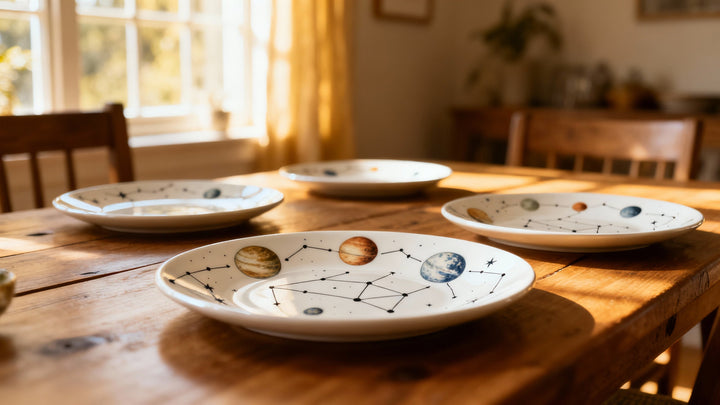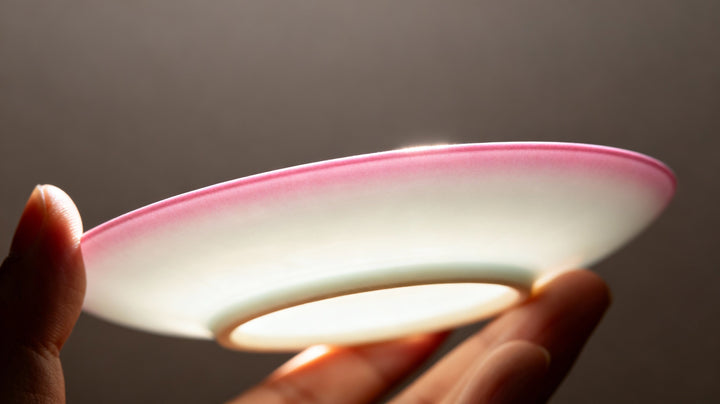


Liquid nitrogen cooking looks like table-side magic: clouds of mist rolling over a vivid ceramic bowl, sorbet frozen in seconds, herbs shattering like candy glass. But underneath that drama is a serious question: what is your beautiful tableware actually doing at those extremes, and how do you keep it from cracking, exploding, or leaching anything into your food?
Cryogenic ceramics are the quiet heroes here. They are not just pretty plates; they are engineered materials built to survive the kind of temperatures more at home in a physics lab than a dinner party. Bringing them into a colorful, joyful dining setup means blending aesthetics with materials science and safety.
In this guide, you will see how cryogenic ceramics work, why glass-ceramics like Pyroceram matter, how thermal expansion and thermal shock really behave, and how to choose and care for pieces that can play nicely with liquid nitrogen while still looking fabulous on the table.
Cryogenic Ceramics 101
From pottery to technical ceramics
Most of the ceramics on your table today fall into what materials scientists call traditional ceramics: porcelain, stoneware, and earthenware made from clays, silica, and fluxes fired in a kiln. As GlobalReach Ceramic notes, that world is huge, with an industry valued in the hundreds of billions of dollars and everyday products ranging from fine porcelain plates to refractory fire bricks.
Traditional ceramics rely on natural raw materials. Porcelain, for instance, is a dense, vitrified material based on kaolin and other clays, prized for fine dinnerware and sanitary ware. Stoneware is another everyday hero: dense, non-porous, and perfect for daily mugs and plates. Earthenware, fired lower, stays more porous and is popular for decorative pieces and rustic kitchenware.
On the other side stand advanced or technical ceramics, described in overviews from CoorsTek and others. These are engineered from purified compounds like alumina, silicon carbide, zirconia, and specialized glass-ceramics. Instead of prioritizing glaze color, they are tuned for properties such as low thermal expansion, controlled thermal conductivity, high electrical resistivity, and extreme temperature capability.
Cryogenic ceramics sit in that advanced family. They are ceramic materials specifically chosen or engineered to function at extremely low temperatures without losing strength or dimensional stability. Think of them as the high-performance sneakers of the ceramic world: built for impact, not just for looks.
What counts as cryogenic?
Thermtest’s discussion of Pyroceram and cryogenic testing leans on a classic definition from cryogenics: this branch of physics deals with extremely low temperatures, typically from about −150°C down toward −273°C. Converted to Fahrenheit, that is roughly −238°F down to around −459°F. In this regime, molecular motion is near its lowest energy state, and familiar properties change dramatically. Thermal conductivity can increase or decrease, ductility shifts, and electrical resistance often behaves very differently.
Ceramics are surprisingly comfortable in this world. Thermtest and related technical literature highlight that many technical ceramics combine good mechanical strength, low thermal expansion, low thermal conductivity, and high electrical resistivity. Compared with some metals, they can remain dimensionally stable, stay strong, and resist electrical conduction even at cryogenic temperatures. That is why ceramics appear in space technology, cryogenic bearings, and military systems.
Liquid nitrogen cooking lives squarely inside that cryogenic regime. Liquid nitrogen itself is a cryogenic fluid, and the surfaces it touches quickly plunge into that ultra-cold zone. That means your serving bowl in a nitrogen-forward dessert course is operating under conditions that materials scientists also consider when designing bearings for cryogenic machinery.
The Science That Makes Cryogenic Ceramics Work
Thermal expansion: the glaze–body “marriage” under stress
To understand why some ceramics shrug off liquid nitrogen and others fail spectacularly, start with thermal expansion. Tony Hansen’s article on Digitalfire about glaze fit describes a ceramic vessel as a two-part system: the clay body and the glaze. Each has its own thermal expansion behavior as it heats and cools.
Ceramics are strong in compression but weak in tension. The ideal “marriage” is one where the glaze and body have compatible thermal expansion curves, and the glaze ends up in slight compression on cooling. When that happens, the interface between body and glaze acts like a snug hug: strong, stable, and more resistant to the insults of repeated heating and cooling.
When the glaze has higher expansion than the body, it contracts more on cooling and ends up in tension. That can cause crazing, the fine crack network you sometimes see in old dishes. Hansen compares it to forcing a size 6 mug into a size 5 glaze. At the other extreme, if the glaze has much lower expansion than the body, it can shiver and flake off edges, like a glaze that simply cannot hold on. That is the size 6 glaze on a size 7 mug.
Under liquid nitrogen, these mismatches become brutal. The outer surface experiences a violent temperature drop. A glaze already close to tension can craze dramatically; a poorly bonded interface can debond. Digitalfire notes that quick surface cooling is enough to pull a glaze into tension and trigger cracking even under otherwise compatible conditions. With nitrogen, every pour is that quick surface cooling on steroids.
Microstructure, porosity, and thermal shock
Ceramic archaeologists studying Bronze Age cooking pots have been thinking about these problems for years, long before anyone was flash-freezing herbs at the table. Research compiled in journals on prehistoric ceramics shows how temper—non-plastic inclusions like quartz or phyllite—changes performance under repeated thermal shock.
In one controlled study of cooking ware ceramics, adding temper increased fracture toughness but decreased fracture strength. Temper particles deflected and arrested cracks, but the rigid inclusions also introduced local damaged zones that weakened the fabric. Firing temperature mattered as well; at higher temperatures, some temper combinations lost toughness. Thermal shock tests swung the vessels between furnace-hot and cool water over cycles, and the results showed a trade-off between strength, toughness, and thermal fatigue resistance.
The big lesson: thermal shock resistance is not just about one property; it is a negotiated peace between low thermal expansion, adequate strength, and a microstructure that can absorb and redirect cracks rather than shattering.
For liquid nitrogen cooking, you are creating your own version of that furnace-to-water test, except now it might be oven-to-nitrogen, or room-temperature plate-to-nitrogen. The ceramic’s microstructure, degree of vitrification, and interface quality between glaze and body all decide whether your dish simply sighs and frosts over or gives up with a loud pop.
Thermal conductivity at very low temperatures
Thermal conductivity tells you how quickly heat flows through a material. For cryogenic ceramics, this reveals not only how they behave structurally but also how they will shape the sensory experience of your dish.
Thermtest’s application note on Pyroceram describes measurements of its thermal conductivity at very low temperatures using their MP‑1 platform with a Transient Plane Source method. Two identical Pyroceram samples were cooled on a liquid nitrogen platform. The measurements showed that Pyroceram’s thermal conductivity increased as temperature dropped from near the freezing point of water down toward deeply cryogenic levels. In their data, conductivity rose from about 4.122 W/m·K around 32°F to roughly 5.731 W/m·K at temperatures in the neighborhood of −265°F, closely matching earlier measurements by Gaal and co-authors in Journal of Thermal Analysis and Calorimetry.
That behavior matters at the table. A moderate thermal conductivity means the ceramic can move cold into your food efficiently without behaving like a superconductor of chill that instantly overcools everything. At cryogenic temperatures, the slight rise in conductivity helps the piece stay uniform in temperature instead of having hot spots and cold spots, which reduces internal stresses and supports structural stability.
Technical ceramics more broadly span a wide thermal conductivity range. CoorsTek notes that some, like zirconia, sit near the very low end, while others, like aluminum nitride, conduct heat several times more effectively. Pyroceram, in contrast, plays in a middle zone: more conductive than highly insulating ceramics, but far less than metals. That makes it particularly interesting for liquid nitrogen applications where you want controlled cooling and robust shock resistance rather than brutal, uneven heat flow.
Electrical and chemical behavior for food service
Beyond temperature, cryogenic ceramics must behave nicely with both electricity and food. The Thermtest article points out that ceramics offer high electrical resistivity, which is one reason they are used as insulators in electronics and cryogenic devices. Around your tabletop, that translates to safety when you integrate LED-lit stands or sensors near cold vessels; the ceramic itself will not conduct stray currents.
From a chemical perspective, dinnerware makers such as HF Coors emphasize vitrified, non-porous ceramic bodies with food-safe glazes. Properly fired stoneware and porcelain resist liquid absorption, helping to prevent bacterial growth and odor retention. Modern lead-free glazes, tested for leaching of metals like lead and cadmium, mean you can plate acidic foods, bright citrus sauces, or tomato-based reductions without worrying that the glaze will contribute off-notes or contaminants.
For cryogenic use, you want that same combination of non-porous, vitrified structure and tested, food-safe glaze, but paired with the low thermal expansion and high-strength profile of technical ceramics. Glass-ceramics like Pyroceram deliver exactly this fusion of lab-grade performance and kitchen familiarity.

Pyroceram: A Glass-Ceramic Built for Extremes
Pyroceram is a particularly illuminating example of a cryogenic ceramic that has already bridged the gap from laboratory to kitchen. According to Thermtest, Pyroceram is a white, opaque, fine-grained glassy ceramic discovered by Corning in 1959. It began life as an innovative glass ceramic for cooking and baking glassware, which later became the iconic CorningWare bakeware brand.
Pyroceram’s key traits are high mechanical strength, low thermal expansion, and a wide operational temperature range from about −200°C up to around 1000°C. In Fahrenheit, that is approximately −328°F to about 1,832°F. That range spans everyday kitchen use, commercial ovens, and deep cryogenic systems. Corning and its successors have put Pyroceram into microwave cookware, hot plates and stirrers for laboratories, and even components in air-force weapons, capitalizing on that unmatched stability.
Thermtest’s measurements at cryogenic temperatures, carried out with the MP‑1 Measurement Platform using a symmetric Transient Plane Source configuration and liquid nitrogen cooling, confirm that Pyroceram behaves predictably even when chilled far below freezing. The values align closely with previous literature, giving engineers confidence that if a design works on paper, it will work in practice across repeated cycles.
To place Pyroceram in context for your table, it helps to compare it with more familiar ceramics.
Material category |
Key traits relevant to liquid nitrogen cooking |
Typical kitchen role |
Glass-ceramics like Pyroceram |
High strength, low thermal expansion, moderate thermal conductivity that increases at cryogenic temperatures, stable from roughly −328°F to about 1,832°F, used in cryogenic bearings and high-heat cookware |
Specialized bakeware, lab hot plates, components in cryogenic systems; a strong candidate for nitrogen-ready serving dishes when properly designed |
High-fired stoneware and porcelain |
Dense, vitrified, low porosity; strong for everyday thermal cycling but not engineered for deep cryogenic use; glaze–body fit quality depends on formulation and firing |
Everyday dinnerware, oven-to-table dishes, mugs; suitable for chilling and freezing when rated, but only select pieces will tolerate direct liquid nitrogen exposure |
Low-fired earthenware |
Fired at lower temperatures, more porous, often valued for bright decorative glazes rather than mechanical toughness or extreme thermal shock resistance |
Decorative bowls, plant pots, occasional-use dishes; generally poor candidates for direct liquid nitrogen contact due to porosity and lower strength |
This table shows why not every pretty plate is a nitrogen-ready star. Pyroceram is engineered from the atomic level up to handle extremes, whereas many stoneware and porcelain pieces are optimized for daily cooking and serving, and earthenware leans heavily into decoration.
Where Cryogenic Ceramics Belong in Liquid Nitrogen Cooking
Liquid nitrogen cooking is as much theater as technique, and ceramics shape that theater. While specific serving styles vary, the properties described above naturally lend cryogenic ceramics to certain roles.
They shine as stable, high-contrast stages for frozen textures. A white or softly tinted glass-ceramic coupe or shallow bowl lets you nest scoops of nitrogen-frozen ice cream, granités, and powdered herbs while mist curls over the rim. The moderate thermal conductivity keeps the food cold yet allows flavor and aroma to bloom as the surface gently warms toward the room.
Cryogenic ceramics are also well suited as bases and cradles for vessels that actually hold the liquid nitrogen. For example, a nitrogen-safe metal or lab-grade container might sit inside a cryogenic ceramic well or tray. The ceramic’s low thermal expansion and tailored microstructure help absorb the shock of extreme cold, while its low thermal conductivity protects the tabletop and keeps edges comfortable to touch.
Because these materials maintain mechanical integrity across a huge temperature span, they are appealing for dramatic transitions: an element baked at high oven temperatures, then moved to a cryogenic ceramic stand or shallow dish where liquid nitrogen is poured nearby to generate fog. Corning’s work on low-expansion ceramics for exhaust-gas treatment, where components endure extreme and fluctuating temperatures, mirrors this demand for reliable performance when conditions shift rapidly.
In contrast, low-fired, porous ceramics and pieces with obvious glaze crazing or cracks are poor candidates anywhere near liquid nitrogen. Research on cooking ware ceramics shows that microcracks and mismatched expansion create weak points that thermal shock happily exploits. Real-world anecdotes from household forums describe mugs breaking apart when hot water met extremely cold outdoor air, even without liquid nitrogen in the mix. A nitrogen bath would be harsher still.
Choosing Ceramics for a Nitrogen-Forward Kitchen
Firing temperature and porosity
When you curate ceramics for liquid nitrogen theatrics, start by thinking in terms of firing temperature and porosity. Jinhua’s overview of high- versus low-temperature firing explains that high-fired ceramics, used for fine porcelain and durable tableware, reach about 1100–1400°C in the kiln. In everyday terms, those high temperatures drive vitrification: the body becomes dense, strong, and much less porous.
Curvd’s comparison of high-fired and low-fired mugs underscores that high-fired stoneware and porcelain often achieve porosity levels around a tiny fraction of what low-fired earthenware allows. That low porosity means less water absorption, fewer hidden cracks, and more resilience under repeated heating and cooling. It also supports food safety by reducing places for bacteria and stains to hide.
For any role near liquid nitrogen, high-fired, vitrified bodies are your starting point. Look for pieces clearly marketed as oven-safe, freezer-safe, and made from high-fired stoneware, porcelain, or glass-ceramic. Makers like HF Coors highlight vitrified, lead-free, non-porous dinnerware that can move between freezer, oven, microwave, and dishwasher. While they may not specifically advertise liquid nitrogen, that broad thermal tolerance is encouraging.
Low-fired earthenware, on the other hand, remains more porous and mechanically weaker, even when beautifully glazed. The research on temper and performance in cooking ware ceramics shows how added inclusions and lower firing temperatures limit strength under extreme thermal cycling. Those charming terracotta-style pieces belong in cozy, warm presentations, not in the path of a cryogenic plume.
Glaze quality and fit
Even a strong, vitrified body can fail if its glaze is not well matched. Digitalfire’s deep dive into glaze fit reminds us that crazing and shivering signal mismatch between glaze and body expansions. Under everyday use, that might just be an aesthetic issue and a modest hygiene concern. Under liquid nitrogen, it becomes a structural hazard.
If you are scouting pieces for nitrogen use, examine them closely under good light. Avoid anything with visible fine crack networks in the glaze, chips on rims, or flaking edges. Those are already evidence that the glaze–body marriage is under stress. Research on thermal shock and fracture patterns in ceramics shows that existing flaws are where catastrophic failures begin.
In contrast, well-made high-fired stoneware or glass-ceramics, with smooth, continuous glazes and a proven track record in ovens and on cooktops, are much more promising. Corning’s low-expansion ceramics and Pyroceram-based cookware became famous precisely because they stay intact when many ordinary ceramics would crack.
Pros and cons of cryogenic ceramics in the kitchen
From the perspective of a colorful tabletop curator, cryogenic ceramics bring a compelling mix of benefits and trade-offs.
On the plus side, they deliver extraordinary temperature range, letting you mingle blazing oven heat and liquid nitrogen theatrics around the same dinnerware family. Their low thermal expansion and engineered microstructures help them ride out brutal temperature gradients. Their non-porous, glassy surfaces feel right at home with food, echoing what HF Coors, Saje Rose, and others emphasize about modern, lead-free ceramic dinnerware: durability, safety, and beauty rolled into one.
On the minus side, advanced cryogenic ceramics and specialized glass-ceramics can be expensive and less widely available than standard porcelain or stoneware. They remain brittle materials; abuse, sharp impacts, or hidden flaws can still lead to sudden breakage. Not every piece marketed as “ceramic” or “oven safe” is suitable for direct contact with liquid nitrogen, and manufacturers rarely test or certify for that use.
In practice, this means curating a small, dedicated set of pieces for any serious nitrogen work, leaning toward glass-ceramics and robust, high-fired stoneware from trusted sources, and keeping your heirloom earthenware and delicate, low-fired art mugs well clear of the fog show.
Practical Tips for Using Ceramics with Liquid Nitrogen
Liquid nitrogen is both beautiful and hazardous. It can cause severe cold burns, and rapid boiling can generate pressure if trapped. Any work with it should follow professional kitchen or laboratory protocols, with appropriate training, protective gear, and ventilation. Within that safety-first mindset, ceramics become one piece of a larger system.
For serving applications, think of the ceramic as a stage rather than a tank. A cryogenic-grade glass-ceramic or robust high-fired stoneware bowl can comfortably hold food that has been frozen or chilled with liquid nitrogen, or serve as a pedestal around which nitrogen is poured to create mist, without necessarily acting as the primary container for the liquid itself. This reduces the stress on the ceramic while still delivering the visual drama you want.
Avoid sudden, extreme transitions whenever possible. Research on ceramic bakeware and tableware consistently warns against thermal shock: for instance, Joyye’s guidance for ceramic bakeware recommends not moving dishes directly between extremes, like freezer to very hot oven. With liquid nitrogen, that caution should be amplified. Do not take a piece straight from a very hot oven and immediately douse or immerse it in liquid nitrogen. Allow an intermediate cooling step in air, so you are not asking the material to absorb the full temperature swing in one go.
Inspect cryogenic ceramics frequently. The same advice HF Coors gives for everyday dinnerware applies more urgently here: replace pieces with chips, cracks, or suspicious glaze defects. A small flaw that is harmless in regular use may be the starting point of a high-velocity shatter when subjected to liquid nitrogen.
Finally, treat cryogenic ceramics as specialty tools, not all-purpose workhorses. Just as a high-end technical knife is sharpened and stored differently than a casual picnic knife, your nitrogen-ready ceramics deserve a dedicated shelf and gentle handling. Stack them with soft separators, avoid dropping utensils into them, and communicate clearly to everyone in the kitchen about which pieces are reserved for extreme temperature duty.
FAQ
Are all ceramics safe to use with liquid nitrogen?
No. Many ceramics are not designed for cryogenic temperatures. High-fired, vitrified materials and glass-ceramics with low thermal expansion, like Pyroceram, have properties that support cryogenic use, but even these should be used thoughtfully. Low-fired, porous earthenware and pieces with crazed or damaged glazes are poor candidates and can fail under thermal shock.
Can I pour liquid nitrogen directly into a ceramic bowl?
That choice depends on the specific ceramic and its proven properties. Technical literature shows that some glass-ceramics and high-performance technical ceramics tolerate cryogenic temperatures extremely well. However, most consumer ceramics are not explicitly tested or rated for direct liquid nitrogen contact. It is safer to rely on vessels and practices recommended by cryogenic equipment suppliers and to use ceramics mainly as serving stages and secondary containers.
How do I clean ceramics after using them around liquid nitrogen?
Once the pieces have returned fully to room temperature, treat them much like high-end ceramic bakeware. Allow them to warm gradually; do not plunge a just-chilled piece into very hot water. Use mild dish soap, soft sponges, and avoid abrasive shocks such as banging pieces together. As with any dinnerware, retire items that develop chips, cracks, or flaking glazes.
When you bring cryogenic ceramics into a liquid nitrogen menu, you are not just chasing spectacle; you are curating a conversation between physics and pleasure. Glass-ceramics like Pyroceram, high-fired stoneware, and carefully chosen glazes give you a palette where rainbow sorbets, shimmering sauces, and drifting nitrogen fog can play together safely. With a little respect for thermal expansion curves and a lot of love for form and color, your tabletop can feel like a tiny, joyful materials-science lab, serving up both wonder and dinner.
References
- https://journals.openedition.org/pm/737
- https://www.researchgate.net/publication/306322483_The_influence_of_temper_on_performance_characteristics_of_cooking_ware_ceramics
- https://www.samaterials.com/low-temperature-thermal-ceramic-powder.html
- https://digitalfire.com/article/understanding+thermal+expansion+in+ceramic+glazes
- https://globalreachceramic.com/blog_details/types-and-applications-of-all-kinds-of-ceramic-materials
- https://jinhuaceramic.com/ceramic-firing-high-vs-low-temperature/
- https://www.joyye.com/info-detail/benefits-of-using-ceramic-bakeware
- https://www.soulceramics.com/pages/guide-to-kiln-temperature-ranges-for-pottery?srsltid=AfmBOoqyeXgO1KWhsQs6tMnWbKceiUOUck4wCyLOVoXp44-tDuawR9VV
- https://thermtest.com/application/thermal-conductivity-of-pyroceram-mp-1-tps
- https://www.woodfireceramic.com/how-to-make-food-safe-low-fired-clay/