





How the Hippie Movement Still Shapes Ceramic Dinnerware Aesthetics

If you have ever placed a salad in a cabbage-shaped bowl, poured soup into a heavy brown stoneware mug, or fallen in love with a plate that looks like it was glazed under a lava lamp, you have already felt the hippie movement humming under your dinner table. What began in the 1960s as a radical counterculture experiment in living differently is still alive every time we choose a handmade plate over a glossy mass-produced one, or a leafy green platter over something politely plain.
As a Colorful Tabletop Creative and Pragmatic Joy Curator, I see this play out constantly. Open a cupboard that mixes vintage stoneware, leafy lettuceware, and modern reactive-glaze plates, and you are looking at a little archive of hippie dreams: freedom, nature, community, and a fierce love of everyday beauty.
In this article, we will ground that intuition in evidence. Drawing on museum exhibitions, design history, contemporary market research, and studio practice, we will explore how the hippie movement’s ideas and aesthetics still shape ceramic dinnerware today, and how you can harness that energy on your own table in ways that feel joyful, practical, and very you.
From Counterculture to Kitchen: A Quick Primer
An exhibition at Cranbrook Art Museum called “Hippie Modernism: The Struggle for Utopia” framed the 1960s and early 1970s counterculture as a creative revolution that wanted to reintegrate art with everyday life. Curator Andrew Blauvelt and his team showed how artists, architects, and designers were not just hanging paintings on walls; they were building domes, experimenting with alternative living structures, and designing environments that tried to heal the alienation of advanced industrial society. The show traced this period roughly from Ken Kesey’s 1964 cross-country acid trip to the 1974 OPEC oil crisis, and it explicitly linked counterculture experiments to ecological awareness, organic and local food, and alternative energy.
When a movement’s goal is to fuse art and life, the dinner table becomes a front-row seat. Plates are not just plates anymore; they are utopian surfaces. Everyday objects, including ceramic vessels, become part of a larger attempt to live differently, to “drop out” of purely commercial logic and “tune in” to more conscious ways of eating, sharing, and caring for the planet.
It is worth noticing that this hippie appetite for vivid, unconventional ceramics had historical precedents. Nineteenth-century “majolica,” as summarized by research around the book “Majolica Mania: Transatlantic Pottery in England and the United States, 1850–1915,” was already a riot of bright glazes and molded motifs. Firms like Minton and Wedgwood produced lead-glazed earthenware with exuberant relief surfaces and saturated color, filling Victorian homes with teapots, jardinieres, and tableware that some critics considered “low” or “vulgar.” The Aesthetic Movement embraced motifs like sunflowers, and cultural figures such as Oscar Wilde became icons of this decadent decorative taste. In other words, long before the hippies, there was already a tradition of ceramic rebellion against polite restraint.
The hippie era did not invent colorful, unconventional ceramics, but it did reframe them. Under its influence, the brightly glazed plate or chunky stoneware mug stops being mere ornament and becomes a tool for living out values: anti-consumerism, ecological awareness, community, and a more relaxed, sensorial approach to daily rituals.
So, when we talk about “hippie-inspired dinnerware,” we are talking about a cluster of traits rather than a rigid style. Bold and sometimes trippy color, organic or unconventional shapes, a preference for handmade or artisanal work, nature imagery, and a strong ethical spine around sustainability and health all cluster together on these plates.

Color, Glaze, and the Psychedelic Surface
Lava glaze energy on the table
Mid-century “lava” and “volcanic” glazes, described in depth by Venice Clay Artists, are some of the clearest ceramic cousins of psychedelic posters and album covers. These glazes could involve multiple layers of different colors and textures, often piled so thickly that the surface looked like cooling lava or a volcanic explosion. Fiery reds, oranges, and blacks dominate many of these pieces, visually echoing the Atomic and Jet Age preoccupation with rockets, nuclear tests, and apocalyptic imagery.
Most lava-glaze objects were vases, lamp bases, and sculptural pieces, but the aesthetic language easily spills onto the dinner table. A heavy serving platter with a cratered glaze or a set of dessert plates with explosive, abstract patterns turns a meal into a visual event. The author at Venice Clay Artists even suggested that the physical weight and thickness of this pottery provided a kind of psychic ballast during an era when minds were exploring altered consciousness; the pot on the table literally grounded you.
In practice, setting a table with this kind of ceramic is pure theater. The pros are obvious: instant drama, strong personality, and plates that become conversation magnets. The cons are just as real. These pieces can be very heavy, tricky to stack, and visually overwhelming if you mix too many at once. If you want your soup to be the main trip, pair lava surfaces with simple textiles and plain glassware. Always check how a specific piece is meant to be used, because not every mid-century object was designed for microwaves or dishwashers, and preserving condition matters if you also care about collectible value.
From Victorian majolica to hippie color stories
The majolica tradition documented by Artistoric and the Majolica Mania research project shows another way surface color has long been used to push ceramic boundaries. Nineteenth-century majolica was richly molded and vividly glazed, featuring motifs like leaves, animals, and fruits, all rendered with high-gloss finishes and unapologetically saturated hues. Essays in Majolica Mania and related scholarship discuss how these pieces moved from dining tables to flowerpots and other domestic roles, and how they sometimes scandalized respectable taste while delighting everyday users.
By the time the hippies rolled in, those glossy Victorian leaves and fruits had already infiltrated the collective design memory. The hippie era recycled that love of nature and abundance but stripped away the stiff formalities. Instead of a regimented Victorian sideboard, you get a carefree outdoor meal with a single lush platter piled with produce and surrounded by mismatched stoneware bowls.
For a modern host, majolica-style plates and their descendants offer lush storytelling potential. The advantage is that they can set a narrative instantly: forest picnic, seaside market, cottage garden. The downside is practical. Very busy patterns can compete with the food visually, and many older majolica pieces are now collectible; guides on vintage ceramics, like those from Malacasa, remind us that chips, cracks, or crazing can sharply reduce monetary value, even if they barely show during dinner. That push and pull between use and preservation is part of the hippie-dinnerware tension: do you hold your treasures in a cabinet, or do you let them live and possibly acquire “honest wear” at the table?
Nordic blues, earthy browns, and calm psychedelia
The hippie movement was not only about neon swirls. Finnish tableware from the 1960s and 1970s, described in an article on Finnish design, shows a quieter but deeply compatible vision. Ulla Procopé’s Ruska series used oven-proof stoneware with a rustic brown glaze. It was practical, durable, and visually warm, a kind of ceramic equivalent to a worn leather jacket. Her Valencia series, by contrast, leaned into rich cobalt blue decoration, proving that intense color could coexist with functional modern shapes.
Kaarina Aho’s Palapeli service went one step further into what Finns called “functional art”: stackable components where plates serve as lids for bowls. Designer Göran Bäck focused on tableware and kitchenware for larger households, emphasizing usability, while Kaj Franck argued for “anonymous” design that put utility and universality ahead of designer celebrity. All of this aligns beautifully with a hippie sensibility that favors communal meals, smart multi-use objects, and a skepticism toward pure status signaling.
If you build a table around these Nordic precedents, you get a kind of calm psychedelia. Deep blue plates next to earthy brown bowls can feel as grounded as a forest and as expansive as a night sky. The practical benefits are significant: oven-proof stoneware that easily moves from kitchen to table, stackable designs that make storage in a small apartment feasible, and a visual language that looks intentional rather than chaotic, even when pieces come from different decades.

Nature Worship, Kitsch, and the Garden Plate
Lettuceware, cabbageware, and vegetable utopias
Nothing screams joyful hippie garden party like a table full of leafy plates. Country Living’s deep dive into lettuceware and cabbageware traces these leafy ceramics across centuries, but two modern lines stand out. In early twentieth-century Connecticut, Wannopee Pottery produced a trademarked “Lettuce Leaf” majolica-style line that included about twenty-five forms before production ended in 1903, making surviving pieces relatively rare. In the early 1960s in Jupiter, Florida, self-taught potter Doris “Dodie” Thayer created hand-made Lettuce Ware that became famous in Palm Beach circles; each piece was crafted individually, and she never scaled up, which kept supply low and desirability high.
These verdant dishes have serious glamour credentials. Wannopee’s Lettuce Leaf was collected by Jacqueline Kennedy Onassis, whose twenty-piece set sold for thousands of dollars in the 1990s. Dodie Thayer’s pieces have commanded five-figure sums at auction, and designers have continued her look through collaborations that keep the leafy silhouette alive.
Fast forward to now, and lettuceware and cabbageware are trending well beyond old-school high society. Both Country Living and Tasting Table note how social media platforms have helped push leafy tableware into the mainstream, aligning it with cottagecore fantasies, green interiors, and produce-themed aesthetics. Affordable versions appear in stoneware, porcelain, and even melamine and paper, while serious collectors chase vintage examples.
From a hippie-aesthetics standpoint, these pieces distill several values at once. They visually celebrate vegetables and garden abundance, they bring a sense of humor to the table, and they blur boundaries between serving ware and centerpiece. The practical advantages include instant seasonal mood for spring or summer entertaining and a strong focal point that allows the rest of the table to be simple and inexpensive. The caveats are straightforward. Some leafy pieces are more fragile or require hand washing; others are robust enough for dishwashers and microwaves, so checking care instructions matters. And a full set of nothing but cabbage leaves can feel more costume than lifestyle. A common strategy, echoed in lifestyle advice, is to start with a single statement piece and slowly build a small family of leafy companions.
Upcycled dreams and kitsch alchemy
Swedish artist Karin Karinson, in an interview with Ceramics Now, offers another lens on hippie-adjacent ceramics. Coming from a background in sociology, she collects mass-produced decorative “readymades” from flea markets, streets, and recycling centers—objects with low monetary value but high emotional charge—and fuses them with clay, glass, dust, and other materials to create amorphous sculptures. She is drawn to pink, glittery, low-status decor, seeing these objects not as trash but as carriers of dreams, longings, and desires.
Karin’s process is physically intense. She packs hard objects into molds, fires them so the materials melt and fuse, breaks the molds open, and repeats, building layers of meaning with each cycle. Conceptually, she treats consumption itself as recontextualization. People constantly adapt objects by placing them in new domestic settings, and environmental psychology suggests that we fold our home and its objects into our sense of self.
This is pure hippie energy: honoring the emotional lives of “kitsch” things, questioning the hierarchy between art and decor, and mining flea markets for raw material instead of always buying new. On the dinner table, the equivalent is the mix of inherited floral plates, thrifted stoneware bowls, and perhaps an art-student mug with a slightly off-kilter handle. The strengths of this approach are storytelling and sustainability. Every piece has a past, and the table becomes a collage of lives. The challenges are aesthetic coherence and cultural sensitivity. As catering experts have noted when discussing global plating, there is a difference between playful fusion and careless mixing that flattens cultural meaning. A hippie-inspired table that respects this nuance chooses when to clash and when to quietly harmonize.

Values Beneath the Glaze: Ecology, Health, and Anti-Consumerism
From organic food to sustainable plates
The Cranbrook exhibition explicitly positioned sixties counterculture as a precursor to today’s organic and local food movements, climate activism, and alternative energy. That ecological concern has migrated from fields and protests directly into the materials of our plates.
Market research summarized by Joyye shows that the global ceramic dinnerware market is projected to grow from about $12.4 billion in 2024 to $22.2 billion by 2034, at a healthy pace of around 7 percent annually, with North America holding roughly a third of the market. Within that growth, sustainability is a major driver. Another report cited in the same research notes that sustainable ceramic tableware is expected to rise from about $102 billion in 2024 to $145.5 billion by 2030. Consumers, especially younger ones, increasingly ask how and where pieces are made, what materials are used, and whether glazes are non-toxic.
Vintage dinnerware plays a role here too. Research on rising prices for vintage ceramics points out that buyers value durability and view older porcelain and stoneware as eco-friendly decor that keeps solid material out of landfills. Interior trends toward “hybrid” spaces, where antique porcelain mingles with modern, sustainable furniture, bring new generations into the ceramic conversation.
Manufacturers have responded. HF Coors, for example, positions its American-made dinnerware as vitrified, fully lead-free, non-porous, and compatible with ovens, microwaves, dishwashers, and freezers, backed by guarantees against chipping under normal use. That is hippie practicality reimagined for a twenty-first-century kitchen: color, culture, and story attached to objects that can handle daily life.
Ditching plastic and choosing safer materials
Concerns about material safety are not theoretical. Actor and writer Mayim Bialik has publicly described how she stopped using plastic dishware years ago because she and other “hippie types” were worried about chemicals leaching from plastic, especially when heating food for children. She leaned on thrift-store finds and later moved to stainless steel dishware, highlighting its durability and the reassurance of avoiding plastic altogether. She recommends stainless steel products made by a small Indiana company, praising their dishwasher-safe convenience.
Ceramics and metals together form a powerful anti-plastic alliance. As Mysacraft explains in its overview of ceramic tableware, well-made ceramics offer scratch and chip resistance, non-porous surfaces, and good thermal properties that keep hot dishes warm and cold dishes cool longer. When manufacturers test glazes for harmful chemicals and clearly label their products, they help hosts choose plates that align with both health and aesthetics.
For a hippie-spirited table in 2024, this might mean pairing stainless steel lunch plates for outdoor kids’ meals with stoneware or porcelain for indoor dinners, and actively seeking out brands that emphasize lead-free glazes and long-term durability. Choosing fewer, better pieces is both a joy and a quiet act of resistance against throwaway culture.
Collecting with conscience
The economics of vintage ceramics can feel dizzying. Malacasa’s analysis of the vintage dinnerware market points out that a global collectibles market projected to reach about $422.56 billion by 2030 has room for everything from modest $40 sets to eye-watering auction records. A widely reported Goodwill story involved an eighteenth-century Chinese armorial export plate bought for $4.99 and later valued around $5,000. At the highest end, rare vases and bowls have sold for millions, while coveted dinner services like Royal Copenhagen’s Flora Danica can command thousands of dollars per place setting.
For most of us, the more relevant message is about condition and intent. The same research emphasizes that small chips or glaze crazing can reduce resale value by half or more, while serious damage can slash it to a fraction. That sounds scary, but it also opens a sweet spot. If your goal is not investment but everyday joy, a slightly worn but structurally sound set can be an affordable and sustainable choice. Accepting signs of age can be a deeply hippie move: honoring the story in your plate rather than chasing flawless perfection.
The conscious collector asks both practical and emotional questions. Is this piece safe and functional for how I want to use it? Does its history matter to me? Are there cultural or historical associations I should learn about before I treat it as casual decor? That combination of curiosity and responsibility is exactly the kind of mindset the original hippie movement hoped to nurture.

How Hippie-Inspired Ceramics Are Showing Up Now
Mix-and-match, reactive glazes, and the stoneware revival
Joyye’s research on current consumer preferences reads like a checklist of hippie-friendly dinnerware trends. People are moving away from large, perfectly matching sets toward eclectic tablescapes built from smaller sets and open-stock pieces. Reactive glazes, organic shapes, and visible texture are in high demand. Stoneware, with its heavier, more grounded feel, is gaining share thanks to its durability and its ability to carry those textured, artisanal finishes.
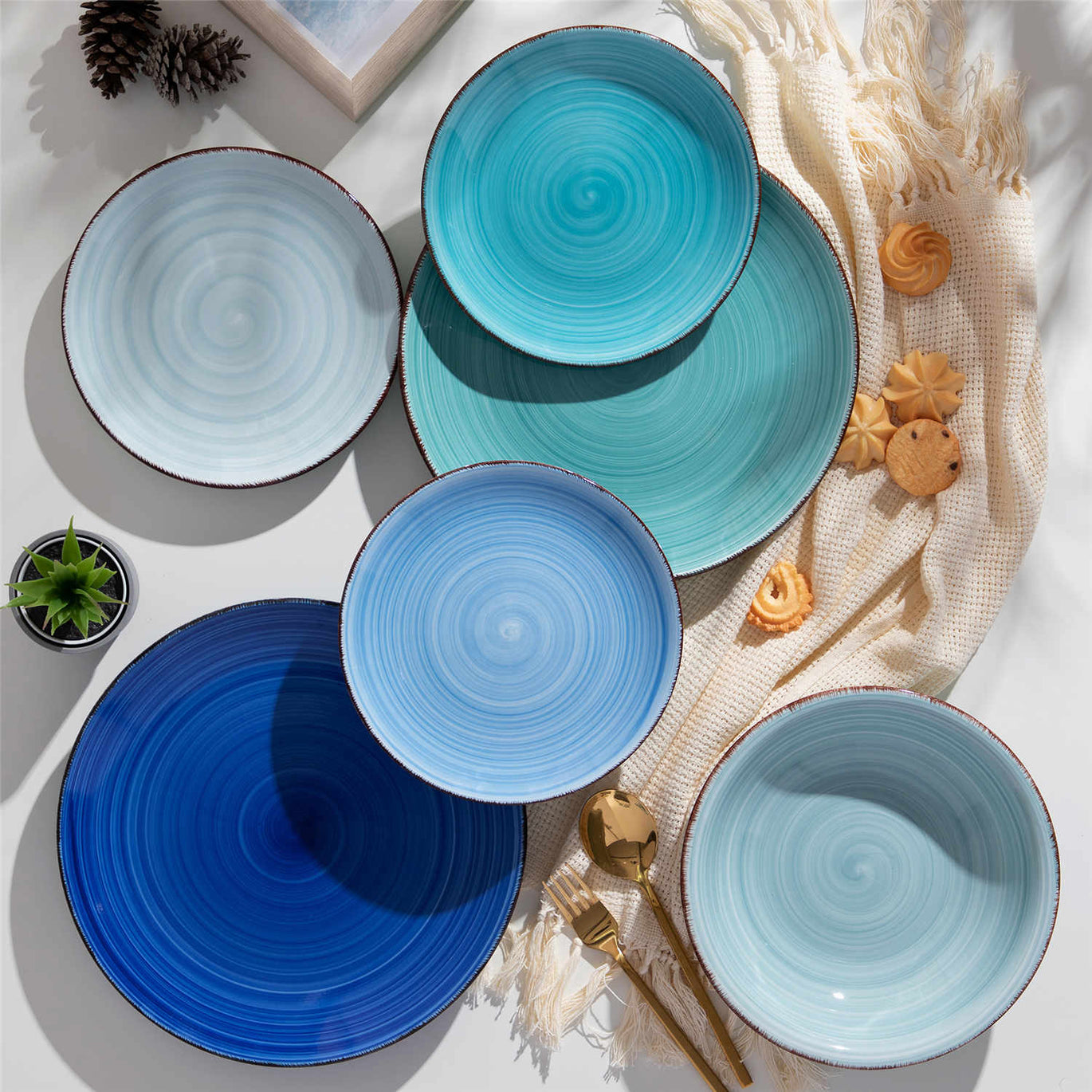
Color is equally important. Buyers still love classic white, but vibrant blues, rich greens, sunny yellows, ocean tones, and warm earth colors like terracotta and rust are rising, with regional preferences shaping palettes in different markets. These palettes echo many hippie associations: ocean blues and sky tones, forest greens, sunlit yellows, and soil browns. When reactive glazes pool and break around the rim of a bowl, they evoke natural phenomena—tidelines, moss on stone, or the ripples of lava—that resonate with the “back to nature” dream.
The practical upside of this trend is that it invites experimentation. You can start with a basic stoneware set and add a few reactive-glaze salad plates or serving bowls as your budget allows. Stoneware’s chip resistance and heat retention make it family-friendly and a good candidate for oven-to-table service. The potential drawback is storage and visual noise. Too many different glazes and shapes can look chaotic. The key is editing: intentionally repeating a color or texture so the eye finds rhythm rather than randomness.
Custom shapes, stackability, and everyday rituals
Royalware’s article on custom-shape ceramic plates shows another line of continuity from hippie ideals to modern practice. They categorize their designs into classic elegance, rustic charm, and contemporary flair, and emphasize that unusual shapes can maximize table space, support portion control, and act as conversation starters. Plates become ergonomic objects that are easier to hold and carry, not just flat circles.
Stackable, multi-role designs like Kaarina Aho’s Palapeli service extend this ethos. When a plate can double as a lid or a tray, it supports compact living and casual serving rituals—very much in tune with floor cushions, small apartments, and the relaxed hosting style that hippies popularized. Mysacraft reminds us that plate depth, rim style, and surface area all influence portioning and how easy a dish is to eat; those are not only technical considerations but also cultural. Articles on global catering highlight how Indian thalis, Japanese lacquerware, Mexican family-style platters, and Ethiopian injera-based spreads each encode specific ideas about sharing, sequencing, and symbolism.
The hippie table borrows freely from these global forms, but the best versions do so with respect rather than indiscriminate fusion. Using a banana-leaf pattern plate to serve an Indian-inspired vegetarian feast, or a simple Japanese-style tray for a carefully arranged plant-based breakfast, acknowledges the cultural contexts described in studies of global food presentation, rather than using motifs as mere decoration.
A snapshot of hippie values in ceramic form
A simple way to see how these threads come together is to look at the relationship between values, ceramic expressions, and practical trade-offs.
Hippie-inspired value |
Ceramic expression today |
Practical upside |
Potential drawback |
Ecological mindfulness |
Durable stoneware and vitrified porcelain from brands that emphasize longevity and non-toxic glazes; reuse of vintage sets |
Fewer replacements, lower long-term waste, strong everyday performance |
Pieces can be heavy, and mindful sourcing takes time and research |
Nature worship and play |
Lettuceware and cabbageware, floral or fruit motifs, earthy reactive glazes, rustic brown stoneware like Ruska |
Immediate mood lift, strong seasonal storytelling, great for gatherings |
Highly themed pieces may be harder to repurpose for every occasion |
Anti-consumer, pro-individuality |
Mix-and-match thrifted plates, custom shapes, flea-market finds fused into new uses |
Deeply personal tablescapes, budget-friendly entry into ceramics, rich narratives |
Visual cohesion can be tricky; some finds may not be food-safe for intensive use |
Each row describes a choice many hosts are already making, whether they use the word “hippie” or not.

Design Tips for a Hippie-Modern Table That Still Works on a Wednesday
Start with one hero piece instead of trying to transform your entire cupboard overnight. Tasting Table’s look at vintage kitchen trends notes how a single cabbageware bowl or a vintage Pyrex casserole dish can carry nostalgia and charm. On a hippie-inspired table, that hero piece might be a leafy salad bowl, a lava-glaze platter, or a deep cobalt serving dish reminiscent of Valencia. Build the rest of the setting around it with simpler plates and clear glasses for weekday realism.
Choose a practical base you can lean on daily. Research from Joyye and Mysacraft makes a strong case for stoneware and porcelain as everyday heroes. Stoneware offers weight, heat retention, and a warm, handmade feel; porcelain brings a smoother, more refined surface that sets off colorful food beautifully. HF Coors’ focus on vitrified, lead-free dinnerware shows how a simple white or softly tinted set can handle the heavy lifting, while hipper accent pieces rotate in and out seasonally.
Play with color thoughtfully instead of throwing every hue at the table. Color psychology in food presentation studies emphasizes how white plates make food pop, while darker tones can create a more sophisticated, moody backdrop. Combine that insight with Joyye’s trending palettes by picking two or three core colors—maybe forest green, cobalt blue, and a warm neutral—and repeating them across plates, napkins, and flowers. That way, a wildly glazed dessert plate still feels anchored in a larger harmony.
Honor function and cultural meaning as much as aesthetics. Writing on global catering stresses that plate shape, portioning, and layout often carry deep symbolism, from the clockwise placement of dishes on an Indian thali to the spareness of Japanese table settings. When you borrow forms or motifs, take a minute to learn what they mean. Serving a Mexican-inspired feast on Talavera-style ceramics, for instance, can be a way to appreciate a hybrid heritage of indigenous and Spanish influences, as HF Coors notes when discussing that tradition. The hippie impulse is not just to collect pretty things, but to use them with empathy and curiosity.
Care for your pieces with the same mindfulness you pour into choosing them. Vintage market research makes it clear that condition matters a lot for monetary value, but it also matters for safety and longevity. Inspect thrifted and inherited pieces for structural cracks, rough edges, or significant glaze damage and reserve questionable items for dry foods or purely decorative roles. Read the maker’s care notes where available. Royalware and HF Coors highlight dishwashers, microwaves, and temperature ranges; leafy cabbageware lines or hand-decorated majolica may require gentler treatment. The more you know about each plate, the easier it is to keep a joyful, hippie-flavored table going without accidental heartbreak.
FAQ: Hippie Movement, Ceramics, and Your Dinner Table
Q: What does “hippie-inspired dinnerware” actually mean?
In practical terms, it is not a fixed design style but a bundle of visual cues and values that emerged around the 1960s and 1970s. Museum exhibitions like Cranbrook’s “Hippie Modernism” show that hippie culture tried to blend art with daily life and promoted ecological awareness, alternative social structures, and more open, participatory experiences. On plates, that translates into bold or earthy color, organic or unconventional shapes, a preference for handmade or small-batch pieces, and often an openness to global influences such as styles inspired by Japanese, Mexican, or Indian ceramics. The key is not whether a plate was literally made in 1969, but whether it helps you create a more conscious, joyful, and communal way of eating.
Q: Are bright retro glazes and vintage pieces safe to eat from?
Modern manufacturers such as HF Coors highlight fully lead-free glazes and vitrified, non-porous bodies that are designed for ovens, microwaves, dishwashers, and freezers, and they back their products with guarantees against chips under normal use. Mysacraft likewise emphasizes that quality ceramic tableware can be durable, hygienic, and safe when appropriately tested and cared for. Vintage pieces are more varied. Market briefings from Malacasa stress condition as a key factor, and heavy damage or glaze deterioration may make some older items better suited for display than for daily stews and sauces. When in doubt, reserve especially old or delicate pieces for dry foods or special occasions, lean on newer certified-safe ceramics and stainless steel for daily hot meals, and follow any care recommendations you can find for specific makers.
Q: How can I start a hippie-style ceramic collection on a budget?
The vintage market is full of stories like the Goodwill plate that turned out to be valuable, but you do not need a lottery ticket to build a hippie-modern cupboard. Research points out that slightly worn but structurally sound pieces often hit a sweet spot between price and character. Thrift stores, yard sales, and online marketplaces can yield sturdy stoneware, leafy dishes, and retro casserole dishes at accessible prices, especially if you are willing to embrace a bit of patina. At the same time, brands tracking current consumer preferences deliberately sell smaller, mix-and-match sets and open-stock pieces, allowing you to assemble an eclectic, personal collection gradually. Start with one or two special pieces that make you smile, add a solid everyday base, and let your table evolve as you discover what feels honest and joyful in your own home.
In the end, the hippie movement’s influence on ceramic dinnerware is less about copying a retro pattern and more about treating your table as a tiny utopia: colorful, caring, imperfect, and alive. Every plate you choose is a chance to tune in to beauty, turn on your senses, and gently drop out of disposable habits—one joyful meal at a time.

References
- https://digitalcommons.trinity.edu/cgi/viewcontent.cgi?article=1291&context=educ_understandings
- https://www.amoca.org/category/blogs/
- https://www.ceramicsnow.org/interviews/new-aesthethics-influenced-by-the-culture-of-consumption-interview-with-karin-karinson/
- https://cranbrookartmuseum.org/2016/04/27/hippie-modernism-the-struggle-for-utopia-opens-at-cranbrook-art-museum-on-june-18/
- https://mysacraft.com/index.php?route=blog/article&article_id=20
- https://www.pamono.com/triangular-ceramic-dish-by-gunnar-nylund-from-nymolle-sweden-1960s?srsltid=AfmBOopkln3D0EDd7Ihm0BmjyMEZtZLaqZMCkyRTKX08YwdmOaWOTdLF
- https://www.thesprucecrafts.com/mid-century-dishware-guide-4126678
- https://artistoric.com/majolica/?srsltid=AfmBOoqbxAYUyMFbHPphx0lC-y5gvZKzxy6nTvBoib-eUbAbG1xpPnlt
- https://bullseyesalooncatering.com/how-cultural-influences-shape-food-presentation-in-global-catering/
- https://www.smh.com.au/lifestyle/get-groovy-with-60s-ceramics-20061128-gdovtk.html
Potrebbe piacerti anche
Stern Set di stoviglie da 16 pezzi
- Da $75.00
$100.00- Da $75.00
- Prezzo unitario
- per
-
Blue
-
Green
-
Red
-
Grey
Bonita Set di stoviglie da 18 pezzi
- Da $63.00
$78.00- Da $63.00
- Prezzo unitario
- per
-
Blue
-
Multicolor
Simi Set di stoviglie 24 pezzi
- $100.00
$135.00- $100.00
- Prezzo unitario
- per
Set di stoviglie stellate da 16 pezzi
- $77.00
$90.00- $77.00
- Prezzo unitario
- per
-
Blue
-
Green
-
Red
-
Gradient Green