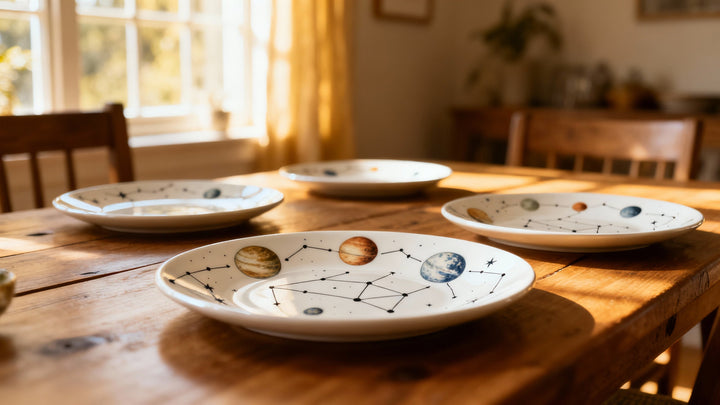


Japanese meals often arrive as a constellation of little vessels—sauces tucked into saucers, pickles glistening on thumbnail plates, vegetables nestled in palm-size bowls—each element set apart yet harmonized. To many diners in the United States, this looks charming; to Japanese cooks and hosts, it feels essential. Small dishes don’t just tidy the table. They guide what you notice first, how you pace each bite, and even how full you feel. Here, through the lens of tableware craft and plating practice, we explore why small dishes matter, what they do to your senses and behavior, and how to bring their practical magic home.
The Cultural Logic of Many Small Dishes
Japanese dining traditions value balance and clarity. Washoku—the culinary culture recognized by UNESCO as Intangible Cultural Heritage—is built on the idea that every component has a deliberate place and a clear purpose. A classic home template, ichiju-sansai, centers on one soup and three sides arranged around rice, not piled on a single plate. Publishers such as Bokksu describe this as harmony through separation: flavor families stand on their own, temperatures stay distinct, and textures don’t blur.
That separation depends on vessels. Musubi Kiln emphasizes that plates and bowls in Japan serve as functional art, chosen to bring out the best in the food’s color and texture. Japan Guide adds a behavioral complement: it’s good manners to lift small bowls toward the mouth, which shortens the path from aroma to palate and keeps sauces from dripping. When each component gets its own space, the table becomes a calm map for exploration rather than a jumble to wade through.

What Counts as a “Small Dish”?
In practice, “small dish” covers a family of vessels from mame-zara (tiny “bean plates” for condiments) to personal side plates. UTSUWABI explains that traditional sizes often follow sun, a historic unit; one sun is about 1.2 in. That makes 3-sun plates roughly 3.6 in across and 4-sun plates about 4.8 in. Musubi Kiln’s size guidance maps neatly to modern dining at home: sauce plates run up to about 5.1 in, side plates typically span about 5.1–8.2 in, and full dinner plates run about 8.3–12.2 in. The idea is practical—the smaller the dish, the more it focuses a single flavor, topping, or garnish without letting it wander into everything else.
Small Dish Quick Reference
Category |
Approx diameter (in) |
Common Japanese term(s) |
Typical use |
Sauce/condiment |
3.6–5.1 |
Mame-zara; shoyu-zara |
Soy sauce, pickles, condiments, nuts |
Small side plate |
4.8–6.0 |
4–5 sun plates |
Tea sweets, kinpira, small fruit portions |
Personal side plate |
6.0–8.2 |
Side plate |
Salads, shared sides, bread or cake |
Small bowl/cup |
varies |
Soba choko |
Dipping sauces or tiny side dishes |
Soup bowl |
palm-held |
Wan (often lidded) |
Miso and clear soups, aroma release |
These categories are not strict rules; they’re a toolkit. When you’re serving noodle bowls, a soba choko might hold dipping sauce. When you’re plating a composed salad, a 6–7 in side plate becomes its own stage.

How Small Dishes Shape What You Feel and Do
The power of small dishes lies in how they nudge perception without shouting. Culinary educators at Escoffier note that presentation sets the tone for taste long before the first bite; the brain reads signals from color, shape, height, and spacing. Flavorfulz’s plating guidance translates this into practice: leave negative space so the eye rests, compose with intention so elements don’t compete, and use color strategically so contrast feels lively but not chaotic. On a table dotted with small plates, those principles become easier to execute.
Color is especially influential. The Culinary Pro observes that serviceware colors can tilt appetite and even taste impression. White plates act like a neutral canvas and can make foods read sweeter; black plates boost contrast for bright foods and emphasize savory notes; red plates have been linked to reduced intake. In other words, your saucer’s hue can subtly shift how much you want to eat and what you think you’re tasting.
Dish style matters too. Research summarized by ScienceDirect shows that the dish itself can shift implicit associations about the very same food—even changing whether eaters perceive it as more “feminine” or “masculine.” While that line of work focuses on young Japanese adults and doesn’t give effect sizes here, it underscores a practical truth for home hosts and chefs: visual context carries meaning, and diners read that meaning fast.
Behavioral cues fold in as well. Japan Guide explains that with small bowls it’s polite to lift the vessel to your mouth, which shortens the distance to aroma and makes morsels feel intimate and warm. Multiple tiny dishes naturally set a slower rhythm, invite alternating bites for contrast, and signal when a flavor is complete. At izakaya or a casual shokudo, that might mean several petite plates arrive in waves. You start light and warm, then move toward richer and bolder, a flow echoed in formal kaiseki sequences.
The Mindset: Harmony, Seasonality, and Flow
Small dishes are not about being precious; they’re about highlighting what’s seasonal and what’s special. JETRO’s overview of home-cooking in Japan emphasizes building meals around in-season fish and vegetables, then varying taste and texture with sides. Think of crisp blanched greens topped with bonito flakes next to a bright vinegar-dressed cucumber and octopus salad. Each tastes clearer when it’s framed by its own vessel. A table that honors spring with pale greens and soft textures, or winter with earthen tones and hot broths in lidded bowls, keeps the season in every glance.
The table also has its own choreography. Bokksu describes a placement logic that helps the eater feel oriented: rice to the left, soup to the right, and three sides set behind, with chopsticks up front and pointing left. This arrangement isn’t red tape; it’s hospitality, a way of saying “I’ve paved a path for you.” If you’re hosting a weeknight dinner in a small apartment, you can keep that spirit by consolidating some pieces onto a large plate or tray and still giving sauces and crisp sides their own little spots.

Benefits and Trade-Offs of Going Small
The upside of small dishes is immediate. They preserve textures, keep hot things hot and cold things cool, and let color and garnish pop without crowding. They promote mindful eating by carving the meal into clear chapters. They simplify clean flavors: soy sauce stays in its lane, and fried items stay crisp because they’re not soaking next to braises.
There are trade-offs. Small dishes mean more washing and more storage. They can look busy if you mix too many clashing patterns. They take a little practice to plate so they read as intentional rather than fussy. Yet, as Musubi Kiln notes, thoughtful choice of shape, material, and size tends to make even varied pieces fall into a harmonious whole. With experience, you learn which little plates become workhorses and which are best as seasonal accents.
Getting Started at Home: Practical Setups That Work
In my own studio test kitchen and in client homes, I build small-dish sets in layers. A reliable starter arrangement is a 7 in main plate paired with a 5 in side plate; UTSUWABI recommends this pairing, and it works beautifully for US kitchens. Add a couple of mame-zara in the 3.6–4.8 in range for soy sauce, pickles, or spicy condiments, and you already have a balanced canvas for an ichiju-sansai-style meal.
When you’re cooking a noodle night, a menbachi-style bowl handles ramen or udon, while a soba choko stands by for dipping sauce or a small topper. For rice-centered meals, invest in a well-crafted chawan for everyday use; Japanese Tableware Wholesale recommends matching bowl types to what you cook most and thinking about how color and texture harmonize across the table. A dark, matte side plate makes sashimi glisten; a white saucer brightens a soy-scallion dressing.
If you prefer to minimize dish washing, steal a tip from Bokksu and consolidate onto a single large plate or an obon-style tray. Set one main portion and surround it with two or three small dishes nestled onto the same surface. You preserve separation and negative space while cutting the number of items to wash.

How Small Dishes Support Better Plating
Flavorfulz lays out a practical playbook that pairs naturally with small vessels. Composing with intention becomes easier when each dish carries a single theme. Leaving negative space feels designed, not skimpy, when a sauce gets its own saucer. Varying height and texture is simple when you lift a crisp item on a tiny pedestal plate or use a lidded soup bowl to stage an aromatic reveal. Yuzu Omakase’s plating practice showcases how symmetry, asymmetry, and minimalism tell a story—small dishes are the grammar that makes that story readable.
Color choices intensify the effect. Following The Culinary Pro’s guidance, choose white for desserts you want to read as brighter and sweeter, black or dark stoneware for savory depth and contrast, and red when you want to gently nudge portions lighter. Keep patterns subtle so they frame rather than fight the food. When in doubt, let one patterned piece be the accent and keep the rest quiet.

Etiquette and Flow: Using the Dishes Well
Etiquette isn’t decoration—it shapes ease at the table. Japan Guide emphasizes starting meals together with a simple “itadakimasu” and finishing with “gochisousama deshita.” It’s considerate to return lidded bowls to their pre-meal state and set chopsticks back on a rest. When eating from small bowls, lift them close to your mouth instead of using your hand as a barrier to catch drips; small dishes are designed for that gesture. At casual spots, several little plates may arrive in staggered order; it’s fine to begin when yours arrives, and in izakaya settings, a first drink before ordering food feels normal. If you’re watching portions, some venues even offer smaller rice servings, a practice community posts note with terms like komori or half rice.
All of this amplifies the psychological effect of small dishes. The rituals slow the pace just enough to make each bite distinct. The vessel in your hand focuses attention on temperature and aroma. The little saucer that keeps soy sauce from flowing everywhere sends a message of care and restraint.
Buying Guide: Build a Versatile Small-Dish Set
Start with a purpose, then choose sizes and materials. If you eat rice daily, a comfortable chawan earns its keep fast; Japanese Tableware Wholesale notes that a well-crafted rice bowl becomes a daily anchor. If noodles are common, add deep bowls suited to ramen or udon and keep a couple of soba choko for dipping sauces or petite sides. For general small-dish service, combine two mame-zara in the 3.6–4.8 in range with two side plates around 6–7 in. Musubi Kiln’s ranges help you target functional sizes: sauce plates up to about 5.1 in for condiments, side plates in the roughly 5–8 in range for salads and shared sides, and dinner plates from about 8.3–12.2 in for mains.
Match materials to how you serve. Lidded lacquer soup bowls retain heat and release aroma when lifted, while porcelain or stoneware side plates provide sturdy contrast for grilled or pickled items. Keep patterns controlled and let seasonal colors guide accents. A deep indigo nods to the sea and makes white fish shimmer; warm earthy glazes suit autumn root vegetables.
Care and Maintenance: Keep Small Dishes Looking Their Best
Hand-wash lacquerware and hand-painted ceramics and skip abrasive cleaners; Japanese Tableware Wholesale cautions against microwaving pieces with metal or metallic accents. Treat lids gently and replace them after serving so bowls hold warmth and stay neat. Wipe sauce plates promptly to avoid staining, and store tiny plates vertically in a slim rack so you can see, reach, and rotate them. With regular use, you’ll learn which pieces prefer gentle hand-drying and which are sturdy enough for everyday hustle.

When Small Dishes Are Not Ideal
There are times to go bigger. If you’re serving saucy foods that spill past boundaries, consolidating components onto a slightly larger plate with defined sections can reduce mess while maintaining separation. If the table is crowded with patterns, pare back to neutrals and let one or two small dishes do the talking. And if the kitchen sink is already busy, choose a tray-based presentation where a few little plates ride on one larger surface. Bokksu’s consolidation tip is a pragmatic middle path.
A Seasonal Meal, Framed by Tiny Plates
Seasonality is the heartbeat of Japanese cooking. JETRO points to winter’s tonjiru—a pork miso soup brimming with root vegetables—and home favorites like chicken teriyaki that anchor the meal. Imagine serving a winter bowl of tonjiru in a warm-toned lidded bowl, a small side of blanched spinach topped with bonito flakes in a 4.8 in plate, and a bright cucumber-and-octopus salad dressed with vinegar in a 5–6 in side plate. A mame-zara holds shichimi or yuzu kosho. Each dish has a home, each color a reason, and the table feels complete without feeling crowded.

Takeaway
Small dishes in Japanese cuisine are not a quirk; they are a design system that shapes seeing, smelling, tasting, and pacing. They harness color and contrast to make food look more appetizing, they preserve texture and temperature by giving each flavor its own frame, and they gently steer behavior toward mindfulness and balance. Sources like Musubi Kiln, Bokksu, Japan Guide, Flavorfulz, Escoffier, and The Culinary Pro converge on the same insight: when vessels and food harmonize, the meal becomes more than the sum of its parts.
FAQ
Are small dishes required to serve a “proper” Japanese meal at home?
They are not mandatory, but they make traditional frameworks like ichiju-sansai easier and more pleasurable to execute. If you want simplicity, consolidate on a larger plate or tray and give condiments and crisp sides their own small saucers so flavors stay distinct.
Will plate color change how much I eat or how sweet something tastes?
Color can nudge perception and appetite. The Culinary Pro notes that white plates can enhance perceived sweetness, black plates emphasize savory contrast, and red plates have been linked to lower intake. Use these effects judiciously for desserts, salads, and richer mains.
How many small dishes do I need to get started?
Begin with two mame-zara in the roughly 3.6–4.8 in range for condiments, two side plates around 6–7 in for salads or shared sides, and a reliable 7 in main plate. UTSUWABI recommends the 7 in plus 5 in pairing as a flexible foundation; you can build from there.
What’s the polite way to use little bowls and sauce plates?
Lift small bowls toward your mouth rather than using your hand to block drips. Return lids to soup bowls after eating, and set chopsticks on a rest when you’re done. Japan Guide’s etiquette guidance keeps the table graceful and easy.
Which small dishes are most versatile for noodle nights?
Pair a deep bowl suited to ramen or udon with one or two soba choko for dipping sauces or petite side servings. Japanese Tableware Wholesale highlights soba choko as multipurpose cups that flex across many dishes, not just noodles.
How should I care for lacquered soup bowls and hand-painted plates?
Hand-wash and avoid abrasive cleaners. Don’t microwave pieces with metallic details. Dry by hand to protect finishes. These care basics from Japanese Tableware Wholesale help cherished small dishes last.
Cited Perspectives and Guides
This article draws on tableware and plating guidance from Musubi Kiln, Bokksu, Japan Guide, Japanese Tableware Wholesale, Flavorfulz, Escoffier, The Culinary Pro, JETRO, Yuzu Omakase, and research summarized by ScienceDirect. Each source approaches the table from a different angle—craft, etiquette, culinary training, or perception science—but they converge on the same principle: when small vessels frame food with care, diners experience more joy with every bite.
References
- https://www.escoffier.edu/blog/culinary-arts/the-art-of-food-presentation/
- https://www.paradigmpress.org/as/article/download/1415/1248/1594
- https://www.tripadvisor.co.nz/ShowTopic-g294232-i525-k13297451-Food_etiquette-Japan.html
- https://www.theculinarypro.com/plate-presentations
- https://group.bishamon-ten.com/basics-of-japanese-food-manners/
- https://www.japan-guide.com/e/e2005.html
- https://japanspecialist.com/w/the-ultimate-guide-to-japanese-food
- https://bokksu.com/blogs/news/essential-guide-to-japanese-traditional-dining?srsltid=AfmBOop6YAm1CfcA57Fh4Zj0M3rJfNxlxd8HTwC7lT-Xavkn16V4sgkH
- https://flavorfulz.com/blogs/blog/plating-techniques-to-improve-food-presentation
- https://www.mashed.com/1534006/mistakes-ordering-japanese-restaurant/