



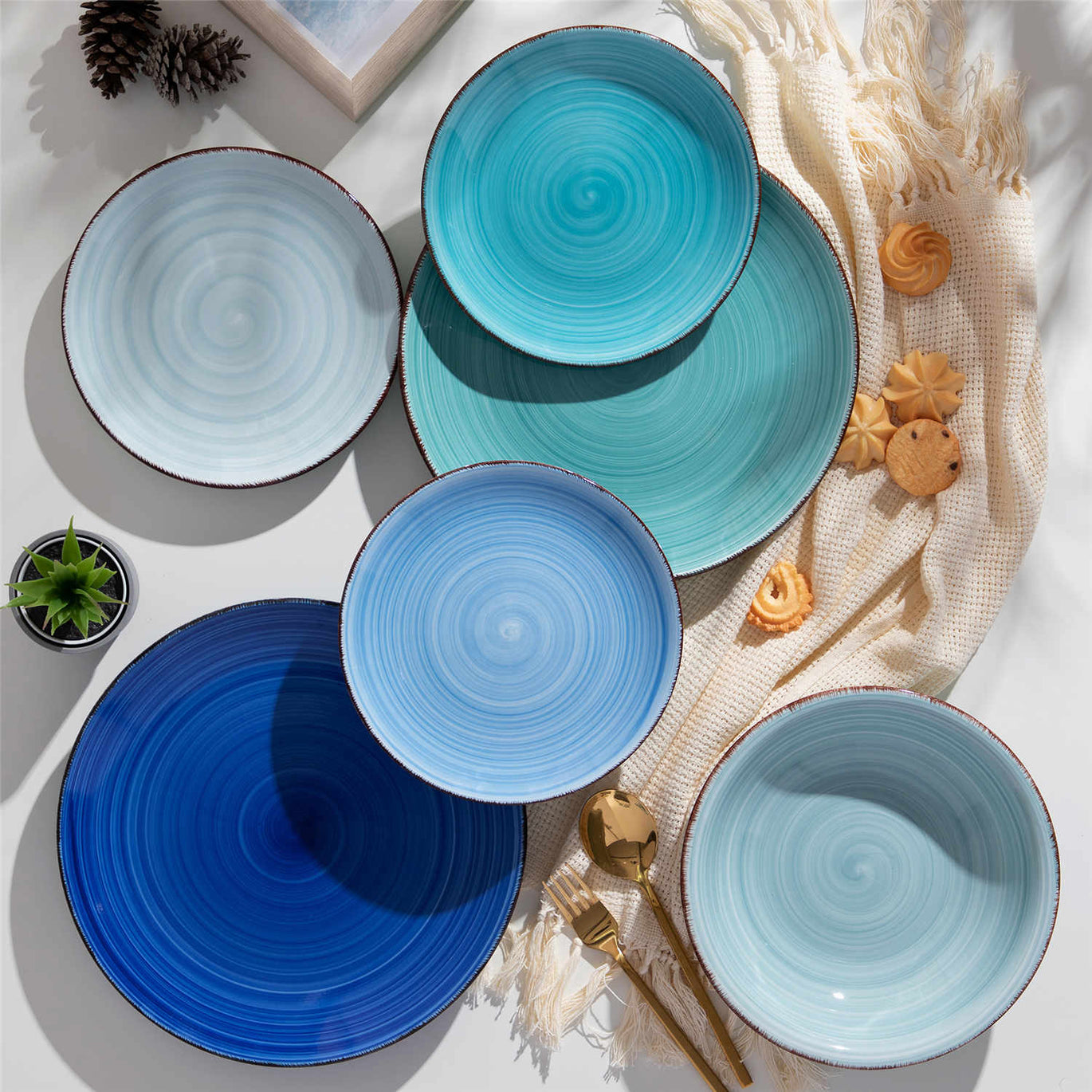


Testing Ceramic Dinnerware in Mars Base Simulation Experiments

Ceramic plates, bowls, and mugs might seem like the least “space-age” gear in a habitat, yet they are morale boosters, food-safety guardians, and delightful design moments rolled into one. When your dining table sits inside a pressure dome and your dishwasher vents into a life-support loop, dinnerware becomes critical hardware. As a Colorful Tabletop Creative & Pragmatic Joy Curator, I love this challenge. The goal is simple but juicy: create tableware that sparks joy and survives the test bench of a Mars base simulation. Here’s how to test for beauty, safety, and resilience—without losing the playful heart of a shared meal.
Why Ceramics Make Sense for Off‑World Dining
Ceramics are age-old, yet wildly future-forward. They are inorganic, non‑metallic materials that shrug off heat, stay dimensionally stable, and resist many chemicals in a way plastics and some metals do not. Technical ceramics such as zirconia and silicon carbide thrive in extreme temperatures and radiation exposure according to Goodfellow and ACerS Bulletin coverage, which is why aerospace engineers lean on them for heat shields, antennas, and insulating parts. For dining, classic bodies—porcelain, stoneware, and earthenware—bring a mix of strength, density, and charm.
The other reason ceramics are a Mars-worthy material is how they could be made. Adventuretech’s work in ceramic 3D printing highlights Digital Light Processing (DLP) methods that achieve high resolution and repeatability. In the long term, in‑situ resource utilization offers the dream of processing local regolith as feedstock to print structures and containers, including food‑contact components. The same case for monolithic, one‑piece builds that reduce part count in spacecraft applies at the table: fewer seams and joins can mean stronger, more reliable, easier‑to‑clean dinnerware. Adventuretech also points to biocompatible and hygienic ceramic pathways that could translate into antimicrobial, food‑safe containers for long missions. Those big ideas need methodical testing before the first stew is ladled.

The Simulation Playground: Earth Labs That Mimic Mars
On Earth, we recreate Martian stressors using combined environment chambers. Russells Technical Products describes chambers that reach up to 100,000 ft simulated altitude with extensions to 200,000 ft, temperatures from about −94°F to 356°F, and humidity from roughly 10% to 95% RH. Profiles often blend altitude with temperature, and temperature with humidity. Typical ramp rates around 9°F per minute let us cycle gowns of cold-soaked dishware to warm, humid interior conditions, then back toward the thin-air chill. What matters for dinnerware is not reentry plasma; it’s the repeated push-pull of pressure, moisture, and heat cycles that stress the clay body and glaze interface, accelerate leaching in unstable surfaces, and reveal latent cracks.
I translate those capabilities into tableware‑specific scenarios: a cold storage locker to warm galley transition, low‑pressure and low‑humidity stow periods, and dishwasher-equivalent spray and heat patterns. The beauty of combined environmental testing is that many failures only appear when you pile on more than one condition.

Core Performance Questions for Martian Dinnerware
Thermal shock survival without tantrums
Thermal shock is what happens when your plate lives one temperature on the surface and a very different one inside the body. InTouch Quality’s thermal shock procedure translates perfectly to simulation: preheat small to medium pieces to roughly 356°F and larger ones to about 320°F, then plunge into water around 68°F for ten seconds. Crackle in the glaze, crazing like a spiderweb, or a ping from a microfracture means your clay body and glaze don’t agree on expansion and contraction. Ceramic Arts Network’s pragmatic home method echoes the same principle with a freezer‑to‑350°F hop. Both approaches surface fit problems early, before they turn into sharp surprises in a habitat sink.
Microwave adaptability is another thermal shock cousin. InTouch’s method places two beakers of water—about 4.2 fl oz each—on opposite corners of the microwave with your dish and runs at full power for a defined energy dose. Visible arcing or sparking signals a metallic glaze or luster that is not microwave safe. Matte metallic trims and lustrous bands can be beautiful, but in microwaves they behave like tiny lightning rods.
Porosity, leakage, and hygiene—how tight is “tight”?
Water uptake is a silent killer in closed-loop habitats. Modest guidance from product quality circles targets very low absorption for porcelain, ideally below about 1%. A quick leakage check from InTouch is elegantly simple: fill a vessel, dry the exterior completely, set it on absorbent cardboard, and watch for moisture stains over two hours. A stain means the body or a microcrack is passing water. That’s not just a mess hazard; in a Mars analog, it also risks cross‑contaminating the kitchen zone.
Vitrification is the keyword here. It means the ceramic body matured into a low‑porosity state during firing. Ceramic Arts Network summarizes it plainly: a mature, vitrified body resists water and heat and keeps the glaze glued tight. That is exactly what we want.
Abrasion and utensil marking—patina or problem?
For abrasion, the most revealing test is almost mischievous: drag a house key across a discreet area. If the mark remains after a gentle buff, flatware will tattoo the finish during daily use. Ceramic Arts Network notes that utensil marking is not a functional failure; it can be polished out with a cleanser like Bar Keepers Friend. If you want to reduce it proactively, adjusting glaze silica and flux to land on a glossier, harder surface tends to help. Matte and frosted finishes deliver moody elegance but are more prone to cosmetic marking. In habitat kitchens with limited resupply, it’s wise to choose a finish you love maintaining.
Dishwasher durability and microwave safety—everyday heroes
Dishwasher cycles are a fast track to the truth. InTouch suggests running a normal cycle with detergent and checking for chips, cracks, glaze dulling, or decal wear against an untreated control piece. Microwave checks, as noted above, also catch arcing and thermal mismatch in real use. Ceramic Arts Network adds a pragmatic caution about thermal expansion mismatches between a tight interior liner glaze and a looser exterior matte. Under rapid microwave heating, that mismatch can invite cracks. If a glaze pattern craze-pops your favorite soup bowl at Earth sea level, expect the issue to amplify in a pressure‑managed galley.
Safety First: Heavy Metals and Food‑Contact Compliance
What to worry about and why
Lead and cadmium are the old villains of ceramic glazes. California Department of Public Health explains that glazes or decorations can leach metals into food, especially when acidic sauces linger or when heating and washing degrade the glaze. Bright reds, oranges, and yellows are classic visual risk cues, as are decorations applied on top of a glaze, visible wear, or a chalky residue after washing. FDA’s guidance recognizes leachable lead limits for tableware and has tightened cookware rules, and California Proposition 65 sets especially strict exposure thresholds. The upshot is simple: there is no known safe level of lead exposure for children, and the adult threshold for concern is low.
The other villain is false comfort. Green‑labeled pieces are not automatically safe. The FDA has documented cases where supposedly “lead‑free” traditional pottery still released extractable lead due to kiln contamination or improper firing. Trust, but verify.
At‑home screening to triage the risk
Home swab kits are quick, inexpensive ways to screen for lead, and some are EPA‑recognized. Yet peer‑reviewed work reported by ScienceDirect shows the chemistry can be fussy. Interferences from glaze ingredients may produce false positives or false negatives. The right way to treat swabs is as triage tools. If a swab turns color on a food‑contact surface, retire the item from service and escalate to lab testing. If it stays negative but you have other risk signals—bright over‑glaze designs, antique origin, or unknown firing—treat it as inconclusive, not a clean bill of health.
There is also the elegant lemon test from Ceramic Arts Network. Puddle lemon juice on a horizontal glazed area, park a wedge in it overnight, and rinse in the morning. Any color shift indicates acid leaching, which disqualifies that glaze for food‑contact surfaces. Holding both ideas at once is key: passing a lemon test does not prove zero leaching; it simply clears a basic threshold. In a Mars analog, you would pair this with formal lab validation before the dish touches a crew menu.
Lab‑grade validation for food‑contact confidence
Certified Laboratories outlines a robust heavy‑metals protocol grounded in FDA methods. Gather representative samples, homogenize, and digest a measured amount with acid in a microwave system up to around 392°F until the solution is clear. Then run Inductively Coupled Plasma Mass Spectrometry to quantify lead, cadmium, mercury, and arsenic to parts‑per‑billion precision. The lab returns a Certificate of Analysis with measured values; you or your quality team decide pass/fail criteria based on FDA rules, Proposition 65, or mission‑specific risk thresholds. This approach is equally applicable for glazed dinnerware brought from Earth and for future regolith‑derived ceramics that need food‑contact certification.
Navigating FDA and LFGB requirements without drama
For US operations, FDA rules hinge on good manufacturing practice, approved substances, controlled raw materials, and documented leach testing. Solecasa’s compliance overview notes lead and cadmium limits for lip and food‑contact areas under FDA, and that a recent update further restricted lead in cookware alloys. The European LFGB framework is stricter in some ways, using a positive list of permissible materials and adding a required sensory test so your dish doesn’t make food smell or taste off. LFGB also calls for rim migration tests when decorations sit within about 0.8 in of the rim. A smart strategy for a Mars analog is to design for both regimes. LFGB‑compliant products usually breeze through FDA checks, and that “compliance by design” mindset saves headaches later. A 2023 market sample cited by Solecasa found about 38% of ceramic dinnerware non‑compliant due to excessive lead or cadmium migration. That number justifies a robust plan.

Choosing the Right Ceramic Body for Mars
Porcelain is the perennial winner for strength‑to‑weight and low porosity. It is high‑fired—often around 2,372°F or above—and tends to be white, hard, and less absorbent. Stoneware brings a thicker, rustic presence and solid durability, though it may absorb more water over time depending on the clay and firing. Earthenware has charm and weight but is the most porous and the most prone to chipping or cracking; it does not love microwaves or dishwashers.
A practical way to line up options is to compare how each body behaves on the bench and at the table.
Ceramic Body |
Typical Firing Temperature |
Porosity and Absorption |
Microwave/Dishwasher Behavior |
Notable Notes for Mars Analogs |
Porcelain |
Often at or above 2,372°F |
Low porosity; targets near‑vitrified |
Generally microwave and dishwasher friendly when glazes are metal‑free |
Lightest of the three; smooth, hard glaze resists utensil marks better; ideal where water is precious |
Stoneware |
Commonly around 2,305–2,336°F |
Moderate porosity depending on clay and firing |
Usually safe for microwave/dishwasher; may show cosmetic marking over time |
Sturdy and forgiving; slightly heavier; verify absorption on your clay |
Earthenware |
Around 1,950°F on average |
Highest porosity; needs robust glaze sealing |
Not recommended for microwave/dishwasher in most cases |
Lovely and rustic, but least aligned with closed‑loop hygiene and durability |
Those temperatures are guideposts, not absolutes. What matters in practice is the water absorption rate you measure, the thermal shock resistance you verify, and the stability of your liner glaze when faced with acids and heat. Ceramic Arts Network’s scratch test and lemon test help you triage fast; InTouch’s bench protocols and a single altitude‑temperature‑humidity cycle prove the deeper point.

Additive Manufacturing and In‑Situ Dreams
Adventuretech emphasizes three points that matter for dinnerware in a habitat. First, DLP ceramic printing can produce high‑resolution, repeatable parts with monolithic geometries that minimize joints and weak seams, ideal for hygienic surfaces. Second, the materials roadmap is broad: zirconia and silicon carbide are standouts for harsh environments, while other formulations can be tailored for food contact and antimicrobial performance. Third, in‑situ resource utilization is not a fantasy. Regolith can be processed into printable feedstock, enabling on‑demand fabrication of containers and possibly tableware, reducing Earth resupply needs. The catch is certification. Food‑contact ceramics printed from local soil need the same heavy metals and acid‑leach checks as any glaze, along with a documented liner surface strategy. The recommendation to invest in ISRU‑capable printers and food‑contact certification pathways is sound; it adds resilience to a galley where a broken bowl is more than an inconvenience.

Building a Mars Simulation Test Plan for Dinnerware
Start with the mission profile. Decide how your plates and bowls will actually live: stored in a cool pantry, warmed just‑in‑time, or staged hot for crew service. Define the temperature and humidity swings those routines impose, and don’t forget the dishwasher loop. Then design a test matrix that reflects those rhythms, using both household‑style tests and environmental chamber profiles so you catch single‑condition and combined‑condition failures.
A neat way to summarize the whole plan is to map each stress to a method, a visible pass signal, and the reputable source that backs it.
Simulation Stress |
Why It Matters on Mars |
Recommended Method |
Pass/Fail Signal |
Source |
Thermal shock |
Rapid shifts from cold storage to hot service |
Preheat to about 356°F for small/medium or 320°F for large; plunge into 68°F water for 10 seconds |
No cracks, chips, or glaze crazing |
InTouch Quality |
Freezer to oven hop |
Realistic galley transition in closed loop |
Freeze overnight, move directly to a 350°F oven for 30 minutes |
No failure or glaze change |
Ceramic Arts Network |
Microwave adaptability |
Everyday heating in the habitat |
Place two water beakers (~4.2 fl oz) in microwave with item; full power run |
No arcing, no cracks, stable glaze |
InTouch Quality |
Dishwasher durability |
Cleaning loads and spray force |
Run a normal cycle with detergent; compare to an untreated control |
No chips, cracks, dulling, or decal damage |
InTouch Quality |
Water leakage and porosity |
Hygiene, cross‑contamination risk |
Fill, dry exterior, rest on cardboard for two hours |
No moisture stain; low measured absorption |
InTouch Quality and Modest guidance |
Altitude + temperature cycle |
Low pressure plus thermal swings |
Cycle up to 100,000 ft with −94°F to 356°F ramps around 9°F/min |
No structural or glaze failures |
Russells Technical Products |
Humidity cycle |
Condensation, odor, and glaze stress |
Cycle humidity between about 10% and 95% RH at site level |
No glaze color shift or odor pickup |
Russells Technical Products |
Acid leaching screen |
Food‑contact safety under acids |
Lemon puddle overnight on a horizontal glaze; rinse and compare color |
No color change; escalate to ICP‑MS for proof |
Ceramic Arts Network and Certified Laboratories |
Heavy metals quantitation |
Regulatory compliance and crew health |
Acid digestion to about 392°F; ICP‑MS report in ppb |
Values below FDA/Prop 65 targets; internal pass/fail defined |
Certified Laboratories, FDA, CDPH |
Microwave lusters check |
Prevent arcing events |
Visual inspection for metallic trims; confirm with microwave test |
No arcing; label non‑microwave‑safe items visibly |
InTouch Quality and CDPH |
Document results with photos, measured values, and any observed changes in gloss, texture, or odor. If pieces fail, revise the clay body or glaze fit rather than pushing a marginal design forward. That’s especially true for matte finishes that show utensil marks; either embrace the patina and plan for gentle polishing, or swap to a harder liner glaze inside vessels that see the most cutlery action.
Pros and Cons Recap
The case for ceramic dinnerware in a Mars analog is strong. Porcelain unlocks low porosity, pleasing weight, and a hard surface that resists silverware marks, which makes it a top choice for a water‑scarce, sanitize‑often galley. Stoneware brings warmth and robustness with a slight trade‑off in water absorption and cosmetic marking. Earthenware’s charm is real, yet the porosity and thermal limitations are at odds with a high‑reliability habitat kitchen.
Testing is your best friend. Thermal shock procedures surface glaze‑fit problems early; leakage and absorption checks protect hygiene; dishwasher and microwave simulations catch everyday failure modes; and environmental chambers add the Mars‑flavored variables of pressure and humidity. Safety is non‑negotiable. California Department of Public Health, FDA, and California Proposition 65 lay out the hazards clearly, and lab‑grade ICP‑MS puts numbers on your risk. Swab kits and lemon tests are good screening tools, not decisive verdicts. Designing for both FDA and LFGB standards up front creates a smooth path to use, and aligns with the principle that a habitat kitchen should be a delight, not a compliance headache.
Finally, the future is additive. Adventuretech’s DLP printing plus an ISRU roadmap suggests a path to printing monolithic, food‑safe containers and, someday, plates from local soil. That dream lives or dies by certification and repeatable microstructure, which puts your test plan—even the humble lemon puddle and the cardboard leak check—front and center.

A Practical Glossary for Fast Alignment
Vitrified describes a ceramic body fired to low porosity so it resists water uptake and thermal shock, the sweet spot for habitat hygiene. Liner glaze refers to the stable, food‑contact surface inside vessels, chosen and tuned specifically for safety and durability. Crazing is the fine crack network in glaze caused by poor fit between body and glaze; it is a red flag for long‑term integrity. Regolith is the loose, unconsolidated soil on the Moon or Mars that can be processed into feedstock for additive manufacturing.
Frequently Asked Questions
Can a regolith‑derived ceramic be food‑safe? The pathway exists in principle. Adventuretech’s in‑situ manufacturing outlook anticipates local feedstock processed for ceramic printing, and the food‑contact bar can be met with documented liner surfaces plus ICP‑MS heavy‑metal verification to FDA and Proposition 65 targets. The operational leap is not material science alone; it is certification and quality control.
Are matte glazes a non‑starter? Not at all. Matte finishes read beautifully under habitat lighting, and textured frosts feel heavenly in hand. Expect more utensil marking and plan for maintenance with a gentle cleanser. Inside bowls and mugs that see the most metal‑to‑glaze contact, a harder, glossier liner can be a happy compromise.
What’s the simplest at‑home screen before sending items to a lab? Combine the lemon test on a horizontal glazed area with a freezer‑to‑350°F thermal hop, then do a quick leakage check on cardboard. Those three moves will surface most glaring problems and tell you whether a piece deserves an ICP‑MS slot.
Closing
Set a table that sings and survives. With a thoughtful test plan, food‑contact rigor, and a pinch of playful restraint in your finishes, ceramic dinnerware can deliver more joy per ounce of payload—and make every Martian meal feel like home.

References
- https://www.fda.gov/food/environmental-contaminants-food/questions-and-answers-lead-glazed-traditional-pottery
- https://www.cdph.ca.gov/Programs/CCDPHP/DEODC/CLPPB/Pages/Q-A-Lead-in-Tableware.aspx
- https://community.ceramicartsdaily.org/topic/17854-04-for-dinnerware/
- https://ceramicartsnetwork.org/ceramic-recipes/recipe/Testing-Durability
- https://bulletin.ceramics.org/article/star-power-how-glass-and-ceramics-push-us-deeper-into-space/
- https://adt-ceramic3dp.com/ceramic-3d-printing-space-exploration/
- https://greenorchardgroup.com/how-to-tell-if-your-dishes-have-lead/
- https://infinityclay.com/ceramics-in-space/
- https://www.intouch-quality.com/blog/top-5-on-site-tests-for-porcelain-dinnerware
- https://livingtaste.com/products/dinnerware-collection-mars?srsltid=AfmBOooaNdtVc_iOS4HCHPW6ffM4I7A6NuorFTJEDUY1RXjcOaO0CbEw
Potrebbe piacerti anche
Stern Set di stoviglie da 16 pezzi
- $88.00
$100.00- $88.00
- Prezzo unitario
- per
-
Blue
-
Green
-
Red
-
Grey
Simi Set di stoviglie 24 pezzi
- $100.00
$135.00- $100.00
- Prezzo unitario
- per
Bonita Set di stoviglie da 18 pezzi
- Da $63.00
$78.00- Da $63.00
- Prezzo unitario
- per
-
Blue
-
Multicolor
Set di stoviglie stellate da 16 pezzi
- $88.00
$90.00- $88.00
- Prezzo unitario
- per
-
Blue
-
Green
-
Red
-
Gradient Green