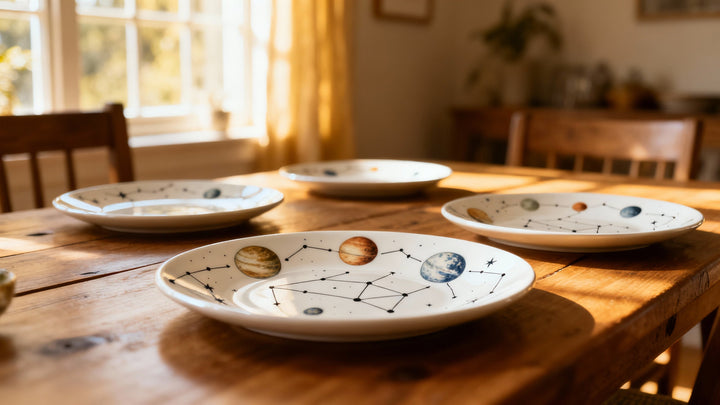


Slide into a Michelin-level dining room and you can almost feel the energy buzzing off the table. The linen is crisp, the lighting is intentional, the first bite hasn’t arrived yet—and already the plate is talking. It is quietly shouting brand, precision, and emotion before a single fork is lifted.
Those custom ceramic plates are not just pretty props. They are engineered, tested, branded, and often obsessively iterated objects. Their price tags can shock even seasoned restaurateurs. To understand those high costs, we need to walk all the way from raw clay to the moment a mousse lands on a reactive glaze.
As a Colorful Tabletop Creative & Pragmatic Joy Curator, I want to unpack this in a way that feels both artfully inspiring and brutally practical, so you can see exactly where the money goes and how to invest wisely.
The Plate As A Silent Co‑Chef
Fine dining research makes one thing very clear: tableware changes how food tastes and feels.
In studies published in the journal Flavour, researchers tested how different spoons and plates affect flavor perception. When blindfolded participants tasted creams with spoons plated in different metals, gold and chrome spoons were rated least metallic and least bitter. Zinc and copper spoons were perceived as most metallic, most bitter, and least sweet, and could enhance a dominant taste such as bitterness by up to about twenty‑five percent. In another experiment, heavier stainless steel spoons made food seem roughly eleven percent better in liking and quality compared with visually similar plastic spoons, an example of “sensation transference” where the perceived quality of the utensil spills onto the food.
The same research group also showed that plate and bowl color nudges flavor. Salty popcorn tasted sweeter when eaten from red or blue bowls, sweet popcorn seemed saltier from blue bowls, with changes around four percent. Strawberry mousse served on a white plate was perceived as about fifteen percent more intense, ten percent sweeter, and ten percent more liked than the exact same dessert on a black plate.
A separate hospitality study on fine dining tableware, drawing on design theory from Norman, shows that tableware shapes first impressions and emotional response. Personalized plates with logos and distinctive shapes help create a unique identity, increase perceived service quality, and make experiences more memorable.
When you stitch these findings together, a picture emerges. At the level where restaurants chase or hold Michelin stars, a plate is not neutral. It is part of a multi‑sensory flavor system, a branding tool, and a storytelling stage. That is the first reason custom ceramic plates cost more: the restaurant wants precise, controllable effects, not random crockery.
What “Custom Ceramic Plate” Really Means At Michelin Level
“Custom ceramic dinner plate” sounds simple until you unpack it.
Wholesale and hospitality guides describe custom dinner plates as bulk‑ordered, tailor‑made pieces where design, size, shape, material, and decoration are specified for a particular client. Custom printed ceramic plates go further, integrating artwork, logos, or messages into the glaze so the design becomes part of the durable surface.
A branding‑focused hospitality article even calls these plates “subtle brand ambassadors.” The logo on the rim, the signature color on the well of the plate, the way a border echoes the restaurant’s typography—these details build recognition in the same quiet way a great business card does.
Underneath the graphics, there is a whole ceramic universe. Luxury and restaurant‑supply articles outline the main bodies used in high‑end dinnerware.
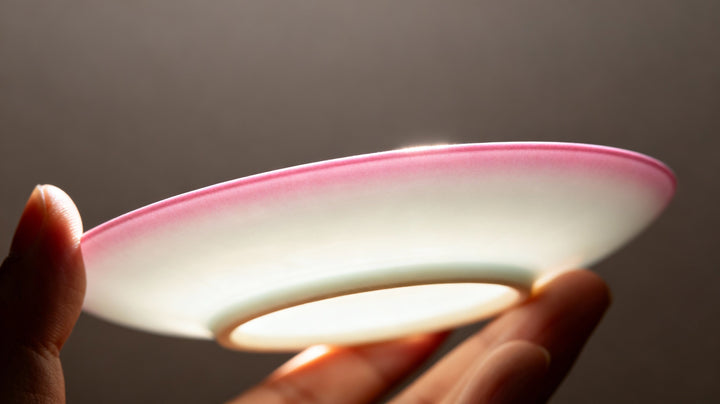
Porcelain and standard china are made from fine‑particle clay fired at high temperature, leading to a non‑porous, durable body with a polished, refined look. Bone china is a type of porcelain that incorporates roughly thirty to forty‑five percent bone ash. This composition yields ultra‑strong, lightweight, and translucent plates that feel almost ethereal. Stoneware is denser and more rustic, with a thicker, earthy presence suited to certain concepts. Earthenware leans even more rustic and porous but can be glazed into vibrant, handmade‑feeling pieces.
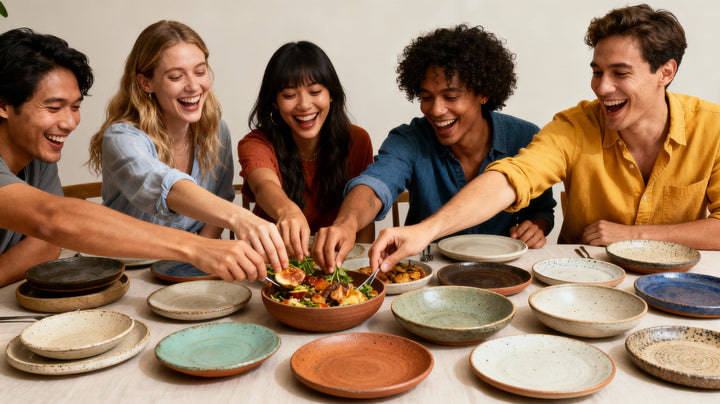
Many luxury restaurants prefer porcelain and bone china for their strength and elegance. Stoneware and reactive glazes show up when a chef wants a more handcrafted, natural mood. Every choice here affects cost.

Clay And Body: How The Material Alone Multiplies Price
Ceramic pricing starts deep in the ground. A manufacturing analysis of custom ceramic gifts explains that clay cost alone can span two orders of magnitude. Some porcelain dinnerware clay costs only a few hundred yuan per ton, while high‑end clay blends can reach tens of thousands of yuan per ton. That difference in raw material price can translate into finished products that differ in price by up to a factor of one hundred.
Higher‑grade clays are not just about prestige. They tend to have fewer impurities, better consistency, and tighter control over shrinkage and color after firing. That means fewer defects, fewer warped plates, and more reliable matching across thousands of pieces.
Wholesale dinnerware manufacturers that focus on premium tableware explicitly connect clay choice to retail price. One sourcing guide from Joyye notes approximate wholesale price ranges that illustrate the tiers. Bone china plates, with their high bone ash content and premium clay, might run around fifty to seventy‑five dollars per piece in premium wholesale scenarios. Porcelain plates sit lower, around thirty to fifty dollars, while robust stoneware for more casual or mid‑market lines may be in the five to twenty dollar range.
Most Michelin‑level restaurants are not buying budget stoneware as their primary canvas; they gravitate toward the bone china and fine porcelain end of that spectrum. Before any design or branding happens, the clay choice has already pushed them into the expensive lane.
Glazes, Colors, And Reactive Surfaces With Attitude
If clay is the skeleton, glaze is the skin—and this skin can be temperamental and pricey.
A technical article on custom ceramic gifts highlights glaze color as a major cost factor. Certain traditional glazes, such as complex copper reds, are extremely sensitive to kiln temperature. A firing difference of just about nine degrees Fahrenheit can completely change the color outcome. When a glaze behaves like this, the yield rate drops. More pieces come out with unacceptable color, so more get scrapped or reworked. That loss of yield is baked directly into the plate price.
Reactive glazes, which have become a darling of modern plating, live in this tricky zone. By design, they produce layered, unpredictable patterns where minerals pool and break in ways that look like watercolor or lava. Achieving that effect consistently enough for restaurant service often requires multiple test firings, careful kiln loading, and acceptance that a portion of every batch will not match the desired look.
On top of aesthetics, premium manufacturers insist on food‑safe glazes that meet strict standards such as FDA and similar European regulations for lead and cadmium release. A bulk pricing guide from Solecasa notes that glazes formulated to meet these international standards are more expensive than basic glazes. This particular manufacturer even frames the choice of top‑tier, lead‑ and cadmium‑free glazes as a core brand value and market‑access safeguard.
For Michelin restaurants, food safety is non‑negotiable, and visually complex, reactive glazes are often central to the plate’s personality. That combination—safety plus drama—requires better ingredients and more firing control, which pushes cost up again.

From Mud To Jewel: The Production Journey
Once you have premium clay and ambitious glazes, you still need to turn them into an impeccably finished plate. This is where process complexity quietly devours budget.
A technical overview of ceramic manufacturing stresses “near‑net‑shape” production: forming parts as close as possible to their final geometry so that expensive post‑processing is minimal. Forming methods matter. Simple round plates can be produced efficiently with techniques like jiggering or pressing. A bulk pricing article points out that these methods keep costs down for standard shapes.
When you want irregular silhouettes, sculptural rims, or asymmetric wells tailored to a chef’s plating style, the process often shifts to slip casting or more intricate mold work. This requires more complex molds, longer production cycles, and more manual intervention, all of which raise labor and energy costs.
After forming comes drying and firing. A manufacturer selection guide explains that drying, firing, and vitrification—the process that locks the body into its strong, non‑porous state—must be tightly controlled to achieve the strength, porosity, and longevity high‑end buyers expect. Kiln type, firing schedule, and post‑firing inspection routines all affect both performance and cost.
Firing itself may happen more than once. Solecasa’s process breakdown notes that single‑firing is cheapest. Higher‑end pieces may go through two or even three firings. One firing might stabilize the body, another might fix the glaze, and a final firing could fuse decals or metallic details. Every trip into the kiln consumes time and energy, slows throughput, and increases cost, but it also allows more refined texture, color depth, and mechanical strength.
Then there is finishing. In advanced ceramics, a manufacturer like Precision Ceramics describes “green machining” of unfired parts as relatively economical, but any grinding or polishing after full firing demands diamond tooling. That hard machining is slow and can represent a significant portion of component cost, especially when tight tolerances or very flat surfaces are required.
Imagine a plate that must stack perfectly, sit dead flat under a sauce pool, and align cleanly with a charger in a star‑level dining room. Every additional micron of flatness and every smoother edge can require more grinding, more inspection, and more rejected pieces. Tighter tolerances almost always mean higher cost.
At the very top of the craft pyramid sits handwork. The custom‑gift pricing article mentions that shaping a thin teacup entirely by hand on a wheel can incur labor costs exceeding one hundred yuan per piece. When Michelin restaurants commission hand‑thrown service pieces, that kind of labor investment per item is not unusual.

Decoration, Branding, And Storytelling Layers
Once the form and glaze are dialed in, many Michelin restaurants add another layer: graphics that tell their story.
Hospitality branding articles emphasize that custom printed ceramic plates carry logos, typography, or motifs that align with a restaurant’s brand guidelines. Plate colors, borders, and patterns echo menu design, interior finishes, and even the style of the chef’s plating. This kind of alignment creates a cohesive identity and helps plates function as subtle, daily brand touchpoints.
Decorating a plate is not a single technique. Solecasa’s pricing explainer draws clear distinctions. Underglaze decoration, where patterns are applied before the clear glaze and then fired over, is considered the most durable and wear‑resistant. It is also more difficult and expensive. In‑glaze and overglaze processes, where decoration sits within or on top of the glaze, are cheaper to execute but may wear faster. Hand‑painting and touches like gold tracing are highly artistic but extremely labor‑ and time‑intensive.
A ceramic pricing article focused on giftware notes that decal application—those applied images you see on branded tableware—adds further cost. Complex multi‑color decals require careful alignment, extra firing, and bring their own scrap rate if anything misregisters.
Manufacturer selection guidance from Joyye encourages buyers to evaluate not only whether a factory can do decals, screen printing, or digital printing, but also the cost, limitations, and durability of each method. A Michelin restaurant that wants a crisp, long‑lasting logo hidden just inside the rim is almost always paying for the more robust, carefully controlled end of that spectrum.
Each of these decoration choices is a new mini‑project layered onto the plate: design development, prototyping, testing, and the literal firing cycles. The cost per plate rises accordingly.

Quality Standards, Food Safety, And Sorting Games
Not every plate that comes out of a kiln is created equal. The way manufacturers classify and sort those plates has a big impact on what ends up in a Michelin dining room and what it costs.
Industry guides describe three main quality tiers. First Choice covers pieces with no visible defects, precise dimensions, and perfect glaze. Mixed Sorting includes a blend of perfect and slightly imperfect items, allowing minor cosmetic flaws. Run Out of Kiln, sometimes called ROK, means essentially no systematic checks, with defect rates that can reach roughly thirty percent and noticeable inconsistency in finish.
Premium‑versus‑budget analyses point out that budget ceramic tableware often falls into the Run Out of Kiln category, sold cheaply for fast‑casual or institutional use where minor glaze specks or shape variations are tolerated. Premium tableware, the kind suitable for fine dining, is typically First Choice and may undergo multiple rounds of inspection after forming, glazing, and firing.
Quality standards also extend to safety and compliance. A manufacturer selection article recommends looking for evidence of FDA compliance, adherence to ISO 6486‑1 lead and cadmium limits, European food‑contact regulation credentials, and broader systems like ISO 9001 or social‑compliance audits. These certifications and third‑party tests cost money. They also require ongoing quality control to maintain.
Michelin‑level restaurants are not going to serve a tasting menu on ROK‑grade plates with random pinholes and questionable glazes. They will demand First Choice plates from factories that can show safety and quality credentials. That requirement means the factory must discard or downgrade a significant portion of each kiln load to hit that First Choice bar, and those hidden rejects are part of the premium a restaurant pays.
MOQs, Scale, And Why Small Runs Are So Expensive
Even when you know exactly what plate you want, manufacturers have to keep their factories economically healthy. That is where minimum order quantities, or MOQs, enter the picture.
A detailed guide on wholesale ceramic dinnerware explains that MOQ is the smallest number of units a manufacturer is willing to produce or sell in one order. MOQs exist partly to keep production efficient. Every batch requires mold setup, glaze preparation, firing, and quality checks. There are fixed costs for clay, glaze, and printing molds that must be recovered across the batch.
For standard designs, some factories can offer relatively low and flexible MOQs, which helps small restaurants and retailers test new products without heavy upfront investment. The same guide notes that common designs usually come with smaller MOQs, while specially designed or custom OEM pieces need higher minimums because mold creation, glaze matching, and branding setup are expensive.
The relationship between MOQ and unit cost is clearly illustrated in one example. Ordering one thousand dinnerware sets at a total of eight thousand dollars yields a cost of eight dollars per set. Ordering five thousand sets at a total of thirty‑three thousand dollars drops the cost to six dollars and sixty cents per set. This demonstrates how spreading fixed costs over a larger quantity can reduce unit cost by roughly fifteen to twenty‑five percent.
A product‑line planning article from Joyye notes that typical MOQs for custom ceramic plates often start around five hundred pieces, and standard designs for wholesale channels might require five hundred to one thousand pieces, with production lead times of thirty to sixty days plus shipping.
Now put yourself in Michelin shoes. Many top restaurants might want only a few hundred covers’ worth of a very specific plate, perhaps plus some back‑of‑house reserves. Depending on the factory and design, that may fall below the comfortable MOQ, or at least below the level where unit cost is attractive. Unless the design can be shared with another client or sold in broader wholesale channels, the restaurant may be carrying a disproportionate share of the mold, setup, and design development cost.
Some manufacturers try to soften this by allowing buyers to mix different SKUs—plates, bowls, mugs—within one order to reach the MOQ, or by offering lower MOQs to long‑term partners. Even so, custom Michelin‑level plates tend to live at the expensive end of the MOQ curve.
Durability, Heat, And The Brutal Everyday Life Of A Plate
In a Michelin kitchen, plates are not delicate ornaments. They pass through hot pass rails, under heat lamps, in and out of commercial dishwashers, and occasionally survive minor bumps and near‑drops. The plate must be visually pristine and mechanically tough.
Comparative reviews of restaurant‑grade porcelain and typical home ceramics tell a consistent story. Restaurant‑grade plates are heavier, denser, and more chip‑ and heat‑resistant. In several weeks of side‑by‑side testing over dinner parties and everyday meals, professional‑grade plates stayed almost flawless after repeated dishwashing, oven heating, and occasional knocks. Lighter, decorative ceramics began to chip and show glaze discoloration within about four weeks of similar use.
Another consumer test compared a high‑end light ceramic plate with an eleven‑inch bone china platter over one to two weeks of real family kitchen life. Using steel flatware, dishwashers, and minor drops, the high‑end ceramic plate resisted surface scratches and edge chipping far better. The bone china picked up light scratching and chipped at a corner after minor impact. Thermal tests showed the high‑end ceramic was oven‑safe up to about four hundred degrees Fahrenheit and microwave‑safe with even heat distribution. The bone china, while microwave‑safe, was not recommended for oven use and showed mild heat sensitivity during longer microwave sessions.
Interestingly, the high‑end ceramic in that test cost about twenty‑four dollars and eighty cents per plate and was rated four and a half out of five by over one hundred reviewers, while the more fragile bone china cost around thirty‑seven dollars and fifty‑six cents with a slightly lower rating. This hints at a theme echoed in wholesale analyses: thoughtfully engineered ceramics can be both more durable and better value than purely “fancy” options.
Premium‑versus‑budget wholesale research reinforces this. Premium ceramics are made from purer kaolin, high‑grade feldspar, and silica, and are fired at roughly two thousand three hundred seventy to two thousand five hundred fifty degrees Fahrenheit. They often carry thicker, multi‑layer glazes. As a result, they offer better heat retention, higher chip and thermal‑shock resistance, more precise stackability, and stronger dishwasher durability. Budget pieces, fired at lower temperatures with lower‑grade clay, chip more easily, cool faster, and show wear sooner.
These performance differences show up vividly in total cost of ownership calculations. One wholesale analysis compares a fifty‑dollar plate that lasts more than twenty years to a ten‑dollar plate that needs replacing every two to three years. The premium plate costs about two dollars and fifty cents per year, while the budget plate ends up costing roughly three dollars thirty‑three to five dollars per year, even before you factor in the operational hassle and possible impact on guest perception.
For a Michelin restaurant where plates are under both constant stress and constant scrutiny, paying more upfront for premium, restaurant‑grade ceramics can be the rational choice.
Premium Versus Budget: A Snapshot
To see how all these factors bundle together, it helps to compare premium Michelin‑style plates with budget ceramics in simple terms, using what wholesale and testing articles describe.
Aspect |
Premium / Michelin‑style custom plate |
Budget or Run Out of Kiln plate |
Material and firing |
Purer clay blends such as bone china or high‑grade porcelain, fired around 2,370–2,550°F with thicker glazes |
Standard ceramic or lower‑grade clay, fired at lower temperatures with thinner glazes |
Quality control |
First Choice classification with multiple inspections and tight dimensional control |
Mixed or ROK classification with limited inspection and higher defect rates |
Decoration |
Durable underglaze decoration, high‑quality decals, possible hand‑painting, multiple firings |
Simpler overglaze patterns, fewer firings, more tolerance for misalignment or color variation |
Durability |
High chip and thermal‑shock resistance, strong dishwasher durability, precise stackability |
Higher chip and crack rates, faster visible wear, less consistent stacking |
Safety and certification |
Extensive food‑contact testing, documented standards and audits |
Basic compliance if any; rarely highlighted as a selling point |
Long‑term cost |
Higher upfront price but lower per‑year cost when lifespan is twenty years or more |
Lower upfront price but often higher per‑year cost due to frequent replacement |
Michelin‑level plates live in the left column. Budget catering plates, discount sets, and many generic imports live on the right.
Are The Plates Really Worth It For Michelin Restaurants?
When you add all these threads together—premium clay, complex glazes, multi‑step firing, advanced decoration, strict quality standards, demanding MOQs, and durability engineering—the high price of custom plates starts to look less mysterious.
On the revenue side, branding and guest experience matter. Articles on restaurant branding and tableware point out that consistent, customized plates support brand recognition, signal attention to detail, and make experiences more memorable. With social media amplifying every striking plating photo, a distinctive plate can become part of why guests seek out a restaurant.
On the cost side, wholesale analyses argue strongly for looking beyond unit price. A high‑quality plate that survives decades of service can be cheaper over time than a cheaper plate that needs constant replacement. And for tasting menus priced in the hundreds of dollars per guest, the per‑year cost of a premium plate can be tiny compared with labor, ingredients, rent, and marketing.
For Michelin‑level restaurants that position themselves around impeccable detail and unique storytelling, custom ceramic plates are not a luxury add‑on. They are part of the core product.
Practical Strategies For Chefs And Owners Considering Custom Plates
Even if you love the artistry of custom ceramics, you still have to pay the bills. The good news is that the same research and manufacturer guidance that explain high prices also point to levers you can pull.
One approach is to match material to the role. Use bone china or fine porcelain for signature courses where translucency and delicacy add emotional impact, and consider stoneware or reinforced porcelain for high‑wear applications such as lunch service, banquets, or dish types that are hard on rims. Manufacturer guides note that stoneware can deliver sturdiness at a lower price point while still feeling substantial and artisanal.
Another strategy is to treat customization like a menu design project: decide where bespoke plates matter most. A hospitality branding article recommends aligning plate design with your core brand moments. Perhaps you invest heavily in an iconic reactive‑glaze plate for the main course and choose simpler, standard shapes with subtle logo marks for sides and bread plates. This controls mold and decoration costs while still giving your guests a clear visual signature.
Work with manufacturers that offer flexible MOQs and mixed loads. The Yongjian MOQ guide shows how mixing plates, bowls, and mugs in a single order can help you reach the minimum quantity while maintaining SKU diversity and avoiding overstock. You might use existing molds for some shapes, adding only light customization such as logo decals or tailored packaging, and reserve new molds and complex glaze development for the few pieces that truly demand it.
Pay attention to decoration methods. If you want your logo to survive years of dishwashers and stacking, manufacturers like Solecasa emphasize underglaze decoration as the gold standard, even though it is more expensive. Overglaze or in‑glaze might be appropriate for special‑occasion pieces that see less wear. Hand‑painted gold details are gorgeous but can be reserved for limited runs or showcase dishes.
Finally, treat quality and safety documentation as non‑optional. Guides from Joyye and others suggest verifying food‑contact test reports and certifications for any custom line. While this due diligence adds cost and time, it protects both your guests and your brand, and it helps ensure that the plates you paid so much for will stand up to real service conditions.
FAQ
Why do custom plates for Michelin‑level restaurants take so long to deliver?
Manufacturer timelines factor in mold creation, glaze and color testing, sample production, full‑scale production, multiple firings, and quality inspections. One USA‑made commercial dinnerware producer notes that standard production time for custom pieces is often about four to six weeks after design approval, and that a sample run is required before full manufacturing. For complex designs, high seasonal demand, or large orders, the timeline can stretch further.
Do Michelin restaurants always need bone china or porcelain?
Not always. Manufacturer and market analyses show that bone china and fine porcelain sit at the premium end thanks to their strength, whiteness, and translucency, which are ideal for many fine‑dining concepts. However, stoneware and other ceramics can be excellent choices for rustic, farm‑to‑table, or casual‑luxury experiences. The key is aligning material properties, aesthetics, and durability with the restaurant’s concept and service realities.
Is it ever smart for a high‑end restaurant to buy budget or Run Out of Kiln plates?
Budget plates classified as Run Out of Kiln can have noticeable defects and higher chip rates. Wholesale analyses suggest they are suited to highly price‑sensitive venues rather than image‑critical fine dining. That said, some operators mix tiers: using premium First Choice plates for hero dishes and more economical, but still commercial‑grade, ceramics for back‑of‑house tasks, staff meals, or high‑turnover contexts.
Closing Spark
When you finally cradle a dish on a perfect, weighty plate in a Michelin dining room, you are holding far more than clay and glaze. You are holding choices about materials, chemistry, craft, branding, safety, and long‑term value. Once you see that hidden architecture, the price tag stops feeling mysterious and starts looking like an intentional investment in flavor, emotion, and the colorful drama of the table itself.
References
- https://www.researchgate.net/publication/366941291_Assessing_the_Impact_of_Tableware_and_its_Influence_on_the_Fine_Dining_Experience
- https://www.28ceramics.com/what-are-the-factors-that-affect-the-custom-price-of-ceramic-gifts.html
- https://insights.made-in-china.com/What-Kind-of-Ceramic-Tableware-Do-Luxury-Restaurants-Use-to-Enhance-Dining-Experiences_XarADIqWsxli.html
- https://www.alibaba.com/showroom/customized-restaurant-plates.html
- https://ceramamadinnerware.com/Dinner_Plates/1739168129296.html
- https://smart.dhgate.com/high-end-vs-budget-ceramic-plates-are-expensive-ones-really-worth-it/
- https://ggsceramic.com/news-item/choosing-the-right-ceramic-material-cost-temperature-tolerance-and-industrial-compatibility
- https://www.happygodinnerware.com/Dinner_Plates/202501121218134569.html
- https://hfcoors.com/pages/usa-made-commercial-dinnerware-and-mugs?srsltid=AfmBOoozODrkgTN0s1hDhLy2g1KQBIbc_ibfhAKYZd0rVIIr9zRSTJXO
- https://www.joyye.com/info-detail/ceramic-plate-manufacturer-choosing-guide