



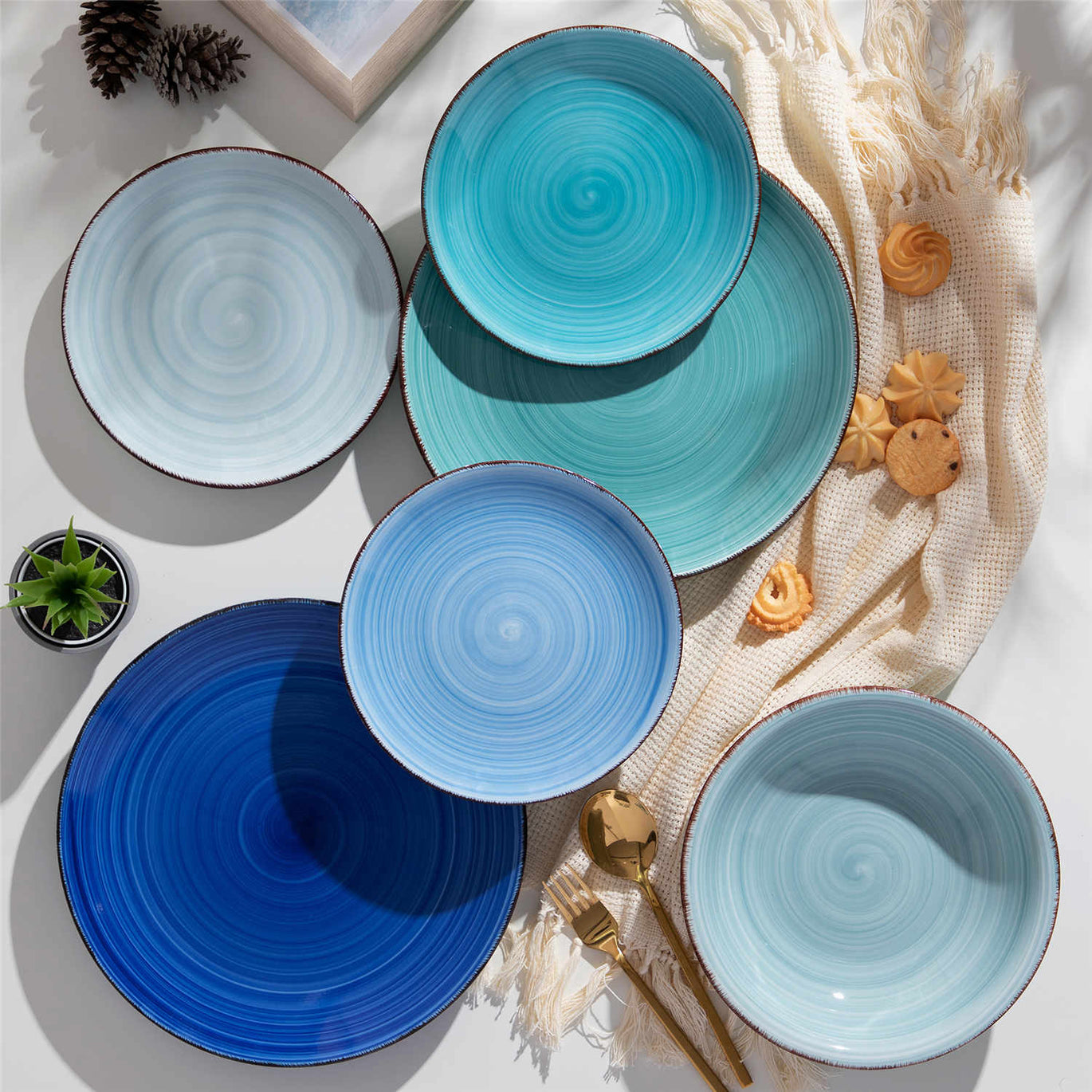


Understanding Why Space Stations Avoid Ceramic Dinnerware Materials

The Table Is Different in Orbit: A Curator’s‑Eye View
On Earth, I’m the first to celebrate a jubilant stack of hand‑glazed plates—color, gloss, delightful heft, the whole vibe. In orbit, though, the rules of beauty change. Space stations are closed ecosystems where mass is money, floating particles are hazards, and every surface is judged by how it behaves in microgravity. Up there, tableware isn’t just tableware. It is part of a finely tuned materials strategy built for reliability, clean operation, and safety. The result is a tastefully minimalist palette of materials that are light, tough, and calm under stress—qualities that traditional ceramic dinnerware simply doesn’t bring to the party.
This isn’t a takedown of ceramics (I love them). It’s a reminder that space has a different aesthetic: the elegance of restraint, the joy of problem‑solving, the color story of coatings and composites. And yes—there’s a deeply practical reason behind every choice.

Weight Is a Design Principle, Not a Footnote
When you design for orbit, every ounce matters. Industry analyses describe a launch marketplace where the cost to place payload in space is assessed by weight. The Center for Strategic and International Studies places most launch costs in a band that translates to roughly 9,070 per pound. Morgan Stanley has tracked dramatic declines in total mission cost thanks to reusability, but the message remains consistent: lighter is cheaper, and lighter often performs better because it unlocks more payload, more margin, and more mission options.
That economic reality doesn’t stop at spacecraft structures; it cascades through the entire onboard ecosystem. Stacking up a dozen heavier dinner plates may seem trivial on Earth. In orbit, that stack is a line item in the mass budget. Aerospace design culture—documented in NASA’s structural practices and broadened in technical overviews from AZoM and others—learns to ask the same question over and over: can we achieve the function with less mass, and can it survive its environment?
An additional twist: lowering density is often far more effective at saving weight than simply chasing higher strength. Engineering notes published in Tech Briefs put a sharp point on it—reducing material density is on the order of three to five times more effective than increasing stiffness or strength when you are pursuing structural efficiency. In short, lighter materials that are strong “enough” are usually the winning move.
Clean, Closed, and Floating: The Particle Problem
Space stations are closed habitats that rely on pristine air handling and ultra‑sensitive equipment. In microgravity, anything that breaks, chips, abrades, or sheds can become a free‑floating particle. Those particles are not just messy; they are risks to eyes, filters, optics, and instruments. Aerospace materials engineers are borderline obsessed with preventing particle generation because it shortens service life and complicates operations.
That caution shows up in technical guidance and coatings work across the industry. One materials technology often used on light alloys—plasma electrolytic oxidation, summarized by Keronite—explicitly lists “excellent adhesion to avoid particle generation” as an advantage. The point isn’t that you would coat a dinner plate with a spacecraft coating; it’s that the culture of space design treats loose particles as unacceptable. NASA’s structural stress practices enumerate failure modes like fracture and time‑dependent degradation precisely because shedding and cracking can propagate into larger problems. Inside a station, anything brittle enough to chip into hard fragments, or friable enough to dust, doesn’t clear the vibe check.

Outgassing and Surface Chemistry Aren’t Dinner Conversation
Earth kitchens don’t think about outgassing. Space stations have to. Materials destined for aerospace applications are evaluated for total mass loss and collected volatile condensable materials during vacuum exposure. The Keronite team highlights test regimes and even notes extreme mission requirements that push total mass loss below a tenth of a percent. Why so strict? Because condensable films can fog optics, contaminate sensors, and compromise surface performance. Space designers gravitate to surfaces and finishes with proven low outgassing, predictable adhesion, and stable behavior under radiation and thermal shifts.
The takeaway for dinnerware is philosophical, not prescriptive: when in doubt, station operators favor known, cleanable, low‑shedding surfaces with proven test pedigrees. Unknown glazes, crumbly textures, and finishes that wear into flakes—however charming at a farmhouse brunch—add variables a spacecraft doesn’t want.
Toughness Beats Fragility: Why Brittle Isn’t Beautiful in Microgravity
Ceramic dinnerware wins on hardness and heat tolerance in your kitchen, but it is brittle by nature. The aerospace mindset is built around managing failure modes—ultimate failure, fracture, fatigue, buckling—before they ever happen. NASA’s preferred practices train teams to be conservative and to verify that structures handle loads with safety margins. Even non‑structural cabin items are chosen through that lens: what happens if this drops, bumps a panel, or sees thermal cycles during cleaning? What happens in microgravity where a sharp chip does not politely fall to the floor?
It’s not that everything in space is metal or plastic. Ceramics appear in aerospace all the time—as insulation, in matrix composites, as radiation shields—but they are engineered for specific functions, then qualified for the environment. That nuance leads to a natural bias against traditional dinnerware ceramics for daily use in orbit. They’re heavier than alternatives. When they fail, they tend to fail abruptly. And when they chip, they generate exactly the kind of particles designers spend their careers trying to eliminate.
A Note on “Space‑Age Ceramics”
Let’s give ceramics their due: frontier research shows them doing spectacularly spacey things. A UCLA‑led team reported a ceramic aerogel that’s more than ninety‑nine percent air by volume, survives violent thermal shocks swinging between about −324 °F and 1,652 °F, and even shows unusual behaviors like contracting when heated. After a week near 2,552 °F, it lost less than one percent of its mechanical strength. That is astonishing performance—but you can’t make a plate out of it, and it is engineered for insulation and extreme environments, not for food service in a shirt‑sleeve cabin.
In other words, “ceramic” in aerospace usually doesn’t mean “plate.” It means advanced, often porous, often composite materials tailored for heat, radiation, or abrasion. Their success underscores the big idea: in space, material selection is application‑first.

What Materials Fit the Space‑Dining Brief Instead?
When you scan aerospace material trends, a pattern emerges: aluminum and titanium alloys, advanced polymers and composites, and novel carbon‑based systems dominate because they offer favorable strength‑to‑weight, durability, and predictable behavior. AZoM’s survey of space materials tracks the historical reliance on aluminum and the rise of titanium for hot, highly stressed zones, then shows how the field broadened into composites and protective coatings tuned for radiation and atomic oxygen. Business reports on the composites market reinforce the same arc: satellites and launch vehicles leverage fiber‑reinforced systems because mass savings improve performance everywhere.
Meanwhile, the new space race is very much a weight race. The Keronite overview ties industry cost dynamics to lighter parts aided by protective coatings. NASA’s Superlightweight Aerospace Composites effort goes further, pursuing carbon nanotube yarn composites with the aim of trimming roughly a quarter of the mass compared with traditional carbon fiber and as much as half versus aluminum in some structures. From structural trusses to brackets and tanks, the drumbeat is constant: less mass, more mission.
The cabin inherits that logic. Here’s how it translates to tableware‑adjacent choices.
Coated Light Alloys
Light alloys like aluminum remain aerospace mainstays because they pair low density with good stiffness. Their Achilles’ heel in harsh environments is surface vulnerability—corrosion, wear, and interactions that generate particles. Conversion coatings such as plasma electrolytic oxidation, described by Keronite, harden and stabilize those surfaces while adding benefits like passive thermal control and reflectivity tuning. They also protect against fretting and impacts and resist radiation ranging from ultraviolet to charged particles. Critically, high‑adhesion coating systems help prevent particle generation and are validated by outgassing tests.
You don’t need a spacecraft coating on your salad bowl, but the principle stands: a light metal substrate with a tough, adherent, low‑shedding finish behaves beautifully in a closed habitat. It cleans easily, shrugs off dings, and stays intact.
Engineered Polymers and Composites
Composites and high‑performance polymers help space programs replace massy metal where temperatures and loads allow. AZoM and related research notes describe carbon fiber reinforcement improving toughness and thermal stability while cutting weight, plus hybrid reinforcements and nanoscale tuning for added resilience. In orbit, such materials show up as panels, enclosures, and brackets that must be strong, quiet, and clean under radiation and temperature swings.
Translated to a dining context, engineered polymeric pieces are light, hard to break, and kinder to surrounding equipment if they bump into something. They can be colored, textured, and shaped in joyful ways without adding mass.
Advanced Carbon Architectures
There’s also a frontier of ultra‑light structural carbon, including the NASA program into carbon nanotube yarn composites aimed at trusses, tanks, and habitats. Estimates suggest sweeping mass savings relative to both traditional carbon fiber and aluminum. They are not dinnerware materials, but they spotlight the direction of travel: in space, lighter carbon‑based architectures are winning because they balance stiffness, strength, and ultra‑low mass.
Additive Proof That Lighter Wins
Even in metals, additive design is pushing mass down. A case study highlighted by Materialise reports titanium inserts for spacecraft mounting redesigned and printed to be about sixty‑six percent lighter than the baseline, while preserving function. The lesson for our tabletop talk isn’t to 3D‑print forks; it’s that the entire supply chain—from brackets to brackets—optimizes for weight without sacrificing reliability. The same thinking discourages heavy, brittle dinner plates.
Quick Comparison
Option |
Relative Mass |
Fracture/Particle Behavior |
Outgassing/Surface Discipline |
Thermal/Environment Headroom |
Orbit‑Friendly Summary |
Traditional ceramic dinnerware |
Higher for a given size |
Brittle; chips can shed hard fragments |
Glazes and textures vary; not qualified for low‑shedding in aerospace |
Excellent kitchen heat tolerance; not engineered for space test regimes |
Heft and brittle failure make it a poor match in microgravity cabins |
Coated aluminum alloy (PEO‑like finishes) |
Low |
Toughened surface; high adhesion mitigates particle generation |
Coating systems are validated for low outgassing in aerospace use |
Coatings are used to tune reflectivity and manage heat; tested to wide swings (about −301 °F to 842 °F cited for space‑exposed needs) |
Light, cleanable, durable—aligns well with cabin priorities |
Engineered polymeric composite |
Very low |
Generally crack‑resistant; fails more ductilely, reducing sharp fragments |
Formulated systems can be selected for low outgassing and stable surfaces |
Can be tailored for radiation and temperature exposure as needed |
Cheerfully light, hard to break, and kind to surrounding hardware |
Titanium alloy |
Moderate |
High toughness; resists denting and fracture |
Clean, stable metallic surfaces; aerospace‑familiar |
Broad thermal resilience, good corrosion resistance |
Overkill for a bowl, but a model of durable, low‑maintenance performance |
The table draws on aerospace‑grade expectations rather than dinner‑table folklore. The coatings performance and temperature ranges cited for space‑exposed light alloys come from industry treatments used to protect materials up to roughly 842 °F and down to about −301 °F, with radiation resistance and outgassing performance validated for mission use. By contrast, the ceramic aerogel results from UCLA showcase spectacular thermal feats in specialty insulation (on the order of −324 °F to 1,652 °F), but they underline the point that “ceramic” in space often means “insulator engineered for extremes,” not “plate.”

At‑Home Translation: Space‑Smart, Color‑Bright Choices Without Losing Joy
Here’s how I bring that orbital logic back to a lively dining room on Earth. I reach for lightweight pieces that don’t shatter, favoring cleanable, low‑shedding surfaces that keep their finish. Luminous colors and expressive silhouettes come from the finish, not from a heavy substrate. I love sets that stack without drama, nest neatly, and feel nimble in the hand. If something gets bumped—or takes an unscripted trip off a patio table—it scuffs rather than splinters.
All of that mirrors what space stations need, just with Earthly charm turned up. The goal is the same: resilient beauty. If you’re building a “space‑inspired” tablescape for a dinner party or a small galley, think like an aerospace materials team and a playful host at the same time. Weight is comfort. Toughness is confidence. Finish is flair.

A Closer Look at the Engineering Logic Behind the Aesthetics
The resurgence of commercial spaceflight adds context and urgency to why these choices matter. Regulatory data sets count hundreds of licensed commercial launches since the late eighties, with a notable surge in recent years. Economies of scale and reusability tracked by Morgan Stanley push overall costs down, but the metric that marries aerospace to our tabletop story—dollars per pound—still dominates. Every unnecessary ounce you fly is an ounce you can’t allocate to science, safety, or crew comfort.
Materials research is sprinting to meet those needs. Overviews from AZoM chronicle the journey from mid‑century aluminum everywhere, through the titanium era, to today’s composites and protective coatings precisely engineered for radiation, ultraviolet exposure, and atomic oxygen. NASA’s own materials roadmap features superlight carbon architectures like carbon nanotube yarns to replace heavier legacy solutions in trusses, tanks, and habitat frames. On the finishing front, conversion coatings like plasma electrolytic oxidation wrap light alloys with a hard, adherent skin that resists wear, mitigates cold welding, manages reflectivity and heat, and—crucially—limits particle generation. Those coatings are tested for outgassing using standard measurements so that anything volatile stays put rather than condensing on optics or electronics.
Yes, ceramics can be astonishing in aerospace roles—as the UCLA ceramic aerogel shows, with negative thermal expansion and remarkable elasticity after crushing to a fraction of its volume. But that ceramic is a feather‑light, foam‑like insulator. It is not a rigid, glossy plate for Tuesday tacos. The success of such specialty ceramics reinforces the big message: space design is application‑first, qualification‑heavy, and relentlessly weight‑aware.
Pros and Cons, Plainly Stated
As a Colorful Tabletop Creative & Pragmatic Joy Curator, here’s how I frame it to teams and clients. Traditional ceramic dinnerware wins on surface beauty and kitchen heat tolerance. In a sealed, microgravity environment, the fail‑shape is wrong. Brittle fracture creates hard, sharp fragments. The mass is unnecessary when lighter, equally delightful options exist. And the variability of glazes and textures introduces surface behavior you’d need to test and certify—an overhead the station doesn’t want.
By contrast, light alloys with proven coatings deliver strength at low mass, tough surfaces that clean easily, and aerospace‑familiar behavior under radiation, heat, and handling cycles. Engineered polymeric composites bring the lightest touch and the easiest color play, with ductile fail‑modes and quiet surfaces. Titanium is the stoic friend who never complains and never chips; it is also the friend you invite when you’re willing to spend more to simplify maintenance.
None of this is theoretical. Industry case studies show that when engineers redesign even small metal fixtures with advanced methods, they routinely carve away half the mass while preserving function. Smarter geometries, better finishes, cleaner surfaces—that recipe scales all the way down to a cup.
FAQ
Is it ever possible that ceramics will make a comeback in space dining? The field is always advancing. Researchers have already demonstrated ceramic aerogels that handle wild temperature swings and rapid shocks with grace. Those materials are tailored for insulation and extreme conditions rather than daily use as rigid dinnerware. If a future ceramic is formulated, finished, and qualified to behave like a low‑mass, low‑shedding, tough composite in microgravity, it could earn a seat at the table. Today’s station priorities still steer toward lighter, tougher, cleaner alternatives.
Why obsess over ounces for a fork or plate? Weight budgets add up. Launch cost trends are improving, but common industry references still translate to thousands of dollars per pound to orbit. Add the safety and cleanliness benefits of low‑shedding, non‑brittle materials, and the case for lighter, tougher dinnerware becomes both financial and operational.
Closing
Space teaches a delicious design lesson: joy loves constraints. When every ounce counts and every surface must behave, the winning tabletop looks light, resilient, and gloriously color‑fast. That’s not a compromise—it’s a new aesthetic. Embrace it, and your table, whether in a cozy apartment or a capsule, will feel beautifully, buoyantly ready for liftoff.

References
- https://llis.nasa.gov/lesson/819
- https://samueli.ucla.edu/researchers-create-ultra-lightweight-ceramic-material-that-can-better-withstand-extreme-temperatures/
- https://pubs.acs.org/doi/10.1021/acscentsci.3c00376
- https://www.researchgate.net/publication/386474409_IMPACT_OF_COMPOSITE_MATERIALS_ON_AIRCRAFT_WEIGHT_REDUCTION_FUEL_EFFICIENCY_AND_PERFORMANCE_IN_COMMERCIAL_AVIATION
- https://www.azom.com/article.aspx?ArticleID=24770
- https://www.cnchonscn.com/a-how-to-reduce-weight-in-cnc-machined-aerospace-parts.html
- https://blog.keronite.com/the-lightweight-future-of-space-design-and-material-selection
- https://www.airlinemro.parts/achieving-aerospace-material-cost-savings-strategies-for-efficiency-and-innovation/
- https://graphenerich.com/carbon-nanotubes-in-spacecraft-lightweight-design-and-high-strength-applications/
- https://ictfibers.com/why-strength-to-weight-ratio-is-critical-in-engineering/
Potrebbe piacerti anche
Stern Set di stoviglie da 16 pezzi
- Da $75.00
$100.00- Da $75.00
- Prezzo unitario
- per
-
Blue
-
Green
-
Red
-
Grey
Bonita Set di stoviglie da 18 pezzi
- Da $63.00
$78.00- Da $63.00
- Prezzo unitario
- per
-
Blue
-
Multicolor
Simi Set di stoviglie 24 pezzi
- $100.00
$135.00- $100.00
- Prezzo unitario
- per
Set di stoviglie stellate da 16 pezzi
- $77.00
$90.00- $77.00
- Prezzo unitario
- per
-
Blue
-
Green
-
Red
-
Gradient Green