

You put your cookies in the oven, shut the door, and then, POP! Your baking sheet bends with a bang. Oil suddenly gathers on one side, cookies bake unevenly, and you are left wondering what happened. If this sounds familiar, you are not alone. One of the most frequent frustrations in home baking is warped baking sheets.
The good news? This isn't user error. It's physics.
Learning the reasons behind the warping of baking pans and how to avoid it can significantly enhance your baking performance. This guide simplifies everything into clear, visual terms, whether it is the science of thermal shock or selecting the appropriate bakeware set. We will also discuss why many bakers are moving to stoneware bakeware and heavy-duty options to achieve consistent and professional results.
4 Main Reasons Your Baking Pans Are Warping
- Basically, warping occurs when a pan does not heat evenly. Most baking sheets are made of metal, which expands under heat. When different sections of the pan do not heat at the same rate, the metal stretches unevenly, and the pan bends or twists.
- Thin, lightweight metal is one of the biggest offenders. Entry-level baking sheets are usually not designed for long-term durability. Their thin structure cannot withstand the internal pressure created by rapid temperature changes when placed in a hot oven.
- Pan shape and construction are another cause. Flat baking sheets without reinforced rims are much more prone to warping compared to those with structured edges. The rim acts as a frame, helping keep the metal stable as it expands.
- Food placement can also contribute. Placing frozen vegetables or cold dough on one side of a pan while leaving the other side empty creates a temperature imbalance that promotes bending.

What Causes Thermal Shock?
The scientific explanation for that shocking pop in the oven is thermal shock.
Imagine metal molecules as miniature springs. As they heat up, they stretch. As they cool down, they shrink. When the entire pan heats evenly, these springs expand uniformly and the pan remains flat. However, when one area heats faster than another, certain springs stretch more quickly, causing the metal to bend.
This often happens when:
- A cold baking sheet is placed into a fully preheated oven.
- Frozen food is added to a hot pan.
- A hot pan is placed on a cold or wet surface.
This sudden, uneven expansion is thermal shock. Over time, repeated thermal shock can permanently deform a baking sheet, increasing both the frequency and severity of warping.
How to Prevent Your Baking Sheets From Warping
The first step in preventing warping is how you use your bakeware, not just what you buy.
First, allow your baking sheets to heat gradually. When your recipe allows, place the empty pan in the oven as it preheats. This helps the metal expand slowly and evenly.
Second, distribute food evenly across the surface. Avoid placing heavy or frozen items on one side while leaving the other side empty. Balanced heat leads to balanced expansion.
Third, avoid extreme temperature changes. Do not run a hot baking sheet under cold water. Let it cool naturally on a rack or stovetop before washing.
Most importantly, invest in heavy-gauge pans with reinforced rims. Thickness matters. A heavier pan resists the internal stress that causes warping, and rolled or encapsulated edges help absorb expansion during heating.
These small habits can significantly extend the life of your baking dishes and improve baking consistency.

Metal vs. Stoneware: Selecting Warp-Resistant Bakeware
Metal baking sheets remain popular for good reason. They heat quickly and are excellent for crisping. However, not all metal bakeware is equal. Aluminum pans heat quickly but are more prone to warping, while professional-grade metal sheets use heavier gauges and stronger construction to maintain their shape.
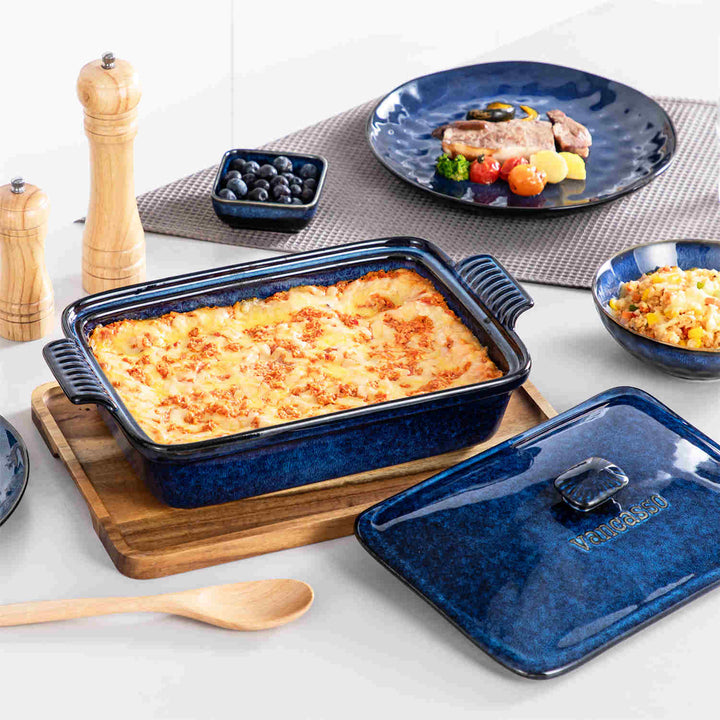
Stoneware bakeware offers different advantages. Ceramic and stoneware do not expand and contract as aggressively as metal. Their thick construction provides greater thermal mass, meaning they heat slowly and evenly while retaining heat longer. This makes stoneware baking dishes naturally resistant to warping and thermal shock.
For bakers who are tired of loud oven pops and inconsistent results, stoneware provides a quieter, more controlled baking experience. It works especially well for casseroles, bread, brownies, and desserts that benefit from steady, even heat.
When choosing high-quality stoneware, look for pieces that are kiln-fired, evenly glazed, and rated for high temperatures. A well-made stoneware baking dish can last for years without losing its shape or performance.
How to Repair a Bent Baking Sheet?
The honest answer: sometimes, but not always.
If the warp is minor, you may be able to gently bend the pan back into shape once it is completely cool. Place it upside down on a flat surface and press evenly. However, this is usually a temporary fix.
After repeated thermal shock, the metal structure weakens. The pan may continue to warp, often more dramatically each time.
If warping affects cooking performance—such as oil pooling, cookies sliding, or uneven heat distribution—it is a strong sign that the pan has reached the end of its useful life.
At that point, upgrading your bakeware set becomes a practical necessity rather than a luxury.

Investing in Bakeware That Lasts
Durable bakeware is not just about longevity; it is also about better performance.
High-quality baking dishes, whether reinforced metal or stoneware, offer:
- Even heat distribution.
- No sudden distortion or loud popping.
- Improved browning and texture.
- Consistent performance.
Professional-grade metal pans are built with heavy gauges and structural rims to control thermal expansion. Meanwhile, stoneware bakeware provides exceptional stability and heat retention for bakers who value reliability and presentation.
If you bake regularly, a thoughtfully selected bakeware set can elevate everything from weeknight dinners to special-occasion desserts. It also reduces frustration, ingredient waste, and frequent replacements.
Think of it as choosing tools that work with physics, not against it.

FAQs
Q: Why Is My Baking Sheet Popping So Loudly?
A: That sound is thermal shock. It occurs when metal heats unevenly in the oven due to rapid temperature changes.
Q: Are Thicker Baking Sheets Really Better?
A: Yes. Heavy-gauge pans resist warping because they handle internal stress more effectively than thin metal sheets.
Q: Is Stoneware Bakeware Better Than Metal?
A: It depends on what you bake. Stoneware excels at even heat and warp resistance, while metal is better for quick browning. Many bakers use both.
Q: Can Stoneware Go From Fridge to Oven?
A: Most high-quality stoneware can, but it is best to follow the manufacturer's guidelines and allow gradual temperature changes to prevent cracking.
Q: What Is the Best Option if I Am Tired of Warped Pans?
A: Upgrade to reinforced metal baking dishes or invest in high-quality stoneware for stable, professional-level results.