



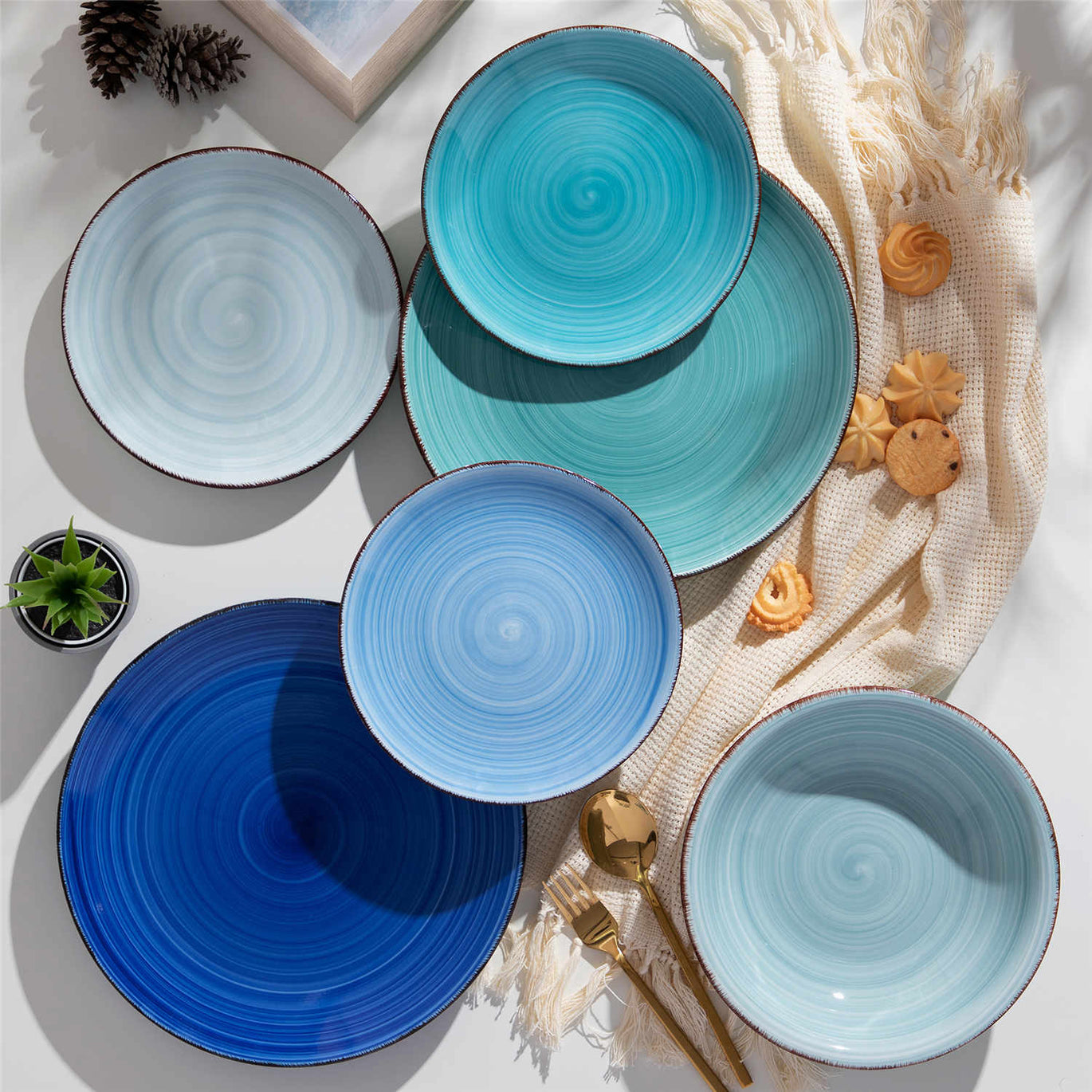


How an Aging World Is Rewriting the Rules of Ceramic Tableware

The New Reality: More Birthdays, Different Bodies
Pull up a chair with me for a moment. Imagine a dining room where most of the hands reaching for plates have celebrated seven or eight decades already. The room is warm, the food smells incredible, and yet the tableware itself is quietly deciding who eats with ease, who spills, and who gives up halfway through the meal.
That is the design challenge of an aging population. It is not abstract demographics; it is grip strength, vision, tremor, attention, and dignity all playing out over soup and salad.
Research summarized by Onward Living notes that muscle mass can drop about three to eight percent per decade after age thirty, and that grip strength falls roughly twenty‑five percent between ages sixty‑five and eighty‑five. Nearly half of adults over sixty‑five live with arthritis, and many others live with Parkinson’s disease, stroke‑related weakness, or neuropathy. Around thirty percent of seniors experience a fall each year, with the kitchen as one of the key danger zones when heavy, breakable dishes are involved.
At the same time, vision is changing. Malacasa’s overview of research on senior dining points out that aging eyes deal with yellowing lenses, less light reaching the retina, and reduced contrast sensitivity. In practice, that means pale chicken on a white plate can visually vanish, glossy reflections can erase plate edges, and the rim of a water glass may not be obvious at all. People living with Alzheimer’s disease or related dementias experience an even steeper drop in contrast sensitivity.
Taken together, these shifts mean that traditional, heavy, low‑contrast tableware is increasingly mismatched with the bodies and brains that are using it. For ceramic designers and brands, the aging of the population is not just a market opportunity; it is a brief to redesign almost everything about how a plate, bowl, and mug behave.
From Pretty Plate to Assistive Tool
Adaptive tableware used to live mostly in medical catalogs. Now it is marching steadily into mainstream design. Sites such as Rehab Store, Essential Aids, Ability Superstore, and caregiver‑focused retailers describe a family of “adaptive plates and bowls” whose job is simple: keep food on the plate, reduce spills, and make eating possible with minimal help.
Across those sources, the recurring functional requirements are surprisingly consistent. Plates and bowls for older adults or people with disabilities often need sloped surfaces that guide food onto the fork, raised rims that act as backstops, deep sides that contain stews and cereals, and non‑slip or suction bases that keep everything anchored during a shaky scoop. Handles and easy‑grip edges show up again and again. Some designs add compartments for portion control or to keep foods separate.
Rehab Store goes further and names the conditions these products serve: arthritis, tremors, neurological conditions, cognitive disorders, joint injuries, and even sports problems like tennis elbow and skier’s thumb. The message is clear. An aging population multiplies the number of diners for whom a plate is not just a fashion piece; it is an assistive device.
For ceramic tableware, that raises a direct question. If plastic and melamine are racing ahead with scooped rims, suction bases, and bright “redware” for low vision, how must ceramics evolve to stay relevant and truly helpful at the table?

Color and Contrast: Glazes that Help You See Your Supper
Color choices used to be mostly about mood. With an older customer base, they become accessibility decisions.
Malacasa’s appetite‑and‑color guide pulls together several strands of evidence that should be pinned above every glaze lab in the industry. A foundational study archived on PubMed followed men with advanced Alzheimer’s disease across a thirty‑day baseline, intervention, and post‑intervention sequence. When caregivers switched from white to high‑contrast colored tableware, mean food intake increased by roughly a quarter and liquid intake rose even more; most participants ate and drank more than they had on white plates. A follow‑up confirmed that high‑contrast blue worked as well, while low‑contrast hues did not.
A randomized crossover trial reported on PubMed Central adds nuance: healthy young women served buffet lunches to themselves on white, red, and black plates of identical size. In that context, white plates were associated with lower calorie intake than red or black, even though subjective appetite did not differ.
Care resources summarized by Malacasa and dementia‑care organizations weave these findings into practical guidance. For many people with dementia, red plates noticeably help increase intake, dark blue plates can be used intentionally to calm overeating, lime green accents are exceptionally visible for cues such as placemats and utensil handles, and large fields of black may be misread as a hole or threat.
For ceramic designers, that research translates into very specific glaze requirements. A plain white dinner plate is no longer neutral. It may blur food for someone with reduced contrast sensitivity and subtly tamp down intake even in healthy diners. A high‑contrast red or blue plate with a matte or satin finish, on the other hand, can literally make meals easier to see and more inviting to eat.
Here is a quick way to think about color choices, based on the Malacasa synthesis.
Color strategy |
Main benefit for older diners |
Potential drawback or caution |
Strong red plate or rim |
Often increases intake in Alzheimer’s disease and related dementias; feels warm and cozy |
Very intense glossy reds may feel overstimulating for a small minority; testing with the individual matters |
High‑contrast blue |
Can boost intake in severe dementia when contrast is strong; also calming |
Dark blues can also be used deliberately to moderate overeating; avoid pairings where the food disappears into the plate |
White on pale table |
Familiar, but can mute edges of pale meals and reduce intake in some healthy diners |
Particularly unhelpful when food and table are also light; glare is a risk on high‑gloss white porcelain |
Black accents |
Striking and, in some tests with healthy diners, linked to higher intake than white |
Larger black zones may be perceived as a void in some dementias; safer as a rim or handle color than as the entire plate surface |
Lime green cues |
Highly visible to aging eyes; excellent for placemats, utensil handles, and labels |
Usually too intense as a plate color; works best as a contrast frame rather than the main surface |
Notice that none of these recommendations say “never use white” or “always pick red.” The true hero is contrast: food against plate, plate against placemat, utensil against napkin, cup against table. Malacasa recommends treating the whole setting as a “legibility stack,” where each layer is clearly edged against the next.
For ceramic tableware, that means designing coordinated families: for example, a rich red dinner plate paired with a paler but still contrasting pasta bowl, a lime‑edged placemat, and a satin‑glaze mug that stands out from the tabletop. It also suggests surface decisions. Matte or satin glazes, lightly textured stoneware, and non‑glare placemats make food edges and cup rims easier to see than high‑gloss white under bright lighting.
The aging population is essentially asking ceramic makers to glaze with the eye of a low‑vision specialist, not just a stylist.

Shape, Stability, and Tremor‑Friendly Design
Color decides whether you can see your meal. Shape and weight decide whether you can actually get it to your mouth.
Potter Jill Van Zanten’s adaptive pottery project offers a masterclass in how hand function reshapes tableware. After a decade of making standard pottery, she realized that many of her beautiful cups, bowls, and plates were nearly unusable for people with hand dexterity and movement disorders. In collaboration with neighbors and testers living with quadriplegia, Essential Tremor, and other conditions, she began redesigning familiar pieces.
Adaptive dinner plates co‑designed with a user named Jeff P use low, concave‑curved raised rims as backstops for food. The curve is gentle enough that plates still stack well and fit into standard dishwasher racks, but high enough that peas and grains stop sliding off the edge. Jeff describes how such modest rim changes transformed meals from a constant battle into something manageable and much more dignified.
Mugs and tumblers in the same project incorporate heavy, wide bases, squared sides, thumb rests, and indented textures. Those details, combined with slightly flared rims, allow people with tremor or weakness to grip in multiple ways, lift with one or two hands, and rest a thumb for stability. A two‑handled mug has become Van Zanten’s best‑selling design, with users reporting that it lets them enjoy coffee and tea again without the constant fear of spilling.
Engineer‑collaborator Mike Hugill drew on engineering principles to tune these pieces: adjusting weight, base size, lip height, indents, and handle geometry to find the sweet spot where a mug is stable enough for Essential Tremor yet attractive enough that anyone would happily use it.
Other adaptive pottery pieces, like spouted bowls and small bowls with lug handles, acknowledge that sometimes it is easier to drink the last of a soup or sauce than chase it with a spoon. Bowls that can be cradled between both hands or even knuckles create options for people who have very limited fine motor control.
Commercial products echo these ideas. A dual‑handle ceramic cup from SoulGenie, for example, targets seniors with dementia, Parkinson’s disease, dysphagia, sclerosis, fatigue, or general tremor. Two handles on either side provide a balanced, two‑handed grip; the mug is made from BPA‑free, latex‑free ceramic with a smooth, edge‑free finish and a capacity of around ten fluid ounces. The design brief is comfort, safety, and dignity in everyday tea or coffee.
Serious Eats adds a broader consumer testing angle. In its extensive review of dinnerware sets, the team noted that plates with higher walls and wider rims were easier to grip and better at containing food, while straight‑walled plates looked sleek but allowed food to slide off more readily. Gently sloped walls provided a middle ground. For mugs, they favored smaller volumes that people actually finish before the drink turns bitter and handles that admit at least two fingers; small, tight handles were consistently harder to hold.
For an aging population, all of these observations converge into clear design requirements for ceramic tableware. Stable bases, gently raised rims, thumb rests or texturing, and ample handle loops are no longer nice‑to‑have embellishments. They are the difference between a bowl that decorates a shelf and a bowl that helps someone with tremor eat independently.

Weight and Material: Heft, Lightness, and Safety
Ceramic’s natural heft is part of its charm. It feels grounded in the hand and on the table. For older adults, that heft cuts both ways.
Onward Living’s review of lightweight dishware spells out the tension. Because muscle mass shrinks and grip strength drops with age, traditional heavy ceramic and glass pieces become harder and riskier to handle. When you pair that with the fact that roughly thirty percent of seniors fall each year, often in domestic environments, every heavy, fragile object in the kitchen becomes part of the risk equation.
That reality has fueled a boom in lighter materials. Melamine sets are typically fifty to seventy‑five percent lighter than ceramic, highly break‑resistant, and dishwasher safe, making them attractive for people concerned about drops and shattering. Bamboo fiber plates and bowls weigh roughly thirty to forty percent less than traditional ceramic and are marketed as both ergonomic and eco‑friendly. Premium polypropylene plates with inner lips, such as those highlighted by Onward Living, are microwave and dishwasher safe and include built‑in walls that help keep food on the plate. Stackable plastic sets reduce cabinet space demands by up to about half, which matters when reaching into high cupboards is itself a challenge.
Yet plastics and melamine come with trade‑offs. The Vancasso guide to mindful living notes that ceramics provide non‑porous, nonreactive, stable surfaces that do not leach chemicals, handle heat predictably, preserve flavor neutrality, and are easy to clean. Plastics, by contrast, can scratch and may leach substances over time; metals conduct heat aggressively and can alter taste or be unsuitable for microwaves.
Designers have started to blur the lines with “ceramic‑look” lightweight alternatives. Onward Living describes lines that mimic the appearance and glazing of traditional ceramic while being up to about seventy percent lighter. Heat‑resistant options, including examples like Le Creuset’s San Francisco Dinnerware set, can typically withstand temperatures up to around five hundred degrees Fahrenheit, making them suitable for oven and microwave use in ways that melamine cannot match.
For an aging market, the material conversation becomes less about dogmatic choices and more about clever mixing. Heavier stoneware pieces with non‑slip bases can anchor the table for those who benefit from stability. Lightweight ceramic‑look dishes can be reserved for people with very limited strength or high fall risk. True ceramic can hold the line where flavor neutrality, heat performance, and long‑term durability are most critical.
The important shift is this: weight is now a design variable to be tuned intentionally across a collection, not a fixed consequence of choosing ceramic.

Mindful Eating, Portion Cues, and Emotional Comfort
Aging does not diminish the desire for pleasure, beauty, or mindful presence at the table. If anything, it makes them more precious.
The Vancasso article on ceramic tableware and mindful living frames mindful eating as paying non‑judgmental, present‑moment attention to aroma, warmth, texture, color, and internal hunger and fullness cues. Guidance from Teladoc Health, summarized there, suggests sitting at a table, using a appropriately sized plate, and removing distractions like televisions and cell phones.
Ceramics slot beautifully into this picture. A 2024 study in the Journal of Environmental Psychology, cited by Vancasso, found that natural, tactile kitchen materials such as ceramics were associated with higher meal satisfaction and more mindful behaviors compared with synthetic materials. Heavier plates and utensils increased perceived quality and fullness, encouraging people to feel satisfied with smaller portions.
Portion perception matters for older adults too. Very large plates can make modest servings look meager, nudging overeating or creating the discouraging feeling that someone “has barely eaten,” even when the portion was appropriate. Vancasso points to the Delboeuf illusion and recommends smaller dinner plates around eight to nine inches across and thoughtful color contrast between plate and food, so an adequate portion feels abundant without being overwhelming. Shallow pasta bowls eight to ten inches wide, everyday soup or grain bowls of about twelve to sixteen fluid ounces, and small ramekins of two to four fluid ounces for nuts, sauces, or desserts create built‑in limits that feel generous rather than restrictive.
For ceramic tableware aimed at an aging audience, that means combining the accessibility features already discussed with the quiet psychology of mindful eating. A high‑contrast, eight‑inch red plate with a softly rounded rim checks several boxes at once: visibility for low‑contrast vision, easier scooping, portion cues that favor appropriate serving sizes, and a warm, appetizing visual tone.
Aging diners also deserve emotional comfort. Memory‑rich pottery projects described by MemoryCherish and TerraBella highlight how crafting bowls and cups can be therapeutic, supporting stress relief, joint flexibility, and storytelling in later life. Even when older adults are not shaping the clay themselves, they often respond powerfully to tableware that feels handcrafted, textured, and personal rather than sterile. Van Zanten’s adaptive pottery emphasizes that people with disabilities do not want stigmatizing “sippy cup” aesthetics; they want beautiful, dignified pieces that simply work better for their hands.
An aging population pushes ceramic brands, in other words, to bring accessibility and aesthetics together, not to trade one for the other.
Practical Design Priorities for Ceramic Tableware Brands
If you design or curate ceramic tableware, what should you do differently in a world where more of your customers are over sixty‑five, many live with arthritis or tremor, and a significant number are navigating dementia or low vision?
First, treat stability and grip as core design briefs. Draw on the lessons from Serious Eats testing, adaptive pottery, and dual‑handle mugs: ample handle loops, textures where fingers land, heavy and wide bases where stability helps, gently raised rims, and curved backstops that still stack efficiently.
Second, rethink color and surface. Use Malacasa’s synthesis as your north star: prioritize high contrast between common foods and plate surfaces, test red and blue options for intake support, and deploy lime green strategically for cues rather than as a plate base. Favor matte and satin glazes that reduce glare. Offer at least one collection that explicitly avoids large black fields, for dementia‑aware settings.
Third, diversify weight within ceramic‑forward collections. Mix traditional stoneware with lighter ceramic‑look pieces so families and senior communities can match weight to individual needs. Make it easy to identify lighter and heavier items by shape or visual cue, not just by picking them up.
Fourth, design for modularity and replacement. Serious Eats emphasized the practical value of sets that can be purchased as full collections, extra place settings, and individual pieces. For older adults on fixed incomes, being able to replace a broken high‑contrast dinner plate without buying an entire new set is not just convenient; it is economic justice.
Fifth, respect safety and glaze health. The Vancasso guide, along with sources such as Healthier Homes and Joyye, stresses modern lead‑free, food‑safe glazes and cautious use of vintage or unmarked ceramics, especially with hot, acidic, or oily foods. Make transparency about materials and microwave and dishwasher safety a prominent part of your packaging and product pages so caregivers do not have to guess.
Finally, consider how your designs will live in group environments such as assisted living and memory‑care communities. Rehab Store and similar suppliers already provide suction bases, redware, and divided plates for these spaces. Ceramic brands can partner by offering compatible, aesthetically elevated alternatives: for example, shallow stoneware bowls that sit securely on non‑slip mats, or red‑rimmed plates sized for institutional dishwashers but styled like something you would proudly use at home.
A Few Common Questions
Is ceramic tableware actually safe for seniors?
Ceramic has several advantages for older adults, according to the mindful living guidance from Vancasso and health‑focused sources. Properly fired, modern ceramic with lead‑free, food‑safe glazes is non‑porous and nonreactive, does not leach chemicals, and handles heat in a predictable way. That makes it excellent for hot soups, coffee, and everyday meals. The main risks are chipping, breaking if dropped, and potential glaze issues with older or unmarked pieces. Choosing contemporary, well‑documented ceramics and using care practices such as avoiding sudden temperature shocks helps keep ceramics senior‑friendly.
Should families switch entirely to plastic or melamine for older relatives?
Not necessarily. Onward Living’s review of lightweight dishware highlights real benefits of melamine, bamboo fiber, and premium plastics: they can be dramatically lighter than ceramic, highly break‑resistant, and easier to store. For someone with very limited strength or high fall risk, these materials can be a game changer. At the same time, the Vancasso article and environmental psychology research suggest that ceramics support more mindful, satisfying eating, and offer superior heat and flavor performance. Many families find a hybrid approach works best, keeping some ceramic pieces for occasions and diners who can handle the weight, and using lighter “ceramic‑look” or melamine pieces where safety and ease are paramount.
How can caregivers or designers test whether a plate color really helps?
Malacasa proposes a simple, home‑scale trial that works beautifully in senior settings. Choose two plate colors that strongly contrast with a given meal, such as a saturated red and a deep blue for a beige lunch. Keep everything else the same: table, placemat, portion size, timing, and utensils. Alternate the plates across several meals and quietly note how much is eaten and how easy it seems for the person to find and handle items. For loved ones with dementia, extend the trial to account for mood and routine. This kind of small experiment, especially when you weigh plates before and after or measure drinks by fluid ounces, often reveals a clear “winning” color without any special equipment.
Setting the Table for the Future
An aging population is not a design problem to be solved; it is an invitation to make the table more generous, more legible, and more joyfully usable for every hand that reaches toward it.
As a Colorful Tabletop Creative and Pragmatic Joy Curator, I see ceramic tableware evolving from static objects into friendly collaborators: plates that gently corral food instead of letting it escape, mugs that welcome uncertain fingers with open handles, glazes that make meals pop for tired eyes, and collections that mix heft and lightness with intention.
If we listen closely to what arthritis, tremor, dementia, and simple wear‑and‑tear are telling us, ceramic design can age as gracefully as the people it serves. The next time you open a cupboard, imagine who will be using what you pull out—and let that vision color, curve, and recalibrate every beautiful piece you bring into the world.
References
- https://www.caregiverproducts.com/plates-plate-guards-bowls.html?srsltid=AfmBOormBZNs_kZJbLZkaelMJOI9gv4b0ur1k7Dn9ypbmnkMWoON1Lbj
- https://www.rehab-store.com/c-plates-and-bowl.html?srsltid=AfmBOopZOrH5FWmgR--lPgVgpyosO4bgmLCmISCXX_ThcC3SVFROmcce
- https://www.seriouseats.com/best-dinnerware-sets-7376024
- https://www.soulgenie.com/ceramic-two-handle-mug-for-seniors
- https://www.abilitysuperstore.com/collections/plates-dishes
- https://www.alzstore.com/dinnerware-p/h018.htm?srsltid=AfmBOopea7kHxl45fdGwDNs0JNky44hIlXaFy4kMbTNR2KvLcRHfuejF
- https://www.amazon.com/dishes-elderly/s?k=dishes+for+elderly
- https://enclaveoffranklin.com/craft-ideas-for-people-with-limited-hand-mobility/
- https://www.essentialaids.com/kitchen-aids-feeding-aids/plates-bowls.html
- https://fieldstonelife.com/craft-ideas-for-seniors-with-limited-mobility/
Tu pourrais aussi aimer
Stern Ensemble de vaisselle 16 pièces
- À partir de $75.00
$100.00- À partir de $75.00
- Unit price
- pour
-
Blue
-
Green
-
Red
-
Grey
Bonita Service de table 18 pièces
- À partir de $63.00
$78.00- À partir de $63.00
- Unit price
- pour
-
Blue
-
Multicolor
Simi Ensemble de vaisselle de 24 pièces
- $100.00
$135.00- $100.00
- Unit price
- pour
Service de vaisselle étoilé 16 pièces
- $77.00
$90.00- $77.00
- Unit price
- pour
-
Blue
-
Green
-
Red
-
Gradient Green