





Brexit's Impact on UK’s Ceramic Dinnerware Exports Explained

A Colorful Tabletop Meets Cold Trade Reality
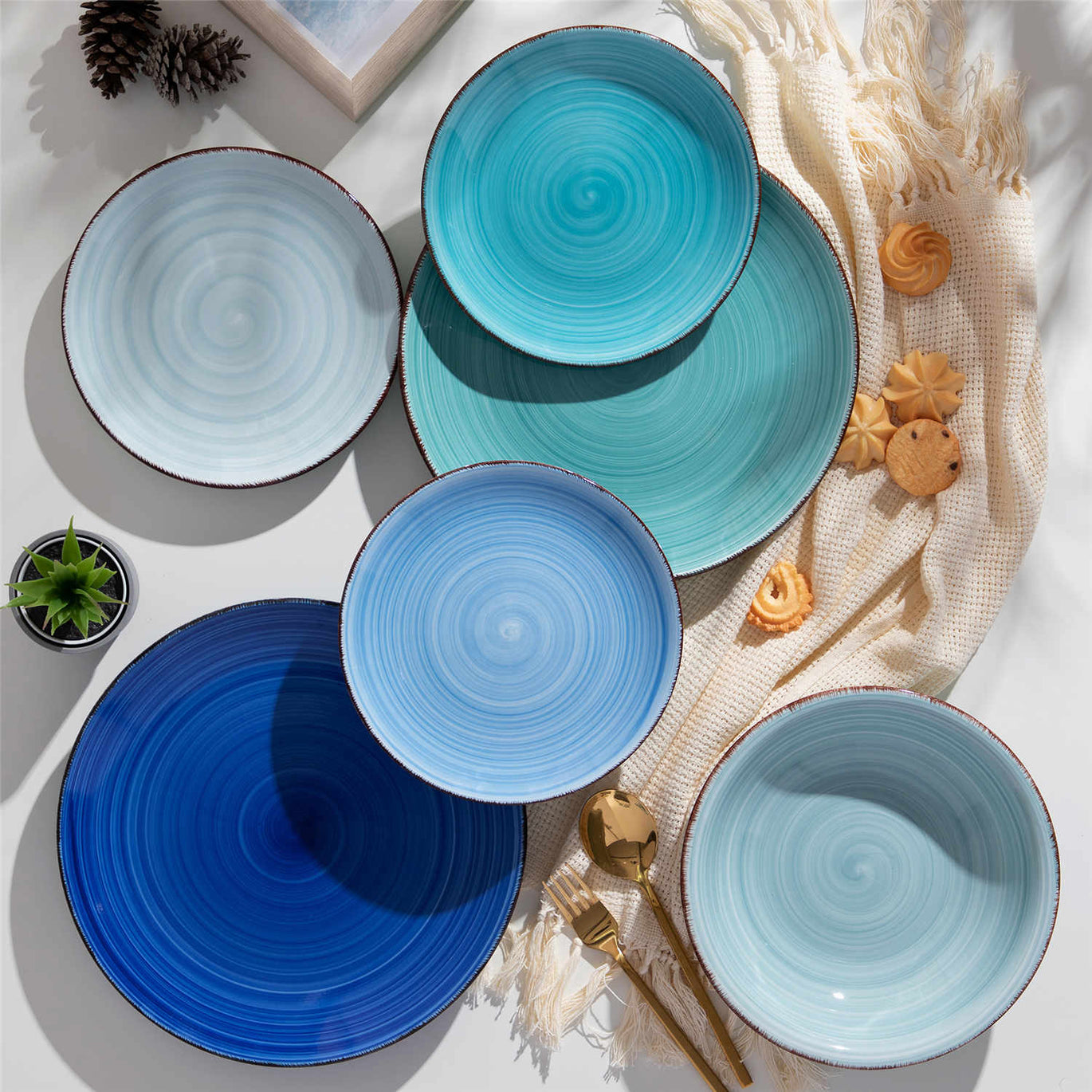
Picture this: a long table dressed in layered stoneware plates, satin-finished porcelain bowls, and hand-painted mugs, all quietly announcing “Made in Britain.” For years, those pieces glided into European homes with about as much fuss as passing the salt. Then Brexit arrived, and suddenly every plate needed a passport, a stack of paperwork, and a lawyer fluent in customs codes.
As a Colorful Tabletop Creative & Pragmatic Joy Curator, I spend my days between potters’ studios, trade data, and dinner parties. I’ve heard the same story from Stoke-on-Trent boardrooms and tiny studio kilns: the love for making beautiful, hard‑working dinnerware has not changed, but the route from kiln to continental kitchen absolutely has.
This article unpacks what Brexit has actually done to UK ceramic dinnerware exports, using evidence from organizations such as the British Ceramic Confederation, the UK Trade Policy Observatory, UK parliamentary research, and European Central Bank economists. We will keep it grounded in numbers and policy, but always bring it back to your dinner table: how it affects the plates you buy, the prices you see, and the future of colorful British ceramics around the world.
Why Ceramic Dinnerware Exports Matter More Than You Think
The UK ceramics industry is not a quaint side hustle in a sleepy town. The British Ceramic Confederation (BCC) describes it as a thriving, energy‑intensive manufacturing sector with more than 20,000 direct jobs and rising exports. Members range from Stoke potters and heritage tableware brands to brick makers and high‑tech ceramic suppliers for aerospace and defense. Roughly three quarters of these companies are small and medium‑sized enterprises, many clustered in Staffordshire.
Ceramic dinnerware sits right at the heart of this ecosystem. Under international trade classifications, most tableware lives in two codes: porcelain and china under HS 6911.10, and other ceramic dinnerware under HS 6912.00. Within those codes you find all the everyday heroes on your table: mugs, cups and saucers, plates, platters, bowls, jugs, cake stands, and sauce boats.
Europe is the planet’s biggest stage for these pieces. Research on the European home decoration and home textiles sector shows that Europe accounts for nearly 40 percent of global ceramic dinnerware imports and that the market grew steadily between 2017 and 2021. Demand is driven by more home cooking, casual social dining, and a growing taste for expressive, personality‑rich tableware rather than purely functional white plates. Buyers increasingly look for design value, durability, and often a story: artisan touch, sustainability, or heritage.
For UK makers, this matters because the EU is their primary export neighborhood. BCC and UK government statements repeatedly note that around 57 percent of UK ceramic exports go to the EU. That is not just a statistic; it is thousands of pallets of mugs and dinner sets, season after season, flowing to German department stores, Dutch re‑export hubs, French specialty shops, and beyond.
So when the rules of UK–EU trade change, ceramic dinnerware feels it quickly. And because ceramics are heavy, fragile, and energy‑intensive to fire, any extra friction in shipping can turn a pretty plate into a marginal business proposition.

How Brexit Rewrote the Rules For UK Tableware
To understand what changed for your favorite British dinnerware brand, we need to translate some trade‑policy jargon into everyday English.
From Single Market Ease to the TCA Maze
Before Brexit, UK ceramic exporters operated inside the EU Single Market and Customs Union. In practice, that meant plates, bowls, and mugs moved from Stoke to Stockholm much like they moved from Stoke to Manchester. There were no customs declarations at the border, no rules‑of‑origin forms, no separate EU‑versus‑UK safety marks to think about. Deep economic integration reduced both tariffs and many of the non‑tariff barriers such as duplicated regulatory checks and routine customs delays.
Brexit replaced that arrangement with the EU–UK Trade and Cooperation Agreement (TCA), which took effect in January 2021. On paper, it sounds generous: a zero‑tariff, zero‑quota free trade agreement for goods. But there is a big condition. To claim zero tariffs, a shipment must satisfy detailed rules of origin, showing that enough of its value is genuinely UK or EU. That means manufacturers and retailers now face customs declarations, origin documentation, and new regulatory borders.
Researchers at the UK Trade Policy Observatory and economists writing for VoxEU describe this as a reversal of deep integration. Instead of streamlining, Brexit reintroduced a customs and regulatory border, raising both fixed trade costs (such as hiring customs expertise) and variable costs (such as slower crossings and recurring paperwork).
The Paperwork Pile-Up For Every Plate
Ceramic dinnerware is not small in customs terms, but it is often low‑margin and highly competitive. Adding friction hurts.
The UK National Audit Office estimated that leaving the EU without smooth arrangements would increase the number of UK import and export declarations from about 55 million per year to around 260 million. BCC speakers brought that figure to members of Parliament in February 2019, warning that an untested Customs Declaration Service might not cope, risking delays in both critical raw materials and finished goods.
Even with the TCA in place, the spirit of that warning still applies. Exporters have had to learn new systems, hire customs intermediaries, and put more staff time into classification and documentation. Research by the UK Trade Policy Observatory finds that, across all sectors, a sizable share of exports that could use zero tariffs under the TCA simply do not. Over the first seven months of 2021, preference utilization rates averaged around 74 percent, meaning roughly a quarter of eligible UK exports to the EU still paid tariffs rather than chase the paperwork. The foregone duty savings on those exports are estimated at about £534.6 million.
For a mid‑sized dinnerware maker, that choice is very real. You can invest heavily in mastering rules of origin, track every clay component and decorative decal, and document that your product qualifies for zero tariff. Or you can accept the tariff as a cost of business and keep your logistics simpler. Either way, the margin on that cheerful polka‑dot plate is under pressure.
Tariffs, Trade Remedies And The Fear Of A Double Whammy
On tariffs, the ceramics sector has lived through several waves of anxiety since the referendum.
Industry evidence presented to MPs and reported by outlets such as Marketplace and Borderlex highlights a particular scenario: a no‑deal Brexit in which UK ceramics face around a 12 percent tariff when entering the EU, while the UK simultaneously cuts its own import tariffs on ceramic products to zero. That is what one BCC leader called a “double whammy.” Exporters would pay more to sell into their largest market, while cheap imported plates from countries such as India or Brazil would pour into the UK without protection.
The sector, represented by the BCC, fought that proposal hard. Government later adjusted its plans, keeping tariffs on certain ceramic products, especially those already covered by EU anti‑dumping duties, at least for a transition period. But the episode revealed a core tension: the desire to make consumer imports cheaper versus the need to preserve high‑skill manufacturing clusters like Stoke‑on‑Trent.
Dumping is not an abstract fear. The ceramics industry has relied on EU trade‑defense measures against underpriced Chinese tableware and tiles for years. In speeches and official briefings, the BCC has argued that EU trade remedies have sometimes protected UK ceramics more effectively than the UK government itself. Post‑Brexit, Britain created its own Trade Remedies Investigations Directorate and a permanent Trade Remedies Authority to investigate dumping and subsidies and recommend countermeasures.
There is opportunity here. The government has framed Brexit as a chance to tailor trade‑remedy rules faster and more decisively to defend sectors such as ceramics. Government statements from visits to Stoke-on-Trent emphasize that a robust UK trade‑remedies system is meant to safeguard the 20,000‑plus jobs in the industry and support future export growth. At the same time, the ceramics sector knows that any delay or weakness in implementing those remedies would leave domestic producers exposed.
What The Numbers Show About Ceramic Dinnerware Exports
So far we have talked about architecture and anxiety. What do the actual data say about exports, especially for ceramics?
The Big Picture: UK–EU Trade Took A Hit
Across the whole economy, the EU remains the UK’s single largest trading partner. UK parliamentary research shows that in 2024 the EU accounted for about 41 percent of UK exports of goods and services and about 51 percent of UK imports. Yet several independent analyses conclude that Brexit has pulled those numbers down from where they would otherwise be.
A UK Trade Policy Observatory briefing paper that focuses on the first seven months of 2021 estimates that the TCA reduced UK exports of goods to the EU by about 14 percent and imports from the EU by about 24 percent compared with a counterfactual in which the UK had stayed in the EU. European Central Bank economists similarly describe Brexit and the TCA as a drag on UK trade, contributing to weaker export performance relative to other advanced economies.
Those figures are for all goods. To understand your dinner plates, we need to zoom into the “ceramics and glass” slice of the trade pie.
The Ceramics Slice: A Noticeable Dent
Using detailed product‑level data, the UK Trade Policy Observatory examined how different sectors fared. For UK exports of ceramics and glass to the EU, they estimate that the TCA led to a reduction of about 16.9 percent over January to July 2021, with the negative effect persisting through most months. On the import side, UK imports of ceramics and glass from the EU fell by roughly 30.3 percent under the same methodology.
Remember that earlier BCC figure: about 57 percent of UK ceramic exports go to the EU. When your largest market suddenly becomes 16 to 17 percent smaller than it would have been, you feel it in order books, in production schedules, and eventually in jobs.
Meanwhile, the European market for ceramic dinnerware itself has not evaporated. Research on the European market potential for ceramic dinnerware shows that Europe’s import appetite grew between 2017 and 2021 and that around half of those imports come directly from developing countries, with China still dominant but countries such as Bangladesh and Indonesia gaining ground. In other words, demand for plates and bowls is buoyant, but UK suppliers now face tougher relative conditions than some of their competitors.
A concise way to see this shift is to place a few key indicators side by side.
Aspect |
Situation before Brexit changes took effect |
Early post‑TCA evidence for ceramics |
Indicative source |
EU share in UK ceramic exports |
Around 57 percent of UK ceramic exports went to the EU |
EU remains core market but is harder to serve |
British Ceramic Confederation and UK government statements |
Tariff risk on UK tableware exports to EU in a no‑deal scenario |
Additional EU import tariff of about 12 percent on Staffordshire pottery |
TCA prevents this if rules of origin are met, but paperwork costs remain |
BCC speeches, Marketplace reporting |
TCA effect on UK exports of ceramics and glass to EU |
Not applicable pre‑TCA |
Around 16.9 percent lower in January–July 2021 than a no‑Brexit counterfactual |
UK Trade Policy Observatory Briefing Paper |
TCA effect on UK imports of ceramics and glass from EU |
Not applicable pre‑TCA |
Around 30.3 percent lower in January–July 2021 than a no‑Brexit counterfactual |
UK Trade Policy Observatory Briefing Paper |
European share of global ceramic dinnerware imports |
Europe accounted for nearly 40 percent of global imports and the market grew between 2017 and 2021 |
European demand remains strong; sourcing is shifting more toward developing‑country suppliers |
Sector research on European market potential for ceramic dinnerware |
Within that context, Brexit does not look like the end of UK ceramic dinnerware exports. Instead, it looks like a structural dent that makes growth harder, especially for smaller firms that cannot simply hire a dedicated trade‑compliance team or set up a distribution hub inside the EU.

How All This Shows Up On Your Table
All these percentages and policy acronyms are interesting, but what do they mean when you are standing in your kitchen choosing plates?
First, variety can shrink at the edges. When some EU retailers face extra hassle importing small, diverse shipments from UK makers, a few of them quietly switch to EU‑based suppliers or to large non‑EU factories that are already set up to navigate customs. Academic work on advanced manufacturing sectors and Midlands exporters notes that some UK firms have had EU clients shift toward EU competitors or require UK suppliers to hold stock inside the EU to guarantee smooth deliveries. That pattern easily extends to tableware.
Second, lead times stretch and become less predictable. Customs checks, rules‑of‑origin documentation, and new safety markings all introduce opportunities for delay. The UK still has a transition period for some import checks, but EU authorities already require full formalities for goods arriving from the UK. Importers describe having to order earlier for key seasons such as spring brunches or the winter holidays because a short holdup at the border can ruin a carefully planned launch.
Third, pricing gets more complex. Tariffs themselves may be zero under the TCA, but trade‑related costs flow into final prices. When over a quarter of eligible exports choose to pay tariffs rather than absorb the administrative burden of claiming preferences, someone down the chain pays. It may be the exporter accepting lower margins, the importer accepting thinner profits, or the final customer seeing a slightly higher price tag on a hand‑decorated mug.
Finally, sourcing patterns shift. European research shows that importers are increasingly buying ceramic dinnerware directly from developing countries, while UK market data suggest that a very high share of UK dinnerware imports also come straight from those same countries, with China holding a particularly large slice. That does not erase UK ceramics, but it does push British producers more firmly into niches where quality, design story, and durability can justify a premium.
The upside for your table is that these niches are often where the most exciting design work happens: expressive glazes, thoughtful shapes, and sustainable materials. The challenge is making sure those plates can still move across borders without drowning in paperwork.

Pros And Cons Of The Post‑Brexit Landscape For Ceramic Dinnerware
If we take a pragmatic, joy‑curating view, Brexit has created both pain points and possibilities for UK ceramic dinnerware.
On the downside, non‑tariff barriers have clearly increased. Customs declarations, rules‑of‑origin checks, and regulatory divergence add costs that weigh particularly heavily on small and medium‑sized firms. Evidence from firm‑level studies across UK trade shows that smaller exporters have been the most likely to reduce or stop exporting to the EU, while the largest firms absorb fixed compliance costs and keep going. In sectors like ceramics and glass, TCA‑related trade declines have been sharper than the average, which lines up with the sector’s relatively higher EU tariffs and the sensitivity of fragile, heavy products to delays and cost increases.
There is also the continued risk around trade defense and global competition. Ceramics producers have stressed how dependent they are on effective anti‑dumping measures to counter underpriced imports, especially from China. Transitioning from EU‑level protections to a new UK‑only system is not just a legal exercise; any gaps or weak points show up as lost market share and threatened jobs.
Energy policy is another quiet stressor. Ceramics need extremely high firing temperatures, and although many UK plants are among the most energy‑efficient in the world, the cost of carbon and energy policy has been a recurring concern. The industry has framed Brexit as an opportunity to redesign carbon policy with more support for investment in breakthrough decarbonization technologies, but until those policies are fully shaped, energy costs remain a tight constraint.
On the plus side, there are strategic opportunities if they are managed well. Independent trade agreements give the UK the chance to negotiate better terms in key non‑EU markets. Government statements and industry commentary repeatedly highlight the United States, where tariffs on certain ceramic catering ware can reach around 28 percent, as a prime candidate for cuts. Removing or reducing those tariffs could make British tableware much more competitive in American restaurants and homes.
A tailored UK trade‑remedies regime can, at least in theory, move faster to protect UK ceramics from unfair dumping than the heavier EU machinery did. Industry alliances including manufacturing bodies and unions have already pushed successfully for improvements to UK trade‑remedy rules through legislation. If that momentum continues, it can reduce some of the downside risks.
Brexit has also nudged many UK producers to sharpen their proposition. In a European market where imports from developing countries dominate the mass segment, and where tariffs and paperwork complicate mid‑range exports, there is a growing logic for UK brands to lean into design, story, and durability. That aligns well with consumer trends: younger buyers craving expressive, Instagram‑ready tablescapes, hospitality buyers insisting on rugged, high‑fired dishes, and home cooks who want pieces that move from oven to table without drama.
Practical Guidance For Makers, Retailers And Enthusiasts
Policy arguments and trade models are important, but the colorful magic happens when makers, retailers, and hosts turn all of this into fresh strategies. Here are pragmatic, playful ways to navigate the post‑Brexit ceramic landscape, grounded in the recommendations and warnings found in trade guidance and industry evidence.
If You Are A UK Ceramic Maker Or Brand
Treat customs competence as a design tool, not a bureaucratic chore. Tax specialists and trade advisers emphasize that, post‑Brexit, the legal responsibility for accurate customs declarations usually rests with the exporter or importer, even when freight forwarders or logistics companies handle the practicalities. Learning the correct commodity codes for your dinnerware, understanding how rules of origin apply to your clay, glazes, and decorative transfers, and keeping clear records are now as essential as your glaze recipes.
Consider where rules‑of‑origin complexity is worth the effort. If a line is strongly UK‑made, with local clay, UK decorating, and minimal non‑UK inputs, it may be relatively straightforward to certify UK origin and benefit from zero tariffs under the TCA. If a line relies heavily on imported bisques or decorated blanks, the paperwork may be more demanding, and you might decide that paying the tariff yields a better balance of cost and simplicity. Research from UK trade analysts underscores that many firms consciously make this trade‑off.
Look again at your market mix. With EU exports under pressure, sector‑level analysis and government visits highlight non‑EU markets, especially the United States, as major opportunities once tariffs are addressed. That does not mean abandoning Europe; the EU still buys a majority share of UK ceramic exports and remains a vital neighbor market. But it does suggest shaping collections with multiple audiences in mind: lines tailored for European taste and hospitality standards, and others aimed at North American or Asia‑Pacific buyers.
Strengthen resilience in your supply chain. Industry surveys from manufacturing and ceramics indicate that Brexit uncertainty has already driven firms to stockpile raw materials, rent extra warehouse space, and in some cases establish entities inside the EU. Rather than treating these moves as panicked reactions, you can reframe them as strategic: hold a modest safety stock of critical materials, diversify key suppliers where possible, and explore whether a small EU distribution base could unlock smoother access to continental customers.
Most importantly, protect the magic. When I visit potteries, the pieces that stand out are not the ones designed to “beat Brexit” but the ones that make a table sing: a satin‑matte stoneware dinner plate in stormy blue, a bone china coupe with a razor‑thin rim, a hand‑painted breakfast bowl that makes granola feel like art. Brexit adds friction; your defense is to create dinnerware that buyers will fight to keep in their assortments despite that friction.
If You Are A Buyer Or Retailer Outside The UK
Ask your UK suppliers direct, practical questions about their post‑Brexit readiness. Trade specialists recommend clarifying who is responsible for customs declarations, who bears the risk of misclassification, and how rules of origin are being handled. Establish early whether your pricing includes duties and taxes and whether you are buying on terms that make you the importer of record.
Plan your calendar with an extra buffer. Evidence from business surveys and regional manufacturing research shows that customs and regulatory delays are now a normal part of UK–EU trade. For seasonal collections, give your UK suppliers a longer runway so that a short hold‑up at the border does not derail your launch.
Use dinnerware as a storytelling tool with your customers. In a world where Brexit headlines can feel abstract, explaining that a particular mug line involved extra effort to navigate new trade rules can actually deepen the perceived value. Many consumers are willing to pay for pieces that support skilled jobs and heritage production when they understand the hurdles those pieces have cleared.
At the same time, remain open to a balanced sourcing strategy. European market research shows that imports from developing countries now represent a large share of dinnerware supply into Europe, with some countries gaining ground by combining craftsmanship and competitive pricing. For retailers, a mix of UK heritage pieces and non‑EU artisanal lines can give customers options while spreading trade risk.
If You Are A Color-Loving Home Host
As a home entertainer, your power is subtle but real. When you choose a UK‑made dinner set or a single hand‑thrown serving bowl, you are voting for a complex ecosystem of skills, apprenticeships, and regional identity that is navigating a turbulent trade moment.
Be patient with price tags that edge upward. Trade economists and parliamentary analysts agree that Brexit has added lasting frictions to UK–EU trade. When a platter costs a little more, it may be reflecting higher energy costs, customs compliance, and extra logistics, not just a designer’s whim.
Lean into intentionality. Instead of buying twelve identical plates on impulse, build a small, coherent stack of pieces you truly love and will use for years. European market data show that consumers are increasingly drawn to expressive, individualistic tableware; Brexit, for all its headaches, only reinforces the case for slower, more meaningful purchasing.
And yes, keep your tables joyful. Mix that British speckled stoneware with a vintage continental jug and a handwoven runner. Trade policy might shape the supply, but you still orchestrate the mood.

Brief FAQ
Did Brexit completely kill UK ceramic dinnerware exports to the EU?
No. The EU is still the single most important destination for UK ceramic exports, accounting for around 57 percent of the sector’s overseas sales according to the British Ceramic Confederation and government statements. However, detailed analysis by the UK Trade Policy Observatory finds that exports of ceramics and glass to the EU were roughly 16.9 percent lower in the first seven months of 2021 than they would have been without Brexit. That is a significant dent, especially for smaller firms, but not a collapse.
Why are some UK tableware brands producing or stocking more inside the EU?
Research on advanced manufacturing and Midlands exporters shows that, in several sectors, firms have responded to Brexit‑related frictions by opening or expanding EU operations or distribution hubs. Doing so can keep deliveries to EU customers smoother and avoid some border delays, but it may also shift where certain products are made or decorated. For tableware brands, this can mean blending UK‑made lines with pieces produced in the EU or elsewhere, while still maintaining design direction and quality control from the UK.
Is buying UK-made dinnerware still sustainable and sensible after Brexit?
Yes, with a bit of nuance. Ceramics are inherently energy‑intensive because they require very high firing temperatures, and the industry has been candid about the costs of carbon and energy policy. At the same time, many UK plants are already highly efficient, and industry leaders are pushing for more supportive decarbonization frameworks. From a consumer perspective, choosing well‑made pieces that you will use for a long time, rather than rapidly replacing cheap, low‑quality items, remains one of the most sustainable choices you can make, regardless of Brexit.

Setting The Table For What Comes Next
Brexit has not broken Britain’s ceramics, but it has changed the choreography behind every plate and bowl that leaves a UK kiln. Trade agreements, customs codes, and tariff schedules now sit in the background of your Sunday brunch just as surely as the sourdough and the salad.
For makers, the path forward runs through sharper trade savvy, bolder design, and smart market diversification. For retailers, it means deeper collaboration with UK suppliers and clearer communication with customers. For home hosts and collectors, it is an invitation to choose more intentionally, to support the pieces and producers whose stories you care about, and to keep your tables vibrant in spite of all the spreadsheets behind the scenes.
In other words, the policy landscape may be gray, but your tabletop does not have to be.
References
- https://www.academia.edu/9258966/Comparative_Performance_Analysis_between_Ceramics
- https://ies.princeton.edu/pdf/S37.pdf
- https://www.gov.uk/government/news/vital-industries-to-benefit-from-post-brexit-britain
- https://aei.pitt.edu/101930/1/BKMNEXT362.pdf
- https://blogs.sussex.ac.uk/uktpo/files/2021/11/BP63-1.pdf
- https://www.ceramics-uk.org/news/speech-to-mps-on-brexit
- https://cepr.org/voxeu/columns/deep-integration-and-trade-uk-firms-wake-brexit
- https://www.uktpo.org/reports/post-brexit-ii-trade-in-goods-and-services/
- https://www.marketplace.org/story/2019/03/12/could-brexit-break-britains-ceramics-industry
- https://borderlex.net/2019/05/23/uk-ceramics-sector-vents-frustration-over-brexit-trade-policy-confusion/
Tu pourrais aussi aimer
Stern Ensemble de vaisselle 16 pièces
- À partir de $75.00
$100.00- À partir de $75.00
- Unit price
- pour
-
Blue
-
Green
-
Red
-
Grey
Bonita Service de table 18 pièces
- À partir de $63.00
$78.00- À partir de $63.00
- Unit price
- pour
-
Blue
-
Multicolor
Simi Ensemble de vaisselle de 24 pièces
- $100.00
$135.00- $100.00
- Unit price
- pour
Service de vaisselle étoilé 16 pièces
- $77.00
$90.00- $77.00
- Unit price
- pour
-
Blue
-
Green
-
Red
-
Gradient Green