



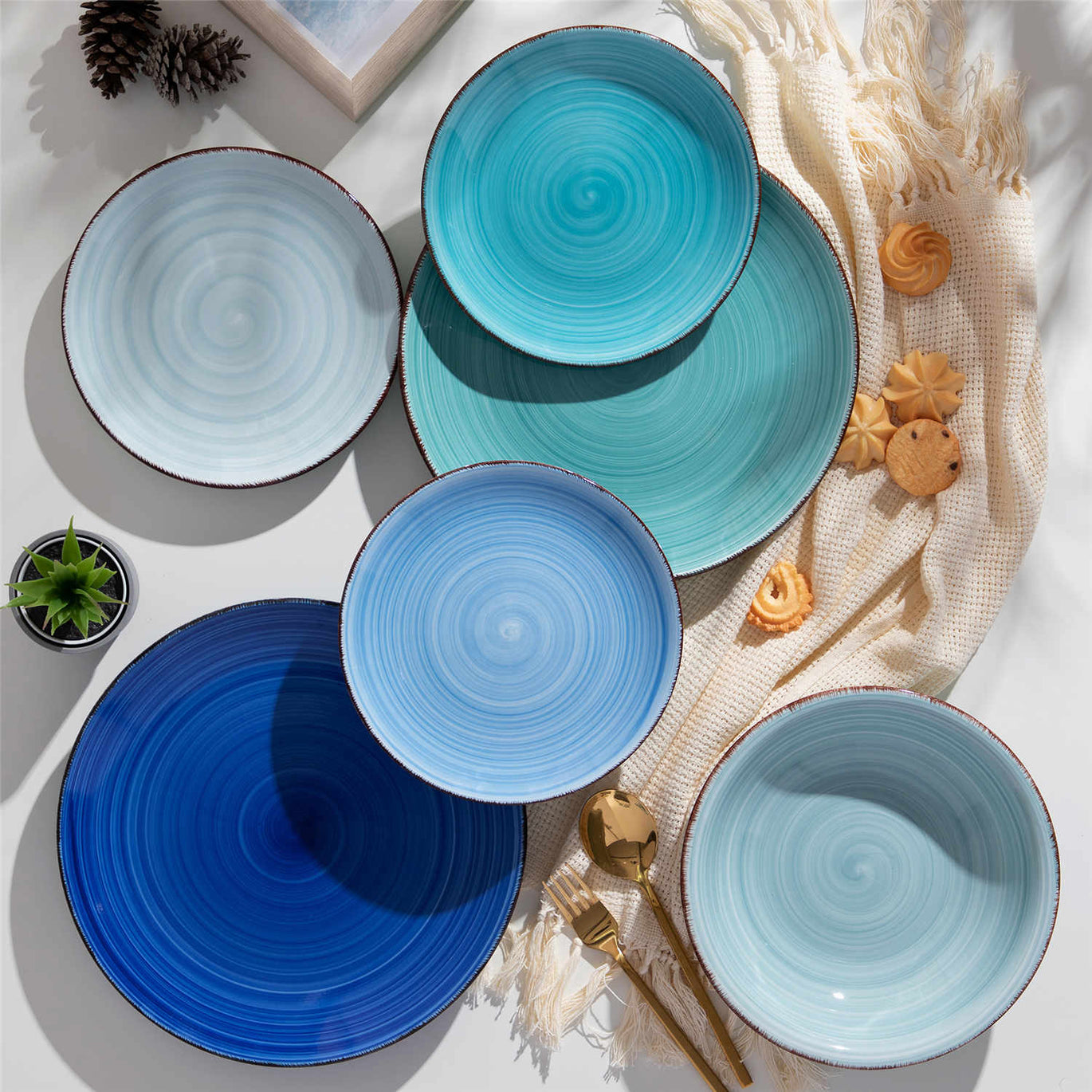


Understanding the Undervalued Male Market for Ceramic Dinnerware

Why Men Belong At The Tableware Strategy Meeting
Walk into most dinnerware aisles or scroll through most ceramic collections online, and you’ll see the same story: soft pastels, bridal registry messaging, and product photos aimed squarely at women or couples. Yet the reality simmering in kitchens is very different.
Over the past few decades, men have quietly moved from “grill guy” or occasional pancake hero to everyday home cooks, grocery planners, and enthusiastic hosts. A Nutrition Journal analysis of US time-use data shows that the share of men who cook rose from 29% in 1965 to 42% in 2007 and climbed to 46% by 2016. That is nearly half of adult men cooking at home in some capacity, even though women are still more likely to cook and spend longer doing it.
At the same time, the ceramic tableware category itself is booming. A ceramic tableware market report summarized by Finance Yahoo values the global ceramic tableware market at about $12.4 billion in 2024, with expectations of reaching around $22.2 billion by 2034. Another outlook from WiseGuy Reports puts the ceramic dinnerware segment alone near $10.96 billion in 2024, rising toward roughly $15.00 billion by 2035. And a Dataintelo report estimates the high-end tableware segment at roughly $3.5 billion in 2023, heading toward about $5.9 billion by 2032.
In other words, ceramic dinnerware is big business. Men are increasingly active in the kitchen. Yet the male consumer is still treated as an afterthought, if he is acknowledged at all. As a Colorful Tabletop Creative & Pragmatic Joy Curator, I see this gap every time I style a table or curate a collection: men light up when they find pieces that feel like them, but the industry rarely talks to them directly.
This article unpacks who these men are, what they want from ceramic dinnerware, where the opportunities lie, and how to court them without falling into tired stereotypes.

The Quiet Rise Of The Male Home Cook
A good place to start is not the plate, but the person holding it. When you understand men’s evolving role in the home kitchen, the case for designing and marketing dinnerware with them in mind becomes impossible to ignore.
A large-scale study in Nutrition Journal examining US home food preparation from 2003 to 2016 shows a clear pattern. More adults are cooking at home, and men are a major part of that increase. The share of men who cook rose from less than one-third in 1965 to nearly half by 2016, and the time they spend cooking has gone up for more educated men in particular. College-educated men and those with some college were more likely to cook and to increase their cooking time over the study period, while men with less than a high school education were less involved and actually decreased cooking time.
This tells us several things. First, male cooking is no longer a fringe behavior; it is becoming a mainstream part of contemporary masculinity. Second, many of the men most engaged in cooking are also the ones more likely to have disposable income and an appetite for design-led, higher-quality tools, including dinnerware. Third, even with these shifts, women still do more cooking and for longer, so the table is often a shared decision space rather than a purely male domain.
A separate qualitative study published in the American Journal of Men’s Health looked specifically at African American men’s perceptions of how their wives influence their eating. In focus groups with 83 men in Michigan, nearly half reported that their wives or girlfriends were the primary grocery shoppers, and most described wives as the main decision-makers about home meals. Men had more freedom over what they ate outside the home, but at home they largely accepted women’s control over food as part of a satisfying division of roles.
Here we see another layer: even when men care deeply about food, their tableware preferences are often filtered through partners or families. Any strategy for the male ceramic market must account for couple and household dynamics rather than imagining men as isolated solo shoppers.
Finally, an SSRN study titled “Flavors of Masculinity: Exploring Men’s Roles and Practices in Household Cooking Behavior” adds a crucial emotional dimension. Among 461 men aged 30 and above, the statement “I often do the grocery shopping” received the highest agreement, suggesting that grocery shopping is a prominent space of domestic participation. The item “I feel a sense of self-actualization when I cook” was the strongest on the cooking behavior scale, indicating that for many men, cooking is not just a chore; it is personally meaningful, tied to identity and fulfillment.
The same study found that greater involvement in household chores was positively linked with more egalitarian gender attitudes and more active cooking behavior. More egalitarian attitudes, in turn, strengthened men’s cooking engagement. In simple terms, when men do more around the house, they tend to adopt more equal gender beliefs and cook more, and cooking itself becomes part of how they see themselves as modern men.
Now imagine that man, with a cart full of fresh groceries and a favorite recipe queued up, reaching for a plate that feels flimsy, fussy, or clearly not designed with him in mind. That friction is exactly where the current ceramic market leaves money and meaning on the table.

The Business Case: A Growing Market With An Overlooked Segment
Before getting into glazes and rims, it helps to remember just how vibrant the overall ceramic tableware landscape is. Several market research firms paint a consistent picture of growth, premiumization, and design-driven demand.
Here is a quick, research-based snapshot of where things stand:
Market segment |
Example 2024/2025 value |
Forecast value and horizon |
Source |
Key note |
Global ceramic tableware |
About $12.4 billion |
Around $22.2 billion by 2034 |
Finance Yahoo (industry report) |
Dinnerware is the largest segment by revenue |
Global ceramic dinnerware |
About $10.96 billion |
About $15.00 billion by 2035 |
WiseGuy Reports |
Plates are the dominant product category |
High-end tableware (all materials) |
Roughly $3.5 billion |
Around $5.9 billion by 2032 |
Dataintelo |
Premium segment growing at about 6.1% CAGR |
US organic ceramic dinnerware |
About $1.2 billion |
About $2.1 billion by 2033 |
LinkedIn market brief |
Eco and health-conscious subsegment growing fast |
North America share of ceramic tableware |
Roughly 35.2% of global |
N/A |
Finance Yahoo and Joyye synthesis |
Strong home dining and social gathering culture |
Across these reports, several themes repeat. Consumers are buying dinnerware not just to eat from, but to stage visually appealing meals for social media, to match their decor and lifestyle, and to enjoy more deliberate home dining. Ceramic and porcelain dominate for durability and design flexibility. Stoneware is especially strong as a durable, approachable option, while bone china caters to lightweight luxury.
Joyye’s analysis of consumer preferences in ceramic dinnerware describes how buyers are moving away from perfectly matched sets toward more eclectic, personalized table settings that combine artisanal, handcrafted pieces with minimalist basics. Many households now own multiple sets for different occasions, and there is a clear tilt toward microwave-safe, dishwasher-safe, and storage-efficient designs that work for small apartments and busy lives.
Social-media-fueled “foodie” culture is a powerful driver here. Reports from Dataintelo and Finance Yahoo emphasize that platforms like Instagram and Pinterest, along with cooking shows and food blogs, have amplified the importance of food presentation. Clayful Homes, a brand specializing in handcrafted ceramics, explicitly frames coordinated tableware as essential for strong first impressions at dinner parties and themed events, while highlighting bold colors, geometric patterns, and natural textures as key trends.
Yet for all this nuance, most segmentation still revolves around price (budget vs premium), material (stoneware, porcelain, bone china), end user (residential vs commercial), and region. Gender rarely appears as an intentional lens, despite robust evidence that men are increasingly present and emotionally invested in the cooking and hosting experience.
This is the definition of an undervalued segment: large enough to matter, distinct enough to serve differently, but largely treated as an incidental part of a generic “household” or “couple” buyer.
What Men Actually Want From Dinnerware (Even If They Never Say It Out Loud)
Identity And Self-Actualization On A Plate
The “Flavors of Masculinity” study offers a striking phrase: men’s cooking as a “flavor of masculinity.” It suggests that for many men, cooking is one way they express who they are and who they want to be. The highest-rated cooking statement in that research was literally about self-actualization.
When cooking is identity work, the tools of that work become identity objects as well. In my tabletop styling projects, the men who are passionate about cooking almost always linger over the details: how substantial a plate feels in hand, the curve of a low bowl, the way a glaze pools in a carved groove. Their faces change when they find something that feels like it could be “their” plate the way a favorite watch or pair of boots is “theirs.”
Joyye’s consumer research shows that across the broader market, artisanal traits such as hand-thrown forms, reactive glazes, irregular shapes, and visible textures are highly valued. These features signal uniqueness and authenticity, which map naturally onto male cooks seeking to express a particular taste or identity.
If you take seriously that many men experience cooking as a meaningful, self-defining activity, then defaulting to plain white plates marketed almost exclusively to brides and families becomes a missed opportunity. There is room for collections that present ceramics as creative tools for men: robust, characterful pieces that look just as at home under a seared steak as under a meticulously composed grain bowl or a weekend pancake tower.
Function First, But Never Only Function
Research on dinnerware testing from Good Housekeeping and Serious Eats underlines a set of performance criteria that matter to almost everyone: plates and bowls should resist scratching and staining, survive repeated dishwasher and microwave cycles when labeled for those uses, and feel balanced and comfortable to handle. Reviewers highlight that porcelain often resists knife scratches better than some stoneware, that plate rim shapes affect both storage and how easy hot dishes are to grip, and that low, wide bowls are incredibly versatile for modern one-bowl meals.
Overlay these findings with the Nutrition Journal observation that less-educated men, who cook less, often rely more on quick convenience foods and away-from-home eating, while more educated men invest more time in home cooking. For brands, this suggests at least two male subsegments that respond to functional messaging in different ways.
The convenience-leaning guy is more likely to care that plates stack easily in a small cabinet, fit in a compact dishwasher, and handle microwave reheating without drama. The engaged cook is more likely to notice whether a plate’s rim gives a good grip when plating saucy dishes, whether a low bowl has enough flat surface for cutting, and whether the glaze hides everyday knife marks.
Either way, ignoring function is a mistake. For many men, performance is the gateway to aesthetics. When a set promises chip-resistant stoneware, oven-to-table safety, and clear dishwasher and microwave compatibility, it earns permission for bolder colors and more expressive design.
Egalitarian Homes, Shared Decisions
The SSRN study’s findings that chores, egalitarian gender attitudes, and men’s cooking are positively linked, along with the African American focus group study showing wives’ strong gatekeeping power over home meals, might seem contradictory at first. One points to men taking on more household responsibility; the other emphasizes women’s control over food decisions. Put together, they actually describe a very common reality: gender roles are evolving but not disappearing, and most dinnerware decisions play out in the space between tradition and change.
In egalitarian-leaning couples, dinnerware is often an area where both partners weigh in. Men who cook regularly are more likely to care about plate size, weight, and how a bowl handles a favorite dish. Women might prioritize how easily the set coordinates across seasons or how it photographs on a holiday table. Both are legitimate and often complementary concerns.
Joyye notes that buyers increasingly favor smaller sets, open-stock pieces, and mix-and-match collections. That flexibility is particularly valuable when multiple tastes coexist. It becomes possible, for instance, to choose a neutral, minimalist base set that both partners like, then layer in bolder accent pieces that speak to one person’s preferences, such as a deeply textured serving platter or a set of statement mugs.
Designing and marketing dinnerware with men in mind does not mean excluding women. It means acknowledging that in many households, men are not just eating off the plates; they are choosing them, washing them, photographing them, and sometimes even arguing about them.

Materials And Design Choices That Win Over Male Shoppers
The Material Question: Stoneware, Porcelain, Bone China
From a technical standpoint, “ceramic” is an umbrella term that includes stoneware, earthenware, porcelain, and bone china. Joyye and several market reports outline the core differences. Stoneware is fired at roughly 2,100 to 2,300°F, non-porous, heavy, and very durable, often with rustic, speckled finishes. Porcelain is fired even hotter, around 2,300 to 2,400°F, producing a lighter, bright white, translucent body suitable for both casual and formal settings. Bone china incorporates bone ash, achieving exceptional strength in a thin, translucent, warm-white body associated with fine dining and luxury.
Different male segments lean toward different materials once you connect properties with real-life use. To make this concrete, consider how a man reading product detail pages might evaluate options:
Material |
Key traits in research |
Likely male-friendly strengths |
Potential concerns for male buyers |
Stoneware |
High-fired, non-porous, heavy, very durable; rustic look |
Feels solid and trustworthy; resists chipping; good heat retention for slow meals |
Weight can be high; some glazes show cutlery marks more |
Porcelain |
Higher firing, lighter, bright white, more translucent |
Looks “chef-grade”; usually stacks well; good scratch resistance |
Can feel formal or fragile if marketed only as “fine” |
Bone china |
Very strong yet thin, translucent, warm white luxury |
Ideal for special rituals, anniversaries, and gifts; conveys refinement |
Higher price; perceived fragility despite strength |
Joyye’s market insights suggest that stoneware dinnerware is seeing especially strong growth because it resists chipping and scratching with heavy use and offers oven-to-table versatility and excellent heat retention. Families with children often prefer stoneware for its sturdiness, while frequent entertainers gravitate toward finer ceramics like porcelain.
For men, stoneware’s “you can bang this around a little” personality and oven-to-table practicality make it an easy match for hearty weeknight meals or game-day spreads. Porcelain, especially in modern shapes with subtle matte or satin glazes, can signal a refined, almost chef-like competence without feeling precious. Bone china becomes relevant for men who take pride in hosting formal occasions or who enjoy the ritual of a beautifully set holiday table; it also makes an excellent, underused category for gifts aimed at men who appreciate luxury but rarely receive it in the form of tableware.
Color, Pattern, And Texture: Beyond “Safe” Neutrals
Clayful Homes highlights bold colors, geometric patterns, and natural textures as key ceramic trends, alongside a “Zen minimal mood” built on clean lines and monochrome palettes with color as an accent. Joyye notes that consumers are moving beyond traditional whites to vibrant blues, rich greens, sunny yellows, ocean-inspired tones, and earthy, nature-driven finishes. North America tends to favor blues and neutrals; Europe leans into Mediterranean earth tones; many Asian markets embrace bright palettes.
Men live in these trends too, even if much of the visual inspiration is aimed at women. In styling sessions and product testing, I repeatedly see male cooks gravitate toward three types of aesthetics that align with their broader style cues in clothing, tech, and interiors.
One is the minimalist, almost architectural look: matte stoneware in charcoal, ink blue, or warm greige, with clean rims and simple forms. This speaks to the man whose wardrobe is dominated by a few well-cut pieces and who loves a tidy, uncluttered countertop.
Another is the earthy, nature-inspired palette: speckled glazes, sandy tones, deep forest greens, and reactive blues reminiscent of the ocean or the night sky. These pieces play well with wooden boards and cast-iron pans and resonate with men who enjoy the idea of cooking as craft.
The third is the bold, graphic approach: strong geometric patterns, color blocking, or one statement accent color layered over a simpler base set. This suits men who embrace color in sneakers, art prints, or gadgets and translates naturally into standout plates and mugs that photograph beautifully.
Google Trends analysis summarized by Accio shows that searches for “ceramic plates” and “ceramic mugs” peak in October and November, aligning with cooler weather, holiday gatherings, and decor refreshes. For many men, the ceramic mug is the first tableware item they feel entitled to treat as a personal design object: a favorite coffee mug at home or at the office, a weekend pour-over ritual, or a post-dinner espresso cup. Thoughtful, male-attuned mug designs—comfortable handles, satisfying weight, tactile glazes—can be an easy entry into more adventurous dinnerware choices.
Shapes That Match How Men Eat
Good Housekeeping’s guidance on plate shapes explains how wide, flat rims offer a large area to grip but reduce usable surface area; straight-walled rims create more cutting space but can stack taller; sloped-rim designs balance grip, capacity, and stackability. Serious Eats tests echo the importance of bowl geometry and rim height for practical use.
In modern male cooking, low bowls (those “blate” hybrids between bowls and plates) deserve special attention. They are ideal for all-in-one meals—stir-fries, grain bowls, pasta, ramen, salads with protein—exactly the kind of dishes many men favor when cooking for themselves or a small household. A thoughtfully designed low bowl that holds a generous portion, keeps sauces contained, and stacks efficiently is often the unsung hero of a man’s daily table.
Size also matters. Smaller plates are easier to carry and fit in tight cabinets but hold less food; larger plates work for steaks and composed plates but may overwhelm compact dishwashers. For male consumers, providing clear dimensions and visual scale—ideally alongside photos with familiar foods—removes guesswork and boosts confidence.
Finally, open-stock availability, which both Good Housekeeping and Joyye highlight as a growing preference, is particularly appealing to male buyers who want to build a set gradually or replace just the pieces they use most often. A man who discovers that he uses the low bowls constantly but almost never touches the salad plates is far more likely to deepen his relationship with a brand if he can buy more of the former without being forced into another full set.

How To Actually Reach And Serve The Male Ceramic Buyer
Meet Him Where He Already Shops And Scrolls
Market reports from Dataintelo, Finance Yahoo, Fortune Business Insights, and others are remarkably consistent about one thing: e-commerce is reshaping how people buy tableware. Online platforms make it easy to compare assortments, read reviews, and discover niche and premium brands. Social media and visual storytelling amplify the desire for photogenic plates and curated table moments.
For male consumers, this often means the first encounter with a ceramic brand happens on a phone or laptop rather than in a department store. He might see a chef or content creator plating on matte black stoneware, stumble upon a vibrant serving bowl in a home renovation video, or search for “dishwasher-safe stoneware bowls” after chipping yet another plate.
Reaching him effectively involves making sure he can recognize himself in the visuals. That does not require dividing the catalog by gender or resorting to clichés like “bachelor sets.” It means showing men of different ages and backgrounds cooking, plating, and hosting with your pieces; highlighting close-up shots that emphasize functional and tactile details; and writing product descriptions that talk candidly about durability, stackability, microwave safety, and how well items handle hearty, sauce-forward meals.
Design Ranges For How Men Actually Buy
Joyye’s research underscores a shift toward smaller sets, open-stock purchasing, and mix-and-match collections. Combined with the Grocery-and-cooking engagement documented in the SSRN study, this suggests several male-friendly product strategies.
Smaller starter kits that feel like complete “everyday armor” can be very powerful: for example, a four-place assortment built around dinner plates and low bowls, with optional add-ons like a serving platter or pasta bowl. This aligns with one- and two-person households and with the guidance from Good Housekeeping that four to six place settings are often sufficient for small households.
Open-stock options let men build, test, and refine. A man might start with two low bowls and a pair of dinner plates, then add matching or contrasting pieces as he learns which shapes he uses most. This approach also makes it easier to accommodate shared decisions: one partner chooses the base color or silhouette, the other selects accent pieces.
Finally, think in terms of occasions men care about: game-day spreads, steak nights with friends, quiet solo meals after a long day, Sunday-morning pancake rituals, holiday dinners where he wants to impress visiting family. Curating small, clearly positioned bundles—say, a “big cook’s night in” trio of two dinner plates, two low bowls, and one versatile serving dish—translates abstract design into lived experience.
Clayful Homes emphasizes ceramics as meaningful gifts for occasions such as Valentine’s Day, birthdays, and anniversaries, framing durable, beautifully designed pieces as tokens of long-term affection. There is real opportunity in positioning certain collections explicitly as gifts for men who cook or host, whether from partners, siblings, or friends. The key is to speak to his pride in his food and his enjoyment of a well-set table, not to stereotypes about “manly” designs.
Educate On Sustainability, Health, And Long-Term Value
Several reports highlight sustainability and health as rising priorities. Finance Yahoo describes ceramic tableware as a more sustainable and health-conscious alternative to disposables and plastics, and Joyye notes that a sustainable ceramic tableware segment is projected to grow from around $102 billion in 2024 to about $145.5 billion by 2030. The US organic ceramic dinnerware market, as profiled in a LinkedIn-based report, is projected to climb from about $1.2 billion in 2024 to roughly $2.1 billion by 2033, reflecting strong eco-driven demand.
Men are not exempt from these concerns. Many read labels carefully, research brands online, and appreciate clear information on material safety and environmental impact. Organic and “non-toxic” dinnerware, defined in the organic market reports as made from natural materials and positioned as free from harmful chemicals, offers a compelling story for health-conscious male cooks.
Educating this audience means going beyond vague claims. Explain firing temperatures and what they mean for durability. Clarify whether glazes are lead- and cadmium-free and whether you use recycled clay or energy-efficient kilns, as highlighted in Joyye’s discussion of sustainable production. Spell out exactly which items are microwave- and dishwasher-safe, and under what conditions.
Men who view cooking as self-actualization often think in terms of long-term tools rather than disposable objects. If you can show that a stoneware or porcelain set is not only beautiful but built to last through years of daily meals, and that it aligns with broader environmental and health values, you tap into both rational and emotional motivations.
The Upside And Risks Of Focusing On Men
Focusing deliberately on men in the ceramic dinnerware market brings significant advantages. It acknowledges reality: men are already cooking more, shopping for groceries, and influencing product choices. It can unlock new revenue by giving these consumers products and stories that resonate with how they see themselves in the kitchen. It can differentiate brands in a crowded space where many collections look and sound alike. And it can support more balanced domestic roles by treating men as full participants in home life rather than occasional helpers.
There are also risks. Over-targeting men in a way that sidelines women or reinforces rigid notions of gender can backfire, especially in households where decisions are shared. The African American men’s focus group study is a reminder that in many relationships, women still manage the food environment, and any intervention that ignores their role is likely to fall flat. And because households, not individuals, usually store and wash the dishes, dinnerware choices must still satisfy multiple stakeholders.
The most promising path is not a “for men only” aisle; it is a more inclusive, realistic picture of who uses and loves ceramic dinnerware. That means recognizing men as a distinct, important part of your audience and designing ranges, narratives, and shopping experiences that make space for them without excluding anyone else.
Brief FAQ: Men And Ceramic Dinnerware
Do men actually care about the color and style of their plates?
Research does not specify color preferences by gender, but it clearly shows that many men experience cooking as a source of self-actualization and personal identity, as seen in the “Flavors of Masculinity” study. When cooking matters that much, the visual and tactile environment matters too. In practice, this often shows up as men gravitating toward certain aesthetics—minimalist matte finishes, earthy reactive glazes, or bold graphic designs—that feel aligned with their overall style. They may not always use the language of design, but they recognize and appreciate pieces that feel “right” in their hands and on their tables.
Is it risky to market dinnerware directly to men?
It can be risky if the approach leans on stereotypes or excludes women. However, research from Nutrition Journal and other sources makes it clear that men are meaningfully involved in cooking and grocery shopping, especially in more educated and egalitarian households. Marketing that acknowledges men as real users—showing them cooking, plating, and hosting, and speaking to performance, durability, sustainability, and expressive design—can feel refreshing rather than divisive, especially when it is framed around shared home life rather than competition between genders.
Should brands create completely separate “men’s” dinnerware lines?
Instead of siloed “his” and “hers” collections, a more nuanced approach is usually better. Design families that include pieces likely to resonate strongly with male cooks—stoneware low bowls, robust mugs, minimal or tactile designs—within broader, mix-and-match ranges. Offer flexible set sizes and open-stock options, and tell stories that highlight how different members of a household can curate their own favorites within a shared collection. This respects individual preferences without forcing gender labels onto every plate.
A Closing Invitation: Set The Table For Him, Too
The male ceramic dinnerware market is not a trend waiting to be invented; it already exists in the quiet clink of plates washed by men after dinner, in grocery carts loaded with ingredients, and in the glow of pride when a carefully plated dish lands on the table. The research tells us men are cooking more, caring more, and finding real meaning in the kitchen. The tableware industry simply has to catch up.
If you design, sell, or style ceramics, consider this your gentle nudge: the next time you dream up a collection, imagine the man who will reach for that plate at 7:00 PM on a weeknight or at 7:00 PM on New Year’s Eve. Give him pieces that respect his skills, reflect his style, and invite him fully into the colorful, joyful story you are telling on the table.
References
- https://scholarworks.utep.edu/cgi/viewcontent.cgi?article=1044&context=open_etd
- https://pmc.ncbi.nlm.nih.gov/articles/PMC4374446/
- https://publications.kon.org/urc//v6/hammar.html
- https://www.researchgate.net/publication/302401957_Plate_and_Prejudice_Gender_Differences_in_Online_Cooking
- https://www.fortunebusinessinsights.com/ceramic-tableware-market-113079
- https://www.seriouseats.com/best-dinnerware-sets-7376024
- https://www.accio.com/business/trend-of-win-top-ceramic
- https://www.archivemarketresearch.com/reports/bone-china-dinnerware-229162
- https://dataintelo.com/report/high-end-tableware-market
- https://www.globalgrowthinsights.com/market-reports/dinnerwares-market-111629
Tu pourrais aussi aimer
Stern Ensemble de vaisselle 16 pièces
- À partir de $75.00
$100.00- À partir de $75.00
- Unit price
- pour
-
Blue
-
Green
-
Red
-
Grey
Bonita Service de table 18 pièces
- À partir de $63.00
$78.00- À partir de $63.00
- Unit price
- pour
-
Blue
-
Multicolor
Simi Ensemble de vaisselle de 24 pièces
- $100.00
$135.00- $100.00
- Unit price
- pour
Service de vaisselle étoilé 16 pièces
- $77.00
$90.00- $77.00
- Unit price
- pour
-
Blue
-
Green
-
Red
-
Gradient Green